7 Results for "

thiamine pyrophosphokinase

" in MedChemExpress (MCE) Product Catalog:
Products (7)

7 Results for "thiamine pyrophosphokinase" in MCE Product Catalog:

1
1 Cited Publications
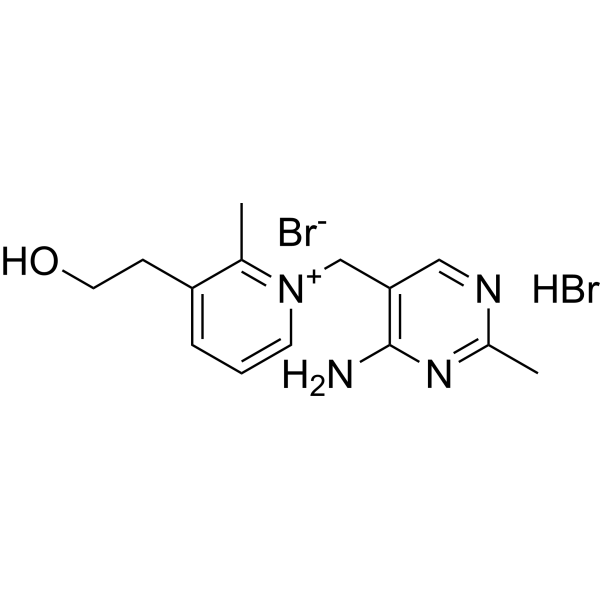
Cat. No.: HY-122273
CAS No.: 534-64-5
Purity:  96.61%
Pyrithiamine (hydrobromide) is an inhibitor of thiamine kinase and thiamine pyrophosphate kinase. Pyrithiamine (hydrobromide) competitively inhibits thiamine transport and reduces intracellular levels of thiamine and its phosphates. Pyrithiamine (hydrobromide) is used to study thiamine deficiency with polyneuritic symptoms and Wernicke's encephalopathy .
loading...
    loading...
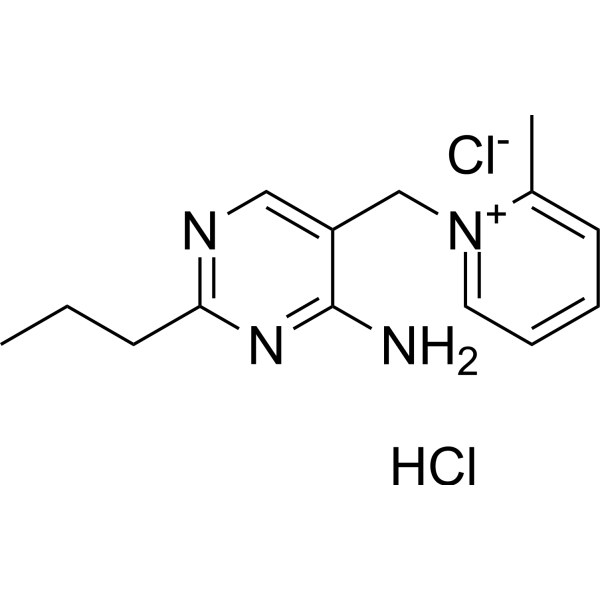
Cat. No.: HY-B0937A
CAS No.: 137-88-2
Research Areas:  

Infection

Amprolium hydrochloride is a thiamine transporter inhibitor and antiparasitic agent with oral activity and blood-brain barrier penetration. Amprolium hydrochloride blocks thiamine transport at the blood-brain barrier and intestine, and competitively inhibits thiamine pyrophosphokinase, inducing thiamine pyrophosphate deficiency and impairing carbohydrate synthesis. Amprolium hydrochloride induces oxidative stress, alters antioxidant enzyme activity, and inhibits acetylcholinesterase (AchE) activity. Amprolium hydrochloride disrupts reproductive organs and gametogenesis, and causes histopathological and ultrastructural damage to multiple organs. Amprolium hydrochloride induces thiamine deficiency, reduces body weight gain in mice, and causes psychomotor behavioral changes and nephropathy. Amprolium hydrochloride exhibits molluscicidal activity against the terrestrial snail Eobania vermiculata, and reduces the shedding of Eimeria meleagrimitis oocysts in feces and litter. Amprolium hydrochloride can be used for research on thiamine deficiency and coccidiosis .
loading...
    loading...
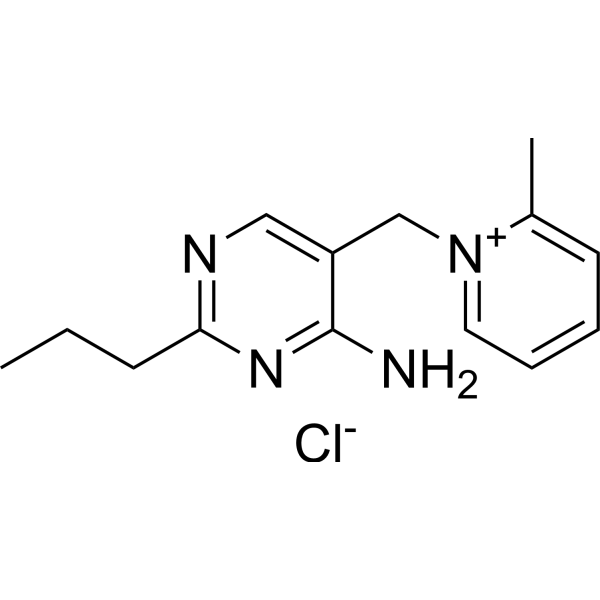
Cat. No.: HY-B0937
CAS No.: 121-25-5
Research Areas:  

Infection

Amprolium is a thiamine transporter inhibitor and antiparasitic agent with oral activity and blood-brain barrier penetration. Amprolium blocks thiamine transport at the blood-brain barrier and intestine, and competitively inhibits thiamine pyrophosphokinase, inducing thiamine pyrophosphate deficiency and impairing carbohydrate synthesis. Amprolium induces oxidative stress, alters antioxidant enzyme activity, and inhibits acetylcholinesterase (AchE) activity. Amprolium disrupts reproductive organs and gametogenesis, and causes histopathological and ultrastructural damage to multiple organs. Amprolium induces thiamine deficiency, reduces body weight gain in mice, and causes psychomotor behavioral changes and nephropathy. Amprolium exhibits molluscicidal activity against the terrestrial snail Eobania vermiculata, and reduces the shedding of Eimeria meleagrimitis oocysts in feces and litter. Amprolium can be used for research on thiamine deficiency and coccidiosis .
loading...
    loading...
Cat. No.: HY-B0937AR
CAS No.: 137-88-2
Amprolium (hydrochloride) (Standard) is the analytical standard of Amprolium (hydrochloride) (HY-B0937A). This product is intended for research and analytical applications. Amprolium hydrochloride is a thiamine transporter inhibitor and antiparasitic agent with oral activity and blood-brain barrier penetration. Amprolium hydrochloride blocks thiamine transport at the blood-brain barrier and intestine, and competitively inhibits thiamine pyrophosphokinase, inducing thiamine pyrophosphate deficiency and impairing carbohydrate synthesis. Amprolium hydrochloride induces oxidative stress, alters antioxidant enzyme activity, and inhibits acetylcholinesterase (AchE) activity. Amprolium hydrochloride disrupts reproductive organs and gametogenesis, and causes histopathological and ultrastructural damage to multiple organs. Amprolium hydrochloride induces thiamine deficiency, reduces body weight gain in mice, and causes psychomotor behavioral changes and nephropathy. Amprolium hydrochloride exhibits molluscicidal activity against the terrestrial snail Eobania vermiculata, and reduces the shedding of Eimeria meleagrimitis oocysts in feces and litter. Amprolium hydrochloride can be used for research on thiamine deficiency and coccidiosis .
loading...
    loading...
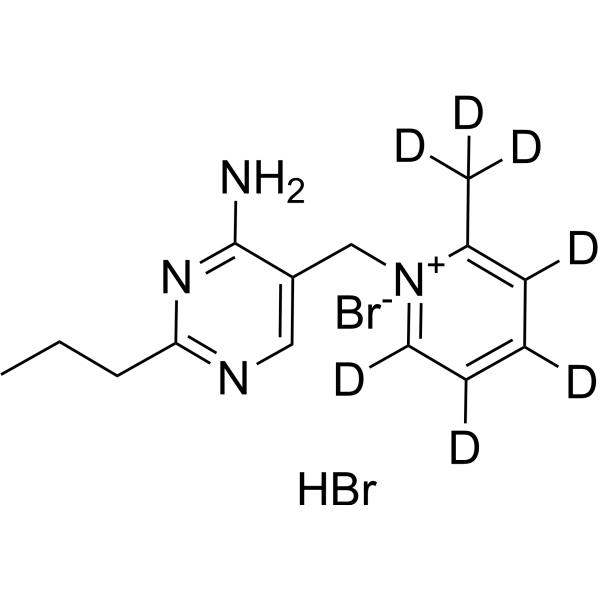
Cat. No.: HY-B0937S
Amprolium-d7 (bromide hydrobromide) is the deuterated-labeled Amprolium (HY-B0937). Amprolium is a thiamine transporter inhibitor and antiparasitic agent with oral activity and blood-brain barrier penetration. Amprolium blocks thiamine transport at the blood-brain barrier and intestine, and competitively inhibits thiamine pyrophosphokinase, inducing thiamine pyrophosphate deficiency and impairing carbohydrate synthesis. Amprolium induces oxidative stress, alters antioxidant enzyme activity, and inhibits acetylcholinesterase (AchE) activity. Amprolium disrupts reproductive organs and gametogenesis, and causes histopathological and ultrastructural damage to multiple organs. Amprolium induces thiamine deficiency, reduces body weight gain in mice, and causes psychomotor behavioral changes and nephropathy. Amprolium exhibits molluscicidal activity against the terrestrial snail Eobania vermiculata, and reduces the shedding of Eimeria meleagrimitis oocysts in feces and litter. Amprolium can be used for research on thiamine deficiency and coccidiosis .
loading...
    loading...
Cat. No.: HY-P71376
Purity:  ≥ 95%, as determined by reducing SDS-PAGE.
Synonyms: TPK1; thiamine Kinase; Thiamin pyrophosphokinase 1; CDNA FLJ46821 Fis, Clone TSTOM2002611, Moderately Similar To Mus Musculus Thiamin pyrophosphokinase (Tpk1); HTPK1; Uncharacterized Protein TPK1; PP20; thiamine pyrophosphokinase; thiamine Pyrophosphokina
Species:  
Human
Source:  
HEK293
loading...
    loading...
Cat. No.: HY-W742094
CAS No.: 6092-18-8
Target:  

Parasite

Research Areas:  

Infection

Cycotiamine is an S-acylated thiamine derivative with antiplasmodial activity. Cycotiamine inhibits the proliferation of Plasmodium falciparum and Plasmodium knowlesi. Cycotiamine can be used in malaria-related research .
loading...
    loading...

