1. Search Result
Search Result
Results for "

tomato plants

" in MedChemExpress (MCE) Product Catalog:

25

Inhibitors & Agonists

3

Biochemical Assay Reagents

2

Peptides

8

Natural
Products

1

Isotope-Labeled Compounds

Cat. No. Product Name Target Research Areas Chemical Structure
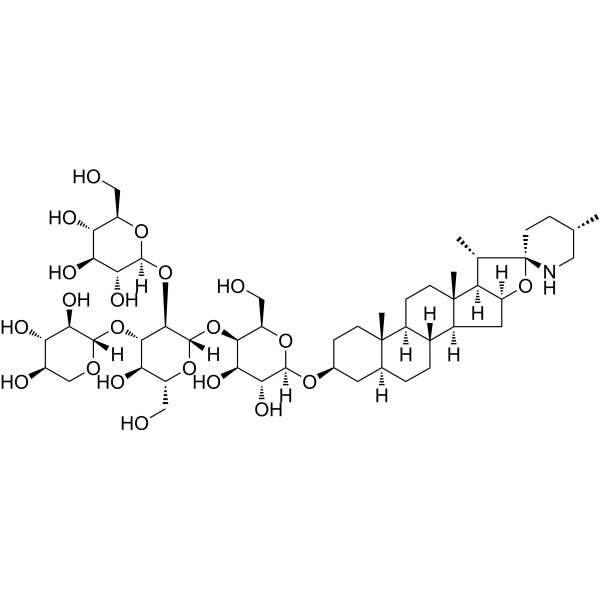
  • HY-N2166
    Tomatine
    2 Publications Verification

    α-Tomatine; Lycopersicin; Tomatin

    Proteasome Apoptosis Neurological Disease
    Tomatine is a glycoalkaloid, found in the tomato plant (Lycopersicon esculentum Mill.). Tomatine elicits neurotoxicity in RIP1 kinase and caspase-independent manner. Tomatine promotes the upregulation of nuclear apoptosis inducing factor (AIF) in neuroblastoma cells. Tomatine also inhibits 20S proteasome activity .
    Tomatine
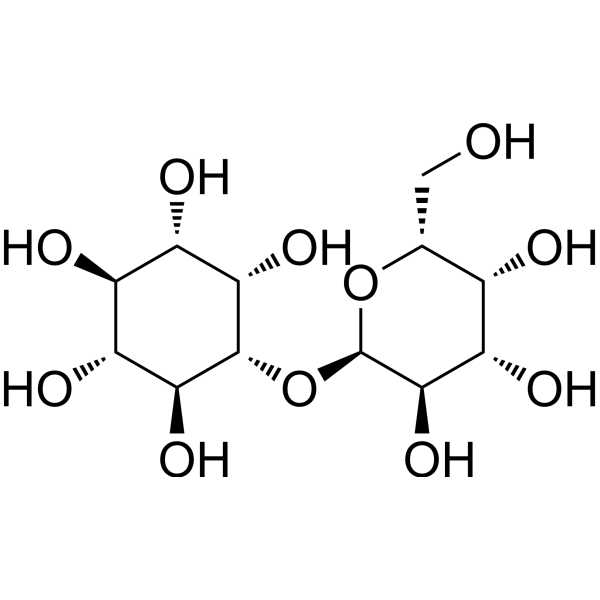
  • HY-N9497

    Galectin Fungal Infection
    Galactinol is a disaccharide carbohydrate serving as a galactosyl donor, which belongs to the raffinose family oligosaccharide pathway and acts as an important osmoprotectant. Galactinol not only induces disease resistance in plants against fungal and bacterial pathogens, but also significantly enhances plant tolerance to abiotic stresses such as drought, high salinity, low temperature and oxidative damage. In addition, Galactinol has the ability to scavenge hydroxyl radicals, can act as a signaling component for root colonization-induced systemic resistance, and is positively correlated with seed longevity in various crops, making it a potential biomarker for evaluating seed vigor. Therefore, Galactinol can be used in the research of various plant diseases including fungal leaf spot, bacterial angular leaf spot, gray mold and soft rot .
    Galactinol
  • HY-B2008

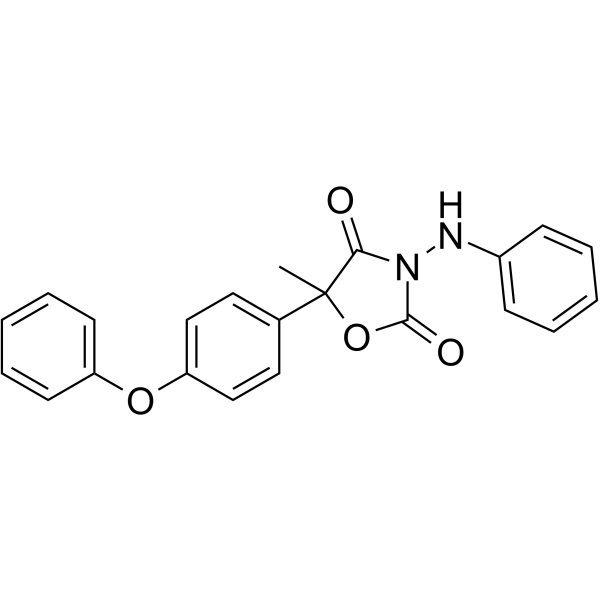
    DPX-JE874

    Environmental Pollutants Fungal Infection
    Famoxadone is a fungicide active against various oomycetes. Famoxadone induces rapid lysis of zoospores of P. viticola and P. infestans, and inhibits sporangial differentiation, zoospore release, sporangial germination and mycelial growth. Famoxadone exerts a preventive control effect on plant diseases. Famoxadone can be used in research related to grape downy mildew, potato late blight, tomato late blight and plant oomycete diseases .
    Famoxadone
  • HY-B2062
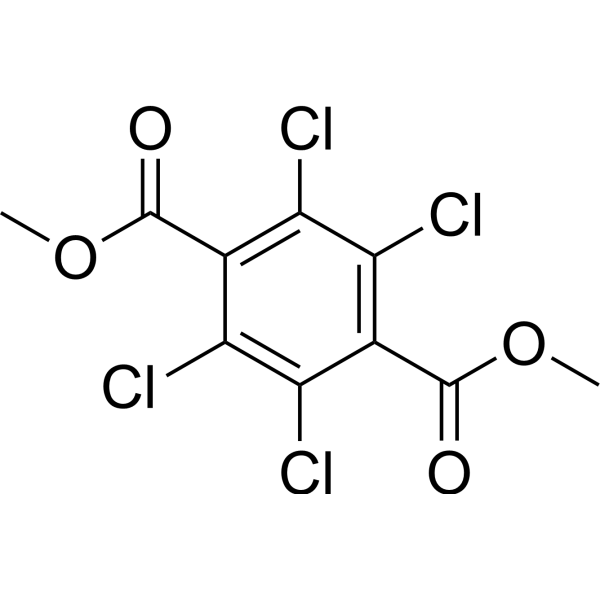
    Chlorthal-dimethyl
    1 Publications Verification

    Dimethyl tetrachloroterephthalate

    Environmental Pollutants Biochemical Assay Reagents Others
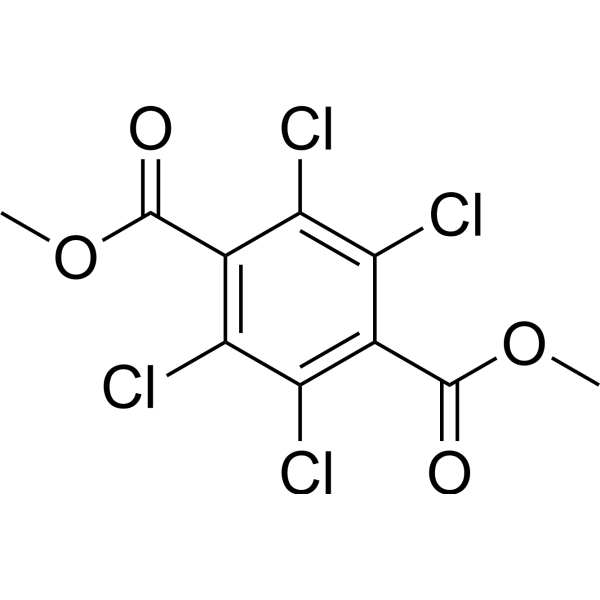
    Chlorthal-dimethyl (Dimethyl tetrachloroterephthalate) is a plant growth regulator. Chlorthal-dimethyl affects cell division and differentiation, interfering with the normal development of vascular tissue. Chlorthal-dimethyl causes localized swelling of tomato hypocotyls and disrupts normal mitosis in germinating millet seedlings .
    Chlorthal-dimethyl
  • HY-118448

    Antibiotic Bacterial Fungal Parasite Infection
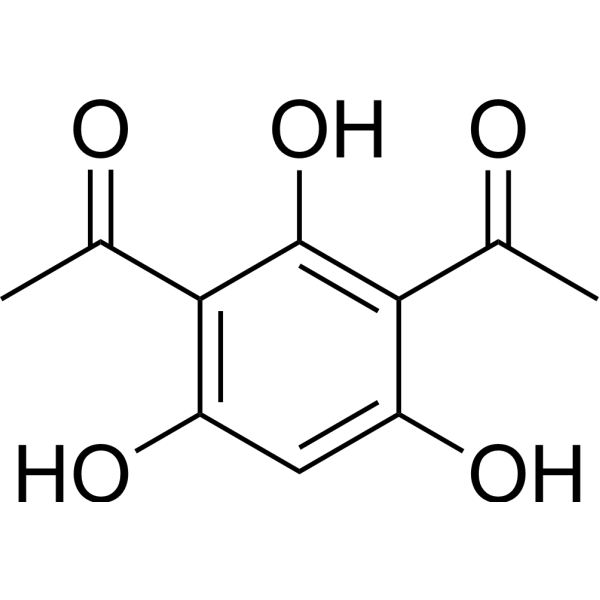
    2,4-Diacetylphloroglucinol is a polyketide antibiotic produced by Pseudomonas fluorescens. 2,4-Diacetylphloroglucinol exhibits broad-spectrum toxicity against various organisms such as bacteria, fungi, oomycetes, and nematodes. 2,4-Diacetylphloroglucinol can also inhibit plant pathogens and affect the root development of tomato seedlings .
    2,4-Diacetylphloroglucinol
  • HY-NP148

    LEL (Biotin)

    Fluorescent Dye Others
    Lycopersicon esculentum (Tomato) Lectin Biotin is a plant lectin that can be used as a probe to specifically bind biomolecules (such as polysaccharides, peptides, etc.). Lycopersicon esculentum (Tomato) Lectin Biotin is a biological material or organic compound that can be used in life science research .
    Lycopersicon esculentum (Tomato) Lectin (Biotin)
  • HY-W762060

    Fungal Infection
    Metiram is a polymeric dithiocarbamate pesticide active as a fungicide. Metiram is widely used to protect crops such as tomatoes, potatoes, apples, grapevines, etc. Human and environmental exposure from the representative use of Metiram on potatoes is considered non-negligible. Metiram is considered necessary in the control of serious threats to plant health that cannot be suppressed by other available means, including non-chemical methods .
    Metiram
  • HY-B2026

    Fungal Infection
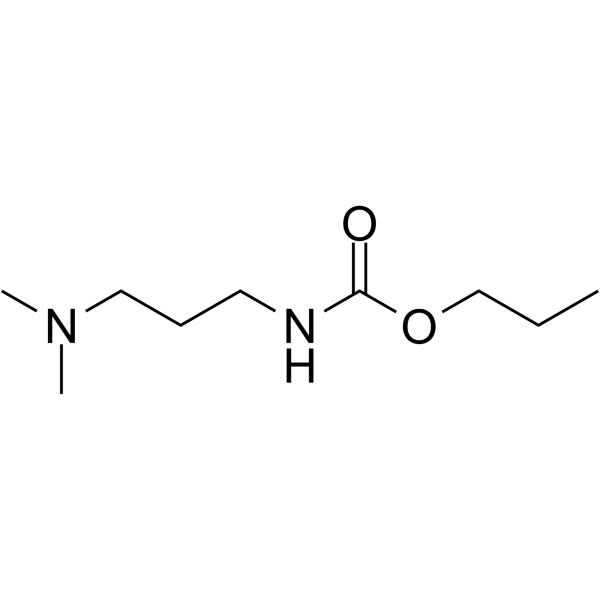
    Propamocarb is a systemic fungicide. Propamocarb is widely used to protect cucumbers, tomatoes and other plants from pathogens .
    Propamocarb
  • HY-NP0136

    LEL (Fluorescein)

    Fluorescent Dye Others
    Lycopersicon esculentum (Tomato) Lectin (LEL) Fluorescein is a plant lectin that can be used as a probe to specifically bind biomolecules (such as polysaccharides, peptides, etc.).Lycopersicon esculentum (Tomato) Lectin (LEL) Fluorescein is a biological material or organic compound that can be used in life science research .
    Lycopersicon esculentum  (Tomato) Lectin (Fluorescein)
  • HY-N16388

    Autophagy Parasite Infection
    α-Costic acid is a plant sesquiterpene that can induce oxidative stress and autophagy in tomatoes. α-Costic acid has acaricidal activity .
    α-Costic acid
  • HY-N2166R

    α-Tomatine (Standard); Lycopersicin (Standard); Tomatin (Standard)

    Reference Standards Proteasome Apoptosis Neurological Disease
    Tomatine is a glycoalkaloid, found in the tomato plant (Lycopersicon esculentum Mill.). Tomatine elicits neurotoxicity in RIP1 kinase and caspase-independent manner. Tomatine promotes the upregulation of nuclear apoptosis inducing factor (AIF) in neuroblastoma cells. Tomatine also inhibits 20S proteasome activity .
    Tomatine (Standard)
  • HY-B2062R

    Dimethyl tetrachloroterephthalate (Standard)

    Drug Intermediate Mitosis Reference Standards Others
    Chlorthal-dimethyl (Standard) is the analytical standard of Chlorthal-dimethyl. This product is intended for research and analytical applications. Chlorthal-dimethyl (Dimethyl tetrachloroterephthalate) is a plant growth regulator. Chlorthal-dimethyl affects cell division and differentiation, interfering with the normal development of vascular tissue. Chlorthal-dimethyl causes localized swelling of tomato hypocotyls and disrupts normal mitosis in germinating millet seedlings .
    Chlorthal-dimethyl (Standard)
  • HY-W726127

    Fungal Infection
    Propamocarb hydrochloride is a systemic fungicide. Propamocarb hydrochloride is widely used to protect cucumbers, tomatoes and other plants from pathogens .
    Propamocarb hydrochloride
  • HY-B2026S

    Fungal Infection
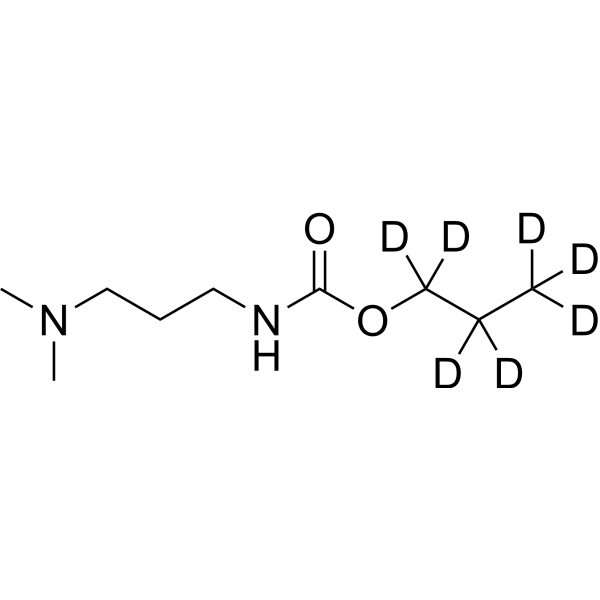
    Propamocarb-d7 is the deuterium labeled Propamocarb . Propamocarb is a systemic fungicide. Propamocarb is widely used to protect cucumbers, tomatoes and other plants from pathogens .
    Propamocarb-d7
  • HY-B2026R

    Reference Standards Fungal Infection
    Propamocarb (Standard) is the analytical standard of Propamocarb. This product is intended for research and analytical applications. Propamocarb is a systemic fungicide. Propamocarb is widely used to protect cucumbers, tomatoes and other plants from pathogens .
    Propamocarb (Standard)
  • HY-N2166A

    α-Tomatine hydrochloride; Lycopersicin hydrochloride; Tomatin hydrochloride

    Proteasome Apoptosis Neurological Disease
    Tomatine hydrochloride is a glycoalkaloid, found in the tomato plant (Lycopersicon esculentum Mill.). Tomatine hydrochloride elicits neurotoxicity in RIP1 kinase and caspase-independent manner. Tomatine hydrochloride promotes the upregulation of nuclear apoptosis inducing factor (AIF) in neuroblastoma cells. Tomatine hydrochloride also inhibits 20S proteasome activity .
    Tomatine hydrochloride
  • HY-P10685

    [Tyr5,12,Lys7]-Polyphemusin II

    HIV CMV Infection
    T-22 (polyphemusin II with [Tyr5,12,Lys7]) is a new synthetic peptide that fights HIV, with an EC50 of 0.008 μg/mL and a CC50 of 54 μg/mL. T22 promotes plant height, photosynthesis, total chlorophyll content, and gas exchange in tomatoes, and it can resist CMV .
    T-22
  • HY-B2008R

    DPX-JE874 (Standard)

    Reference Standards Fungal Infection
    Famoxadone (Standard) is the analytical standard of Famoxadone. This product is intended for research and analytical applications. Famoxadone is a fungicide active against various oomycetes. Famoxadone induces rapid lysis of zoospores of P. viticola and P. infestans, and inhibits sporangial differentiation, zoospore release, sporangial germination and mycelial growth. Famoxadone exerts a preventive control effect on plant diseases. Famoxadone can be used in research related to grape downy mildew, potato late blight, tomato late blight and plant oomycete diseases .
    Famoxadone (Standard)
  • HY-N16445

    (-)-Strevertene A

    Endogenous Metabolite Antibiotic Fungal Infection
    Strevertene A ((-)-Strevertene A) (Compound 1), a pentaene macrolide, is a microbial secondary metabolite. Strevertene A is an antibiotic and has a potent antifungal activity. Strevertene A significantly inhibits the mycelial growth of phytopathogenic fungi (such as Alternaria mali, Aspergillus oryzae and Cylindrocarpon destructans) with IC50s of 4-16 μg/mL. Strevertenes A can strongly prevent Fusarium wilt development on tomato plants .
    Strevertene A
  • HY-171541

    Fungal Infection
    CDA-IN-1 (Compound vs#2-1) is an inhibitor of chitin deacetylase (CDA). CDA-IN-1 exhibits antifungal activity. It can inhibit fungal growth by suppressing the activity of fungal CDA, activating the plant immune response, and accumulating reactive oxygen species (ROS). At a concentration of 100 μM, CDA-IN-1 can achieve inhibition rates of 86.9% and 74.5% against PxCDA1 and PxCDA2 of P. xanthii, respectively. CDA-IN-1 can be applied to the research in the field of controlling plant fungal diseases, such as the research on diseases like cucurbit powdery mildew and tomato gray mold .
    CDA-IN-1
  • HY-118448R

    Reference Standards Antibiotic Bacterial Fungal Parasite Infection
    2,4-Diacetylphloroglucinol (Standard) is the analytical standard of 2,4-Diacetylphloroglucinol (HY-118448). This product is intended for research and analytical applications. 2,4-Diacetylphloroglucinol is a polyketide antibiotic produced by Pseudomonas fluorescens. 2,4-Diacetylphloroglucinol exhibits broad-spectrum toxicity against various organisms such as bacteria, fungi, oomycetes, and nematodes. 2,4-Diacetylphloroglucinol can also inhibit plant pathogens and affect the root development of tomato seedlings .
    2,4-Diacetylphloroglucinol (Standard)
  • HY-W583753

    Bacterial Infection
    Dipotassium phosphite is a phosphite salt and is an antibacterial agent. Dipotassium phosphite directly and indirectly affects development of Phytophthora infestans.Dipotassium phosphite reduces late blight severity in field-grown tomato plants and increases productivity of field-grown tomato plants. Dipotassium phosphite can be used for the research of late blight .
    Dipotassium phosphite
  • HY-W169645

    NSC 102761

    Fungal Infection
    1,5-Hexadien-3-ol is a green leaf volatile (GLV) alcohol that can be found in tomato plants. 1,5-Hexadien-3-ol contributes to protection against Botrytis cinerea. 1,5-Hexadien-3-ol can be used for the research of grey mould disease .
    1,5-Hexadien-3-ol
  • HY-P11630

    Bacterial Cardiovascular Disease Infection
    ZM-804 is a cationic α-helix antimicrobial peptide. ZM-804 targets bacterial cell membranes. ZM-804 demonstrates antimicrobial activity and prevents the infection of tomato plants by Pst DC3000. ZM-804 inhibits the growth of B. subtilis and E. coli (the same MICs of 41.10 μg/mL). ZM-804 exhibits low hemolytic activity .
    ZM-804
  • HY-W043791

    Fungal Infection
    4-Dodecyl-2,6-dimethylmorpholine is a morpholine fungicide and plant-growth regulator. 4-Dodecyl-2,6-dimethylmorpholine targets phytopathogenic fungi including Oomycetes, Ascomycetes and Basidiomycetes. 4-Dodecyl-2,6-dimethylmorpholine acts synergistically with acylalanine fungicides to enhance antifungal efficacy and regulate plant growth. 4-Dodecyl-2,6-dimethylmorpholine can be applied to the study of plant fungal diseases and phytopathogenic fungal infections .
    4-Dodecyl-2,6-dimethylmorpholine

Inquiry Online

Your information is safe with us. * Required Fields.

Salutation


Country or Region *

Applicant Name *


Organization Name *

Department *


Email Address *


Product Name *

Cat. No.


Requested quantity *

Phone Number *


Remarks

Inquiry Online

Inquiry Information

Product Name:
Cat. No.:
Quantity:
MCE Japan Authorized Agent:

