12 Results for "

tonic convulsions

" in MedChemExpress (MCE) Product Catalog:
Products (12)

12 Results for "tonic convulsions" in MCE Product Catalog:

44
44 Publications Verification
Cat. No.: HY-137790
CAS No.: 38641-83-7
Purity:  99.35%
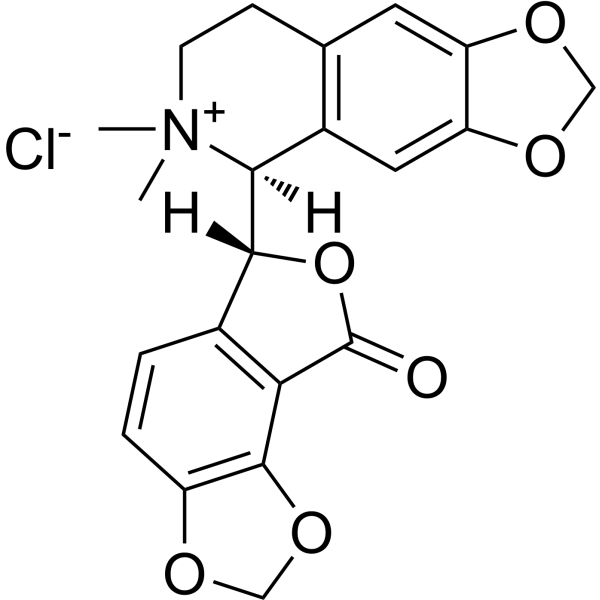
Synonyms: (-)-Bicuculline methochloride
Target:  

GABA Receptor

Research Areas:  

Neurological Disease

Bicuculline ((+)-Bicuculline; d-Bicuculline) methochloride is a selective GABAA receptor antagonist with an IC50 value of 3 μM. Bicuculline methochloride induces clonic tonic convulsions in mammals and can also be used to block Ca 2+ activated potassium channels. Bicuculline methochloride can be used in studies of epilepsy and other related psychiatric disorders .
loading...
    loading...
Cat. No.: HY-W017500
CAS No.: 17833-53-3
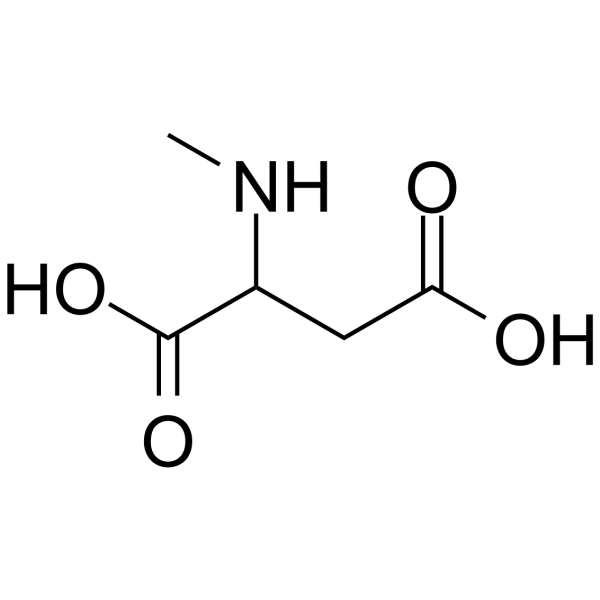
N-Methyl-DL-aspartic acid acts as an agonist for N-methyl-D-aspartic acid receptors and D-isomer-specific aspartate receptors. N-Methyl-DL-aspartic acid activates hypothalamic neurons that regulate gonadotropin-releasing hormone secretion, and stimulates prepubertal male rhesus monkeys to produce sustained intermittent gonadotropin-releasing hormone secretion and pulsatile luteinizing hormone secretion. N-Methyl-DL-aspartic acid activates excitatory effects mediated by N-methyl-D-aspartic acid receptors. N-Methyl-DL-aspartic acid exhibits convulsant effects, inducing clonic convulsions with loss of righting reflex, generalized tonic-clonic seizures or persistent clonic seizures. N-Methyl-DL-aspartic acid causes precocious puberty. N-Methyl-DL-aspartic acid can be used in studies related to convulsions and seizures .
loading...
    loading...
Cat. No.: HY-B1870
CAS No.: 108-62-3
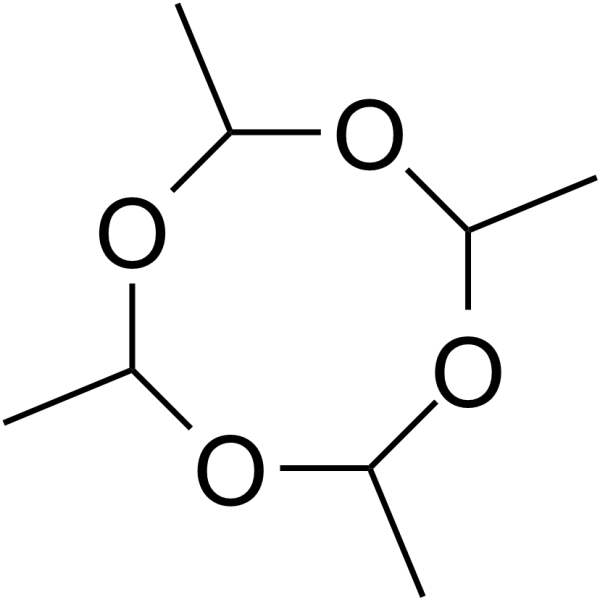
Metaldehyde is an orally active molluscicide. Metaldehyde acts as a feeding inhibitor. Metaldehyde disrupts the feeding cycle, impairs righting ability, delays fecal excretion, induces toxic symptoms in slugs, reduces the concentrations of neurotransmitters (Noradrenaline, 5-HT (HY-B1473A)) in the mouse brain, and induces lethal clonic-tonic convulsions in mice .
loading...
    loading...
Cat. No.: HY-100783B
CAS No.: 66016-70-4
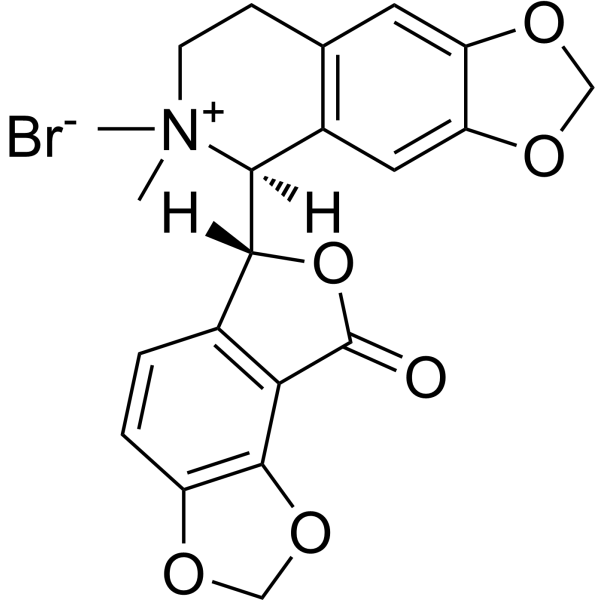
Synonyms: (+)-Bicuculline methobromide
Target:  

GABA Receptor

Research Areas:  

Neurological Disease

Bicuculline methobromide is a selective GABAA Receptor antagonist with an IC50 value of 3 μM. Bicuculline methobromide induces clonic tonic convulsions in mammals and can also be used to block Ca 2+ activated potassium channels. Bicuculline methobromide can be used in studies of epilepsy and other related psychiatric disorders .
loading...
    loading...
Cat. No.: HY-136844
CAS No.: 143692-18-6
Synonyms: GYKI 53655
Target:  

iGluR

Research Areas:  

Neurological Disease

LY 300168 (GYKI 53655) is a non-competitive, blood-brain-barrier permeable AMPA receptor antagonist. LY 300168 attenuates hippocampal injury. LY 300168 blocks the sound-induced clonic and tonic convulsions .
loading...
    loading...
Cat. No.: HY-W097106
CAS No.: 60846-91-5
Target:  

Drug Isomer

Research Areas:  

Neurological Disease

(S)-3-N-Cbz-Amino-succinimide (Compound 1d) is an antiepileptic agent that can inhibit pentylenetetrazole (PTZ) and maximal electroshock (MES)-induced tonic convulsions in mice .
loading...
    loading...
Cat. No.: HY-105059
CAS No.: 73931-96-1
Denzimol is an orally active anticonvulsant agent. Denzimol inhibits cytochrome P450, and interacts with benzodiazepine receptors. Denzimol selectively antagonizes tonic components of Metrazol-induced seizures in rats and mice. Denzimol can be used for the research of epilepsy and convulsions .
loading...
    loading...
Cat. No.: HY-180554
CAS No.: 300587-89-7
Research Areas:  

Neurological Disease

UCB1244283 is a synaptic vesicle glycoprotein 2A (SV2A) allosteric modulator. UCB1244283 binds to a secondary ligand-binding site in SV2A and enhances orthosteric ligand engagement when the orthosteric site is occupied, by stabilizing the occluded state and slowing ligand dissociation. UCB1244283 shows a clear protective effect against both tonic and clonic convulsions in sound-sensitive mice. UCB1244283 can be used for epilepsy research .
loading...
    loading...
Cat. No.: HY-118018
CAS No.: 202914-21-4
Target:  

GABA Receptor

Research Areas:  

Neurological Disease

CHF-2993 is an orally active anticonvulsant. CHF-2993 antagonizes Bicuculline (HY-N0219)- and Picrotoxin (HY-101391)-induced tonic convulsions in mice, shows no activity against Pentylenetetrazole-induced clonic convulsions in mice, and partially reduces Veratridine (HY-N6691)-induced aspartate efflux in rat cortical synaptosomes. CHF-2993 can be used in the research of epilepsy .
loading...
    loading...
Cat. No.: HY-105059A
CAS No.: 77234-90-3
Denzimol hydrochloride is an orally active anticonvulsant agent. Denzimol hydrochloride inhibits cytochrome P450, and interacts with benzodiazepine receptors. Denzimol hydrochloride selectively antagonizes tonic components of Metrazol-induced seizures in rats and mice. Denzimol hydrochloride can be used for the research of epilepsy and convulsions .
loading...
    loading...
Cat. No.: HY-114833
CAS No.: 27591-01-1
Synonyms: (Rac)-Bunolol; dl-Bunolol
Bunolol ((Rac)-Bunolol) is a β-adrenergic receptor blocker. Bunolol antagonizes the β-receptor agonist activity induced by Isoproterenol (HY-B0468) and Dichloroisoproterenol. Bunolol reduces the heart rate and mean blood pressure of anesthetized dogs. Bunolol decreases spontaneous motor activity and Amphetamine-induced hyperactivity in rats, potentiates Pentobarbital-induced hypnosis in mice, and protects rats from extensor tonic convulsions induced by maximal electroshock .
loading...
    loading...
Cat. No.: HY-121554
CAS No.: 68642-64-8
Target:  

GABA Receptor

Research Areas:  

Neurological Disease

Kojic amine is an orally active γ-aminobutyric acid (GABA) analog. Kojic amine acts as a GABA mimic that inhibits sodium-independent [ 3H]GABA binding to rat brain cell membranes. Kojic amine reduces flexor spasms in chronic spinal rat and cat models. Kojic amine prevents tonic extensor convulsions in mice. Kojic amine produces a transient, dose-dependent analgesic effect in the mouse hot-plate test. Kojic amine can be used in research related to skeletal muscle spasm, epilepsy and analgesia [1][2]
loading...
    loading...
  • 1

