1. Search Result
Search Result
Results for "

tryptophan residue

" in MedChemExpress (MCE) Product Catalog:

11

Inhibitors & Agonists

3

Fluorescent Dyes

2

Biochemical Assay Reagents

1

Natural
Products

1

Isotope-Labeled Compounds

Targets Recommended:
Cat. No. Product Name Target Research Areas Chemical Structure
  • HY-W011417
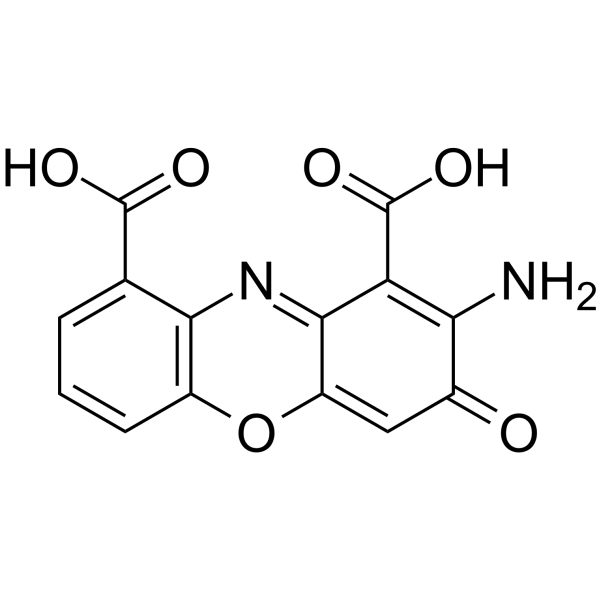
    Cinnabarinic acid
    1 Publications Verification

    Endogenous Metabolite mGluR Apoptosis Others
    Cinnabarinic acid is a specific orthosteric agonist of mGlu4 by interacting with residues of the glutamate binding pocket of mGlu4, has no activity at other mGlu receptors. Cinnabarinic acid is an endogenous metabolite of the kynurenine pathway of tryptophan. Cinnabarinic acid induces cell apoptosis .
    Cinnabarinic acid
  • HY-NP002I

    Biochemical Assay Reagents Others
    Sheep Serum Albumin is a plasma protein derived from sheep. Sheep serum albumin is a 583 amino acid residues long multidomain monomeric protein which is rich in cysteine and low in tryptophan content. Sheep Serum Albumin can be used as a potential biomarker of age-related decline .
    Sheep Serum Albumin
  • HY-W011417R

    Endogenous Metabolite Reference Standards mGluR Apoptosis Others
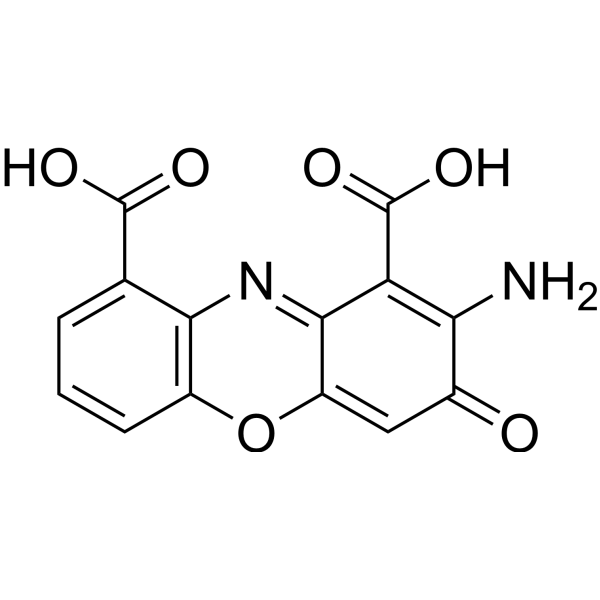
    Cinnabarinic acid (Standard) is the analytical standard of Cinnabarinic acid. This product is intended for research and analytical applications. Cinnabarinic acid is a specific orthosteric agonist of mGlu4 by interacting with residues of the glutamate binding pocket of mGlu4, has no activity at other mGlu receptors. Cinnabarinic acid is an endogenous metabolite of the kynurenine pathway of tryptophan. Cinnabarinic acid induces cell apoptosis .
    Cinnabarinic acid (Standard)
  • HY-D0233

    Fluorescent Dye Others
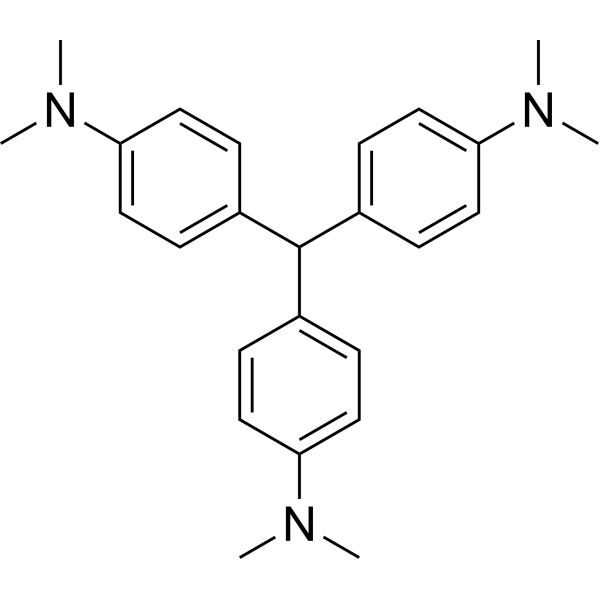
    Leucocrystal violet is a cationic triarylmethane dye. Leucocrystal violet generates a colored purple product in the presence of hydrogen peroxide and horseradish peroxidase, or when oxidized by periodate under the catalysis of horseradish peroxidase. Leucocrystal violet serves as a chromogenic reagent for the determination of submicrogram-level hydrogen peroxide, with no interference from tryptophan, persulfate or chromate. Leucocrystal violet reacts with blood to produce a purple/violet color in the presence of hydrogen peroxide; it forms a very weak fluorophore when acting with whole blood in an unbuffered solution, with a maximum absorption wavelength of 630 nm and a maximum fluorescence emission wavelength of 665 nm upon excitation at 630 nm. Leucocrystal violet is widely used for staining blood residues on porous and non-porous materials .
    Leucocrystal violet
  • HY-D0015

    Fluorescent Dye Others
    Cresol red, 97% is an acidic phenolsulfonphthalein triphenylmethane dye. Cresol red, 97% generates reactive oxygen species and singlet oxygen under ultrasonic irradiation, interacts with bovine serum albumin, alters the structure of bovine serum albumin, and oxidizes the fluorescent amino acid residues of bovine serum albumin. Cresol red, 97% can be decolorized and biodegraded by *Absidia spinosa* M15, producing phenylacetic acid and benzoic acid metabolites. Cresol red, 97% serves as a pH indicator (orange at pH 1.8-yellow at pH 2.0, yellow at pH 7.0-purple at pH 8.8). Cresol red, 97% can be used to indicate pH, temperature and salinity .
    Cresol red, 97%
  • HY-126965

    Biochemical Assay Reagents Others
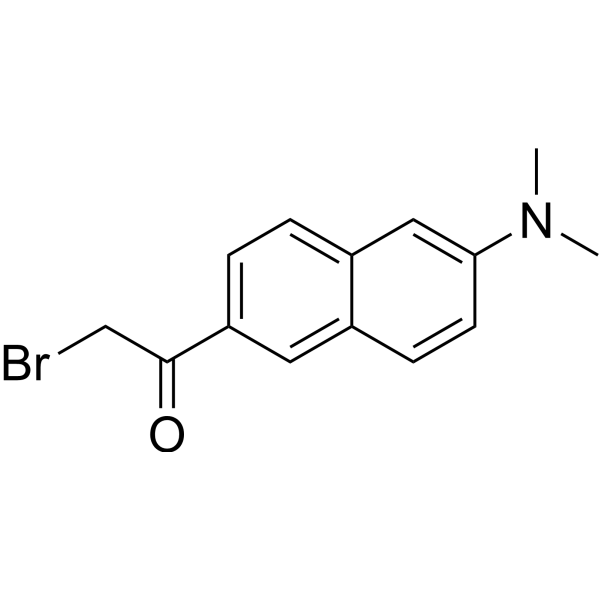
    Lipid Y is a potent monosaccharide which contains two bromines per chain. lipid Y binds to a tryptophan residue in a membrane protein and then quenches the fluorescence of the tryptophan residue .
    Lipid Y
  • HY-D0233S

    Isotope-Labeled Compounds Fluorescent Dye Others
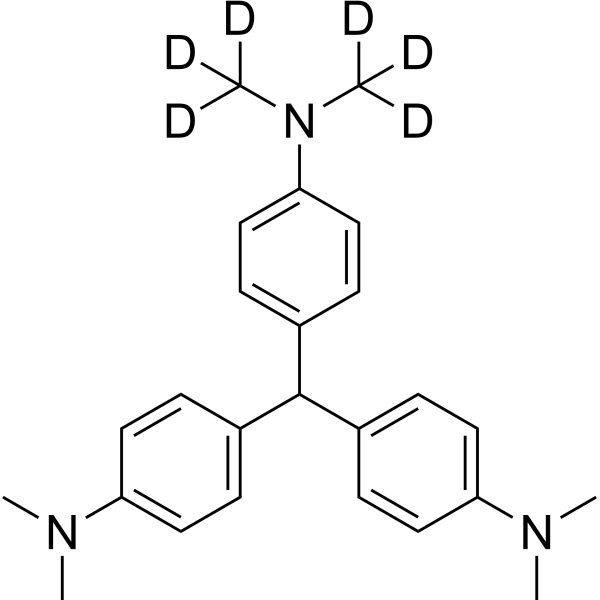
    Leucocrystal violet-d6 is the deuterium labeled Leucocrystal violet (HY-D0233). Leucocrystal violet is a cationic triarylmethane dye. Leucocrystal violet generates a colored purple product in the presence of hydrogen peroxide and horseradish peroxidase, or when oxidized by periodate under the catalysis of horseradish peroxidase. Leucocrystal violet serves as a chromogenic reagent for the determination of submicrogram-level hydrogen peroxide, with no interference from tryptophan, persulfate or chromate. Leucocrystal violet reacts with blood to produce a purple/violet color in the presence of hydrogen peroxide; it forms a very weak fluorophore when acting with whole blood in an unbuffered solution, with a maximum absorption wavelength of 630 nm and a maximum fluorescence emission wavelength of 665 nm upon excitation at 630 nm. Leucocrystal violet is widely used for staining blood residues on porous and non-porous materials.
    Leucocrystal violet-d6
  • HY-D0233R

    Reference Standards Fluorescent Dye Others
    Leucocrystal violet (Standard) is the analytical standard of Leucocrystal violet (HY-D0233). This product is intended for research and analytical applications. Leucocrystal violet is a cationic triarylmethane dye. Leucocrystal violet generates a colored purple product in the presence of hydrogen peroxide and horseradish peroxidase, or when oxidized by periodate under the catalysis of horseradish peroxidase. Leucocrystal violet serves as a chromogenic reagent for the determination of submicrogram-level hydrogen peroxide, with no interference from tryptophan, persulfate or chromate. Leucocrystal violet reacts with blood to produce a purple/violet color in the presence of hydrogen peroxide; it forms a very weak fluorophore when acting with whole blood in an unbuffered solution, with a maximum absorption wavelength of 630 nm and a maximum fluorescence emission wavelength of 665 nm upon excitation at 630 nm. Leucocrystal violet is widely used for staining blood residues on porous and non-porous materials.
    Leucocrystal violet (Standard)
  • HY-182754

    SARS-CoV Virus Protease Infection
    SARS-CoV-2 Mpro-IN-57 is an irreversible SARS-CoV-2 main protease inhibitor with an IC50 of 0.41 μM and a Kd of 247.37 nM. SARS-CoV-2 Mpro-IN-57 forms a covalent bond with the key amino acid residue Cys145 in SARS-CoV-2 main protease via its -CN group. SARS-CoV-2 Mpro-IN-57 can be used for the research of COVID-19 .
    SARS-CoV-2 Mpro-IN-57
  • HY-181683

    Metabolic Disease
    Antidiabetic agent 8 is an orally active multi-target inhibitor, with IC50 values of 9.79, 6.36 and 19.08 μM against α-glucosidase, α-amylase and PTP1B, respectively. Antidiabetic agent 8 reduces postprandial blood glucose elevation. Antidiabetic agent 8 can be used in the research of type 2 diabetes .
    Antidiabetic agent 8
  • HY-N19855

    Geranicardic acid

    Cholinesterase (ChE) Neurological Disease
    Merulinic acid (Geranicardic acid) is an acetylcholinesterase (AChE) inhibitor with an IC50 >94 μM against electric eel-derived AChE. Merulinic acid can be used for the research of alzheimer’s disease .
    Merulinic acid

Inquiry Online

Your information is safe with us. * Required Fields.

Salutation


Country or Region *

Applicant Name *


Organization Name *

Department *


Email Address *


Product Name *

Cat. No.


Requested quantity *

Phone Number *


Remarks

Inquiry Online

Inquiry Information

Product Name:
Cat. No.:
Quantity:
MCE Japan Authorized Agent:

