
1. Search Result
Search Result
Results for "

tubulin-binding

" in MedChemExpress (MCE) Product Catalog:

7

Inhibitors & Agonists

2

Natural
Products

1

Click Chemistry

Cat. No. Product Name Target Research Areas Chemical Structure
  • HY-141604
    Glembatumumab vedotin
    1 Publications Verification

    CDX-011; CR011-vcMMAE

    Antibody-Drug Conjugates (ADCs) Microtubule/Tubulin Cancer
    Glembatumumab vedotin (CDX-011) is an ADC comprising a fully human IgG2 monoclonal antibody (CR011) directed against glycoprotein NMB (GPNMB) and conjugated to the potent tubulinbinding cytotoxic agent MMAE via a protease-sensitive vc linker. Glembatumumab vedotin has potent anticancer effects .
    Glembatumumab vedotin
  • HY-W021267

    Reactive Oxygen Species (ROS) Inflammation/Immunology
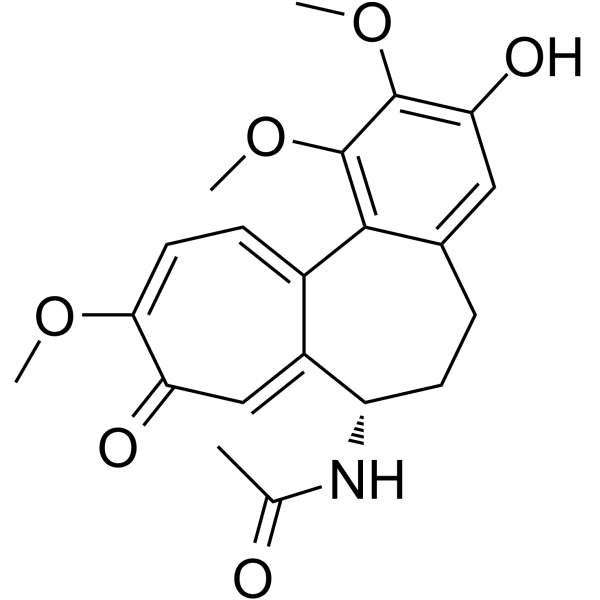
    3-Demethylcolchicine, a colchicine metabolite and anti-inflammatory agent, exhibits potent tubulin-binding activity. 3-Demethylcolchicine inhibits carrageenan-induced rat paw edema. 3-Demethylcolchicine bears a hydroxyl group on its carbocyclic ring; this group participates in free radical scavenging processes, allowing it to act as a free radical scavenger. 3-Demethylcolchicine is applicable to studies related to carrageenan-induced paw edema .
    3-Demethylcolchicine
  • HY-123283

    Microtubule/Tubulin Cancer
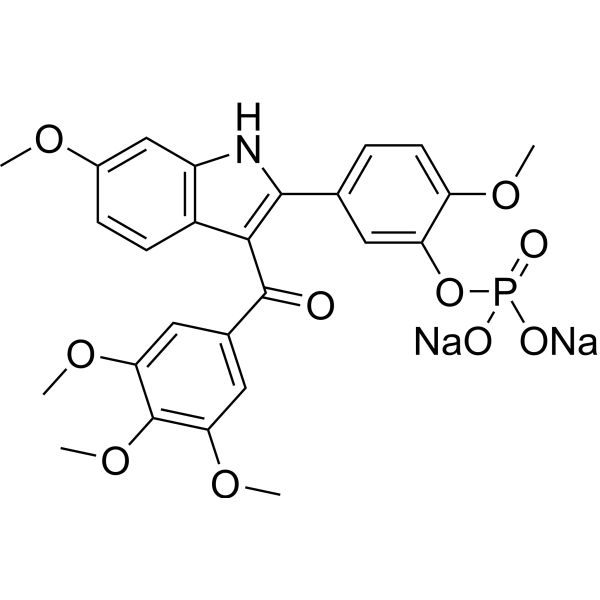
    OXi8007 is a water-soluble phosphate proagent of OXi8006, a tubulin-binding compound.
    OXi8007
  • HY-N7256

    Microtubule/Tubulin Cancer
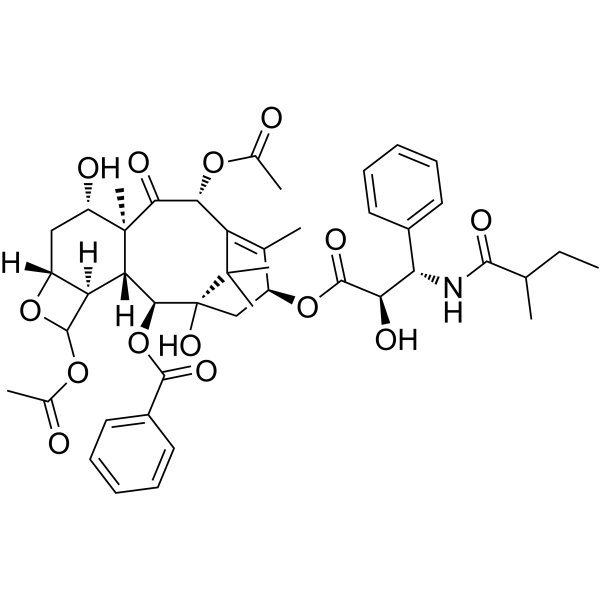
    Dihydrocephalomannine (compound 1b), an analogue of Paclitaxel, shows reduced cytotoxicity and tubulin binding compared to Paclitaxel .
    Dihydrocephalomannine
  • HY-172915

    MDM-2/p53 DNA-PK Apoptosis Cancer
    p53 Stabilizer 2 is a 9'-cycloheptylselenomethyl-noscapine derivative and DNA-PKcs-dependent p53 stabilizer with low tubulin-binding affinity.p53 Stabilizer 2 induces S-phase arrest and apoptosis in cancer cells.p53 Stabilizer 2 can be used for the research of cancer .
    p53 Stabilizer 2
  • HY-144585

    Microtubule/Tubulin ADC Payload Others
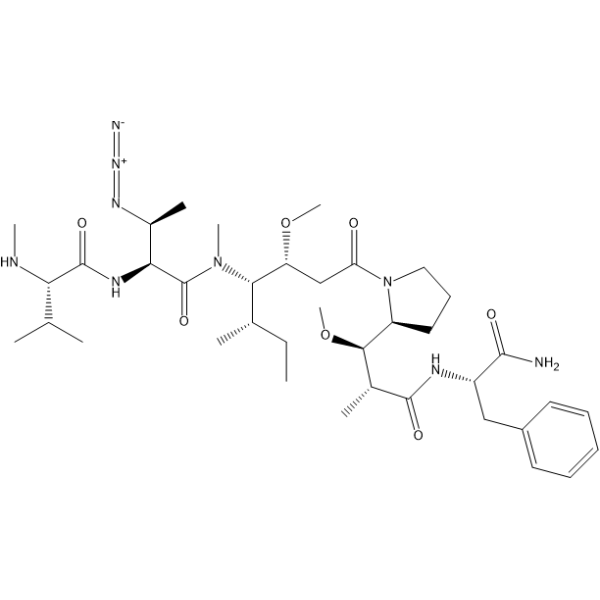
    AGD-0182 is a microtubule disrupting agent. AGD-0182 is a synthetic analogue of the naturally occurring tubulin-binding molecule Dolastatin 10 . AGD-0182 is a click chemistry reagent, it contains an Azide group and can undergo copper-catalyzed azide-alkyne cycloaddition reaction (CuAAc) with molecules containing Alkyne groups. It can also undergo strain-promoted alkyne-azide cycloaddition (SPAAC) reactions with molecules containing DBCO or BCN groups.
    AGD-0182
  • HY-183147A

    Amino acid Transporter Cancer
    LAT1-IN-2 hydrochloride is an orally active anticancer agent, as well as a LAT1 substrate and tubulin-binding agent. LAT1-IN-2 hydrochloride relies on LAT1 for cellular uptake, disrupts microtubule formation by binding to the colchicine site of tubulin, and induces actin depolymerization to transform cells into a spherical shape. LAT1-IN-2 hydrochloride effectively inhibits tumor growth in xenograft mice. Compared with Etoposide (HY-13629), LAT1-IN-2 hydrochloride shows higher distribution in tumor tissues, lower distribution in major organs, and better tolerability. LAT1-IN-2 hydrochloride has been applied in studies related to esophageal cancer .
    LAT1-IN-2 hydrochloride

Inquiry Online

Your information is safe with us. * Required Fields.

Salutation


Country or Region *

Applicant Name *


Organization Name *

Department *


Email Address *


Product Name *

Cat. No.


Requested quantity *

Phone Number *


Remarks

Inquiry Online

Inquiry Information

Product Name:
Cat. No.:
Quantity:
MCE Japan Authorized Agent:

