15 Results for "

uveal melanoma.

" in MedChemExpress (MCE) Product Catalog:
Products (15)

15 Results for "uveal melanoma." in MCE Product Catalog:

4
4 Cited Publications
Cat. No.: HY-101569
CAS No.: 1874276-76-2
Purity:  99.42%
Synonyms: LXS196; IDE196
Target:  

PKC

Research Areas:  

Cancer

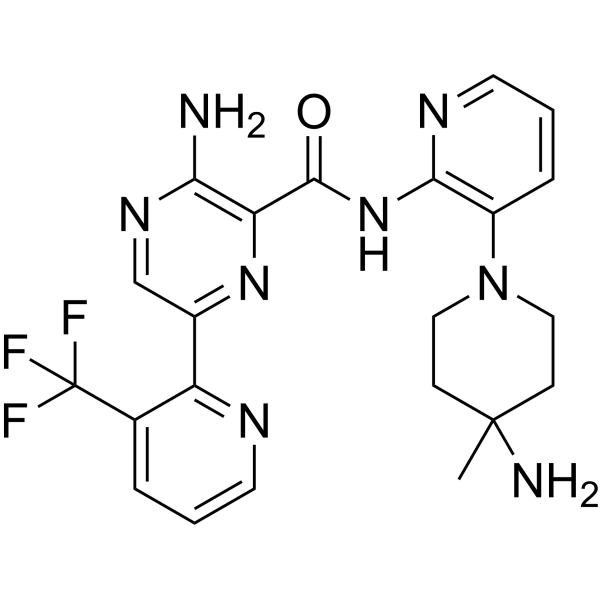
Darovasertib (LXS196) is a potent, selective and orally active protein kinase C (PKC) inhibitor, with IC50 values of 1.9 nM, 0.4 nM and 3.1 μM for PKCα, PKCθ and GSK3β, respectively. Darovasertib has the potential for uveal melanoma research .
loading...
    loading...
3
3 Cited Publications
Cat. No.: HY-N6893
CAS No.: 54999-07-4
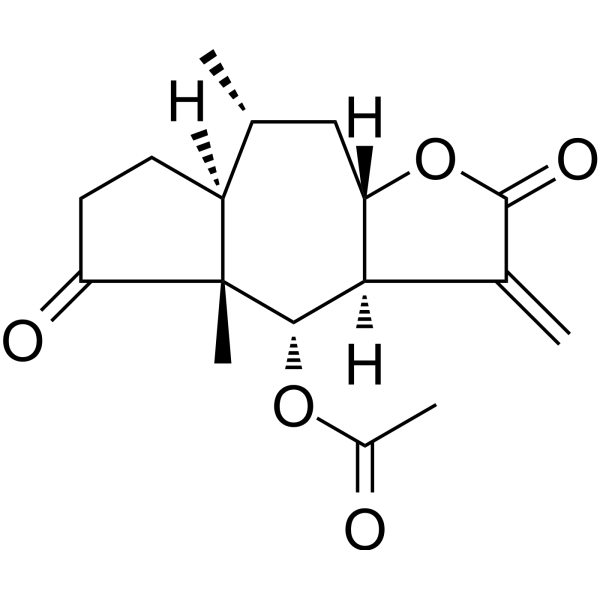
Ergolide is an orally active dual inhibitor targeting NF-κB/p65 and NLRP3. Ergolide blocks the NF-κB signaling pathway and the nuclear translocation of p65, and irreversibly binds to the NACHT domain of NLRP3 to inhibit inflammasome assembly. Ergolide significantly reduces the production of inflammatory mediators (e.g., NO, PGE2) and cytokines, induces cancer cell apoptosis, autophagy and ROS generation. Ergolide also enhances the anti-tumor effect of vincristine. Ergolide alleviates acute lung injury via an NLRP3-dependent mechanism, and effectively improves the survival rate and behavioral function of septic mice and inflammatory zebrafish models. Ergolide is used in the research of metastatic uveal melanoma, neurodegenerative diseases (such as Alzheimer's disease, Parkinson's disease), sepsis and acute lymphoblastic leukemia .
loading...
    loading...
2
2 Cited Publications
Cat. No.: HY-144896
CAS No.: 2368903-18-6
Purity:  98.41%
Target:  

SWI/SNF Complex

Research Areas:  

Cancer

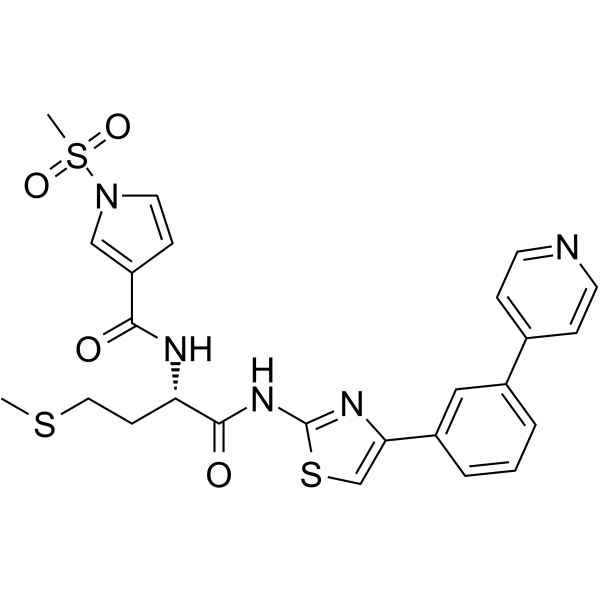
FHT-1015 is a selective SMARCA4 (IC50 = 4 nM) and SMARCA2 (IC50 = 5 nM) (also known as BRG1 and BRM) inhibitor. FH-1015 is an allosteric inhibitor that causes conformation change in the BRG1/BRM protein upon interaction with an allosteric site, inhibiting ATPase activity. FH-1015 interferes with tumor cell growth and migration. FH-1015 can be studied in research for uveal melanoma and hematologic cancer .
loading...
    loading...
Cat. No.: HY-17357
CAS No.: 78281-72-8
Synonyms: AHR 9434; AL 6515
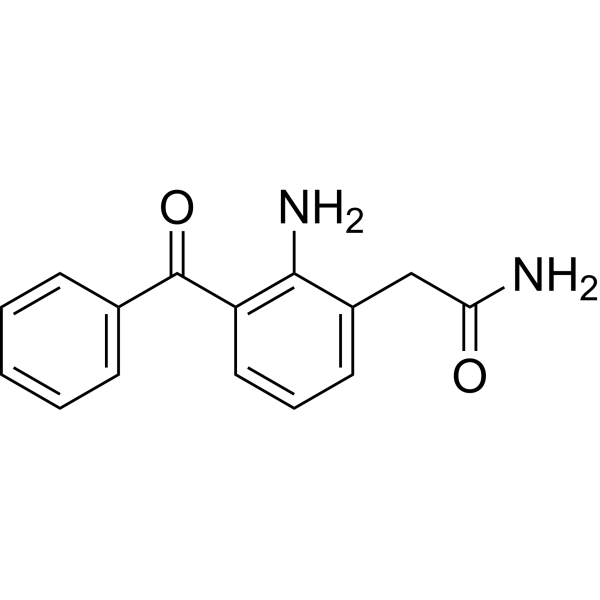
Nepafenac (AHR 9434; AL 6515), a nonsteroidal anti-inflammatory agent, is a topically administered COX-2 inhibitor with an IC50 of 0.12 μM. Nepafenac exhibits only weak COX-1 inhibitory activity (IC50 = 64.3 μM). Nepafenac possesses unique prodrug properties, which enable it to rapidly convert into the active metabolite Amfenac (HY-17479) in the ocular tissues, thereby achieving high concentrations in the retina and choroid. Nepafenac reduces inflammation and pain by inhibiting the activity of cyclooxygenase (COX) enzymes and thereby decreasing the production of prostaglandin PGE. Nepafenac can delay the metastasis of uveal melanoma (UM) in rabbit eyes. Nepafenac is mainly used for pain management and inflammation control after ophthalmic surgeries .
loading...
    loading...
Cat. No.: HY-P11288
CAS No.: 2871680-36-1
Research Areas:  

Cancer

ANT308 is a vasoactive intestinal polypeptide (VIP receptor) antagonist. ANT308 significantly enhances the activation and proliferation of T cells. ANT308 inhibits the migration and metastasis, induces apoptosis of melanoma tumor cells by inhibiting VIP-VPAC2 signaling and reducing the expression of MCAM and N-cadherin. ANT308 can be used for the studies of acute myeloid leukemia (AML) and uveal melanoma (UVM) .
loading...
    loading...
Cat. No.: HY-P11288A
Research Areas:  

Cancer

ANT308 TFA is a vasoactive intestinal polypeptide (VIP receptor) antagonist. ANT308 TFA significantly enhances the activation and proliferation of T cells. ANT308 TFA inhibits the migration and metastasis, induces apoptosis of melanoma tumor cells by inhibiting VIP-VPAC2 signaling and reducing the expression of MCAM and N-cadherin. ANT308 TFA can be used for the study of acute myeloid leukemia (AML) and uveal melanoma (UVM) .
loading...
    loading...
Cat. No.: HY-17357S
CAS No.: 1246814-53-8
Synonyms: AHR-9434-d5; AL-6515-d5
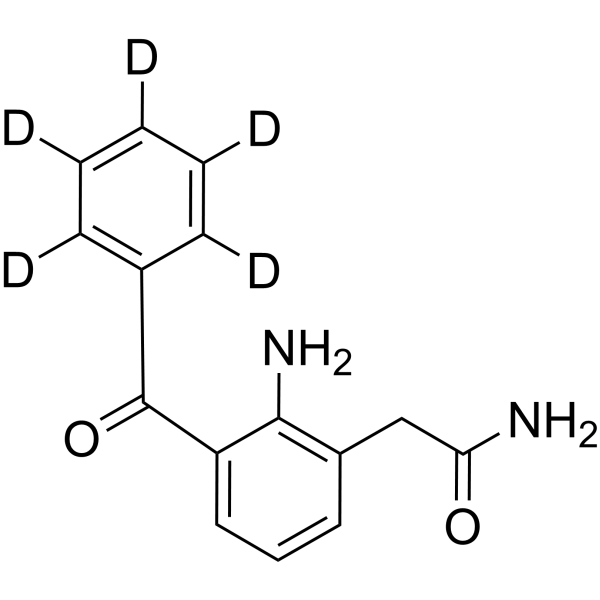
Nepafenac-d5 (AHR-9434-d5; AL-6515-d5) is the deuterium labeled Nepafenac (HY-17357). Nepafenac, a nonsteroidal anti-inflammatory agent, is a topically administered COX-2 inhibitor with an IC50 of 0.12 μM. Nepafenac exhibits only weak COX-1 inhibitory activity (IC50 = 64.3 μM). Nepafenac possesses unique prodrug properties, which enable it to rapidly convert into the active metabolite Amfenac (HY-17479) in the ocular tissues, thereby achieving high concentrations in the retina and choroid. Nepafenac reduces inflammation and pain by inhibiting the activity of cyclooxygenase (COX) enzymes and thereby decreasing the production of prostaglandin PGE. Nepafenac can delay the metastasis of uveal melanoma (UM) in rabbit eyes. Nepafenac is mainly used for pain management and inflammation control after ophthalmic surgeries.
loading...
    loading...
Cat. No.: HY-123009
CAS No.: 927823-01-6
KCN1 is a p300/HIF-1α interaction inhibitor with a Kd value of 345 nM for p300-CH1. KCN1 binds to the CH1 domain of p300, blocks the assembly of the p300/HIF-1α complex, and disrupts the HIF-1α-p300/CBP interaction. KCN1 inhibits cancer cell growth, induces cancer cell cycle arrest and apoptosis. KCN1 inhibits β-galactosidase activity and downregulates the expression of VEGF, Glut1, CA9 and CAIX. KCN1 exerts anticancer activity in mouse tumor xenograft models. KCN1 can be used in research related to malignant glioma, pancreatic cancer and metastatic uveal melanoma .
loading...
    loading...
Cat. No.: HY-115722
CAS No.: 2757301-90-7
Target:  

Drug Metabolite

Research Areas:  

Cancer

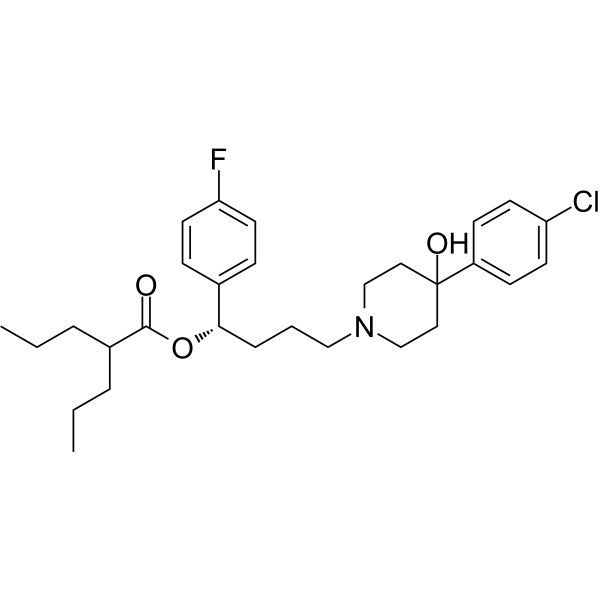
(S)-(-)-MRJF22 is haloperidol metabolite II valproate ester. (S)-(-)-MRJF22 exhibits the high antimigratory effects in endothelial and tumor cells. (S)-(-)-MRJF22 is a potential multifunctional agent against uveal melanoma .
loading...
    loading...
Cat. No.: HY-124875
CAS No.: 1342890-83-8
Synonyms: HIF inhibitor 64B
Research Areas:  

Neurological Disease

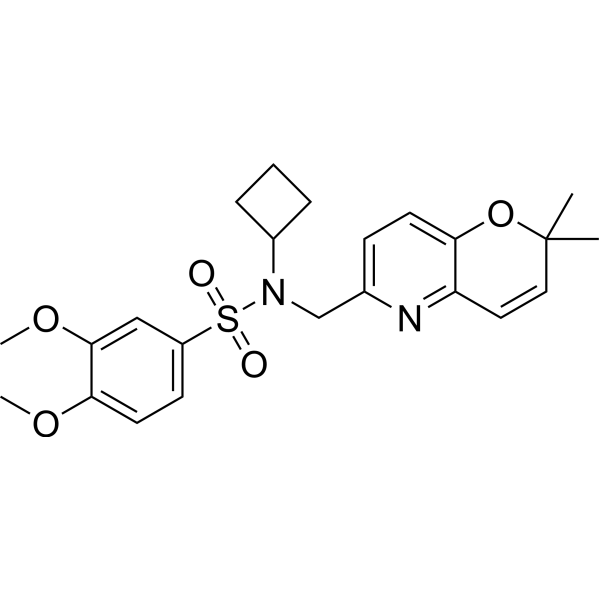
Arylsulfonamide 64B (HIF inhibitor 64B) is an inhibitor of the hypoxia-induced factor (HIF). Arylsulfonamide 64B inhibits hypoxia/HIF-induced expression of c-Met and CXCR4 and reduces primary tumor growth and metastasis of uveal melanoma mouse model .
loading...
    loading...
Cat. No.: HY-17357R
CAS No.: 78281-72-8
Synonyms: AHR 9434 (Standard); AL 6515 (Standard)
Nepafenac (AHR 9434; AL 6515) (Standard) is the analytical standard of Nepafenac (HY-17357). This product is intended for research and analytical applications. Nepafenac, a nonsteroidal anti-inflammatory agent, is a topically administered COX-2 inhibitor with an IC50 of 0.12 μM. Nepafenac exhibits only weak COX-1 inhibitory activity (IC50 = 64.3 μM). Nepafenac possesses unique prodrug properties, which enable it to rapidly convert into the active metabolite Amfenac (HY-17479) in the ocular tissues, thereby achieving high concentrations in the retina and choroid. Nepafenac reduces inflammation and pain by inhibiting the activity of cyclooxygenase (COX) enzymes and thereby decreasing the production of prostaglandin PGE. Nepafenac can delay the metastasis of uveal melanoma (UM) in rabbit eyes. Nepafenac is mainly used for pain management and inflammation control after ophthalmic surgeries.
loading...
    loading...
Cat. No.: HY-182405
CAS No.: 2625582-70-7
Target:  

Apoptosis YAP ERK

Research Areas:  

Cancer

GQ127 is an orally active Gαq/11 inhibitor with an IC50 of 22.6 μM. GQ127 binds directly to Gαq/11 protein and inhibits its activity. GQ127 induces Apoptosis, suppresses viability, migration and invasion of uveal melanoma cells. GQ127 increases the phosphorylation level of YAP and decreases the phosphorylation level of ERK. GQ127 inhibits the growth of uveal melanoma xenografts in mouse models. GQ127 can be used for research related to uveal melanoma .
loading...
    loading...
Cat. No.: HY-P11902
Research Areas:  

Cancer

IRS1 is an integrin-targeted, ROS-responsive self-assembling peptide prodrug molecule with selective anti-cancer activity against integrin-overexpressing tumor cells. IRS1 contains an RGD motif for integrin binding, can covalently bind to DR4/DR5, and promotes DR4/DR5 aggregation. After oxidation by ROS, IRS1 undergoes a morphological transition from nanoparticles to nanofibers, exposes the pharmacophore of Chlorambucil (HY-13593), disrupts cell membrane integrity, activates the extrinsic apoptosis pathway, and can penetrate and inhibit the three-dimensional uveal melanoma spheroid model. IRS1 can be used for the research of uveal melanoma .
loading...
    loading...
Cat. No.: HY-179165
Target:  

P2Y Receptor Apoptosis YAP

Research Areas:  

Cancer

Gαq/11 protein-IN-2 (Compound 9g) is a Gαq/11 protein inhibitor, with an IC50 of 11.3 μM. Gαq/11 protein-IN-2 induces Apoptosis, increases p-YAP. Gαq/11 protein-IN-2 has anticancer activity against uveal melanoma .
loading...
    loading...
Cat. No.: HY-P992200
Anti-CD146 Antibody (AA98) is an antibody targeting CD146 and an angiogenesis inhibitor. Anti-CD146 Antibody (AA98) blocks the dimerization of CD146 as well as its downstream PI3K/AKT, p38 MAPK and NF-κB signaling pathways; it inhibits the expression of MMP9 and ICAM1, epithelial-mesenchymal transition (EMT), and the proliferation, migration and tube formation of endothelial cells. Anti-CD146 Antibody (AA98) enhances radiation-induced cancer cell apoptosis and survival inhibition, reduces tumor microvessel density, and suppresses tumor growth, invasion and vasculogenic mimicry. Anti-CD146 Antibody (AA98) can be used in research related to cervical cancer, liver cancer, malignant phyllodes tumor of the breast, uveal melanoma, leiomyosarcoma, pancreatic cancer, other tumors and angiogenesis .
loading...
    loading...
  • 1

