



β-Rubromycin
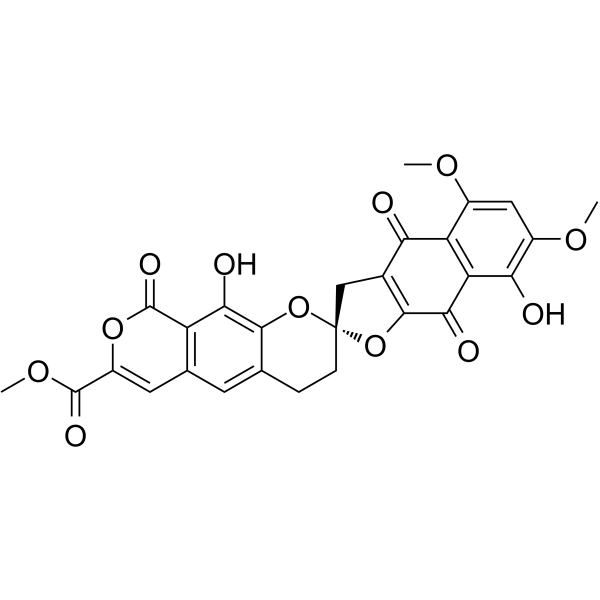
β-Rubromycin, a quinone antibacterial agent, is a selective HIV-1 reverse transcriptase inhibitor with a Ki of 0.27 μM. β-Rubromycin is a potent telomerase inhibitor with an IC50 of 3 μM. β-Rubromycin inhibits the proliferation of both K-562 and HeLa cells with IC50 values of 19.5 µM and 22.7 µM, respectively.
Nur für Forschungszwecke. Wir verkaufen nicht an Patienten.
- CAS. Nr.: 27267-70-5
- Formel: C27H20O12
- Molecular Weight:536.44
-
Speicherung:Powder -20°C, 3 years ; In solvent -80°C, 6 months , -20°C, 1 month

To place orders, for customer services and technical support, please contact: MedChemExpress USA
Tel: 609-228-6898 E-mail: [email protected] [email protected]


-
 Biologische Aktivität
-
Chemical Information
-
Lösungsmittel & Löslichkeit
- Protokoll
- Reinheit & Dokumentation
- Verweise
-
 Help & FAQs


-
HY-10570S
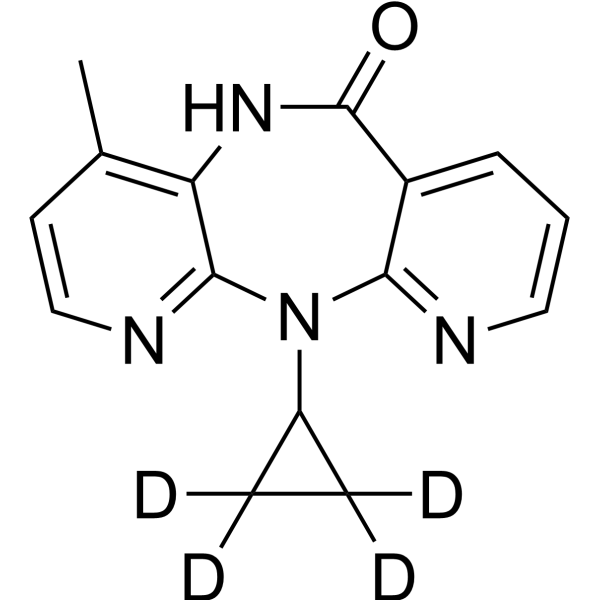
Nevirapine-d4Deuterium Labeled Nevirapine -
HY-116213
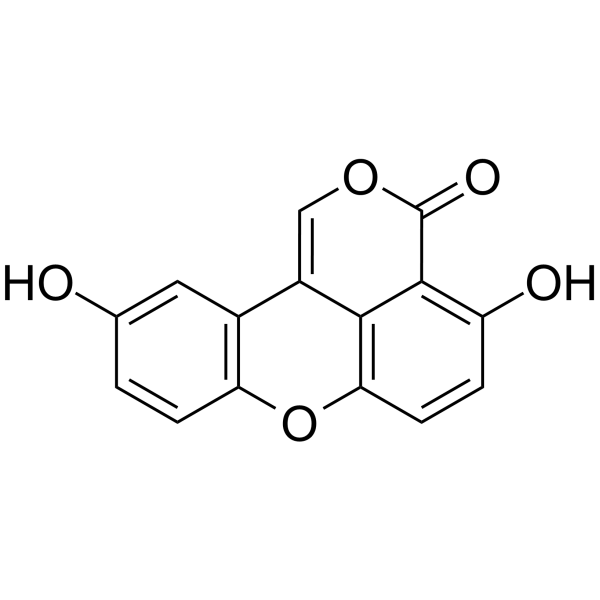
Sparstolonin BTLR2/TLR4 Antagonist -

HY-124493
AluminonComplexometric Titration Indicator -
HY-14266
DapivirineNRTI -
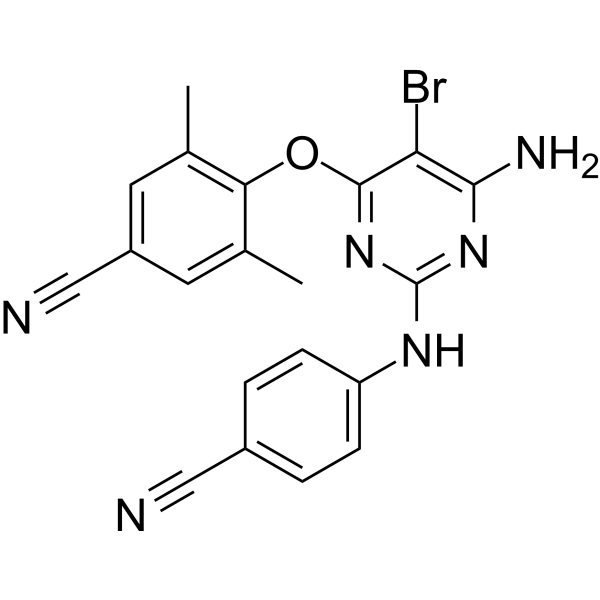
HY-90005
Etravirine -
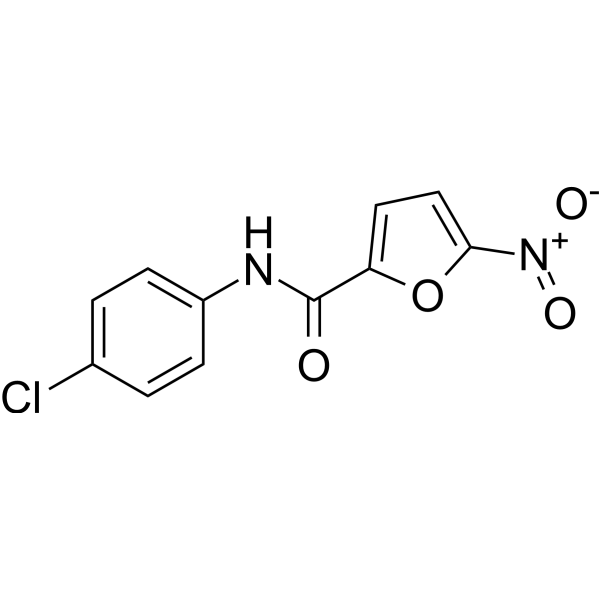
HY-147328
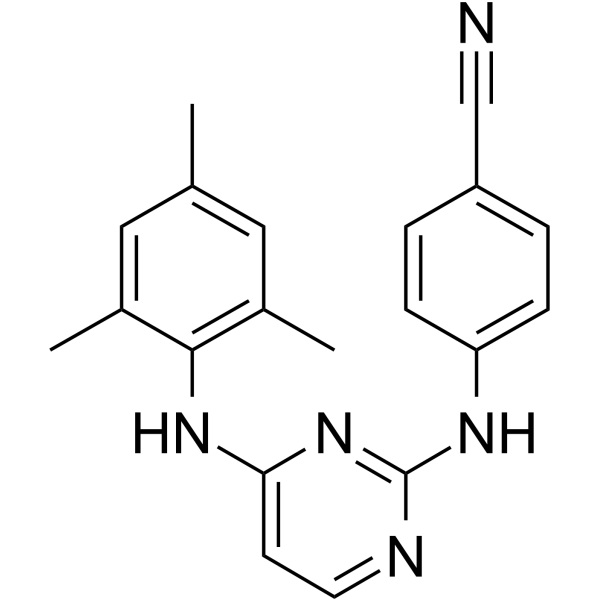
LCS3GSR/TXNRD1 Inhibitor -
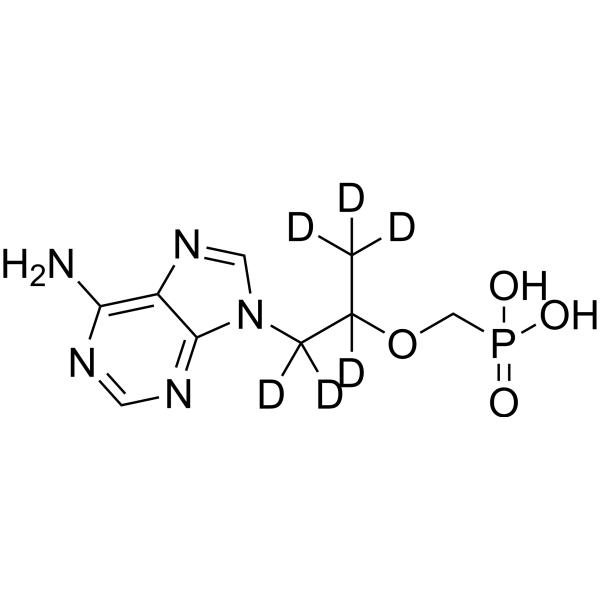
HY-113904S
(Rac)-Tenofovir-d6Stable Isotope -
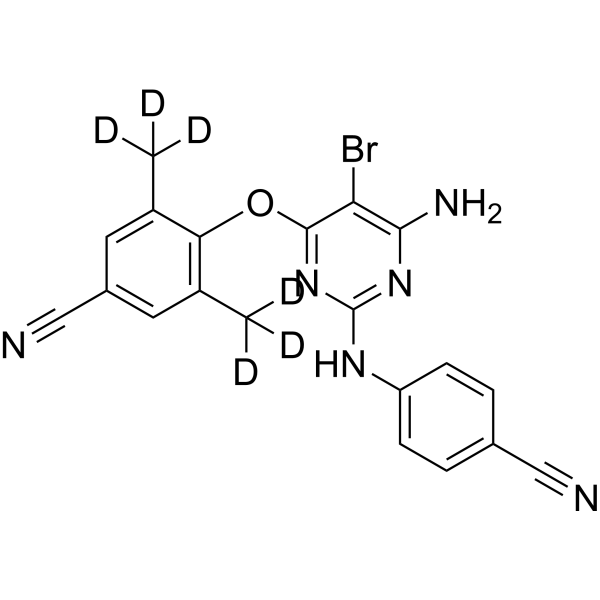
HY-132508S
Etravirine-d8Stable Isotope -
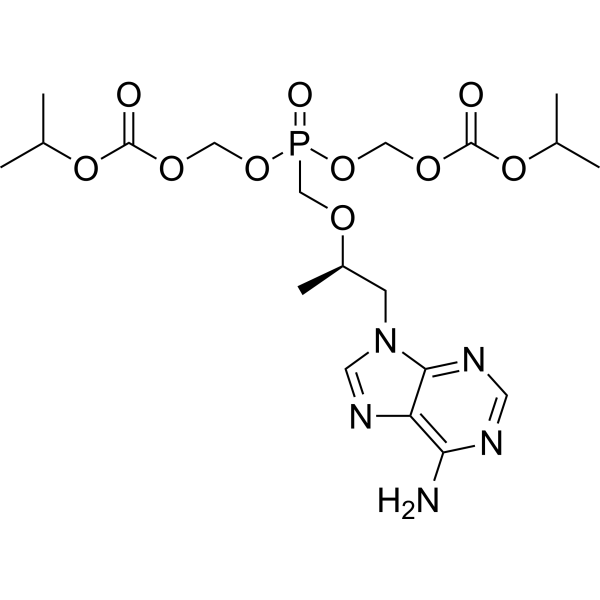
HY-13782A
Tenofovir DisoproxilReverse Transcriptase Inhibitor -
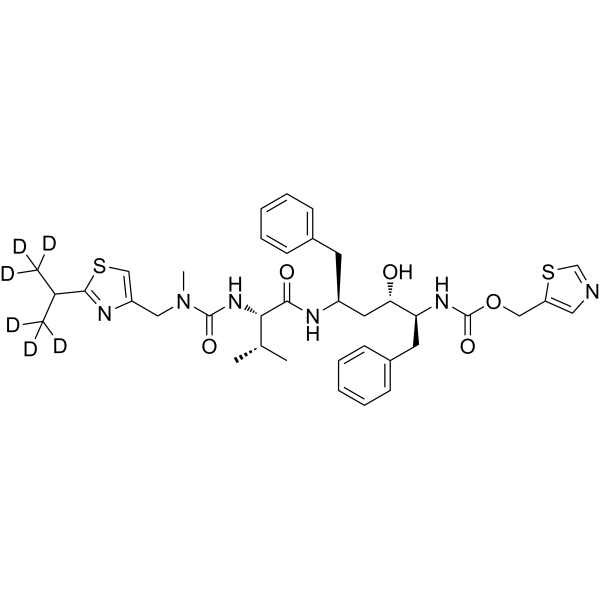
HY-90001S3
rel-Ritonavir-d6Stable Isotope -
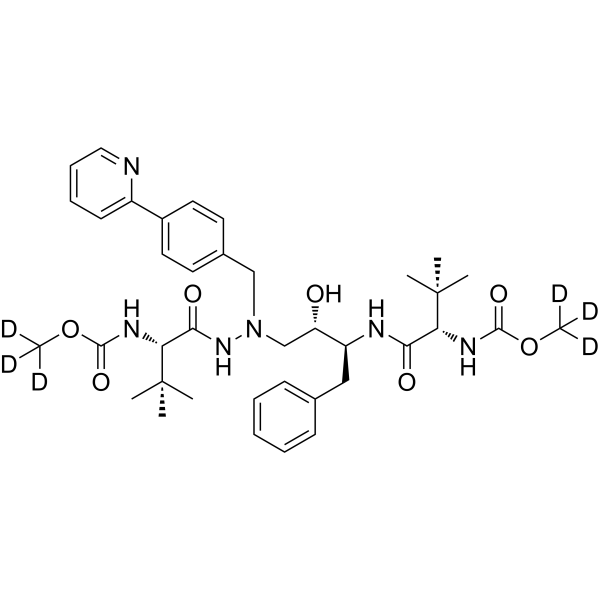
HY-17367S4
Atazanavir-d6Stable Isotope -
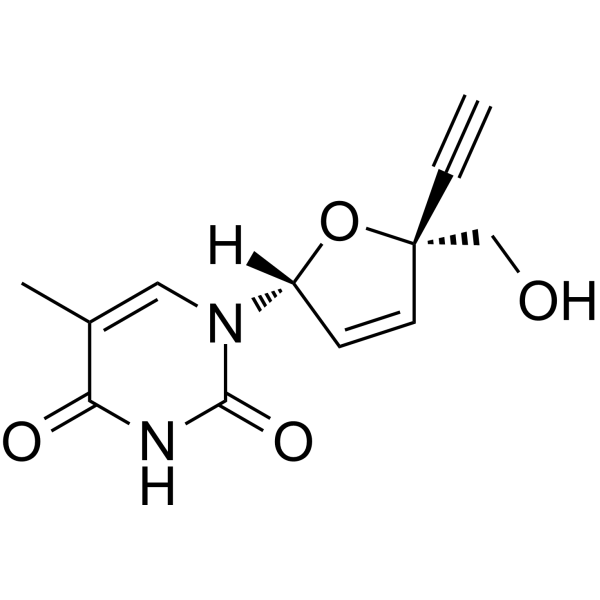
HY-16776
CensavudineHIV Inhibitor


Biologische Aktivität
Beschreibung
IC50 & Target
|
HIV-1 |
Cellular Effect
|
Cell Line

|
Type | Value | Description | References |
|---|---|---|---|---|
| A549 | EC50 |
>100 μM
Compound: 7
|
Antiproliferative activity against human A549 cells assessed as reduction in cell viability after 72 hrs by alamar blue assay
Antiproliferative activity against human A549 cells assessed as reduction in cell viability after 72 hrs by alamar blue assay
|
[PMID: 31833370] |
| HeLa | IC50 |
1.32 μM
Compound: 1, beta-R
|
Inhibition of telomerase in human HeLa cells using 5'-AAT CCG TCG AGC AGA GTT-3' as substrate incubated for 15 mins prior to extension reaction by telomeric repeat amplification protocol
Inhibition of telomerase in human HeLa cells using 5'-AAT CCG TCG AGC AGA GTT-3' as substrate incubated for 15 mins prior to extension reaction by telomeric repeat amplification protocol
|
[PMID: 22413845] |
| HeLa | IC50 |
1.53 μM
Compound: 1, beta-R
|
Inhibition of telomerase in human HeLa cells using 5'-AAT CCG TCG AGC AGA GTT-3' as substrate incubated for 15 mins prior to extension reaction followed by compound washout by spin-telomeric repeat amplification protocol
Inhibition of telomerase in human HeLa cells using 5'-AAT CCG TCG AGC AGA GTT-3' as substrate incubated for 15 mins prior to extension reaction followed by compound washout by spin-telomeric repeat amplification protocol
|
[PMID: 22413845] |
| K562 | IC50 |
3.06 μM
Compound: 1, beta-R
|
Inhibition of telomerase in human K562 cells by modified telomeric repeat amplification protocol
Inhibition of telomerase in human K562 cells by modified telomeric repeat amplification protocol
|
[PMID: 22413845] |
| PC-3 | EC50 |
>100 μM
Compound: 7
|
Antiproliferative activity against human PC3 cells assessed as reduction in cell viability after 72 hrs by alamar blue assay
Antiproliferative activity against human PC3 cells assessed as reduction in cell viability after 72 hrs by alamar blue assay
|
[PMID: 31833370] |
In Vitro
β-Rubromycin inhibits equipotently HIV-1 RT and avian myeloblastosis virus RT, in a concentration-dependent manner, and is significantly weaker as an inhibitor of calf thymus DNA polymerase α[1].
A kinetic study of the inhibition by β-Rubromycin revealed a competitive interaction with respect to the telomerase substrate primer, with a Ki of 0.74 μM, whereas a mixed type inhibition was observed with respect to the nucleotide substrate[2].
MedChemExpress (MCE) has not independently confirmed the accuracy of these methods. They are for reference only.


Chemical Information
-
CAS. Nr. 27267-70-5
-
Appearance Solid
-
Molecular Weight 536.44
-
Formel C27H20O12
-
Color Brown to reddish brown
-
SMILES
O=C(C(O1)=CC(C=C(CC[C@@]2(OC(C3=O)=C(C(C4=C3C(O)=C(OC)C=C4OC)=O)C2)O5)C5=C6O)=C6C1=O)OC
-
Versand
Room temperature in continental US; may vary elsewhere.
-
Speicherung
Powder -20°C 3 years In solvent -80°C 6 months -20°C 1 month


Lösungsmittel & Löslichkeit
In Vitro:
DMSO : 1 mg/mL (1.86 mM; Need ultrasonic and warming; Hygroscopic DMSO has a significant impact on the solubility of product, please use newly opened DMSO)
Please refer to the solubility information to select the appropriate solvent. Once prepared, please aliquot and store the solution to prevent product inactivation from repeated freeze-thaw cycles.
Storage method and period of stock solution: -80°C, 6 months; -20°C, 1 month. When stored at -80°C, please use it within 6 months. When stored at -20°C, please use it within 1 month.
Please refer to the solubility information to select the appropriate solvent. Once prepared, please aliquot and store the solution to prevent product inactivation from repeated freeze-thaw cycles.
Storage method and period of stock solution: -80°C, 6 months; -20°C, 1 month. When stored at -80°C, please use it within 6 months. When stored at -20°C, please use it within 1 month.
Konzentration (Stammlösung) × Volumen (Stammlösung) = Konzentration (Ziellösung) × Volumen (Ziellösung)


Reinheit & Dokumentation
-
Data Sheet (274 KB)
-
SDS (252 KB)
- English - EN (252 KB)
- Français - FR (252 KB)
- Deutsch - DE (252 KB)
- Norwegian - NO (252 KB)
- Español - ES (252 KB)
- Swedish - SV (252 KB)
- Italian - IT (252 KB)
- Korean - KR (252 KB)
- Portuguese - PT (252 KB)
-
Handling Instructions (2659 KB)
Verweise
[1]. Goldman ME, et al. Inhibition of human immunodeficiency virus-1 reverse transcriptase activity by rubromycins: competitive interaction at the template.primer site. Mol Pharmacol. 1990;38(1):20-25. [Content Brief]
[2]. Ueno T, et al. Inhibition of human telomerase by rubromycins: implication of spiroketal system of the compounds as an active moiety. Biochemistry. 2000 May 23;39(20):5995-6002. [Content Brief]


Complete Stock Solution Preparation Table
Please refer to the solubility information to select the appropriate solvent. Once prepared, please aliquot and store the solution to prevent product inactivation from repeated freeze-thaw cycles.
Storage method and period of stock solution: -80°C, 6 months; -20°C, 1 month. When stored at -80°C, please use it within 6 months. When stored at -20°C, please use it within 1 month.
| Optional Solvent | Concentration Solvent Mass | 1 mg | 5 mg | 10 mg | 25 mg |
|---|---|---|---|---|---|
| DMSO | 1 mM | 1.8641 mL | 9.3207 mL | 18.6414 mL | 46.6035 mL |


β-Rubromycin Related Classifications
HY-122482 Related Classifications
 Powered by Bioz