



ACP-105
Based on 6 publication(s) in Google Scholar
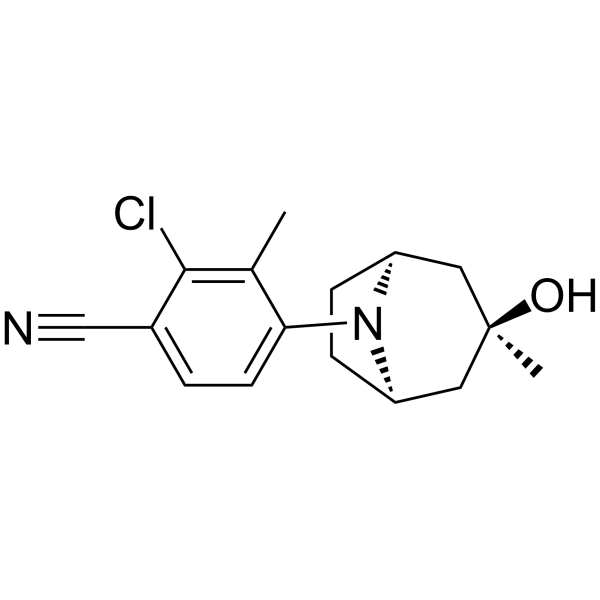
ACP-105 is an orally available, selective amd potent androgen receptor modulator (SARM), with pEC50s of 9.0 and 9.3 for AR wild type and T877A mutant, respectively.
For research use only. We do not sell to patients.
- Purity : 98.92%
- CAS No.: 899821-23-9
- Formula: C16H19ClN2O
- Molecular Weight:290.79
-
Storage:Powder -20°C, 3 years , 4°C, 2 years ; In solvent -80°C, 2 years , -20°C, 1 year

To place orders, for customer services and technical support, please contact: MedChemExpress USA
Tel: 609-228-6898 E-mail: [email protected] [email protected]


-
 Biological Activity
-
Chemical Information
-
Solvent & Solubility
- Protocols
- Purity & Documentation
- References
-
 Help & FAQs


-
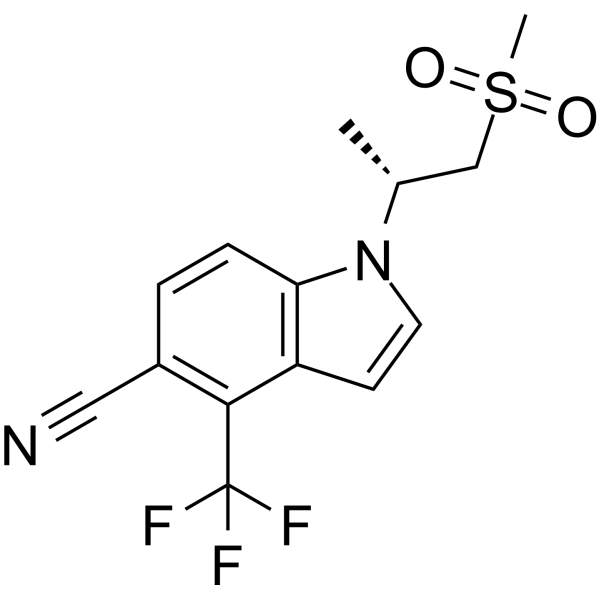
HY-100186
GSK-2881078Androgen Receptor Modulator -
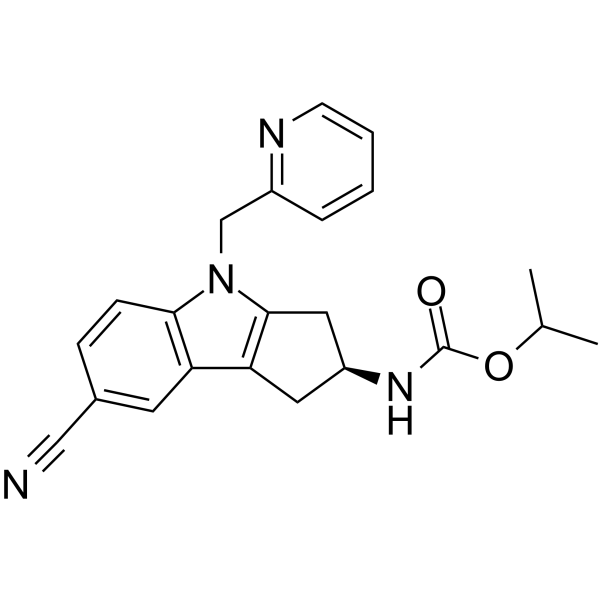
HY-114530
LY2452473Androgen Receptor Modulator -
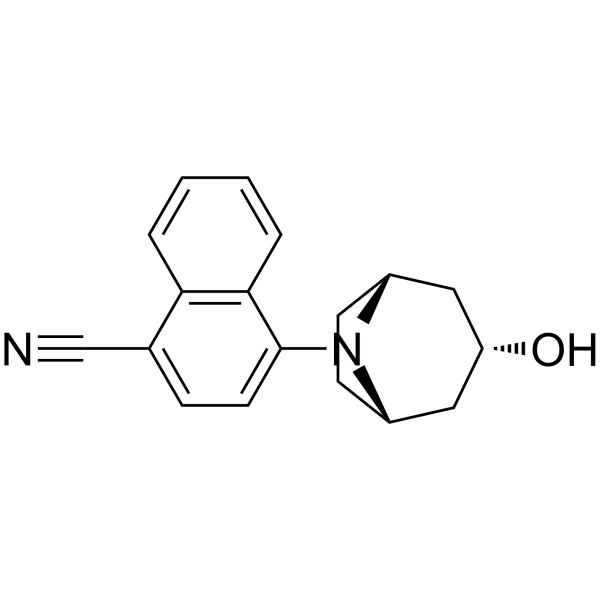
HY-122025
AC-262536Androgen Receptor Agonist -
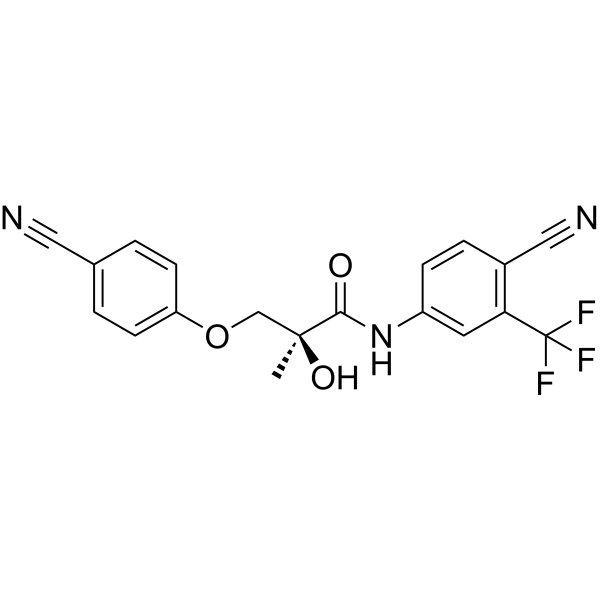
HY-13273
OstarineSARMs -
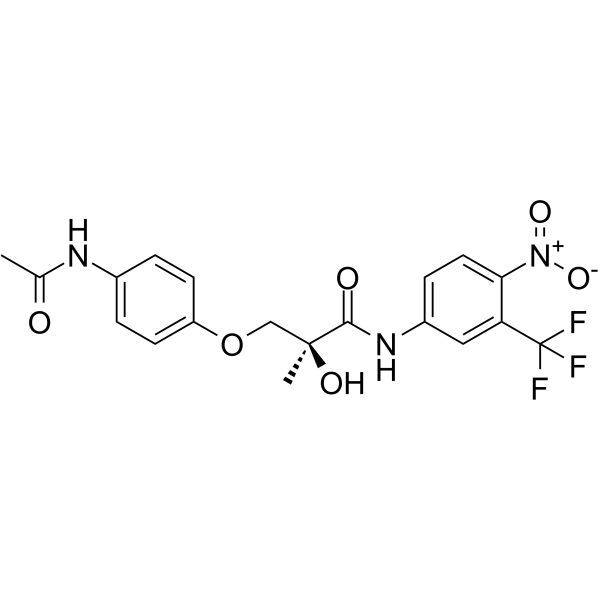
HY-12023
GTx-007Androgen Receptor SARM -
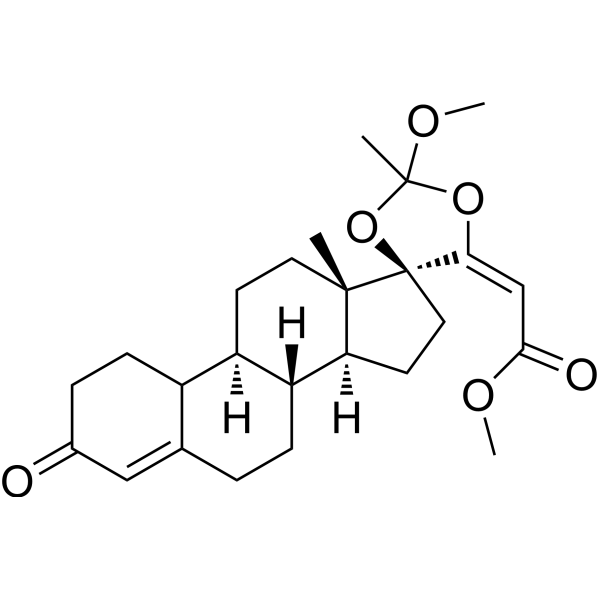
HY-107480
YK11Androgen Receptor Partial Agonist -
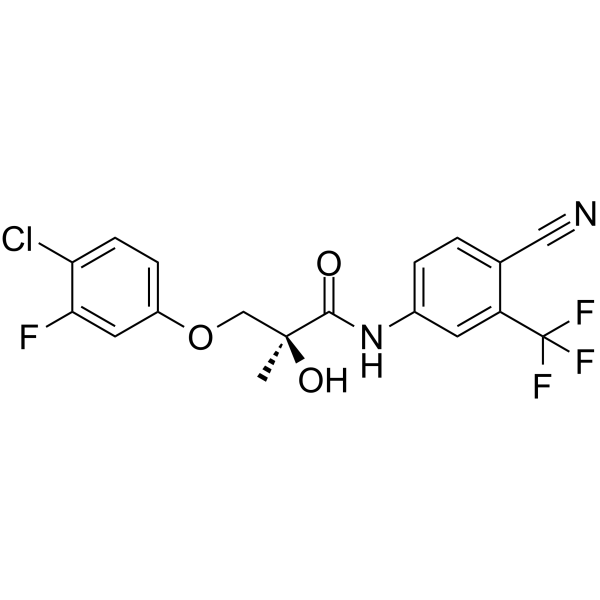
HY-112257
S-23Selective Androgen Receptor Modulator -
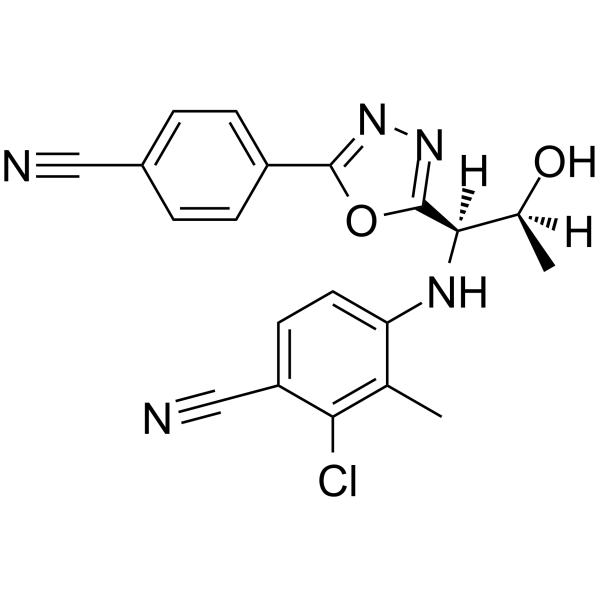
HY-14383
VosilasarmAndrogen Receptor Modulator -
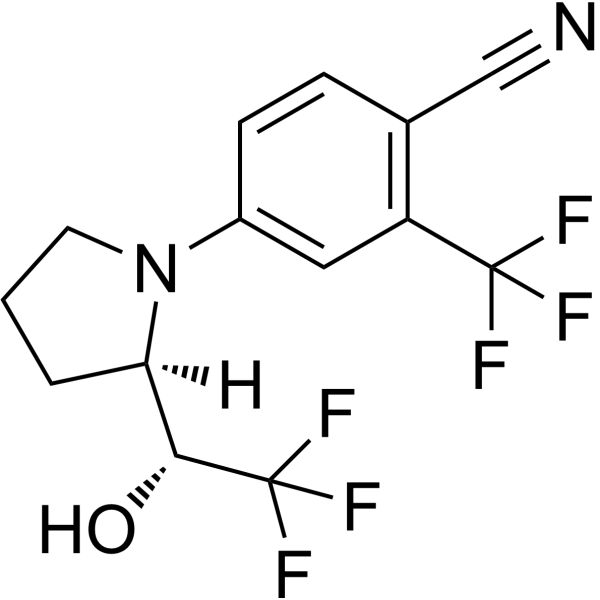
HY-13981
LigandrolAndrogen Receptor Agonist -
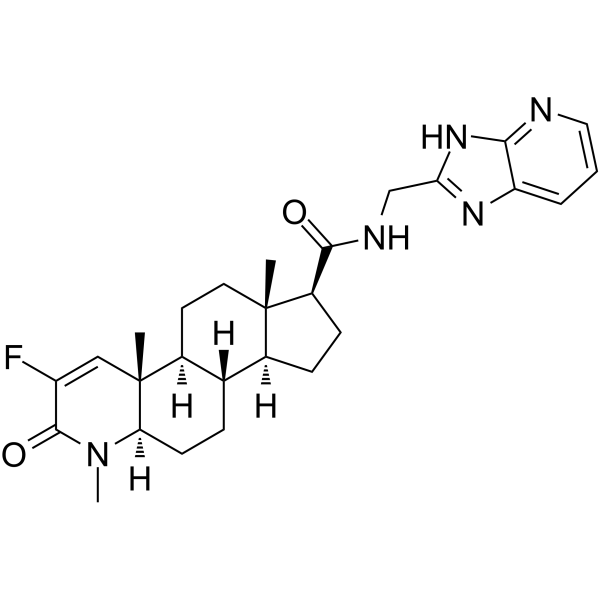
HY-11027
MK-0773Androgen Receptor Inhibitor -
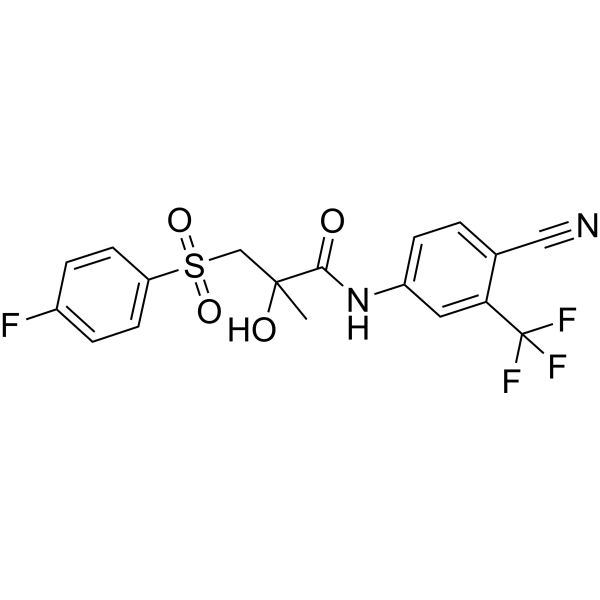
HY-14249
BicalutamideAndrogen Receptor Inhibitor -
HY-10561
RU 58841Androgen Receptor Antagonist
Publications Citing Use of MedChemExpress (MCE) ACP-105
More- Metabolites. 2021 Feb 1;11(2):85. [Abstract]
- Drug Test Anal. 2022 Feb;14(2):349-370. [Abstract]
- Drug Test Anal. 2021 May;13(5):916-928. [Abstract]
- Drug Test Anal. 2021 Feb;13(2):283-298. [Abstract]
- Food Addit Contam Part A Chem Anal Control Expo Risk Assess. 2026 Feb 26:1-17. [Abstract]
- J Chromatogr B Analyt Technol Biomed Life Sci. 2023 Dec 1:1231:123927. [Abstract]


Biological Activity
Description
IC50 & Target
pEC50: 9.0 (AR wild type), 9.3 (AR T877A mutant)[1].
In Vitro
ACP-105 is an orally available, selective amd potent androgen receptor modulator (SARM), with pEC50s of 9.0 and 9.3 for AR wild type and T877A mutant, respectively. The half-lives of ACP-105 (compound 1) in human hepatocytes is measured and found to be 5.0 h[1].
MedChemExpress (MCE) has not independently confirmed the accuracy of these methods. They are for reference only. Further protocols information, click here.
In Vivo
MedChemExpress (MCE) has not independently confirmed the accuracy of these methods. They are for reference only.


Chemical Information
-
CAS No. 899821-23-9
-
Appearance Solid
-
Molecular Weight 290.79
-
Formula C16H19ClN2O
-
Color Light yellow to yellow
-
SMILES
N#CC1=CC=C(N2[C@@H]3C[C@](O)(C)C[C@H]2CC3)C(C)=C1Cl
-
Shipping
Room temperature in continental US; may vary elsewhere.
-
Storage
Powder -20°C 3 years 4°C 2 years In solvent -80°C 2 years -20°C 1 year


Publications (6)
-
Journal Impact Factor
-
Most Recent
-
Metabolites
Investigation of Equine In Vivo and In Vitro Derived Metabolites of the Selective Androgen Receptor Modulator (SARM) ACP-105 for Improved Doping Control. [Abstract]2021 Feb 1;11(2):85. PMID: 33535528 -
Drug Test Anal
Identification of equine in vitro metabolites of seven non-steroidal selective androgen receptor modulators for doping control purposes. [Abstract]2022 Feb;14(2):349-370. PMID: 34714606 -
Drug Test Anal
An in vitro assay approach to investigate the potential impact of different doping agents on the steroid profile. [Abstract]2021 May;13(5):916-928. PMID: 33283964 -
Drug Test Anal
High-throughput liquid chromatography tandem mass spectrometry assay as initial testing procedure for analysis of total urinary fraction. [Abstract]2021 Feb;13(2):283-298. PMID: 32852861 -
Food Addit Contam Part A Chem Anal Control Expo Risk Assess
Comprehensive IM-MS approach for SARMs detection in urine: building CCS databases to support food safety monitoring. [Abstract]2026 Feb 26:1-17. PMID: 41747154 -
J Chromatogr B Analyt Technol Biomed Life Sci
A multivariate data analysis approach for the investigation of in vitro derived metabolites of ACP-105 in comparison with human in vivo metabolites. [Abstract]2023 Dec 1:1231:123927. PMID: 37972465


Solvent & Solubility
In Vitro:
DMSO : ≥ 103 mg/mL (354.21 mM; Hygroscopic DMSO has a significant impact on the solubility of product, please use newly opened DMSO)
* "≥" means soluble, but saturation unknown.
Please refer to the solubility information to select the appropriate solvent. Once prepared, please aliquot and store the solution to prevent product inactivation from repeated freeze-thaw cycles.
Storage method and period of stock solution: -80°C, 2 years; -20°C, 1 year. When stored at -80°C, please use it within 2 years. When stored at -20°C, please use it within 1 year.
Please refer to the solubility information to select the appropriate solvent. Once prepared, please aliquot and store the solution to prevent product inactivation from repeated freeze-thaw cycles.
Storage method and period of stock solution: -80°C, 2 years; -20°C, 1 year. When stored at -80°C, please use it within 2 years. When stored at -20°C, please use it within 1 year.
Concentration (start) × Volume (start) = Concentration (final) × Volume (final)

Protocols
-
Research Protocol for Endocrine Diseases
Endocrine diseases often arise from disrupted hormone production, hormone signaling, or target-tissue responsiveness; for diabetes-focused endocrine disease models, insulin signaling regulates glucose uptake, hepatic glucose output, lipid metabolism, and β-cell compensation. Type 2 diabetes develops through interacting defects in insulin resistance, β-cell dysfunction, adipose inflammation, hepatic glucose overproduction, altered incretin signaling, and ectopic lipid metabolism. A major unresolved question is whether endocrine dysfunction is driven primarily by target-tissue insulin resistance, intrinsic β-cell failure, immune/inflammatory stress, or combined multi-organ failure that differs by disease stage.


Purity & Documentation
-
Data Sheet (275 KB)
-
SDS (251 KB)
- English - EN (251 KB)
- Français - FR (251 KB)
- Deutsch - DE (251 KB)
- Norwegian - NO (251 KB)
- Español - ES (251 KB)
- Swedish - SV (251 KB)
- Italian - IT (251 KB)
- Korean - KR (251 KB)
- Portuguese - PT (251 KB)
-
Handling Instructions (2659 KB)
References
[1]. Schlienger N, et al. Synthesis, structure-activity relationships, and characterization of novel nonsteroidal and selective androgen receptor modulators. J Med Chem. 2009 Nov 26;52(22):7186-91. [Content Brief]
[2]. Dayger C, et al. Effects of the SARM ACP-105 on rotorod performance and cued fear conditioning in sham-irradiated and irradiated female mice. Brain Res. 2011 Mar 24;1381:134-40. [Content Brief]


Complete Stock Solution Preparation Table
Please refer to the solubility information to select the appropriate solvent. Once prepared, please aliquot and store the solution to prevent product inactivation from repeated freeze-thaw cycles.
Storage method and period of stock solution: -80°C, 2 years; -20°C, 1 year. When stored at -80°C, please use it within 2 years. When stored at -20°C, please use it within 1 year.
| Optional Solvent | Concentration Solvent Mass | 1 mg | 5 mg | 10 mg | 25 mg |
|---|---|---|---|---|---|
| DMSO | 1 mM | 3.4389 mL | 17.1945 mL | 34.3891 mL | 85.9727 mL |
| 5 mM | 0.6878 mL | 3.4389 mL | 6.8778 mL | 17.1945 mL | |
| 10 mM | 0.3439 mL | 1.7195 mL | 3.4389 mL | 8.5973 mL | |
| 15 mM | 0.2293 mL | 1.1463 mL | 2.2926 mL | 5.7315 mL | |
| 20 mM | 0.1719 mL | 0.8597 mL | 1.7195 mL | 4.2986 mL | |
| 25 mM | 0.1376 mL | 0.6878 mL | 1.3756 mL | 3.4389 mL | |
| 30 mM | 0.1146 mL | 0.5732 mL | 1.1463 mL | 2.8658 mL | |
| 40 mM | 0.0860 mL | 0.4299 mL | 0.8597 mL | 2.1493 mL | |
| 50 mM | 0.0688 mL | 0.3439 mL | 0.6878 mL | 1.7195 mL | |
| 60 mM | 0.0573 mL | 0.2866 mL | 0.5732 mL | 1.4329 mL | |
| 80 mM | 0.0430 mL | 0.2149 mL | 0.4299 mL | 1.0747 mL | |
| 100 mM | 0.0344 mL | 0.1719 mL | 0.3439 mL | 0.8597 mL |


ACP-105 Related Classifications
HY-112256 Related Classifications
 Powered by Bioz