



AL 082D06
Based on 4 publication(s) in Google Scholar
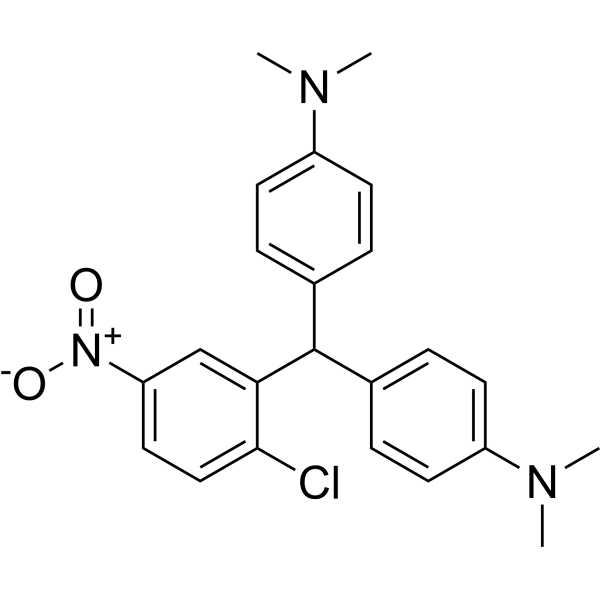
AL 082D06 is a selective, nonsteroidal glucocorticoid receptor (GR) antagonist with Ki of 210 nM.
For research use only. We do not sell to patients.
- Purity : 98.92%
- CAS No.: 256925-03-8
- Formula: C23H24ClN3O2
- Molecular Weight:409.91
-
Storage:Powder -20°C, 3 years , 4°C, 2 years ; In solvent -80°C, 2 years , -20°C, 1 year

To place orders, for customer services and technical support, please contact: MedChemExpress USA
Tel: 609-228-6898 E-mail: [email protected] [email protected]


-
 Biological Activity
-
Chemical Information
-
Solvent & Solubility
- Protocols
- Purity & Documentation
- References
-
 Help & FAQs


-
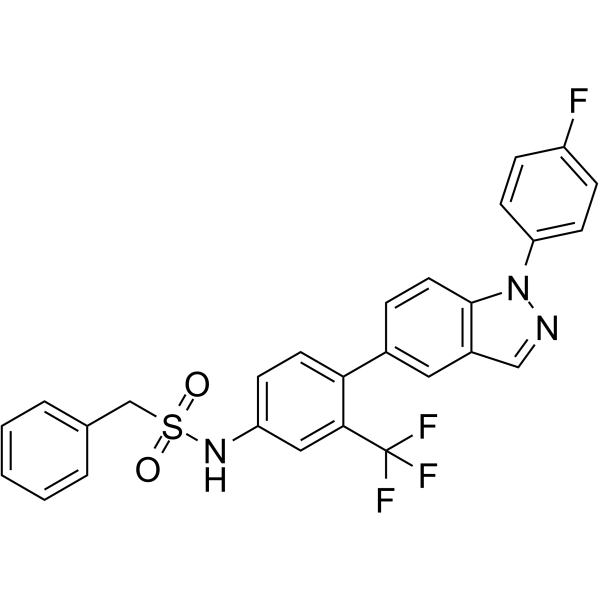
HY-103548
GSK9027GR Agonist -
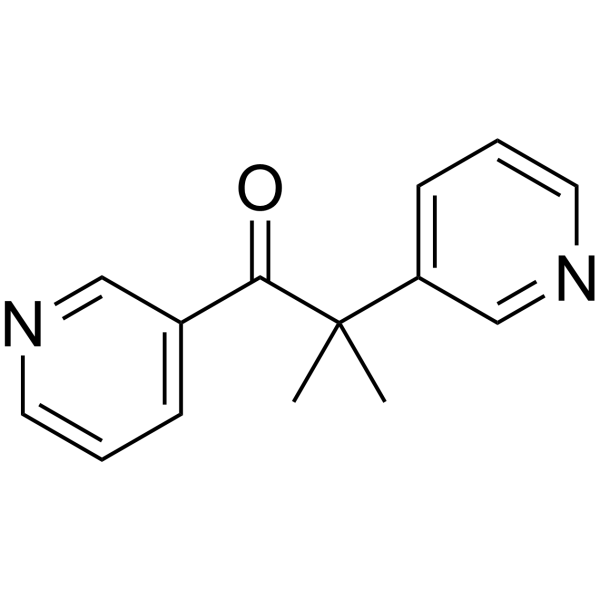
HY-B1232
Metyrapone11β-hydroxylase Inhibitor -
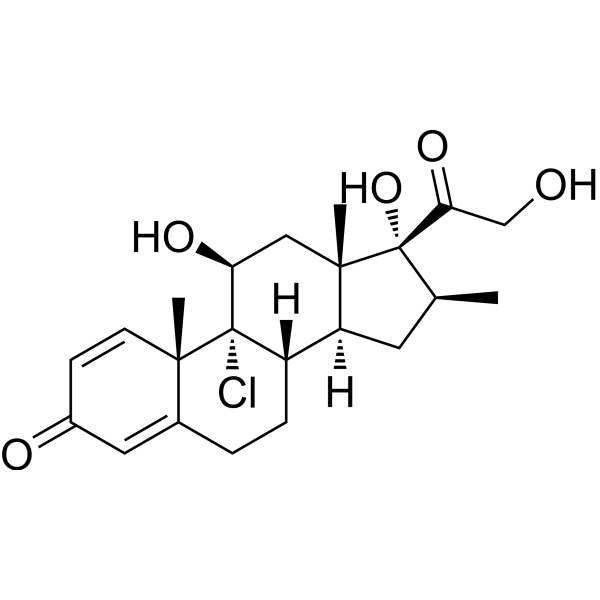
HY-B1540
BeclometasoneGlucocorticoid Receptor Agonist -
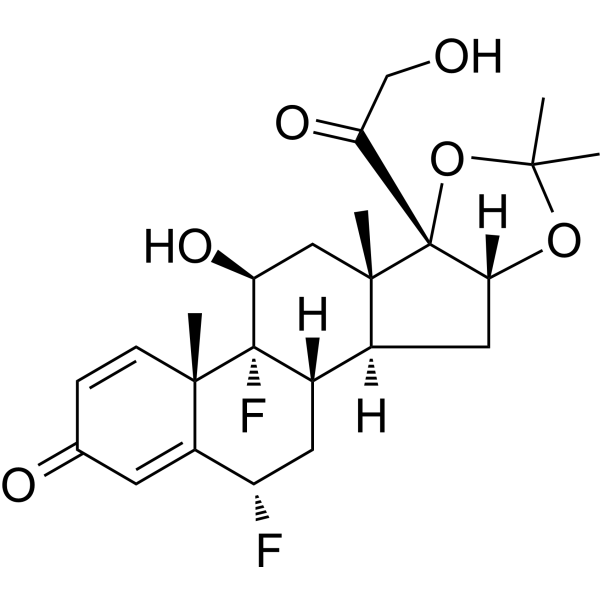
HY-B0415
Fluocinolone (Acetonide)Glucocorticoid Receptor Agonist -
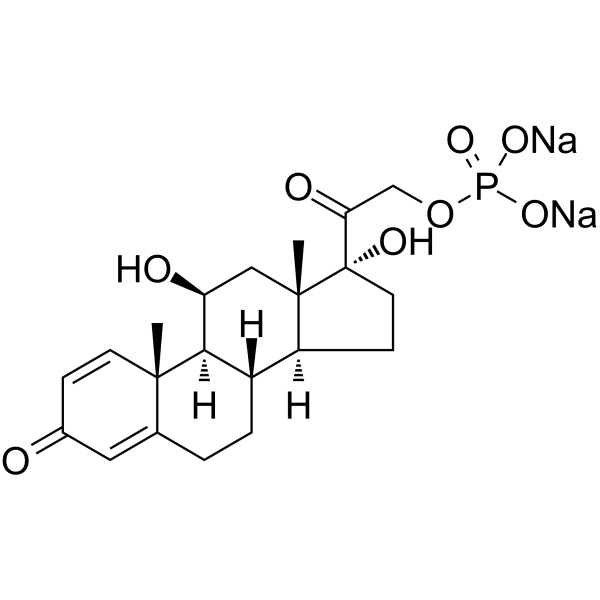
HY-B0645
Prednisolone disodium phosphateSynthetic Glucocorticoid -
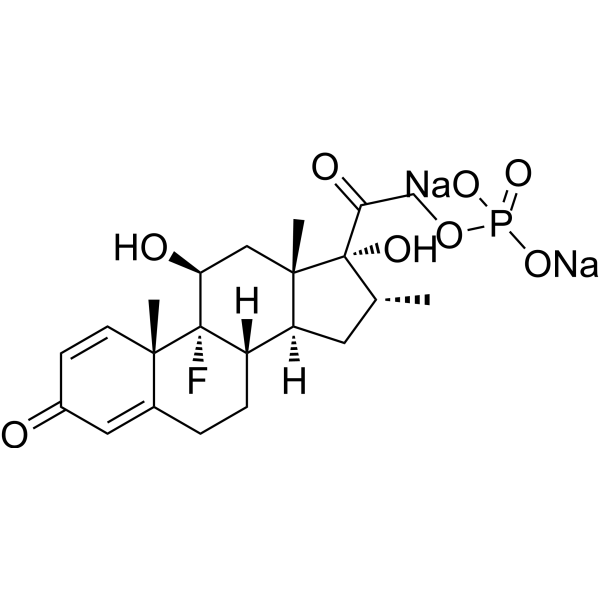
HY-B1829A
Dexamethasone phosphate disodiumDexamethasone Prodrug -
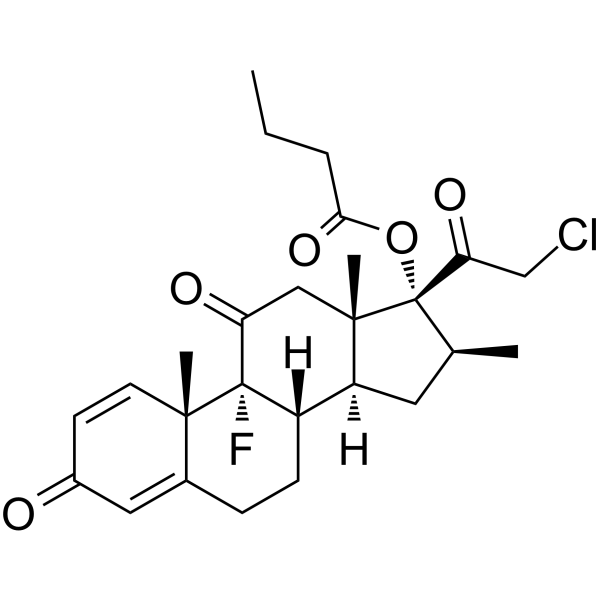
HY-B1616
Clobetasone butyrateGlucocorticoid -
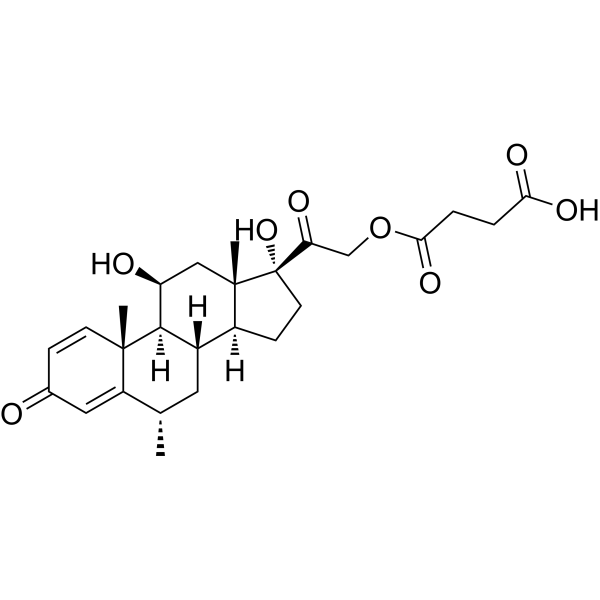
HY-B1900
Methylprednisolone succinateGlucocorticoid Agonist -

HY-B1540R
Beclometasone (Standard)Glucocorticoid Receptor Agonist -
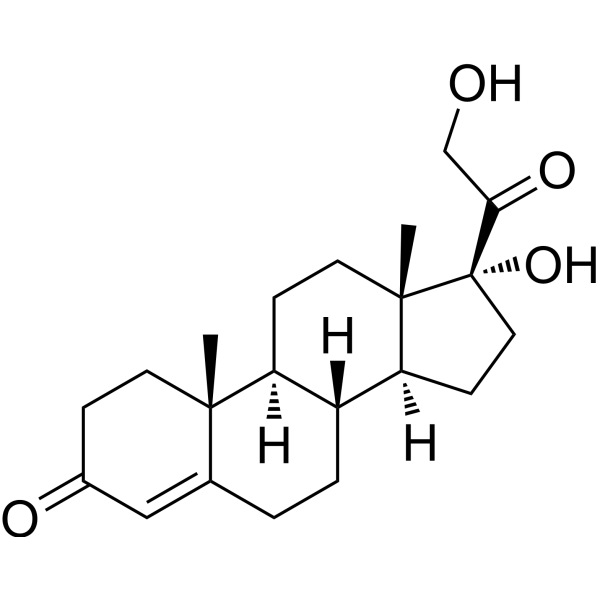
HY-77839
CortodoxoneGlucocorticoid Steroid Hormone -
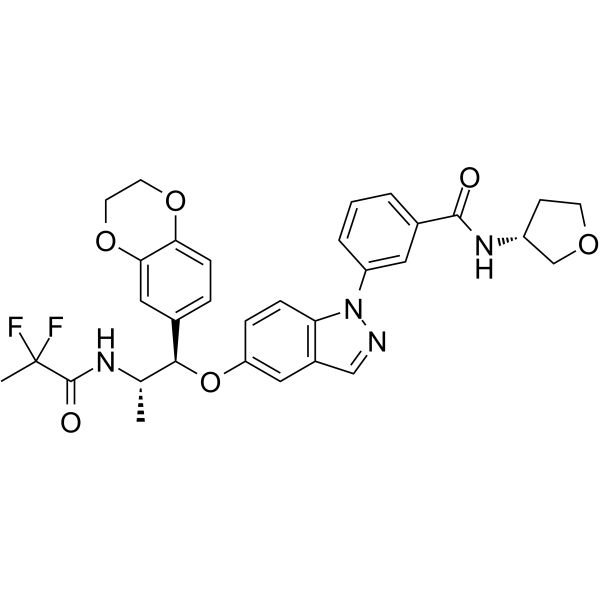
HY-111453
Velsecorat
Publications Citing Use of MedChemExpress (MCE) AL 082D06
More

Biological Activity
Description
IC50 & Target
Ki: 210 nM (GR)[1]
In Vitro
AL 082D06 (D06) binds specifically to GR with nanomolar affinity. Addition of AL 082D06 causes a dose-dependent decrease in transcriptional activation from the MMTV:Luc reporter stimulated with half-maximal DEX concentrations. AL 082D06 acts to antagonize reporter activity using several glucocorticoid-responsive promoter- reporter systems including the 3-kb tyrosine amino transferase (TAT) promoter and less complex promoters comprised of isolated glucocorticoid response element (GRE) sequences. AL 082D06 competes with 3H-Dex for baculovirus-expressed GR with nanomolar affinity. Other intracellular receptors (AR, ER, PR, and MR) have no affinity for AL 082D06 in a similarly structured binding assay with the appropriate receptor and tritiated ligand (>2500 nM). AL 082D06 has no activation efficacy on the progesterone, androgen, mineralocorticoid, retinoid, glucocorticoid, or estrogen receptors. AL 082D06 is very efficacious at antagonizing GR activity but exhibits much weaker efficacy when tested against the other steroid receptors in contrast to the reference antagonists used as controls[1].
MedChemExpress (MCE) has not independently confirmed the accuracy of these methods. They are for reference only. Further protocols information, click here.


Chemical Information
-
CAS No. 256925-03-8
-
Appearance Solid
-
Molecular Weight 409.91
-
Formula C23H24ClN3O2
-
Color Light yellow to yellow
-
SMILES
O=[N+](C1=CC=C(Cl)C(C(C2=CC=C(N(C)C)C=C2)C3=CC=C(N(C)C)C=C3)=C1)[O-]
-
Synonyms
D06; D-06
-
Shipping
Room temperature in continental US; may vary elsewhere.
-
Storage
Powder -20°C 3 years 4°C 2 years In solvent -80°C 2 years -20°C 1 year


Publications (4)
-
Journal Impact Factor
-
Most Recent
-
Br J Pharmacol
Up-regulation of hepatic CD36 by increased corticosterone/cortisol levels via GR leads to lipid accumulation in liver and hypertriglyceridaemia during pregnancy. [Abstract]2022 Sep;179(17):4440-4456. PMID: 35491243 -
Biochem Pharmacol
Targeting steroid receptor RNA activator as a novel therapeutic strategy for myocardial hypertrophy. [Abstract]2025 Oct:240:117121. PMID: 40619012 -
Biochem Pharmacol
A novel fluorinated triazole derivative suppresses macrophage activation and alleviates experimental colitis via a Twist1-dependent pathway. [Abstract]2018 Sep:155:275-287. PMID: 30028990 -
Int Immunopharmacol
Stress aggravates imiquimod-induced psoriasiform inflammation by promoting M1 macrophage polarization. [Abstract]2023 Sep 7;124(Pt A):110899. PMID: 37688915


Solvent & Solubility
In Vitro:
DMSO : 7.5 mg/mL (18.30 mM; Need ultrasonic and warming; Hygroscopic DMSO has a significant impact on the solubility of product, please use newly opened DMSO)
Please refer to the solubility information to select the appropriate solvent. Once prepared, please aliquot and store the solution to prevent product inactivation from repeated freeze-thaw cycles.
Storage method and period of stock solution: -80°C, 2 years; -20°C, 1 year. When stored at -80°C, please use it within 2 years. When stored at -20°C, please use it within 1 year.
Please refer to the solubility information to select the appropriate solvent. Once prepared, please aliquot and store the solution to prevent product inactivation from repeated freeze-thaw cycles.
Storage method and period of stock solution: -80°C, 2 years; -20°C, 1 year. When stored at -80°C, please use it within 2 years. When stored at -20°C, please use it within 1 year.
Concentration (start) × Volume (start) = Concentration (final) × Volume (final)

Protocols
-
Research Protocol for Endocrine Diseases
Endocrine diseases often arise from disrupted hormone production, hormone signaling, or target-tissue responsiveness; for diabetes-focused endocrine disease models, insulin signaling regulates glucose uptake, hepatic glucose output, lipid metabolism, and β-cell compensation. Type 2 diabetes develops through interacting defects in insulin resistance, β-cell dysfunction, adipose inflammation, hepatic glucose overproduction, altered incretin signaling, and ectopic lipid metabolism. A major unresolved question is whether endocrine dysfunction is driven primarily by target-tissue insulin resistance, intrinsic β-cell failure, immune/inflammatory stress, or combined multi-organ failure that differs by disease stage.


Purity & Documentation
-
Data Sheet (277 KB)
-
SDS (393 KB)
- English - EN (393 KB)
- Français - FR (393 KB)
- Deutsch - DE (393 KB)
- Norwegian - NO (393 KB)
- Español - ES (393 KB)
- Swedish - SV (393 KB)
- Italian - IT (393 KB)
- Korean - KR (393 KB)
- Portuguese - PT (393 KB)
-
Handling Instructions (2659 KB)
References


Complete Stock Solution Preparation Table
Please refer to the solubility information to select the appropriate solvent. Once prepared, please aliquot and store the solution to prevent product inactivation from repeated freeze-thaw cycles.
Storage method and period of stock solution: -80°C, 2 years; -20°C, 1 year. When stored at -80°C, please use it within 2 years. When stored at -20°C, please use it within 1 year.
| Optional Solvent | Concentration Solvent Mass | 1 mg | 5 mg | 10 mg | 25 mg |
|---|---|---|---|---|---|
| DMSO | 1 mM | 2.4396 mL | 12.1978 mL | 24.3956 mL | 60.9890 mL |
| 5 mM | 0.4879 mL | 2.4396 mL | 4.8791 mL | 12.1978 mL | |
| 10 mM | 0.2440 mL | 1.2198 mL | 2.4396 mL | 6.0989 mL | |
| 15 mM | 0.1626 mL | 0.8132 mL | 1.6264 mL | 4.0659 mL |


AL 082D06 Related Classifications
HY-15709 Related Classifications
 Powered by Bioz