



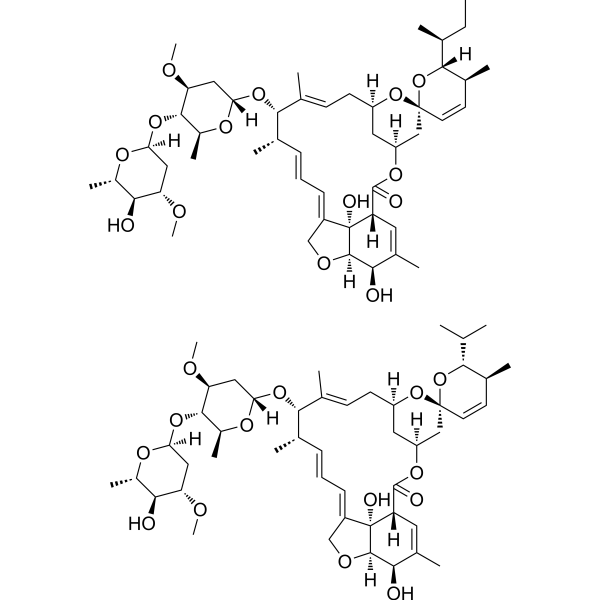
Avermectin B1
Based on 5 publication(s) in Google Scholar
Avermectin B1 (Abamectin) is a mixture of two similar segments of avermectin. Avermectin B1 is an orally anti-infection agent, which can be used in the research of parasitic worms, insect pests, agriculture and animal husbandry. Avermectin B1 can also induce the production of ROS and induces cytotoxicity, apoptosis and autophagy.
Nur für Forschungszwecke. Wir verkaufen nicht an Patienten.
- Reinheit : 98.99%
- CAS. Nr.: 71751-41-2
- Formel: C48H72O14 (for Avermectin B1a)
- Molecular Weight:873.09
-
Speicherung:
-20°C, sealed storage, away from moisture and light
* In solvent : -80°C, 6 months; -20°C, 1 month (sealed storage, away from moisture and light)

To place orders, for customer services and technical support, please contact: MedChemExpress USA
Tel: 609-228-6898 E-mail: [email protected] [email protected]


-
 Biologische Aktivität
-
Chemical Information
-
Lösungsmittel & Löslichkeit
- Protokoll
- Reinheit & Dokumentation
- Verweise
-
 Help & FAQs


-
HY-100558
Bafilomycin A1V-ATPase Inhibitor -
HY-Y0320
Dimethyl sulfoxide, meets analytical specification of Ch.P.Aprotic Solvent -
HY-B1135
BenzbromaroneApoptosis Inducer -
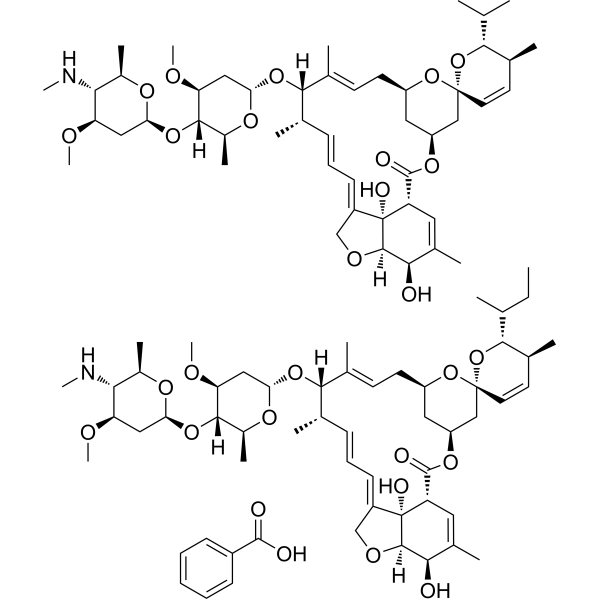
HY-B0837
Emamectin BenzoateNervoussystem Toxicant -
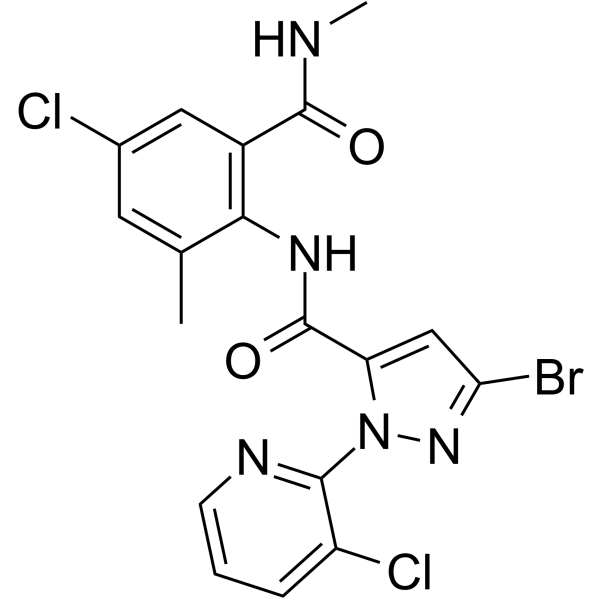
HY-112820
ChlorantraniliproleInsecticide -
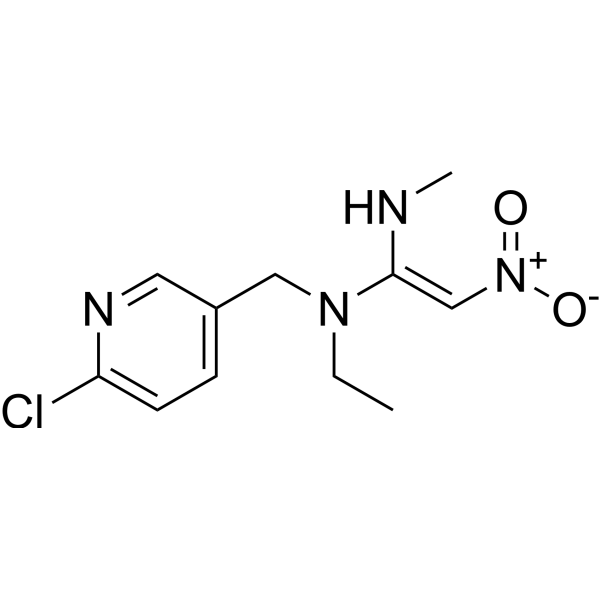
HY-B0820
NitenpyramnAChR Agonist -
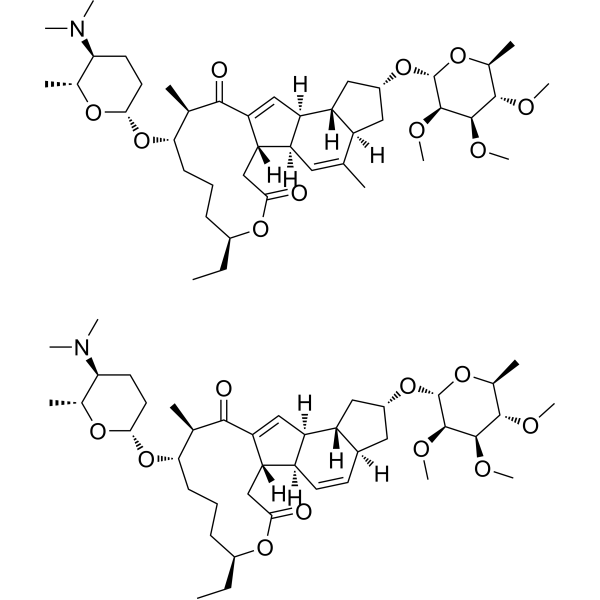
HY-138800
SpinosadAcetylcholine Agonist -

HY-15311R
Avermectin B1 (Standard)Anti-infection Agent -
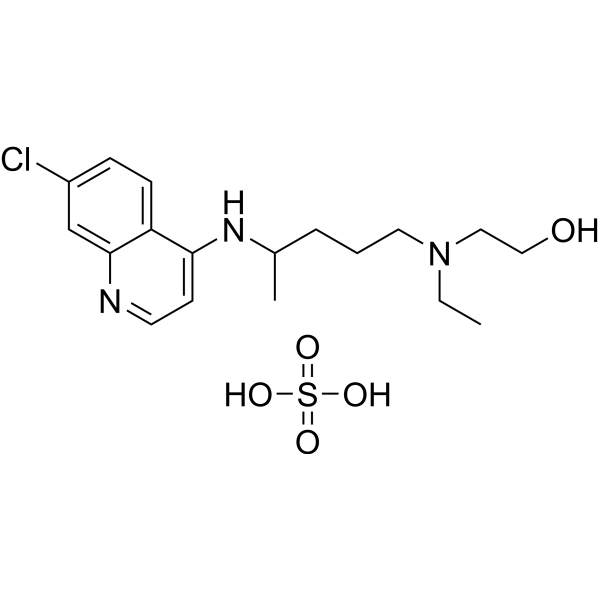
HY-B1370
Hydroxychloroquine sulfateToll-like Receptor (TLR) Inhibitor -
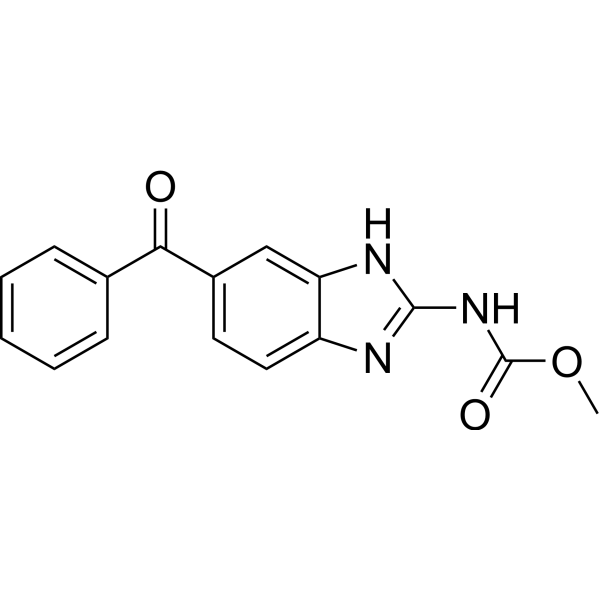
HY-17595
MebendazoleApoptosis Inducer -
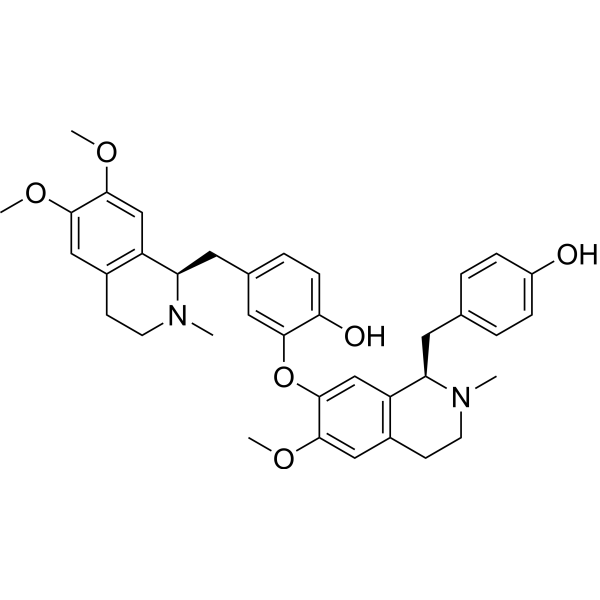
HY-N0484
LiensininePI3K/AKT/MAPK/JAK2/STAT3 Inhibitor
Publications Citing Use of MedChemExpress (MCE) Avermectin B1
More Customer Validation & Images

-
Cell Proliferation/Viability Assay
-
Cell Imaging/Staining

-
Flow Cytometry
-
IF
-
WB
Alle Antibiotic Isoform-spezifische Produkte anzeigen
MoreAlle Parasite Isoform-spezifische Produkte anzeigen
More

Biologische Aktivität
Beschreibung
In Vitro
Avermectin B1 (0-80 μM, 12 h) induces cytotoxicity through MAPK and ATM/ATR pathway in mouse embryonic fibroblast (MEF) cells, and induces ROS-mediated DNA damage[1].
Avermectin B1 (36 μg/mL, 72 h) has strong nematicidal efect of on G. pallida in aqueous solution, and negatively influences viability and infectivity of G. pallida J2 detected in potato roots(cv. Spunta)[2].
Abamectin (10 μM, 24 h) induces significant cytotoxicity by overproduction of ROS in haemocytes of Erocheir sinensis[3].
Abamectin (4 μM, 24 h) induces apoptosis and autophagy by inhibiting ROS-mediated PI3K/AKT signaling in MGC803 cells[4].
MedChemExpress (MCE) has not independently confirmed the accuracy of these methods. They are for reference only.
-
Cell Line:Mouse embryonic fibroblast (MEF) cells
-
Concentration:0, 0.5, 5, 10, 20, 40, 80 μM
-
Incubation Time:12 h
-
Result:Reduced cell viability with an IC50 value of 45.6 μM.
-
Cell Line:MGC803 cells
-
Concentration:0-4 μM
-
Incubation Time:24 h
-
Result:Increased active caspase-3 and expression of Bax/Bcl-2, decreased MMP in a dose-dependent manner.
In Vivo
MedChemExpress (MCE) has not independently confirmed the accuracy of these methods. They are for reference only.
-
Animal Model:Horses (had a pruritic dermatosis)[5]
-
Dosage:0.2 mg/kg, a single dose.
-
Administration:Oral administration
-
Result:Decreased in mean strongyle egg counts 14, 28 and 42 d after treatment, and resulted in zero microfilaria counts in all horses 14 d after treatment.
-
Animal Model:Healthy adult female sheep (Pharmacokinetic assay)[6]
-
Dosage:0.2 mg/kg
-
Administration:Subcutaneous administration (in the left neck area of each sheep)
-
Result:Pharmacokinetic profiles of Avermectin B1
Parameters Mean Kcl (/day) 0.17 t1/2cl (day) 4.36 Kab (/day) 0.24 t1/2ab (day) 3.15 Cmax (ng/mL) 6.24 tmax (day) 4.20 AUC (0-27) (ng/day/mL) 80.2 AUC(0-∞) (ng/day/mL) 84.7 MRT (day) 8.80
- Research Protocol for Infectious Diseases
- Detection of Apoptosis
- TUNEL staining for apoptotic DNA fragmentation
- Cell Cytotoxicity Assay
- Mammalian live/dead viability and cytotoxicity staining
- Annexin V plus membrane-impermeant dye apoptosis staining
- ROS/oxidative-stress fluorescent staining
- Autophagy
- Apoptosis Solutions
- Lysosome and acidic-vesicle live-cell staining
- Macroautophagy Solutions
- Cell Viability Determination by MTT Colorimetric Assay
Clinical Trial
| NCT Number | Sponsor | Condition | Start Date |
Phase

|
|---|---|---|---|---|
| NCT01329991 | 2011-05 | PHASE1 |


Chemical Information
-
CAS. Nr. 71751-41-2
-
Appearance Solid
-
Molecular Weight 873.09
-
Formel C48H72O14 (for Avermectin B1a)
-
Color White to off-white
-
SMILES
C[C@@H](CC)[C@]1([H])[C@@H](C)C=C[C@@]2(O[C@@]3([H])C[C@]([H])(OC([C@@]4([H])[C@@](/C(CO5)=C/C=C/[C@H](C)[C@H](O[C@@]6([H])C[C@H](OC)[C@@H](O[C@]7([H])O[C@@H](C)[C@H](O)[C@@H](OC)C7)[C@H](C)O6)/C(C)=C/C3)(O)[C@@]5([H])[C@H](O)C(C)=C4)=O)C2)O1.C[C@H]8C=C[C@@]9(O[C@@]%10([H])C[C@]([H])(OC([C@@]%11([H])[C@@](/C(CO%12)=C/C=C/[C@H](C)[C@H](O[C@@]%13([H])C[C@H](OC)[C@@H](O[C@]%14([H])O[C@@H](C)[C@H](O)[C@@H](OC)C%14)[C@H](C)O%13)/C(C)=C/C%10)(O)[C@@]%12([H])[C@H](O)C(C)=C%11)=O)C9)O[C@@H]8C(C)C
-
Synonyms
Abamectin; Avermectin B1a-Avermectin B1b mixt.
-
Initial Source
Streptomyces avermitilis
-
Versand
Room temperature in continental US; may vary elsewhere.
-
Speicherung
-20°C, sealed storage, away from moisture and light
* In solvent : -80°C, 6 months; -20°C, 1 month (sealed storage, away from moisture and light)


Publications (5)
-
Journal Impact Factor
-
Most Recent
-
Mol Pharm
2022 Nov 7;19(11):4320-4332. PMID: 36269563 -
J Biochem Mol Toxicol
ROS accumulation contributes to abamectin-induced apoptosis and autophagy via the inactivation of PI3K/AKT/mTOR pathway in TM3 Leydig cells. [Abstract]2020 Aug;34(8):e22505. PMID: 32275808 -
J Biochem Mol Toxicol
Abamectin induces apoptosis and autophagy by inhibiting reactive oxygen species-mediated PI3K/AKT signaling in MGC803 cells. [Abstract]2019 Jul;33(7):e22336. PMID: 30958899
Avermectin B1 purchased from MedChemExpress. Usage Cited in: J Biochem Mol Toxicol. 2019 Jul;33(7):e22336. [Abstract]
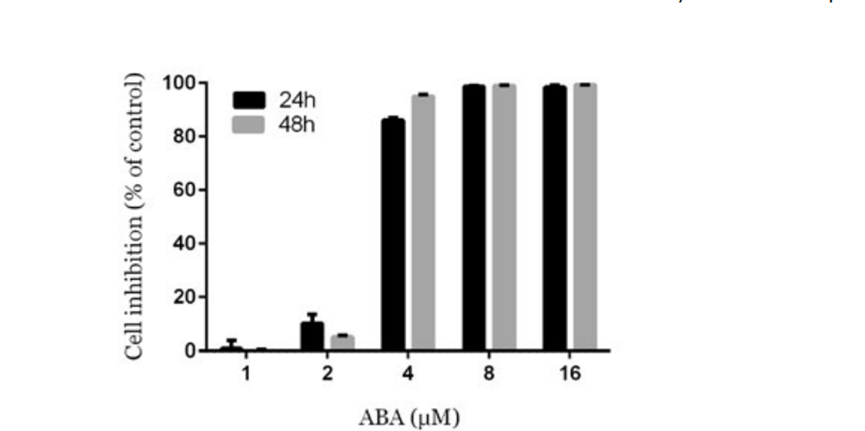
MTS assays were carried out to assess cell viability inhibition after MGC803 cells were treated with Avermectin B1 (ABA) (1, 2, 4, 8, and 16 μM) for 24 and 48 hours.
Avermectin B1 purchased from MedChemExpress. Usage Cited in: J Biochem Mol Toxicol. 2019 Jul;33(7):e22336. [Abstract]
Dose‐dependent effect of ABA on MGC803 cells morphology. MGC803 cells were treated with Avermectin B1 (ABA) for 24 hours and examined under a light microscope at ×200 magnification.
Avermectin B1 purchased from MedChemExpress. Usage Cited in: J Biochem Mol Toxicol. 2019 Jul;33(7):e22336. [Abstract]
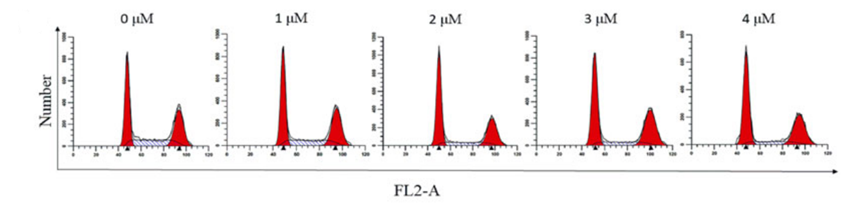
Representative flow cytometry histograms following PI staining for cell‐cycle analysis after treatment with Avermectin B1 (ABA) (0, 1, 2, 3, and 4 μM) for 24 hours.
Avermectin B1 purchased from MedChemExpress. Usage Cited in: J Biochem Mol Toxicol. 2019 Jul;33(7):e22336. [Abstract]
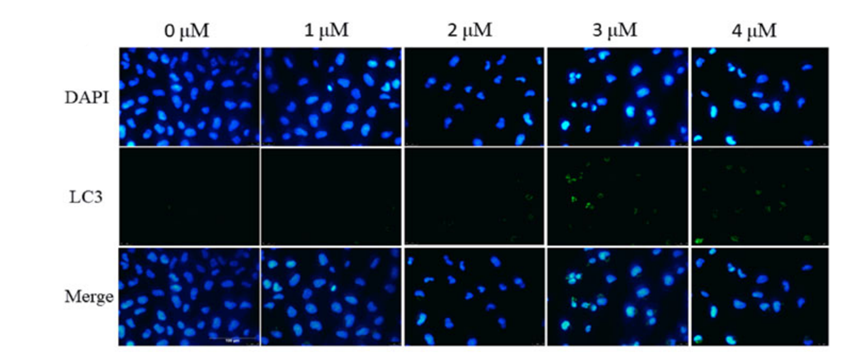
The LC3 and DAPI staining detected MGC803 cell autophagy treated with Avermectin B1 (ABA) (0, 1, 2, 3, and 4 μM).
Avermectin B1 purchased from MedChemExpress. Usage Cited in: J Biochem Mol Toxicol. 2019 Jul;33(7):e22336. [Abstract]
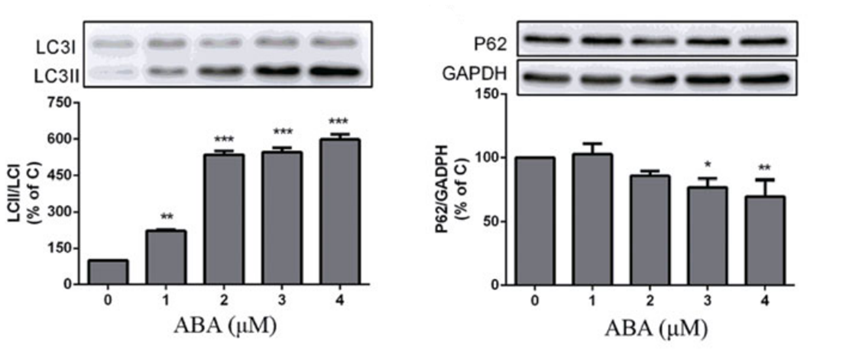
Protein expression of LC3‐Ⅰ, LC3‐II, and P62 treated with Avermectin B1 (ABA) (0, 1, 2, 3, and 4 μM).
-
J Insect Physiol
Multi-omics analysis reveals AaaaNAT1 as a critical regulator of physiological homeostasis in Aedes aegypti. [Abstract]2026 Mar:169:104956. PMID: 41722763 -
Virology
Evaluating anti-viral effect of Ivermectin on porcine epidemic diarrhea virus and analyzing the related genes and signaling pathway by RNA-seq in vitro. [Abstract]2023 Oct:587:109877. PMID: 37688922


Lösungsmittel & Löslichkeit
In Vitro:
DMSO : 100 mg/mL (114.54 mM; Need ultrasonic; Hygroscopic DMSO has a significant impact on the solubility of product, please use newly opened DMSO)
Please refer to the solubility information to select the appropriate solvent. Once prepared, please aliquot and store the solution to prevent product inactivation from repeated freeze-thaw cycles.
Storage method and period of stock solution: -80°C, 6 months; -20°C, 1 month (sealed storage, away from moisture and light). When stored at -80°C, please use it within 6 months. When stored at -20°C, please use it within 1 month.
Please refer to the solubility information to select the appropriate solvent. Once prepared, please aliquot and store the solution to prevent product inactivation from repeated freeze-thaw cycles.
Storage method and period of stock solution: -80°C, 6 months; -20°C, 1 month (sealed storage, away from moisture and light). When stored at -80°C, please use it within 6 months. When stored at -20°C, please use it within 1 month.
Konzentration (Stammlösung) × Volumen (Stammlösung) = Konzentration (Ziellösung) × Volumen (Ziellösung)
In Vivo:
Select the appropriate dissolution method based on your experimental animal and administration route.
- For the following dissolution methods, please ensure to first prepare a clear stock solution using an In Vitro approach and then sequentially add co-solvents:
- To ensure reliable experimental results, the clarified stock solution can be appropriately stored based on storage conditions. As for the working solution for In Vivo experiments, it is recommended to prepare freshly and use it on the same day.
- The percentages shown for the solvents indicate their volumetric ratio in the final prepared solution. If precipitation or phase separation occurs during preparation, heat and/or sonication can be used to aid dissolution.
Add each solvent one by one: 10% DMSO 40% PEG300 5% Tween-80 45% Saline
Solubility: ≥ 2.08 mg/mL (2.38 mM); Clear solution
This protocol yields a clear solution of ≥ 2.08 mg/mL (saturation unknown).
Taking 1 mL working solution as an example, add 100 μL DMSO stock solution (20.8 mg/mL) to 400 μL PEG300, and mix evenly; then add 50 μL Tween-80 and mix evenly; then add 450 μL Saline to adjust the volume to 1 mL.
Preparation of Saline: Dissolve 0.9 g sodium chloride in ddH₂O and dilute to 100 mL to obtain a clear Saline solution.
Add each solvent one by one: 10% DMSO 90% (20% SBE-β-CD in Saline)
Solubility: 2.08 mg/mL (2.38 mM); Suspended solution; Need ultrasonic
This protocol yields a suspended solution of 2.08 mg/mL. Suspended solution can be used for oral and intraperitoneal injection.
Taking 1 mL working solution as an example, add 100 μL DMSO stock solution (20.8 mg/mL) to 900 μL 20% SBE-β-CD in Saline, and mix evenly.
Preparation of 20% SBE-β-CD in Saline (4°C, storage for one week): 2 g SBE-β-CD powder is dissolved in 10 mL Saline, completely dissolve until clear.
In Vivo Dissolution Calculator
Please enter the basic information of animal experiments:
-
-
-
-
Recommended: Prepare an additional quantity of animals to account for potential losses during experiments.
Please enter your animal formula composition:
-
%DMSO +
Recommended: Keep the proportion of DMSO in working solution below 2% if your animal is weak.
-
%+
-
+%Tween-80 + +
-
%Saline +
The co-solvents required include: DMSO, . All of co-solvents are available by MedChemExpress (MCE). , Tween 80. All of co-solvents are available by MedChemExpress (MCE).
Working solution concentration: 0.22 mg/mL
Method for preparing stock solution: mg drug dissolved in μL DMSO. Stock solution concentration: mg/mL. * In solvent : -80°C, 6 months; -20°C, 1 month (sealed storage, away from moisture and light)
1. Take μL DMSO stock solution;
2. Add μL .
μL , mix evenly;
3. Then add μL Tween 80, mix evenly;
4. Then add μL
Please ensure that the stock solution in the first step is dissolved to a clear state, and add co-solvents in sequence. You can use ultrasonic heating (ultrasonic cleaner, recommended frequency 20-40 kHz), vortexing, etc. to assist dissolution.


Reinheit & Dokumentation
-
Data Sheet (291 KB)
-
SDS (624 KB)
- English - EN (624 KB)
- Français - FR (624 KB)
- Deutsch - DE (624 KB)
- Norwegian - NO (624 KB)
- Español - ES (624 KB)
- Swedish - SV (624 KB)
- Italian - IT (624 KB)
- Korean - KR (624 KB)
- Portuguese - PT (624 KB)
-
Handling Instructions (2659 KB)
Verweise
[1]. [1] Yiran Liang, et al. Abamectin induces cytotoxicity via the ROS, JNK, and ATM/ATR pathways. PLoS One. Environ Sci Pollut Res Int. 2020 Apr;27(12):13726-13734. [Content Brief]
[2]. Nicola Sasanelli, et al. Abamectin Efficacy on the Potato Cyst Nematode Globodera pallida. Plants (Basel). 2019 Dec 19;9(1):12. [Content Brief]
[3]. Yi Huang, et al. Cytotoxicity induced by abamectin exposure in haemocytes of Chinese mitten crab, Eriocheir sinensis. Environ Toxicol Pharmacol. 2020 Jul;77:103384. [Content Brief]
[4]. Shanshan Zhu, et al. Abamectin induces apoptosis and autophagy by inhibiting reactive oxygen species-mediated PI3K/AKT signaling in MGC803 cells. J Biochem Mol Toxicol. 2019 Jul;33(7):e22336. [Content Brief]
[5]. Mogg TD, et al. Efficacy of avermectin B1 given orally against equine intestinal strongyles and Onchocera microfilaria. Aust Vet J. 1990 Nov;67(11):399-401. [Content Brief]
[6]. Peyami Sari, et al. Pharmacokinetics of Abamectin/Levamisole Combination in a Medium Chain Mono and Diglyceride-Based Vehicle and an In Vitro Release and In Vitro In Vivo Correlation Study for Levamisole. AAPS PharmSciTech. 2017 May;18(4):1254-1260. [Content Brief]


Complete Stock Solution Preparation Table
Please refer to the solubility information to select the appropriate solvent. Once prepared, please aliquot and store the solution to prevent product inactivation from repeated freeze-thaw cycles.
Storage method and period of stock solution: -80°C, 6 months; -20°C, 1 month (sealed storage, away from moisture and light). When stored at -80°C, please use it within 6 months. When stored at -20°C, please use it within 1 month.
| Optional Solvent | Concentration Solvent Mass | 1 mg | 5 mg | 10 mg | 25 mg |
|---|---|---|---|---|---|
| DMSO | 1 mM | 1.1454 mL | 5.7268 mL | 11.4536 mL | 28.6339 mL |
| 5 mM | 0.2291 mL | 1.1454 mL | 2.2907 mL | 5.7268 mL | |
| 10 mM | 0.1145 mL | 0.5727 mL | 1.1454 mL | 2.8634 mL | |
| 15 mM | 0.0764 mL | 0.3818 mL | 0.7636 mL | 1.9089 mL | |
| 20 mM | 0.0573 mL | 0.2863 mL | 0.5727 mL | 1.4317 mL | |
| 25 mM | 0.0458 mL | 0.2291 mL | 0.4581 mL | 1.1454 mL | |
| 30 mM | 0.0382 mL | 0.1909 mL | 0.3818 mL | 0.9545 mL | |
| 40 mM | 0.0286 mL | 0.1432 mL | 0.2863 mL | 0.7158 mL | |
| 50 mM | 0.0229 mL | 0.1145 mL | 0.2291 mL | 0.5727 mL | |
| 60 mM | 0.0191 mL | 0.0954 mL | 0.1909 mL | 0.4772 mL | |
| 80 mM | 0.0143 mL | 0.0716 mL | 0.1432 mL | 0.3579 mL | |
| 100 mM | 0.0115 mL | 0.0573 mL | 0.1145 mL | 0.2863 mL |


Avermectin B1 Related Classifications
HY-15311 Related Classifications
 Powered by Bioz