



Substance P (7-11)

Based on 1 Customer Validation
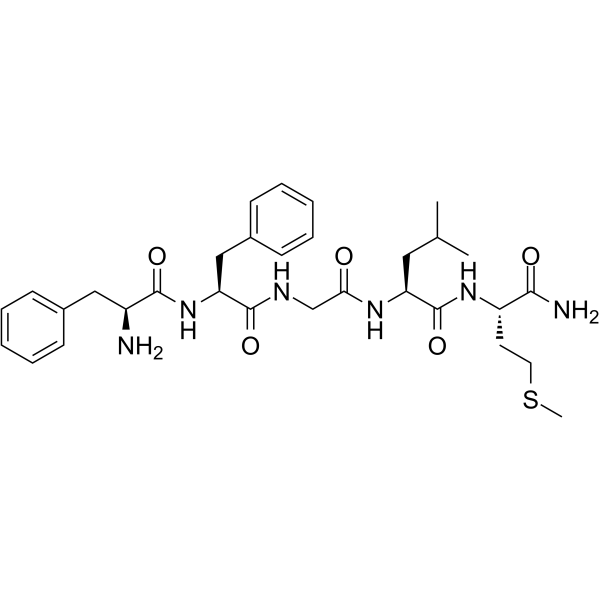
Substance P (7-11) is a C-terminal fragment of Substance P which can cause an increase in the intracellular calcium concentration.
For research use only. We do not sell to patients.
- Purity : 99.08%
- CAS No.: 51165-05-0
- Formula: C31H44N6O5S
- Molecular Weight:612.78
-
Storage:
Sealed storage, away from moisture and light.
Powder -80°C, 2 years , -20°C, 1 year* In solvent : -80°C, 6 months; -20°C, 1 month (sealed storage, away from moisture and light)

To place orders, for customer services and technical support, please contact: MedChemExpress USA
Tel: 609-228-6898 E-mail: [email protected] [email protected]


-
 Biological Activity
-
Chemical Information
-
Solvent & Solubility
- Protocols
- Purity & Documentation
- References
-
 Help & FAQs


-
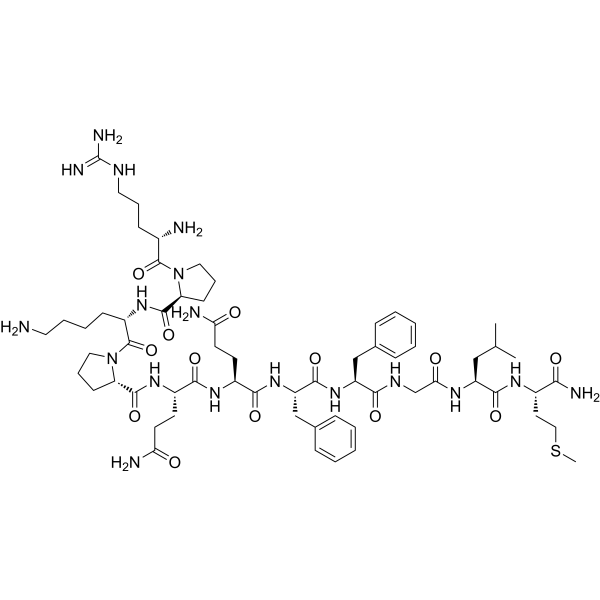
HY-P0201
Substance PNeurotransmitter -
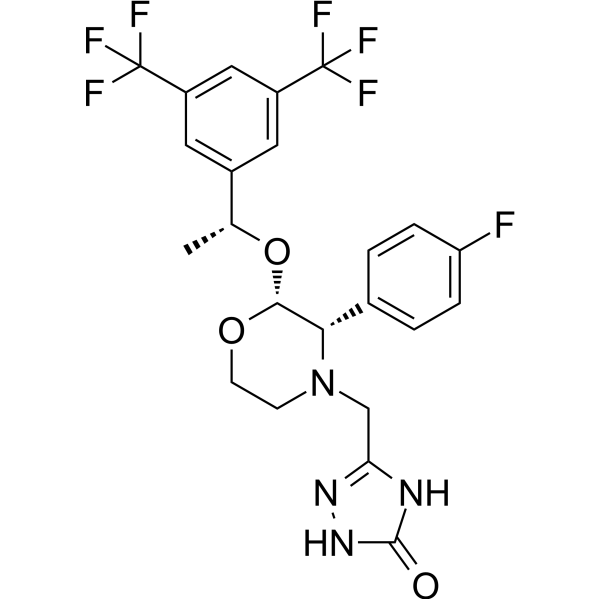
HY-10052
AprepitantNeurokinin 1 Receptor Antagonist -
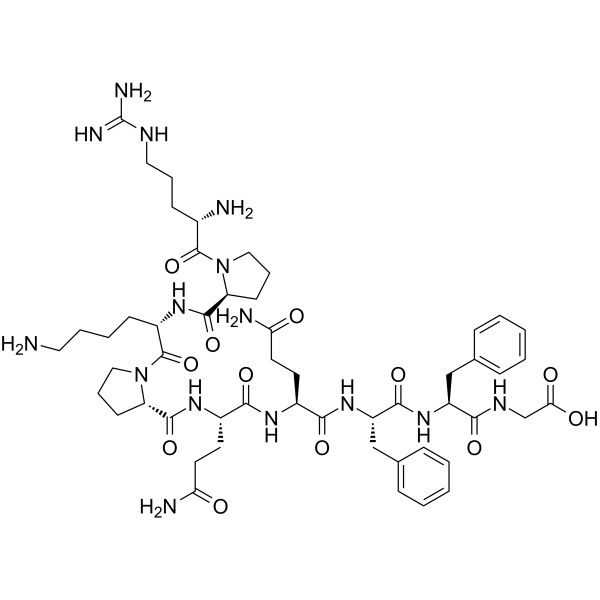
HY-P1494
Substance P (1-9)Neurokinin Receptor -
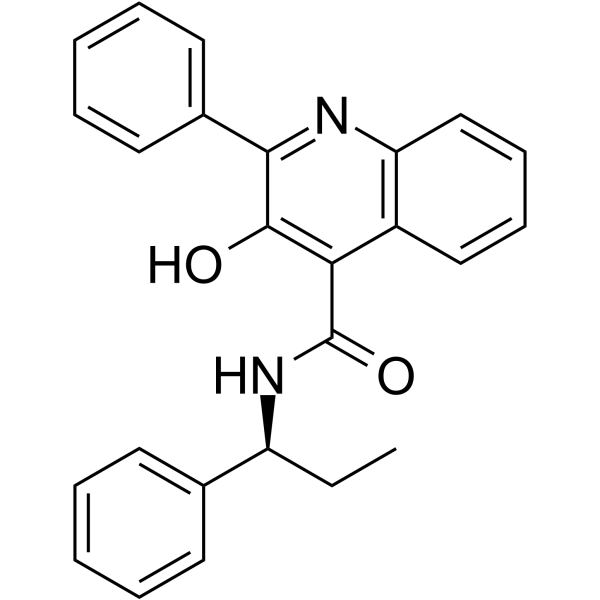
HY-14552
TalnetantNK3 Receptor Antagonist -
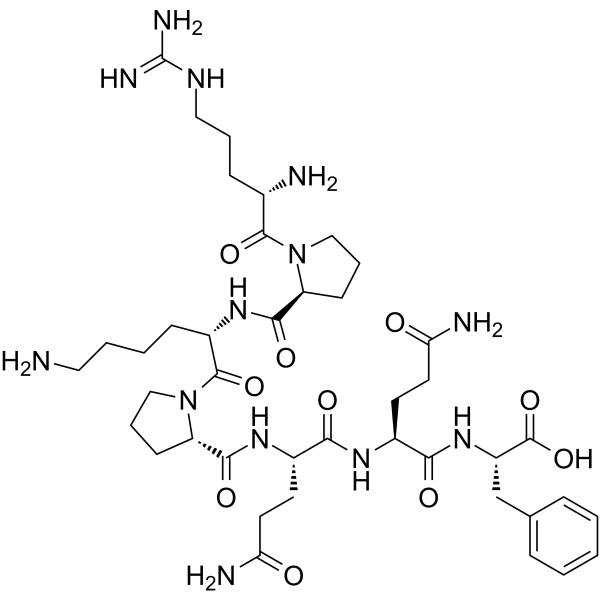
HY-P1485
Substance P(1-7) -

HY-P0197
Neurokinin APeptide Neurotransmitter -
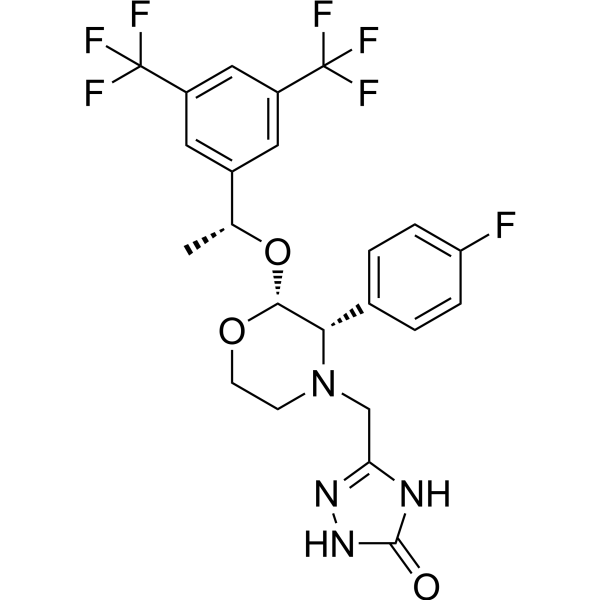
HY-10052R
Aprepitant (Standard)Neurokinin 1 Receptor Antagonist -
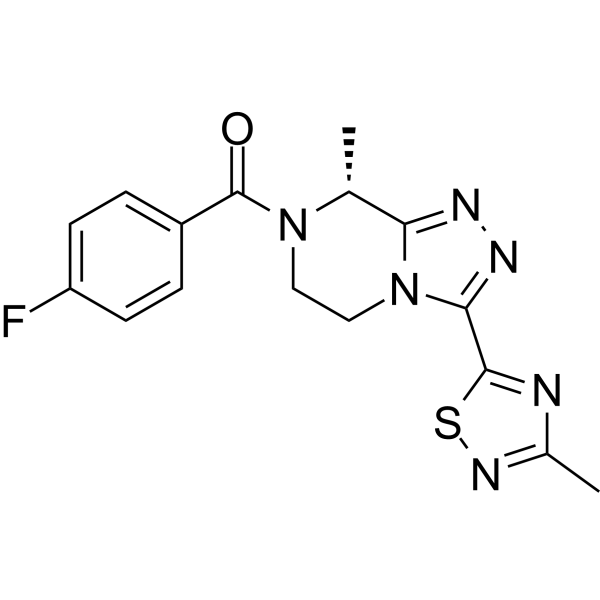
HY-19632
FezolinetantNK3R Antagonist -
HY-14407A
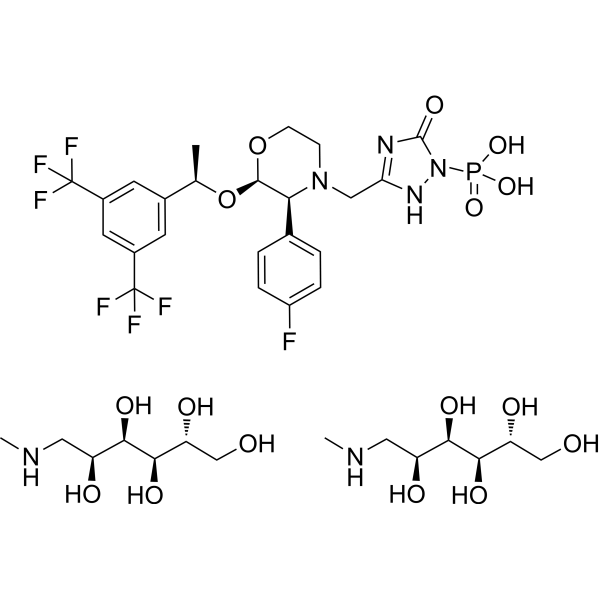
Fosaprepitant dimeglumineNeurokinin-1 Receptor Antagonist -

HY-P0242
Neurokinin BNeurokinin 3 Receptor Activator -

HY-P0197A
Neurokinin A TFAPeptide Neurotransmitter -
HY-16732
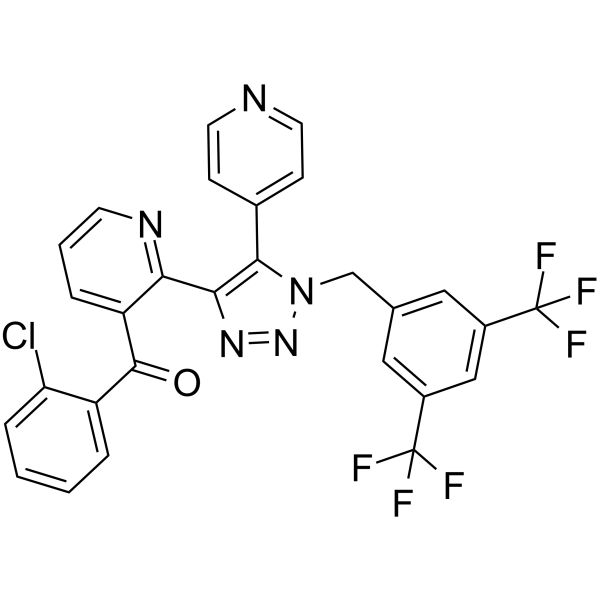
TradipitantNK-1 Receptor Antagonist


Biological Activity
Description
In Vitro
Substance P (7-11) increases PGE2 and collagenase production at concentrations greater than 1 μM. Substance P (7-11), but not intact SP, SP-(1-4), SP-(1-6), SP- (8-11) or SP-(9-1 1), nor the tachykinins NKA and NKB, causes an increase in the intracellular calcium concentration as measured by the fluorescent dye Fura-2. The maximal change in intracellular calcium induced by 10 μM Substance P (7-11) was 140±30 nM[1].
MedChemExpress (MCE) has not independently confirmed the accuracy of these methods. They are for reference only. Further protocols information, click here.


Chemical Information
-
CAS No. 51165-05-0
-
Appearance Solid
-
Molecular Weight 612.78
-
Formula C31H44N6O5S
-
Color White to off-white
-
Sequence
Phe-Phe-Gly-Leu-Met-NH2
-
Sequence Shortening
FFGLM-NH2
-
Shipping
Room temperature in continental US; may vary elsewhere.
-
Storage
Sealed storage, away from moisture and light
Powder -80°C 2 years -20°C 1 year * In solvent : -80°C, 6 months; -20°C, 1 month (sealed storage, away from moisture and light)


Solvent & Solubility
In Vitro:
H2O : 1.96 mg/mL (3.20 mM; ultrasonic and adjust pH to 2 with HCl)
Please refer to the solubility information to select the appropriate solvent. Once prepared, please aliquot and store the solution to prevent product inactivation from repeated freeze-thaw cycles.
Storage method and period of stock solution: -80°C, 6 months; -20°C, 1 month (sealed storage, away from moisture and light). When stored at -80°C, please use it within 6 months. When stored at -20°C, please use it within 1 month.
* Note: If you choose water as the stock solution, please dilute it to the working solution, then filter and sterilize it with a 0.22 μm filter before use.
Please refer to the solubility information to select the appropriate solvent. Once prepared, please aliquot and store the solution to prevent product inactivation from repeated freeze-thaw cycles.
Storage method and period of stock solution: -80°C, 6 months; -20°C, 1 month (sealed storage, away from moisture and light). When stored at -80°C, please use it within 6 months. When stored at -20°C, please use it within 1 month.
* Note: If you choose water as the stock solution, please dilute it to the working solution, then filter and sterilize it with a 0.22 μm filter before use.
Concentration (start) × Volume (start) = Concentration (final) × Volume (final)

Protocols
-
Calcium Spark Assay
Calcium sparks are localized, transient increases in intracellular calcium concentration ([Ca2+]i) that occur in cardiac myocytes and represent elementary events underlying excitation-contraction coupling. These events are generated by the coordinated opening of clusters of ryanodine receptors (RyRs) on the sarcoplasmic reticulum membrane, leading to a brief release of Ca2+ into the cytosol. The detection and analysis of calcium sparks provide insights into the mechanisms of calcium handling and signaling in cardiac cells. Imaging techniques using fluorescent calcium indicators such as Fluo-3 are employed to visualize these subcellular calcium transients with high spatial and temporal resolution. The protocol is based on established methodologies described in primary literature for both experimental measurement and automated analysis of calcium sparks.
-
Ca2+ Staining Technique
Ca2+ staining is an experimental technique that utilizes specific fluorescent probes (such as Fluo-4 AM, Fura-2, etc.) to qualitatively or quantitatively detect dynamic changes in intracellular Ca2+ concentrations; this is achieved by monitoring the changes in fluorescent signals generated when these probes bind to free intracellular calcium ions. The underlying principle relies primarily on the presence of chelating groups within the probe's molecular structure that possess high affinity for calcium ions.


Purity & Documentation
-
Data Sheet (272 KB)
-
SDS (446 KB)
- English - EN (446 KB)
- Français - FR (446 KB)
- Deutsch - DE (446 KB)
- Norwegian - NO (446 KB)
- Español - ES (446 KB)
- Swedish - SV (446 KB)
- Italian - IT (446 KB)
- Korean - KR (446 KB)
- Portuguese - PT (446 KB)
-
Handling Instructions (2659 KB)
References


Complete Stock Solution Preparation Table
Please refer to the solubility information to select the appropriate solvent. Once prepared, please aliquot and store the solution to prevent product inactivation from repeated freeze-thaw cycles.
Storage method and period of stock solution: -80°C, 6 months; -20°C, 1 month (sealed storage, away from moisture and light). When stored at -80°C, please use it within 6 months. When stored at -20°C, please use it within 1 month.
| Optional Solvent | Concentration Solvent Mass | 1 mg | 5 mg | 10 mg | 25 mg |
|---|---|---|---|---|---|
| H2O | 1 mM | 1.6319 mL | 8.1595 mL | 16.3191 mL | 40.7977 mL |
* Note: If you choose water as the stock solution, please dilute it to the working solution, then filter and sterilize it with a 0.22 μm filter before use.


Substance P (7-11) Related Classifications
HY-P1492 Related Classifications
 Powered by Bioz