



Bacterial
Anything that destroys bacteria or suppresses their growth or their ability to reproduce. Heat, chemicals such as chlorine, and antibiotic drugs all have antibacterial properties. Many antibacterial products for cleaning and handwashing are sold today. Such products do not reduce the risk for symptoms of viral infectious diseases in otherwise healthy persons. This does not preclude the potential contribution of antibacterial products to reducing symptoms of bacterial diseases in the home.
All Product Categories
-
Bacterial Inhibitors
(7510)
View all products
-
Bacterial Agonists
(3)
View all products
-
Bacterial Antagonists
(9)
View all products
-
Bacterial Activators
(23)
View all products
-
Bacterial Modulators
(27)
View all products
-
Bacterial Chemicals
(2)
View all products
-
Bacterial Inducers
(7)
View all products
-
Bacterial Controls
(14)
View all products
-
Bacterial Substrates
(2)
View all products
-
Bacterial Ligand
(1)
View all products
-
Bacterial Related Products (8837)
Related Products (8837)

-
Antibodies (14)
-
Related Compound Screening Libraries (1)
-
VEGFR-2/DHFR-IN-1
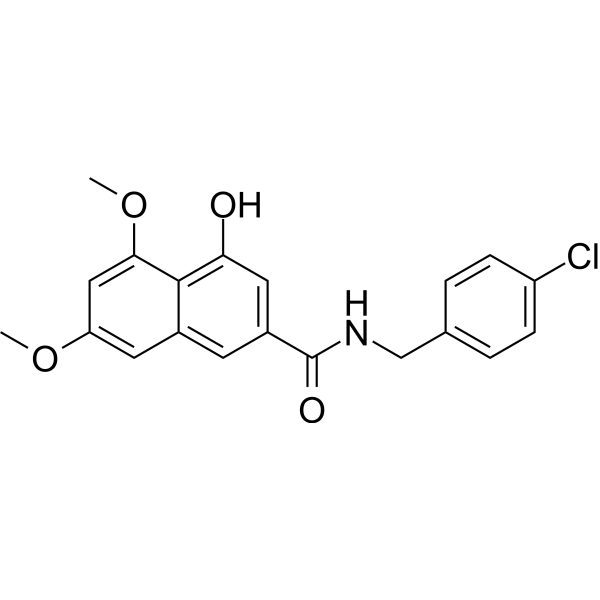 0 ImagesCat. No.: HY-151458CAS No.: 2831498-15-6VEGFR-2/DHFR-IN-1 (compound 8b) is an inhibitor of VEGFR-2 and DHFR with IC50s of 0.384 and 7.881 μM, respectively. VEGFR-2/DHFR-IN-1 shows good antibacterial activities against Escherichia coli, Streptococcus faecalis, Salmonella enterica, MSSA and MRSA with MIC values of 16, 16, 16, 8, and 16 μg/mL, respectively. VEGFR-2/DHFR-IN-1 exhibits good cytotoxic activities against C26, HepG2, and MCF7 cancer cell lines with IC50 values of 2.97-7.12 μM. VEGFR-2/DHFR-IN-1 can be used for the research of cancer.
-
Spinach extract
 0 ImagesCat. No.: HY-N20540Spinach extract is an extract from spinach (Spinacia oleracea) that has beneficial effects on gut microbiota and short-chain fatty acids.

-
SABA1 (Standard)
 0 ImagesCat. No.: HY-144701RCAS No.: 690681-65-3Fluopicolide (Standard) is the analytical standard of Fluopicolide. This product is intended for research and analytical applications. Fluopicolide is the active compound.
-
Antifungal agent 37
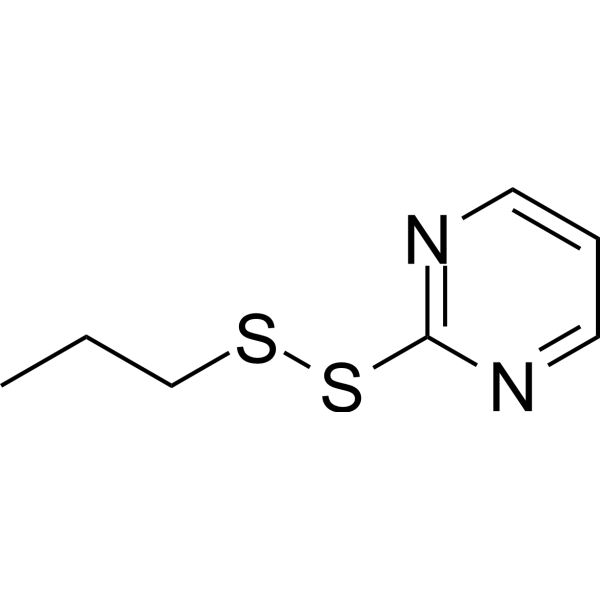 0 ImagesCat. No.: HY-151280CAS No.: 2833772-92-0Antifungal agent 37 is a geterocyclic disulfide, with antifungal activity.
-
C215
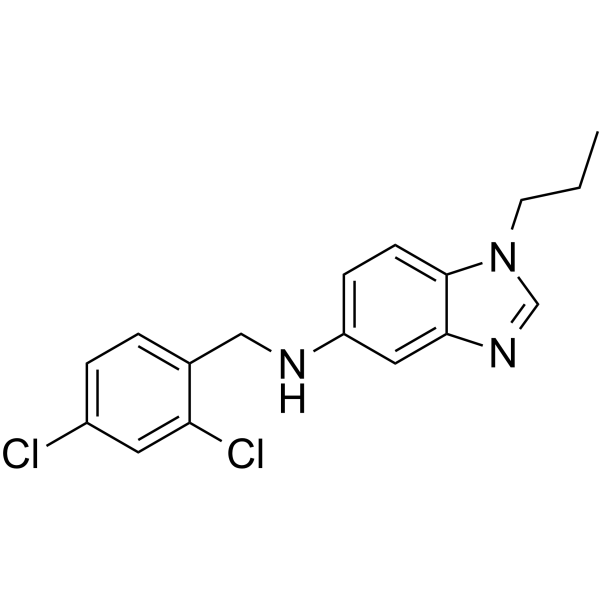 0 ImagesC215 is a potent inhibitor of MmpL3. C215 is identified in HTS with glycerol independent activity against M. tuberculosis, limited non-specific toxicity against mammalian cells, an IC90 of 16 μM against M. tuberculosis, and efficacy against M. tuberculosis growing in macrophages.
-
Aldgamycin E
 0 ImagesCat. No.: HY-113795CAS No.: 11011-06-6Aldgamycin E is a neutral macrolide antibiotic that can be derived from culture filtrates of Streptomyces lavendulae. Aldgamycin E has antibacterial activity.
-
Kalibor (Standard)
 0 ImagesCat. No.: HY-W025784RCAS No.: 143-66-8Synonyms: Sodium tetraphenylborate (Standard); Tetraphenylboron sodium (Standard)(Sodium tetraphenylborate; Tetraphenylboron sodium) (Standard) is the analytical standard of Kalibor (HY-W025784). This product is intended for research and analytical applications. Kalibor is a boron-based salt and antibacterial agent. Kalibor exerts activity against Neisseria meningitidis and Neisseria gonorrhoeae. Kalibor facilitates boron uptake by Neisseria meningitidis cells. Kalibor reduces bacterial burden in a mouse model of Neisseria meningitidis bacteremia. Kalibor can be used for the research of bacterial infection, such as meningococcal bacteremia.


-
GSK572A
 0 ImagesCat. No.: HY-117990CAS No.: 1403602-32-3GSK572A is a potent EchA6 inhibitor with an Kd value of 1.9 µM. GSK572A shows anti-tubercular activity.
-
BT-33
 0 ImagesCat. No.: HY-174219CAS No.: 2999743-86-9BT-33 is a fuorinated macrobicyclic oxepanoprolinamide antibiotic with broad-spectrum activity against multidrug-resistant bacterial pathogens.
-
11-Hydroxynovobiocin
 0 ImagesCat. No.: HY-134947CAS No.: 69282-87-711-Hydroxynovobiocin has anti-Gram-negative bacteria effect.
-
Antibiofilm-IN-1
 0 ImagesCat. No.: HY-183305Antibiofilm-IN-1 (Compound 10) is a biofilm inhibitor and Antibacterial agent. Antibiofilm-IN-1 potently inhibits biofilm formation by Staphylococcus aureus, Bacillus subtilis, Escherichia coli and Pseudomonas aeruginosa.
-
SRG-II-19F
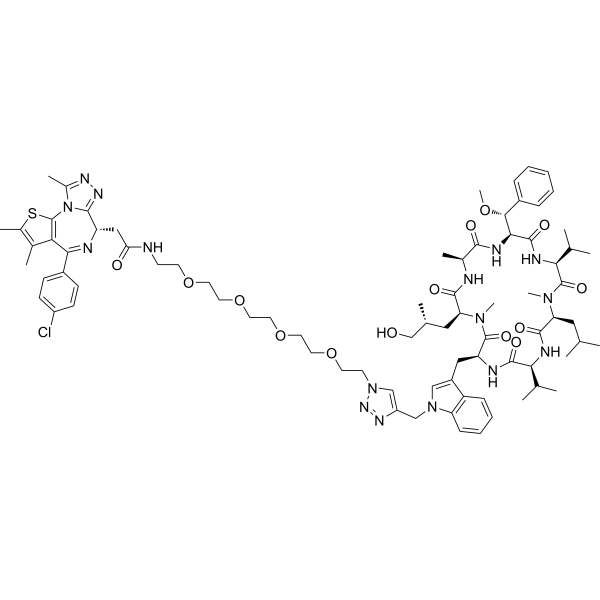 0 ImagesCat. No.: HY-153573Synonyms: dCym-JQ1SRG-II-19F (dCym-JQ1) is a BRDTBD1 PROTAC degrader. Its dCym moiety at one end binds to the N-terminal domain of ClpC1 (ClpC1NTD), while its JQ1 moiety at the other end binds to bromodomain 1 of BRDT (BRDTBD1). This molecule induces the degradation of BRDTBD1 by recruiting the BRDTBD1 substrate to the ClpC1P1P2 protease complex. SRG-II-19F serves as a research tool for studies related to mycobacterial protein degradation.
-
Metallo-β-lactamase-IN-8
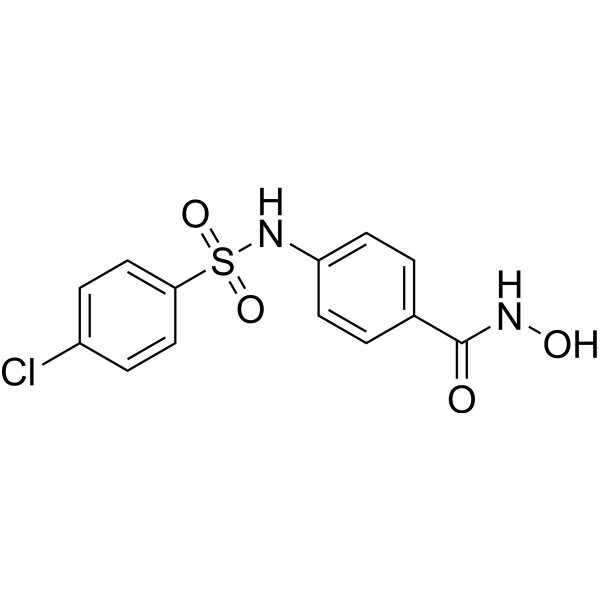 0 ImagesCat. No.: HY-146165CAS No.: 1610537-25-1Metallo-β-lactamase-IN-8 (compound 17) is a potent, reversible and competitive broad-spectrum inhibitor of metallo-β-lactamases (MβLs), with IC50s of 1.3 μM, 5.7 μM, 9.8 μM, and 9.9 μM for L1, ImiS, IMP-1 and VIM-2, respectively. Metallo-β-lactamase-IN-8 exhibits antibacterial activity.
-
Antitubercular agent-36
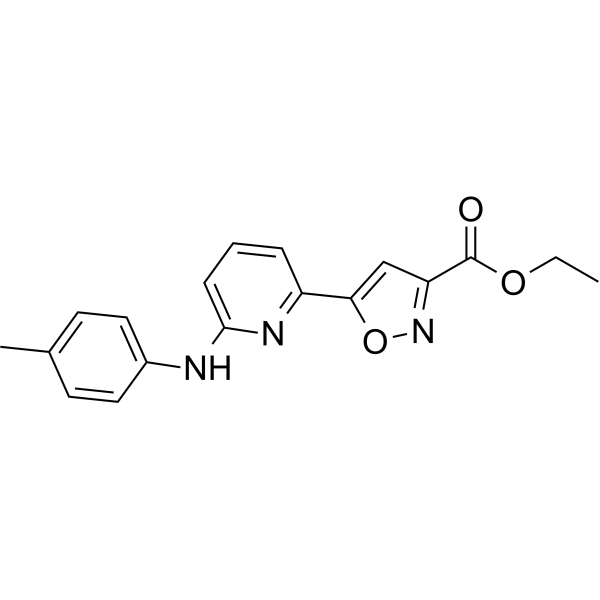 0 ImagesCat. No.: HY-151960CAS No.: 2883173-82-6Antitubercular agent-36 (compound 53) is an antitubercular agent. Antitubercular agent-36 inhibits the growth of MtbH37Rv with a MIC90 value of 1.25 μg/mL. Antitubercular agent-36 can be used for the research of tuberculosis.
-
Antituberculosis agent-18
 0 ImagesCat. No.: HY-189379Antituberculosis agent-18 is an anti-tuberculosis compound that inhibits the growth of Mycobacterium tuberculosis. Antituberculosis agent-18 exhibits moderate antimycobacterial activity against Mycobacterium tuberculosis H37Rv. Antituberculosis agent-18 can be used for research on tuberculosis.
-
Antitubercular agent-11
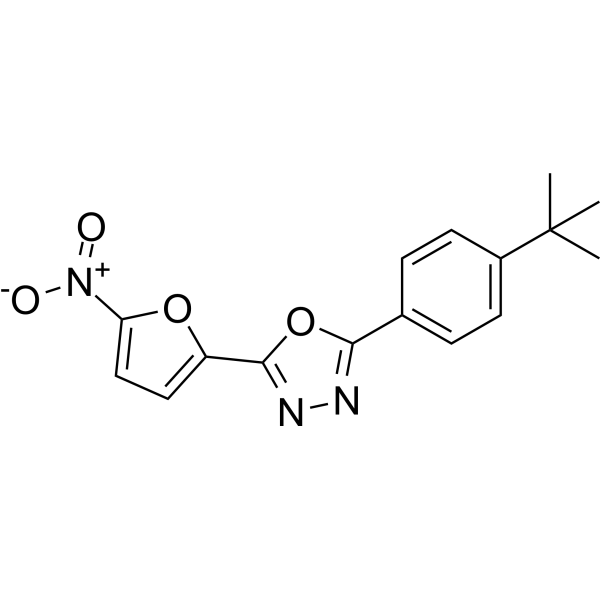 0 ImagesCat. No.: HY-144721CAS No.: 3032629-09-4Antitubercular agent-11 (Compound 1e) is an antitubercular agent. Antitubercular agent-11 with a bulkier electron-donating group (Bu-t) demonstrated the best MIC value of 0.060 μg/mL.
-
Loteprednol Etabonate-d3
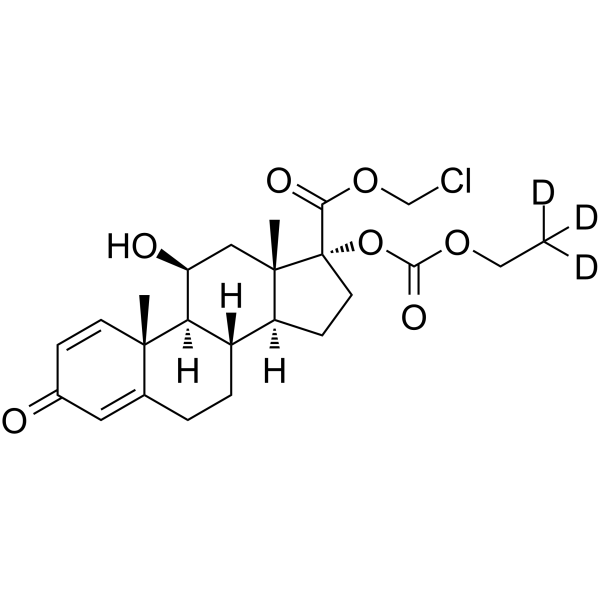 0 ImagesCat. No.: HY-17358S1Loteprednol Etabonate-d3 is the deuterium labeled Loteprednol Etabonate. Loteprednol etabonate (LE) is an orally active "soft" steroid belonging to a unique class of glucocorticoids. Loteprednol etabonate (LE) exhibits anti-inflammatory activity and has been used in optometry and ophthalmology.




