



Bacterial
Anything that destroys bacteria or suppresses their growth or their ability to reproduce. Heat, chemicals such as chlorine, and antibiotic drugs all have antibacterial properties. Many antibacterial products for cleaning and handwashing are sold today. Such products do not reduce the risk for symptoms of viral infectious diseases in otherwise healthy persons. This does not preclude the potential contribution of antibacterial products to reducing symptoms of bacterial diseases in the home.
All Product Categories
-
Bacterial Inhibitors
(7483)
View all products
-
Bacterial Agonists
(3)
View all products
-
Bacterial Antagonists
(9)
View all products
-
Bacterial Activators
(23)
View all products
-
Bacterial Modulators
(23)
View all products
-
Bacterial Chemicals
(2)
View all products
-
Bacterial Inducers
(7)
View all products
-
Bacterial Controls
(14)
View all products
-
Bacterial Substrates
(2)
View all products
-
Bacterial Ligand
(1)
View all products
-
Bacterial Related Products (8800)
Related Products (8800)

-
Antibodies (14)
-
Related Compound Screening Libraries (1)
-
Maximin 9
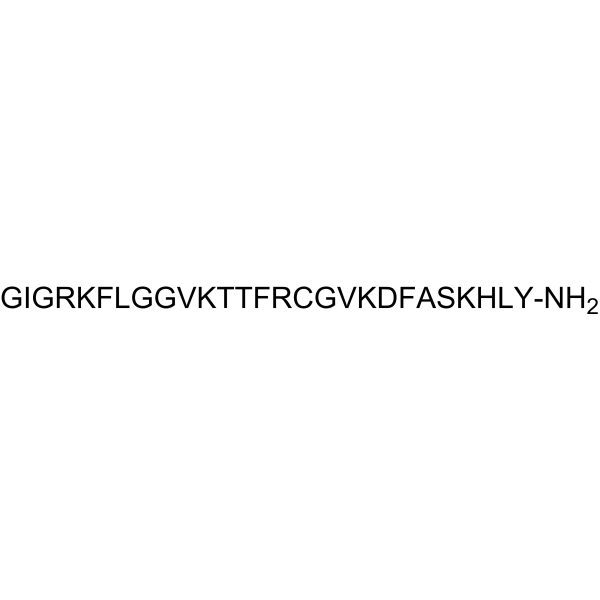 0 ImagesCat. No.: HY-P5614CAS No.: 853262-58-5Maximin 9 is an antimicrobial peptide derived from toad Bombina maxima.
-
Sodium bicarbonate, United States Pharmacopeia (USP) Reference Standard
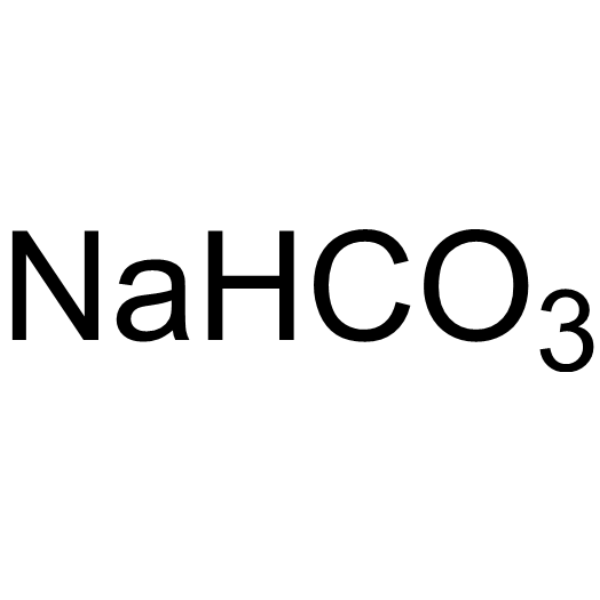 0 ImagesCat. No.: HY-W251598JCAS No.: 144-55-8Synonyms: Sodium hydrogen carbonate (Pharmaceutical primary standard, USP); Soda bicarbonate (Pharmaceutical primary standard, USP)Sodium bicarbonate, United States Pharmacopeia (USP) Reference Standard is an inorganic salt. Sodium bicarbonate, United States Pharmacopeia (USP) Reference Standard can maintain the pH of the culture medium, thereby affecting the expression of inducible nitric oxide synthase (iNOS) and nitric oxide (NO) production in macrophages and reversing the acidosis of the tumor microenvironment. Sodium bicarbonate, United States Pharmacopeia (USP) Reference Standard is widely used in the fields of food, cosmetics, etc. Its main uses include buffers, flavoring agents, disinfectants, pharmaceuticals, and proton gradient regulators. Sodium bicarbonate, United States Pharmacopeia (USP) Reference Standard is also commonly used as an antacid to inhibit gastrointestinal diseases, neutralize gastric acid, and reduce gastric discomfort.
-
Netropsin
 0 ImagesNetropsin dihydrochloride is a small-molecule MGB (minor-groove binder) and antibiotic, inhibits the catalytic activity of isolated topoisomerase and interferes with the stabilization of the cleavable complexes of topoisomerase II and I in nuclei. Netropsin dihydrochloride has antibacterial and antiviral activity.

-
Capricostatin A
 0 ImagesCat. No.: HY-N20645Capricostatin A is a glycosylated heteromeric depsipeptide and Antibacterial agent. Capricostatin A is present in the fungus Austroacremonium gemini MST-FP2131. Capricostatin A inhibits the growth of Gram-positive bacteria, including Bacillus subtilis, Staphylococcus aureus, and MRSA. Capricostatin A exhibits no antifungal activity against Saccharomyces cerevisiae and no cytotoxicity against mammalian cells. Capricostatin A can be used in the research of bacterial infections caused by Bacillus subtilis and Staphylococcus aureus.
-
XMP-629
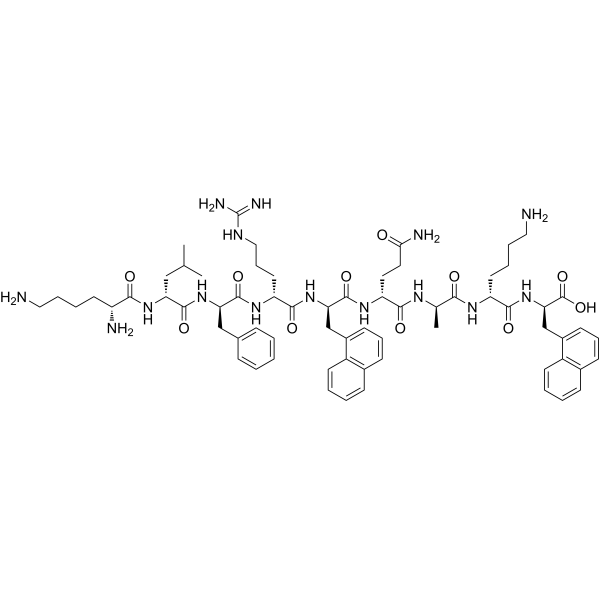 0 ImagesCat. No.: HY-P2170CAS No.: 316805-65-9Synonyms: XOMA-629XMP-629 (XOMA-629), a cationic α-helical peptide, is a potent endotoxin inhibitor. XMP-629 exhibits broad-spectrum antimicrobial activity via an immunomodulatory mechanism. XOMA 629 has antimicrobial activity against Propionibacterium acnes, Staphylococcus aureus and Streptococcus pyogenesand.
-
Antifungal agent 27
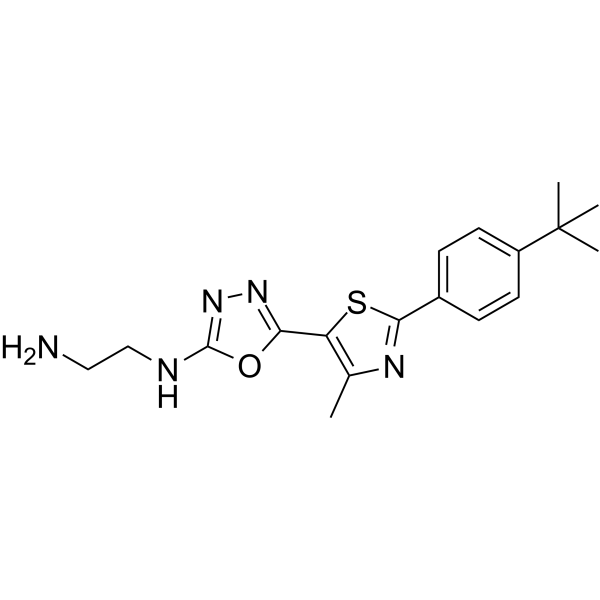 0 ImagesCat. No.: HY-146023CAS No.: 2987755-90-6Antifungal agent 27 (compound 7) is a antifungal agent. Antifungal agent 27 shows moderate antibacterial and weak antifungal activities against MRSA and C. albicans SS5314, with MIC values of 8 and 32 μg/mL, respectively.
-
KPC-2-IN-1
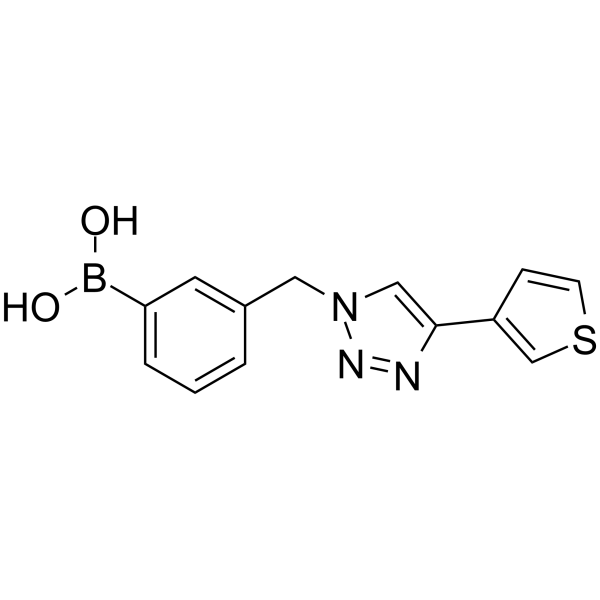 0 ImagesCat. No.: HY-150766CAS No.: 2232877-85-7KPC-2-IN-1, boronic acid derivative, is a potent KPC-2 inhibitor with Ki of 0.032 μM. KPC-2-IN-1 enhances the activity of cefotaxime in KPC-2 expressing E. coli. KPC-2-IN-1 exhibits well tolerated in human HEK-293 cells, which can be used for the study of E. coli resistance to β-lactam antibiotics.
-
Sparfloxacin-d5
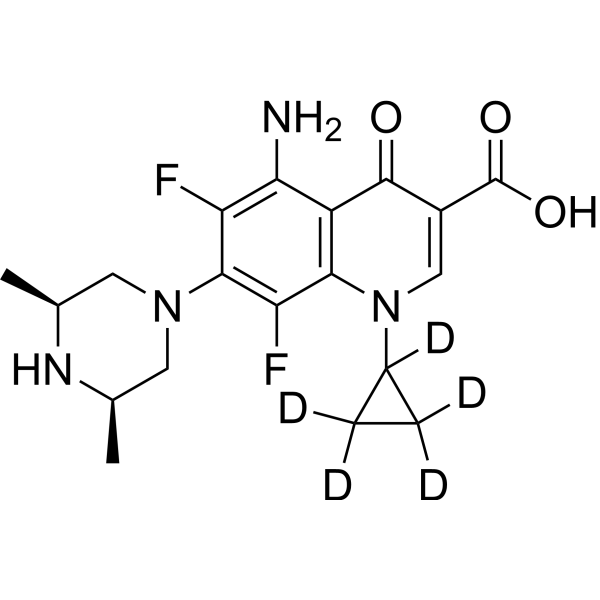 0 ImagesCat. No.: HY-B0308SSynonyms: CI-978-d5; AT-4140-d5Sparfloxacin-d5 is deuterium labeled Sparfloxacin (HY-B0308). Sparfloxacin is a fluoroquinolone antibiotic, shows broad and potent antibacterial activity.
-
Malleobactin E
 0 ImagesCat. No.: HY-P12123CAS No.: 1715003-63-6Malleobactin E is a Burkholderia cepacia complex homologue with specific siderophore activity. Malleobactin E forms a complex with Fe3+ and promotes iron uptake by dissociating CAS-Fe3+, with a EC50 of 8.4 μM. Malleobactin E helps bacterial acquire essential iron from the environment to maintain their survival during infection.
-
Moracin T
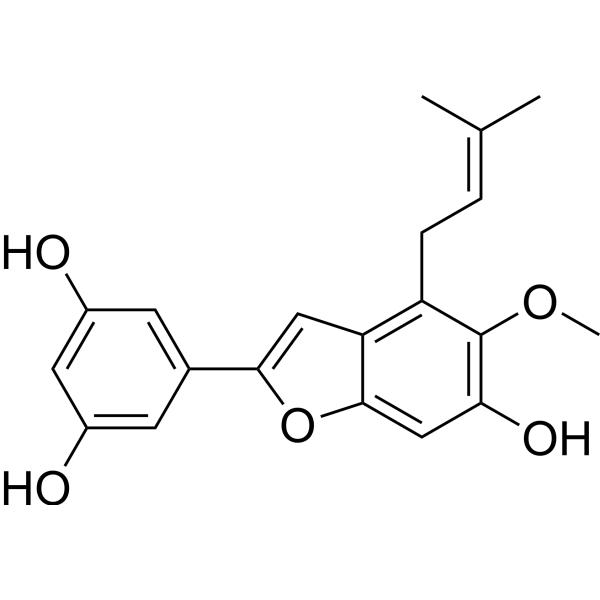 0 ImagesCat. No.: HY-122918CAS No.: 1146113-27-0Moracin T can be isolated from the bark of mulberry trees and has antibacterial activity.
-
Tetranactin
 0 ImagesCat. No.: HY-125721CAS No.: 33956-61-5Tetranactin is an orally active antibiotic that has insecticidal properties and can inhibit the growth of Gram-positive bacteria and plant pathogenic fungal in vitro. Tetranactin LD50 for intraperitoneal injection in mice is greater than 300 mg/kg, and the LD50 is greater than 15,000 mg/kg.
-
Melilotigenin C
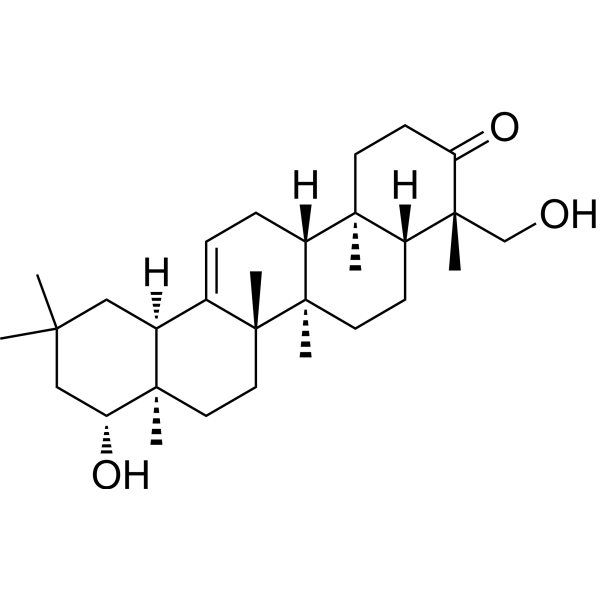 0 ImagesCat. No.: HY-N3301CAS No.: 188970-21-0Melilotigenin C can be isolated from genus Erythrina. Melilotigenin C can be used for research on antiplasmodial activity, antimycobacterial activity and cytotoxicity.
-
Spergualin trihydrochloride
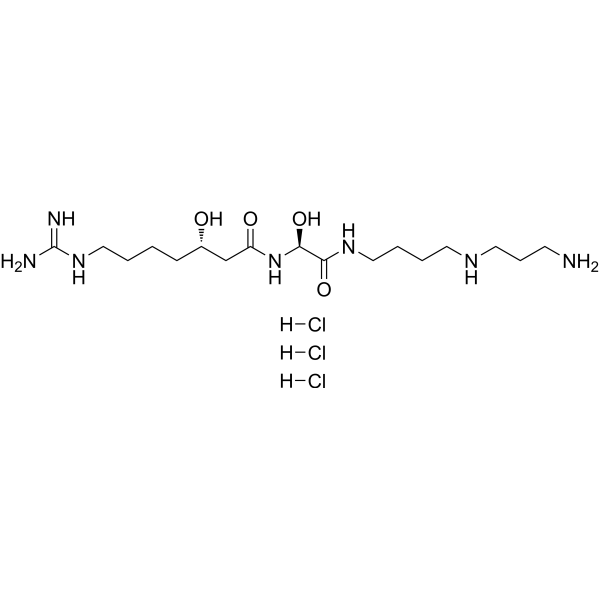 0 ImagesCat. No.: HY-15087ACAS No.: 80952-47-2Spergualin trihydrochloride is a natural occurring antibiotic initially identified from culture filtrates of Bacillus laterosporus BMG162-aF2.
-
Indomethacin (GMP)
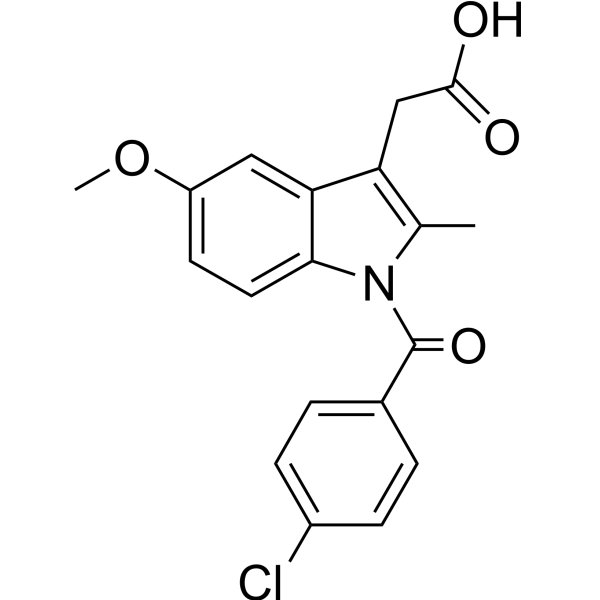 0 ImagesIndomethacin (GMP) is Indomethacin (HY-14397) produced by using GMP guidelines. GMP small molecules work appropriately as an auxiliary reagent for cell therapy manufacture. Indomethacin (Indometacin) is a potent, orally active COX1/2 inhibitor with IC50 values of 18 nM and 26 nM for COX-1 and COX-2, respectively. Indomethacin has anticancer activity and anti-infective activity. Indomethacin can be used for cancer, inflammation and viral infection research.
-
Thalrugosaminine
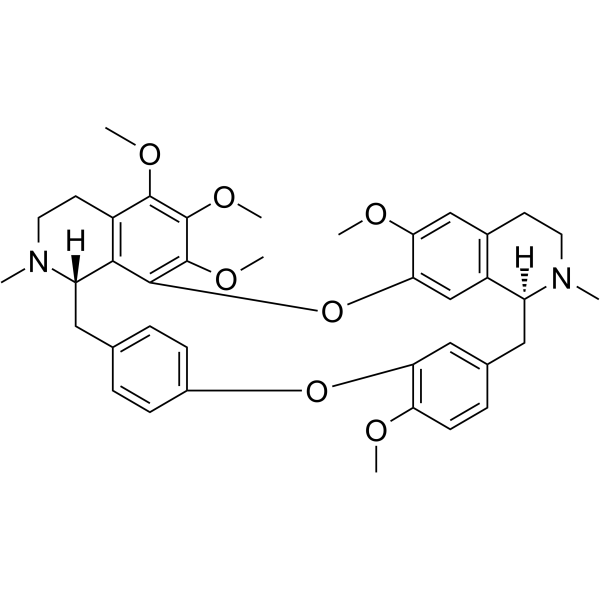 0 ImagesCat. No.: HY-N6078CAS No.: 22226-73-9Thalrugosaminine is a benzylisoquinoline alkaloid isolated from the roots of Thalictrum minus. Thalrugosaminine shows good antibacterial activity with MIC values of 64-128 µg/ml.
-
EP2
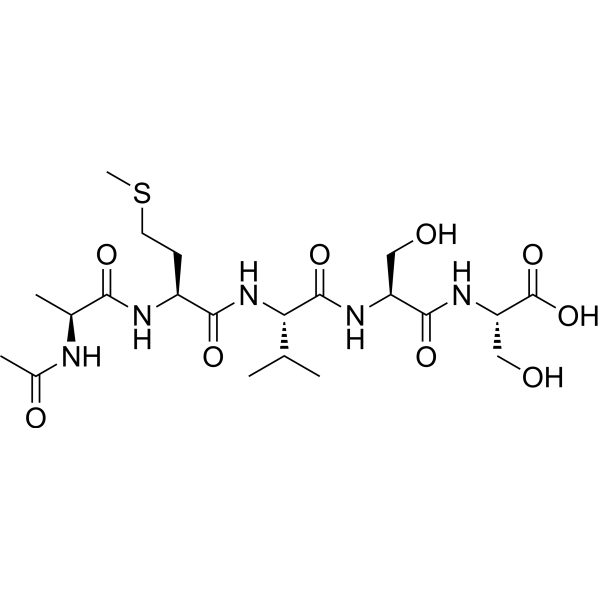 0 ImagesCat. No.: HY-P5701CAS No.: 749252-78-6EP2 is an antimicrobial peptide. EP2 has antibacterial and antifungal activities. EP2 inhibits E. gallinarum, P. pyocyanea, A. baumanii, K. terrigena with a MIC value of 11.4 μg/mL.
-
RFQF4
 0 ImagesCat. No.: HY-P11132RFQF4 is a nanonet-forming peptide and antibacterial agent. RFQF4 exhibits excellent bacterial capture capability coupled with moderate antibacterial activity. RFQF4 shows bactericidal activity against E. coli, S. typhimurium, S. aureus, L. monocytogenes, and S. epidermidis (IC50: 4.89-21.85 μM).
-
LPZ-51
 0 ImagesCat. No.: HY-183611LPZ-51 is a Vibrio β-lactam resistance sensor kinase (VbrK) inhibitor with a Ki value of 1.09 μM. LPZ-51 inhibits blaA gene expression at the transcriptional level by blocking the kinase activity of VbrK, reduces β-lactamase synthesis, and does not affect bacterial growth. LPZ-51 acts synergistically with β-lactam antibiotics. LPZ-51 decreases bacterial load, alleviates intestinal inflammation, and improves survival rate in zebrafish infection models. LPZ-51 can be used in studies related to Vibrio parahaemolyticus infection.
-
Davercin (Standard)
 0 ImagesCat. No.: HY-100584RCAS No.: 55224-05-0Synonyms: Erythromycin Cyclocarbonate (Standard)Maraviroc (Standard) is the analytical standard of Maraviroc. This product is intended for research and analytical applications. Maraviroc (UK-427857) is a selective CCR5 antagonist with activity against human HIV.




