



IRE1α
IRE1α (inositol-requiring enzyme 1 alpha) functions as a transmembrane sensor of endoplasmic reticulum (ER) stress and a key regulator of the unfolded protein response (UPR)[1][2]. Mechanistically, it possesses dual kinase and endoribonuclease activities, which coordinate adaptive responses to maintain ER proteostasis and control cell fate decisions[1][3][4]. IRE1α participates in noncanonical processes by modulating mitochondria-associated membranes (MAMs) to regulate calcium flux and bioenergetics independently of its UPR activity[5][6]. In disease models, IRE1α facilitates cardiomyocyte hypertrophic growth by promoting translation of 5' terminal oligopyrimidine (TOP)-motif mRNAs and sustaining protein synthesis under stress conditions[2]. It also contributes to cancer progression through degradation of tumor-suppressive mRNAs and activation of pro-survival pathways[3][4]. Compared with its paralog IRE1β, which is largely restricted to epithelial tissues and displays distinct luminal sensing mechanisms, IRE1α exhibits ubiquitous expression and essential roles in systemic metabolism, immune function, and development[1][7]. Pharmacologically, selective inhibitors targeting either the RNase or kinase domains of IRE1α can attenuate maladaptive signaling in cancer, neurodegeneration, viral infection, and fibrotic disorders, providing valuable tools for experimental modulation and therapeutic exploration[4][8][9].
References:
- [1]. Feldman HC, et al. Development of a Chemical Toolset for Studying the Paralog-Specific Function of IRE1. ACS Chem Biol. 2019 Dec 20;14(12):2595-2605. [Content Brief]
- [2]. Li C, et al. IRE1α Mediates the Hypertrophic Growth of Cardiomyocytes Through Facilitating the Formation of Initiation Complex to Promote the Translation of TOP-Motif Transcripts. Circulation. 2024 Sep 24;150(13):1010-1029. [Content Brief]
- [3]. Pluquet O, et al. Posttranscriptional regulation of PER1 underlies the oncogenic function of IREα. Cancer Res. 2013 Aug 1;73(15):4732-43. [Content Brief]
- [4]. Raymundo DP, et al. Pharmacological Targeting of IRE1 in Cancer. Trends Cancer. 2020 Dec;6(12):1018-1030. [Content Brief]
- [5]. Carreras-Sureda A, et al. Non-canonical function of IRE1α determines mitochondria-associated endoplasmic reticulum composition to control calcium transfer and bioenergetics. Nat Cell Biol. 2019 Jun;21(6):755-767. [Content Brief]
- [6]. Agellon LB, et al. Avoiding raising the ire of IRE1α. Cell Calcium. 2019 Nov;83:102056. [Content Brief]
- [7]. Oikawa D, et al. Direct association of unfolded proteins with mammalian ER stress sensor, IRE1β. PLoS One. 2012;7(12):e51290. [Content Brief]
- [8]. Wiese W, et al. IRE1α Inhibitors as a Promising Therapeutic Strategy in Blood Malignancies. Cancers (Basel). 2022 May 20;14(10):2526. [Content Brief]
- [9]. Fink SL, et al. IRE1α promotes viral infection by conferring resistance to apoptosis. Sci Signal. 2017 Jun 6;10(482):eaai7814. [Content Brief]
All Product Categories
-
IRE1α Related Products (8)
Related Products (8)

-
Tauroursodeoxycholate dihydrate
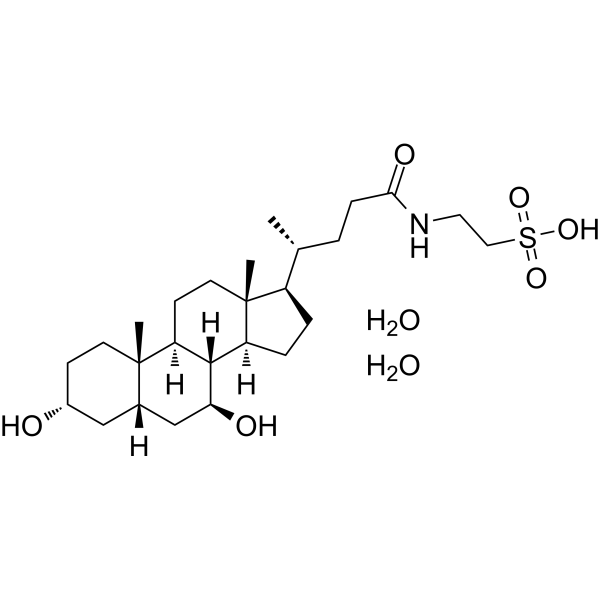 0 ImagesSynonyms: Tauroursodeoxycholic acid dihydrate; TUDCA dihydrate; UR 906 dihydrateTauroursodeoxycholate dehydrate is an orally active taurine conjugate of Ursodeoxycholic acid (HY-13771). Tauroursodeoxycholate dehydrate inhibits caspase-3/7, Apoptosis, IRE1α/TRAF2/NF-κB, prevents JNK phosphorylation, inhibits ROS generation, and activates Akt signaling. Tauroursodeoxycholate dehydrate prevents cataract formation, reduces renal tubular damage in type 2 diabetic mice, reduces I/R injury in liver, and inhibits intestinal inflammation and barrier disruption in nonalcoholic fatty liver disease.
-
6-Bromo-2-hydroxy-3-methoxybenzaldehyde
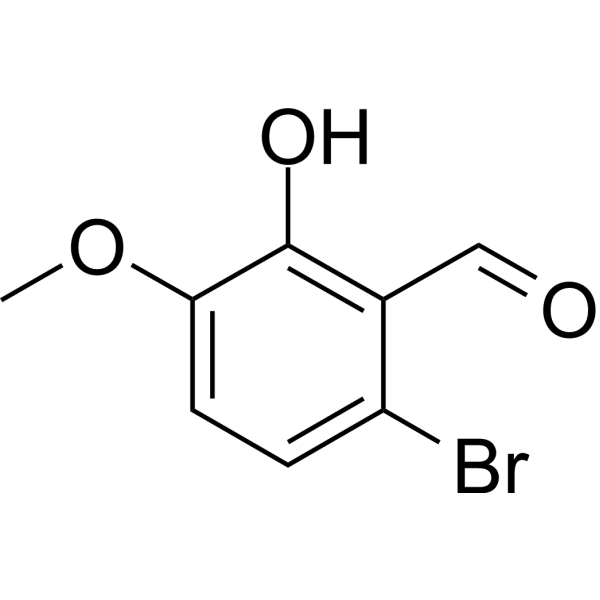 0 ImagesSynonyms: NSC956826-Bromo-2-hydroxy-3-methoxybenzaldehyde (NSC95682) (Compound 3-5) is a selective and potent IRE-1α inhibitor with an IC50 value of 0.08 μM. 6-Bromo-2-hydroxy-3-methoxybenzaldehyde can be used for research on diseases associated with the unfolded protein response (UPR), such as cancer and autoimmune diseases.
-
Sunitinib glucuronate
 0 ImagesCat. No.: HY-10255CCAS No.: 1818285-48-1Synonyms: SU 11248 glucuronateSunitinib (SU 11248) glucuronate is a multi-targeted receptor tyrosine kinase inhibitor with IC50s of 80 nM and 2 nM for VEGFR2 and PDGFRβ, respectively. Sunitinib glucuronate, an ATP-competitive inhibitor, effectively inhibits autophosphorylation of Ire1α by inhibiting autophosphorylation and consequent RNase activation.


-
3-Ethoxy-5,6-dibromosalicylaldehyde
 0 Images3-Ethoxy-5,6-dibromosalicylaldehyde is an IRE1/ERN1 inhibitor, with an IC50 of 0.12 μM, a Ki of 71-88 nM, and a Kd of 100 nM against the ribonuclease activity of hIRE1α, as well as an IC50 of 4.8 μM against yeast Ire1. It shows selectivity toward IRE1 ribonuclease. 3-Ethoxy-5,6-dibromosalicylaldehyde blocks the IRE1/ERN1-mediated unfolded protein response (UPR) signaling pathway, including XBP-1 mRNA splicing, induction of XBP1 target genes, and activation of MAPK8/9/10, but does not alter the phosphorylation level of IRE1α or the PERK/ATF6 pathway. 3-Ethoxy-5,6-dibromosalicylaldehyde inhibits chikungunya virus replication, induces growth arrest, apoptosis and clonogenic inhibition in pancreatic cancer cells, reduces FB1 (Fumonisin B1) (HY-N6719)-induced autophagy and cell death, regulates PGG-induced senescence and apoptosis, and alleviates Sorafenib (HY-10201)-induced vacuolization and damage in hepatic stellate cells. 3-Ethoxy-5,6-dibromosalicylaldehyde can be used in research related to chikungunya virus infection, pancreatic cancer, FB1-induced nephrotoxicity, liver cancer, breast cancer, lung cancer and liver fibrosis.
-
PAIR2
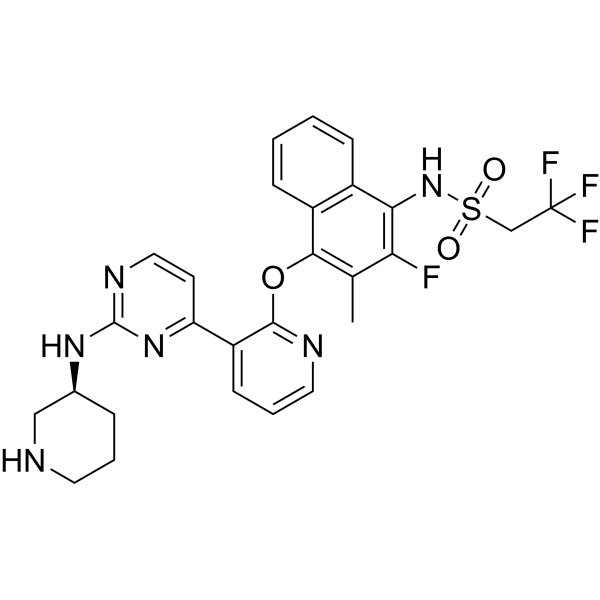 0 ImagesCat. No.: HY-145425CAS No.: 2771006-54-1PAIR2 is a highly selective inhibitor targeting the kinase domain of human IRE1α, with a Ki value of 8.8 nM against human IRE1α. PAIR2 fully occupies the ATP-binding site of the IRE1α kinase domain, partially antagonizes the ribonuclease activity of IRE1α, specifically inhibits regulated IRE1α-dependent decay (RIDD) and its mediated substrate cleavage, while preserving the splicing function of Xbp1 mRNA. PAIR2 also promotes the differentiation of B cells into plasma cells, blocks IRE1α-induced cell apoptosis, and restores the expression of Fgfr2 mRNA in AT2 cells. PAIR2 effectively reaches a steady-state concentration in the lung tissues of Mus musculus, and serves as an important tool for investigating the function of the IRE1α signaling pathway in diseases such as pulmonary fibrosis.
-
Lard oil
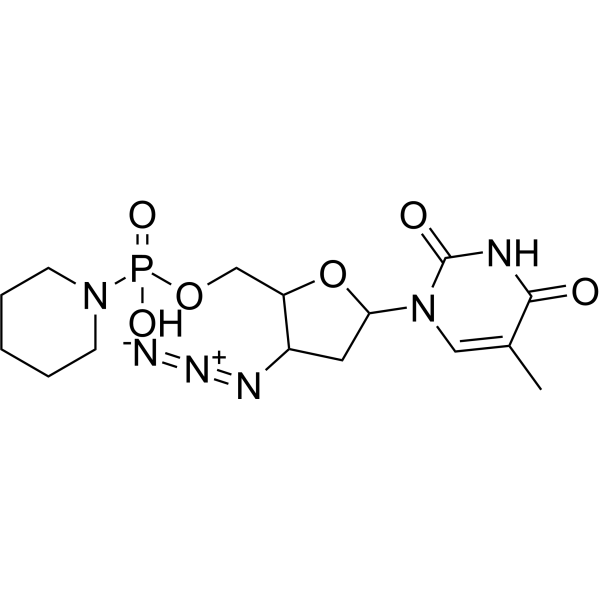 0 ImagesCat. No.: HY-W127601CAS No.: 8016-28-2Lard oil is an orally active biochemical reagent. Lard oil upregulates PERK, eIF2a, CHOP, OPN, TLR2, TLR4, TNF-α, and downregulates GRP78 and IRE1a. Lard oil induces responses such as body fat accumulation, elevated serum insulin levels, increased HOMA-IR, hepatic ectopic lipid deposition, hepatic endoplasmic reticulum stress, and hepatic inflammation. Lard oil can be used in studies related to diet-induced obesity, insulin resistance, and non-alcoholic fatty liver disease.



