



PD-1/PD-L1
PD-1/Programmed death-ligand 1
Programmed death-1 (PD-1) is a cell surface receptor that functions as a T cell checkpoint and plays a central role in regulating T cell exhaustion. PD-1 is activated by the engagement of its ligands PDL-1 or PDL-2. PD-1 receptor delivers inhibitory checkpoint signals to activated T cells upon binding to its ligands PD-L1 and PD-L2 expressed on antigen-presenting cells and cancer cells, resulting in suppression of T-cell effector function and tumor immune evasion. Inhibiting the programmed cell death-1 (PD-1)/programmed cell death-ligand 1 (PD-L1) pathway is an attractive strategy for tumor immunotherapy.
PD-1 is expressed on activated T cells, B cells, monocytes, dendritic cells (DCs), regulatory T cells (Tregs), and natural killer T cells (NKT). It is a member of a family of immunoglobulin domain (Ig) co-receptors that modify the outcome of activation of the T cell receptor by an antigen-presenting cell (APC) or infected target cell. PD-L1 is widely and constitutively expressed on both hematopoietic and nonhematopoietic cells; e.g., naive T and B cells, vascular endothelial cells, and pancreatic islet cells, whereas PD-L2 is exclusively and inducibly expressed on professional APCs.
All Product Categories
-
PD-1/PD-L1 Inhibitors
(344)
View all products
-
PD-1/PD-L1 Agonists
(5)
View all products
-
PD-1/PD-L1 Antagonists
(11)
View all products
-
PD-1/PD-L1 Activators
(16)
View all products
-
PD-1/PD-L1 Modulators
(7)
View all products
-
PD-1/PD-L1 Inducers
(3)
View all products
-
PD-1/PD-L1 Degraders
(13)
View all products
-
PD-1/PD-L1 Control
(1)
View all products
-
PD-1/PD-L1 Substrates
(2)
View all products
-
PD-1/PD-L1 Ligands
(7)
View all products
-
PD-1/PD-L1 Related Products (454)
Related Products (454)

-
Antibodies (8)
-
PD-1/PD-L1-IN-34
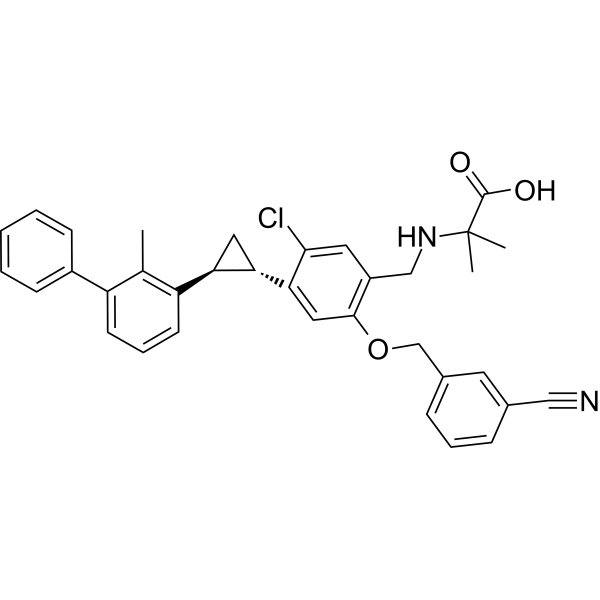 0 ImagesCat. No.: HY-154869CAS No.: 2924403-17-6PD-1/PD-L1-IN-34 (Compound (1S,2S)-A25) inhibits PD-1/PD-L1 interaction (IC50=0.029 μM), with a selected binding affinity with PD-L1 (KD=0.1554 μM). PD-1/PD-L1-IN-34 inhibits tumor growth by activating the immune microenvironment.
-
FGFR-IN-25
 0 ImagesCat. No.: HY-181005FGFR-IN-25 (Compound 19E) is a FGFR inhibitor (IC50s: 1.30 nM and 0.85 nM for FGFR1 and FGFR2, respectively) and radiosensitizer. FGFR-IN-25 effectively reduces the phosphorylation of FGFR1 and its key downstream effectors, pAKT and pERK. FGFR-IN-25 exerts broad-spectrum antitumor activity against gastric cancer, colorectal carcinoma, hepatocellular carcinoma, breast cancer, triple-negative breast cancer, and glioblastoma. FGFR-IN-25, when combined with radiotherapy, synergistically activates the ROS-Caspase-3-GSDME axis, downregulates PD-L1 expression, and induces immunogenic cell death (ICD). FGFR-IN-25 combined with radiotherapy improves the antitumor efficacy.
-
PD-1/PD-L1-IN-38
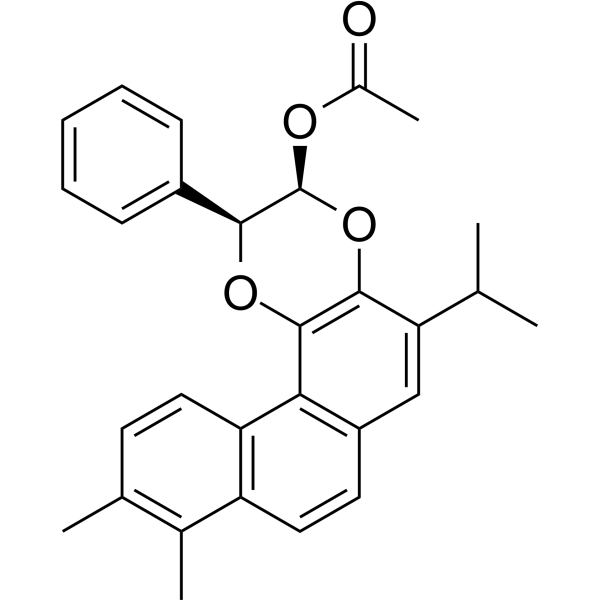 0 ImagesCat. No.: HY-N12537PD-1/ PD-L1-in-38 is a PD-1/PD-L1 inhibitor, which can inhibit the proliferation of tumor cells, promote the secretion of INF-γ by CD8+ T cells, and inhibit the ability of PD-1/PD-L1 signal transduction. PD-1/PD-L1-IN-38 has antitumor activity.
-
UR238
 0 ImagesCat. No.: HY-180127CAS No.: 2728747-80-4UR238 is a proteasome inhibitor. UR238 reduces levels of the immunomodulator HE4. UR238 decreases PDL1 expression on cells. UR238 exhibits anticancer activity against epithelial ovarian cancer.

-
PD-1/PD-L1-IN-28
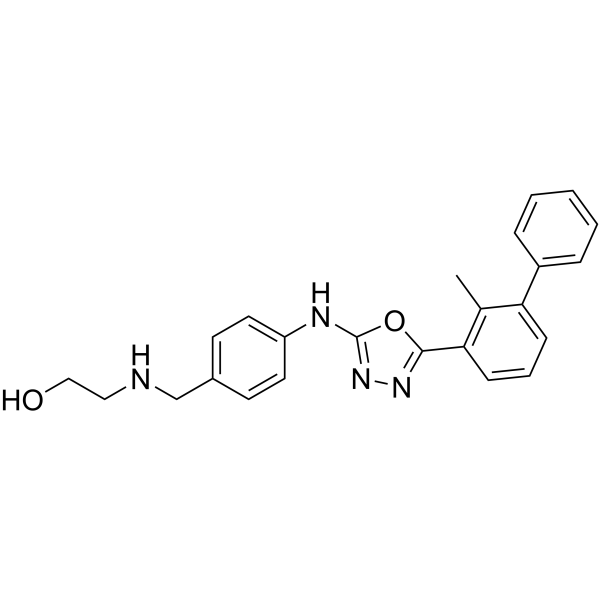 0 ImagesCat. No.: HY-148305CAS No.: 2499965-07-8PD-1/PD-L1-IN-28 (compound 3) is an immune checkpoint inhibitor of PD-1/PD-L1 signaling pathway (IC50=0.744 µM). PD-1/PD-L1-IN-28 shows good research potential in tumor immunity.
-
XQ-P3 sodium
 0 ImagesCat. No.: HY-177801XQ-P3 sodium is an aptamer that binds to PD-L1. XQ-P3 can inhibit the PD-1/PD-L1 interaction and restore the function of T cells to detect and attack tumor cells.
-
NPH16
 0 ImagesCat. No.: HY-174424NPH16 is an orally active PD-1/PD-L1 inhibitor with an IC50 of 24.4 nM. NPH16 can promote HepG2 cell apoptosis. NPH16 shows excellent in vivo antitumor efficacy and favorable pharmacokinetic properties. NPH16 can be used for the study of liver cancer.
-
Melafolone
 0 ImagesCat. No.: HY-165394CAS No.: 129724-42-1Melafolone is a potent dual COX-2/EGFR inhibitor with IC50s of 13.2 μM (COX-2) and 17.4 μM (EGFR). Melafolone enhances the effect of anti-PD-1 through vascular normalization and PD-L1 downregulation via the PI3K/Akt pathway in Lewis lung carcinoma (LLC) and CMT167 models. Melafolone can be used for lung cancer research.
-
CYP51/PD-L1-IN-4
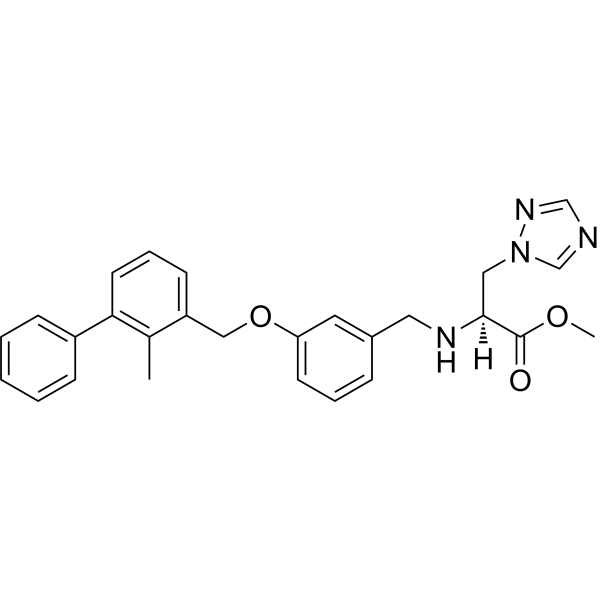 0 ImagesCat. No.: HY-149617CAS No.: 3032391-34-4CYP51/PD-L1-IN-4 (compound 14a-2) is a potent dual-target (CYP51/PD-L1) inhibitor, with IC50 values of 0.17 and 0.021 μM, respectively. CYP51/PD-L1-IN-4 exhibits excellent antifungal and antidrug-resistant fungal activity in vitro. CYP51/PD-L1-IN-4 can be used for fungal infections research.
-
LZFPN-90
 0 ImagesCat. No.: HY-162519Synonyms: LZ90LZFPN-90 (LZ90) is a dual NAMPT/PD-L1 targeting compound. LZFPN-90 inhibits PD-1/PD-L1 interaction and NAMPT activity. LZFPN-90 inhibits cell growth in a NAMPT-dependent manner and blocks the cell cycle, subsequently inducing apoptosis. LZFPN-90 exerted target-dependent antitumor activities, affecting metabolic processes and the immune system.
-
MEDI-0680
 0 ImagesCat. No.: HY-P991345Synonyms: AMP-514MEDI-0680 (AMP-514) is a human IgG4 monoclonal antibody (mAb) targeting PDCD1/PD-1/CD279. MEDI-0680 can be used in Diffuse Large B-Cell Lymphoma (DLBCL) research.
-
Polθ-IN-11
 0 ImagesCat. No.: HY-183748CAS No.: 3082173-75-6Polθ-IN-11 is an orally active DNA polymerase θ (Polθ) ATPase inhibitor with an IC50 of 4.3 nM against human targets. Polθ-IN-11 activates the cGAS-STING pathway. Polθ-IN-11 upregulates the expression of PD-L1 in HR-deficient cancer cells. Polθ-IN-11 acts synergistically with PARP inhibition in HR-deficient cancer cells and in vivo xenograft models. Polθ-IN-11 can be used in studies related to HR-deficient cancers.
-
IMM25011
 0 ImagesCat. No.: HY-P992385IMM25011 is an Anti-CD274/PD-L1/B7-H1 antibody.
-
PD-1/PD-L1 antagonist 1
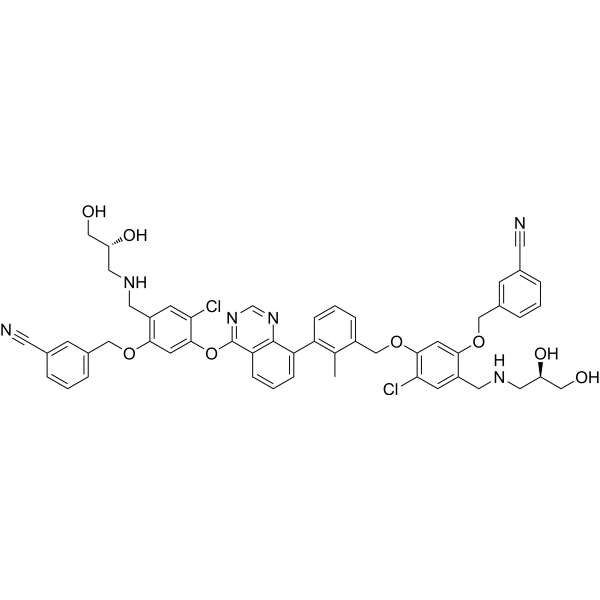 0 ImagesCat. No.: HY-158052PD-1/PD-L1 antagonist 1 (Compound A5) is an antagonist for programmed cell death-1 (PD-1) and programmed cell death ligand-1 (PD-L1) interaction, with an IC50 of 23.78 nM.
-
PD-1/PD-L1-IN-22
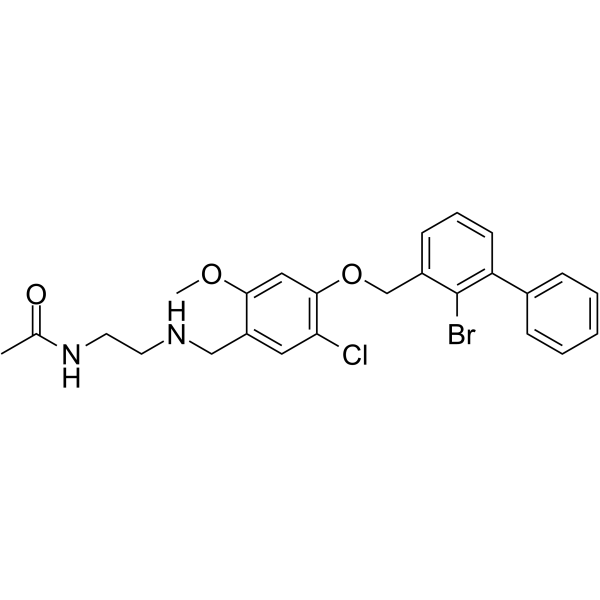 0 ImagesCat. No.: HY-145773CAS No.: 2159063-12-2PD-1/PD-L1-IN-22 (Example 2) is a small-molecule inhibitor of the PD-1/PD-L1 protein-protein interaction. PD-1/PD-L1-IN-22 blocks PD-1/PD-L1 with the IC50 of 0.732 μM. PD-1/PD-L1-IN-22 can be used for the research of cancers, infectious diseases and autoimmune diseases.
-
RC98
 0 ImagesCat. No.: HY-P992448RC98 is a monoclonal antibody targeting programmed cell death ligand 1 (PD-L1) and acts as a selective PD-L1 inhibitor. RC98 binds specifically to human and cynomolgus monkey PD-L1. RC98 blocks the interaction between PD-L1 and its receptor PD-1 to reverse T-cell inactivation mediated by PD-1/PD-L1 signaling. RC98 enhances the cytotoxic T-lymphocyte-mediated anti-tumor immune response against PD-L1-expressing tumor cells. RC98 can be used for the research of tumor immunity and solid tumors.
-
PD-1/PD-L1-IN-18
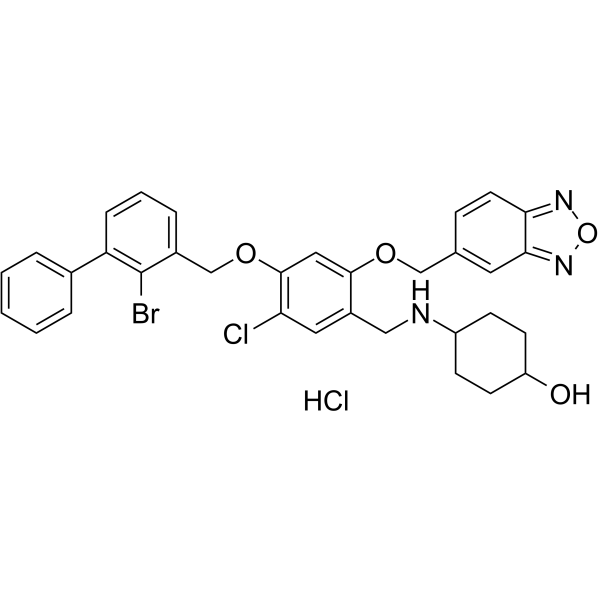 0 ImagesCat. No.: HY-145768CAS No.: 2648851-27-6PD-1/PD-L1-IN-18 (Compound L31) is a small-molecule inhibitor of the PD-1/PD-L1 protein-protein interaction. PD-1/PD-L1-IN-18 blocks PD-1/PD-L1 with the IC50 of 1.054 μM. Antitumor Activity.
-
DPAP
 0 ImagesCat. No.: HY-182899DPAP is a p-ERK1/2 inhibitor with an IC50 of 7.85 μM against p-ERK1/2. DPAP inhibits the expression of p-MEK1/2 and disrupts the Ras-ERK signaling pathway. DPAP inhibits the expression of COX-2 in nerve cells. DPAP damages DNA and mitochondria, induces Apoptosis via the mitochondrial pathway, and upregulates PD-L1. DPAP inhibits melanoma metastasis and angiogenesis, and inactivates spinal microglia and astrocytes. DPAP exhibits anti-melanoma activity and can be combined with anti-PD-1 monoclonal antibodies to modify anti-tumor effects. DPAP is applicable for the research of melanoma.
-
YDH-704
 0 ImagesCat. No.: HY-187370YDH-704 is a PAK1/HDAC10 inhibitor, with IC50 values of 0.05 μM and 0.02 μM against human targets, respectively. YDH-704 blocks PAK1-mediated oncogenic signaling pathways, inhibits the proliferation and migration of tumor cells, suppresses the epigenetic regulatory function of HDAC10, downregulates PD-L1 expression, and regulates polyamine metabolism. YDH-704 reduces MDSC/Treg infiltration, enhances the infiltration and activation of CD8+ T cells, and inhibits tumor growth and lung metastasis. YDH-704 can be used for research on triple-negative breast cancer.




