



PI3K
Phosphoinositide 3-kinase
PI3K (Phosphoinositide 3-kinase), via phosphorylation of the inositol lipid phosphatidylinositol 4,5-bisphosphate (PI(4,5)P2), forms the second messenger molecule phosphatidylinositol (3,4,5)-trisphosphate (PI(3,4,5)P3) which recruits and activates pleckstrin homology domain containing proteins, leading to downstream signalling events crucial for proliferation, survival and migration. Class I PI3K enzymes consist of four distinct catalytic isoforms, PI3Kα, PI3Kβ, PI3Kδ and PI3Kγ.
There are three major classes of PI3K enzymes, being class IA widely associated to cancer. Class IA PI3K are heterodimeric lipid kinases composed of a catalytic subunit (p110α, p110β, or p110δ; encoded by PIK3CA, PIK3CB, and PIK3CD genes, respectively) and a regulatory subunit (p85).
The PI3K pathway plays an important role in many biological processes, including cell cycle progression, cell growth, survival, actin rearrangement and migration, and intracellular vesicular transport.
PI3K Isoform Specific Products
-
PI3Kα
(233)
View all products
-
PI3Kβ
(162)
View all products
-
PI3Kγ
(182)
View all products
-
PI3Kδ
(200)
View all products
-
PI3KC2α
(8)
View all products
-
PI3KC2β
(12)
View all products
-
PI3KC2γ
(4)
View all products
-
Vps34
(24)
View all products
-
PI3K
(659)
View all products
-
PI3KC3
(1)
View all products
-
p120γ
(1)
View all products
All Product Categories
-
PI3K Inhibitors
(854)
View all products
-
PI3K Agonists
(9)
View all products
-
PI3K Antagonist
(1)
View all products
-
PI3K Activators
(126)
View all products
-
PI3K Modulators
(22)
View all products
-
PI3K Inducers
(3)
View all products
-
PI3K Degraders
(6)
View all products
-
PI3K Controls
(4)
View all products
-
PI3K Substrate
(1)
View all products
-
PI3K Ligands
(9)
View all products
-
PI3K Related Products (1098)
Related Products (1098)

-
Antibodies (16)
-
PI3K Signaling Pathway
-
PI3K Isoform Comparison
-
PI3Kα/HDAC6-IN-1
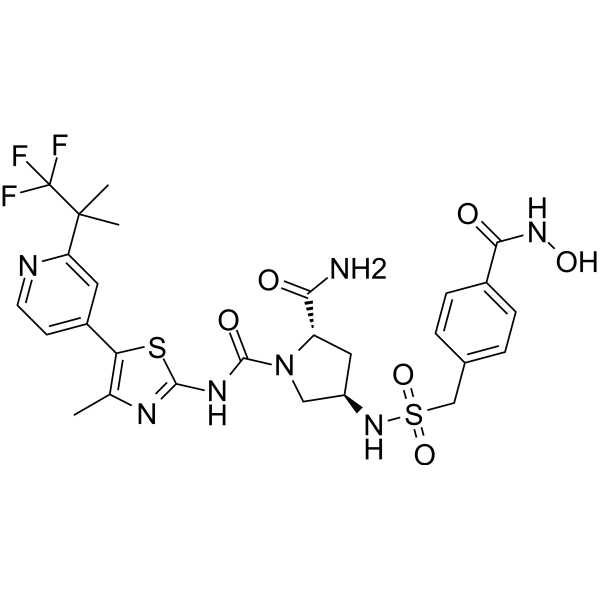 0 ImagesCat. No.: HY-156091CAS No.: 3007565-26-3PI3Kα/HDAC6-IN-1 (compound 21j) is a dual PI3Kα/HDAC6 inhibitor with IC50 of 2.9 and 26 nM, respectively. PI3Kα/HDAC6-IN-1 also inhibits AKT(Ser473) phosphorylation and induces the accumulation of acetylated α-tubulin without affecting acetylated histones H3 and H4. PI3Kα/HDAC6-IN-1 efficiently inhibits L-363 cell line (IC50=0.17 μM) and has good anti-cancer activity.
-
CK37
 0 ImagesCat. No.: HY-101145CAS No.: 1001478-90-5CK37 is a competitive choline kinase-α inhibitor. CK37 inhibits purified recombinant human choline kinase-α activity. CK37 suppresses MAPK and PI3K/AKT signaling, disrupts actin cytoskeletal organization. CK37 diminishs activating phosphorylations of ERK. CK37 exhibits anticancer activity against cervical cancer, melanoma, Lewis lung carcinoma, lung adenocarcinoma, breast cancer, and leukemia.
-
PPM-18
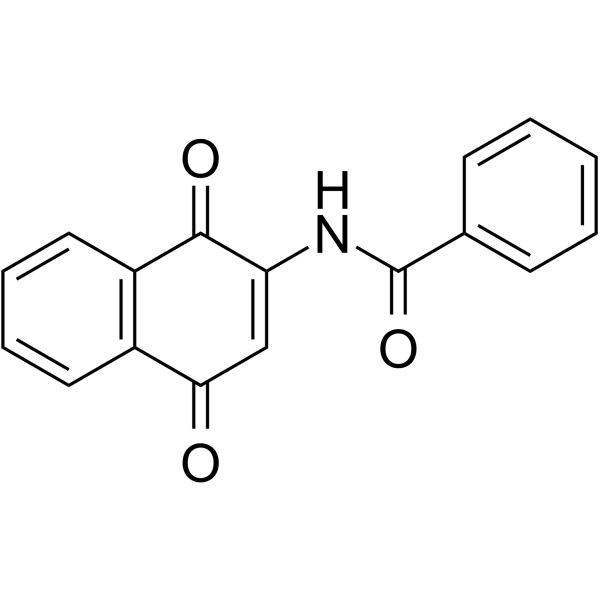 0 ImagesSynonyms: NSC 73233PPM-18 (NSC 73233) is a Vitamin K (HY-B2172) analog. PPM-18 prevents LPS-induced IκBα degradation, thereby inhibiting NF-κB activation and nuclear translocation of NF-κB. PPM-18 inhibits LPS-induced nitrite production and iNOS expression. PPM-18 inhibits HDAC6. PPM-18 induces ROS accumulation, activates AMPK, inhibits the mTORC1 and PI3K/AKT pathways, initiates Autophagy, and induces Apoptosis. PPM-18 suppresses seizures in zebrafish and mouse epilepsy models. PPM-18 prevents LPS-induced lethal toxicity and delayed hypotension. PPM-18 exhibits anticancer activity against leukemia and bladder cancer. PPM-18 can be used in research related to septic shock, bladder cancer and atherosclerosis.
-
FD2056
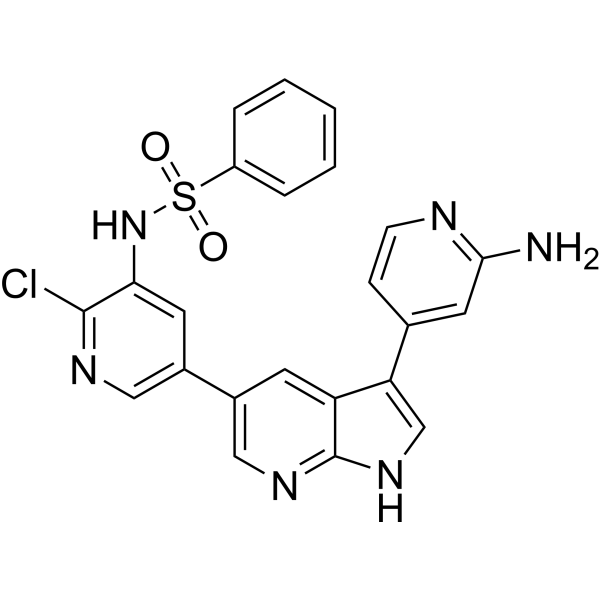 0 ImagesCat. No.: HY-155180CAS No.: 2685870-87-3FD2056 is a potent and orally active PI3K inhibitor. FD2056 inhibits PI3Kα/PI3Kβ/PI3Kγ/PI3Kδ with IC50s of 0.30, 0.80, 1.10, 0.42 nM. FD2056 also inhibits CDK2-CyclinA2 and CDK4-CyclinD3 with IC50 of 115.95 and 2782.15 nM. FD2056 inhibits breast cancer cell proliferation with IC50s of 1.06, 0.04, 1.40 μM for MDA-MB-231, MDA-MB-468, MCF-7 cells. FD2056 also induces cancer apoptosis and inhibits tumor growth.
-
Antcin K
 0 ImagesCat. No.: HY-N9980CAS No.: 741268-13-3Antcin K is a selective inhibitor targeting the PI3K/Akt, NF-κB, MEK1/2-ERK, p38 and AP-1 pathways. Antcin K upregulates IL-10 expression, thereby inhibiting the production of pro-inflammatory factors, blocking monocyte adhesion, reducing tissue damage, and promoting myogenesis. Antcin K has significant anti-inflammatory, anti-damage and tissue protective activities. Antcin K is mainly used in the research of inflammation-related diseases such as periodontitis, rheumatoid arthritis, and skeletal muscle injury.
-
Pan-RAS-IN-8
 0 ImagesCat. No.: HY-177762CAS No.: 3103594-37-9Pan-RAS-IN-8 (Page 152, third row, third from left to right) is a pan-RAS inhibitor. Pan-RAS-IN-8 blocks the binding of RAS to downstream effector molecules by forming a ternary complex, thereby inhibiting the activation of the MAPK and PI3K-AKT signaling pathways. Pan-RAS-IN-8 can be used for the research of cancer, inflammatory diseases and autoimmune diseases.
-
PI3K/mTOR-IN-20
 0 ImagesCat. No.: HY-180556PI3K/mTOR-IN-20 is a selective dual PI3K/mTOR inhibitor. PI3K/mTOR-IN-20 demonstrates nanomolar antiproliferative effects with IC50s of 0.380 and 0.090 μM for MRC-5 and Mlg2908 cells. PI3K/mTOR-IN-20 reduces Ashcroft scores, hydroxyproline content, collagen deposition, and downregulates fibrosis-related proteins, while restoring lung architecture in a Bleomycin-induced pulmonary fibrosis model. PI3K/mTOR-IN-20 shows a favorable safety profile with steady weight recovery and no distinct liver or kidney toxicity. PI3K/mTOR-IN-20 can be used for fetal lung fibroblasts research.
-
PI3K-IN-56
 0 ImagesCat. No.: HY-171558CAS No.: 2633645-58-4PI3K-IN-56 (Compound 1) is an orally active, potent and selective irreversible inhibitor of phosphoinositide 3-kinase (PI3K). PI3K-IN-56 irreversibly blocks the phosphatidylinositol-3,4,5-triphosphate (PIP3) production and downstream AKT signaling pathway. PI3K-IN-56 is promising for research of PI3Kα-driven cancers, such as breast and ovarian cancers.

-
PI3Kδ-IN-3
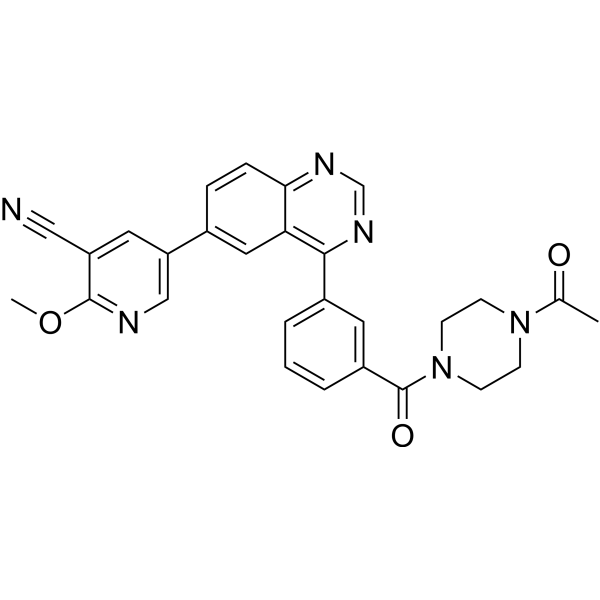 0 ImagesCat. No.: HY-125376CAS No.: 1431540-99-6PI3Kδ-IN-3 (Compound 11) is a PI3Kδ inhibitor (IC50: 9 nM). PI3Kδ-IN-3 inhibits B cell function. PI3Kδ-IN-3 has good pharmacokinetic properties.

-
PI3Kα-IN-13
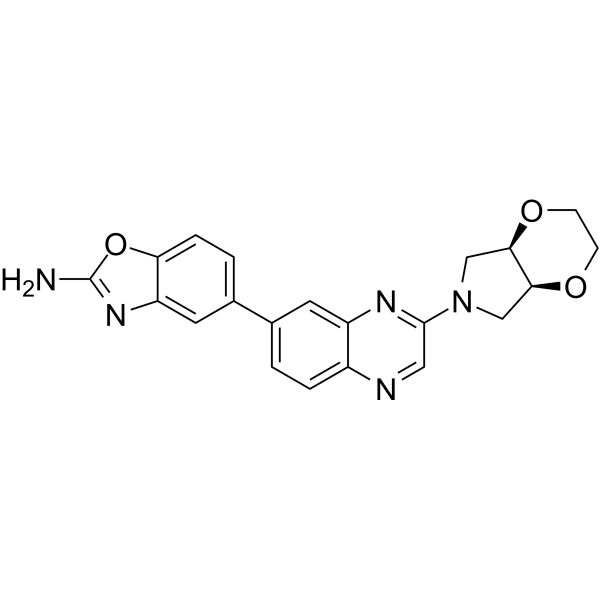 0 ImagesCat. No.: HY-156018CAS No.: 2955529-67-4PI3Kα-IN-13 (Compound 18a) is a PI3Kα inhibitor (IC50: 2.5 nM). PI3Kα-IN-13 induces tumor cell apoptosis. PI3Kα-IN-13 inhibits cancer cell proliferation with IC50s of 0.75 μM (MCF-7), 3.79 μM (HCT-116), 13.71 μM (MDA-MB-231), 9.85 μM (SW620), respectively. PI3Kα-IN-13 inhibits tumor cell colony formation, migration and invasion.
-
PI3K/mTOR-IN-19
 0 ImagesCat. No.: HY-179155PI3K/mTOR-IN-19 is an orally active, potent, selective PI3K (IC50 = 4.23 nM) and mTOR (IC50 = 2.3 nM) inhibitor. PI3K/mTOR-IN-19 significantly inhibits Eca109 cell viability and induces apoptosis. PI3K/mTOR-IN-19 causes G0/G1 cell cycle arrest, decreased mitochondrial membrane potential, and demonstrates marked telomerase inhibitory activity. PI3K/mTOR-IN-19 modulates the expression of key apoptotic regulators (Bcl-2, Bax, and p53) and downregulates the PI3K/Akt/mTOR signaling pathway. PI3K/mTOR-IN-19 can be used for the study of esophageal cancer.
-
PI3K-IN-41
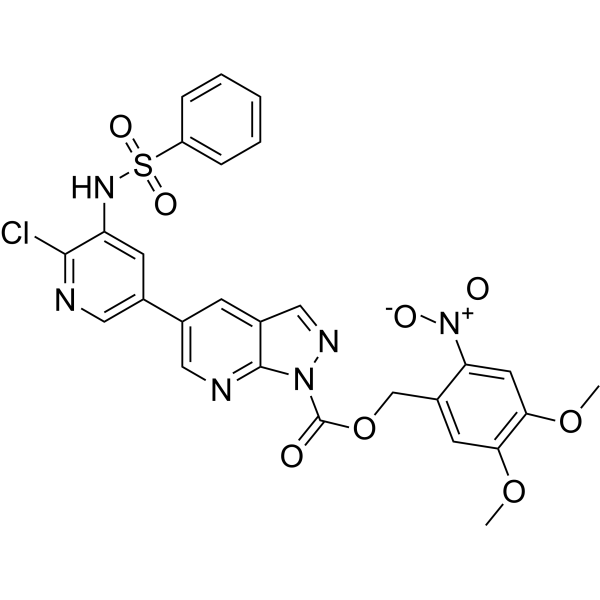
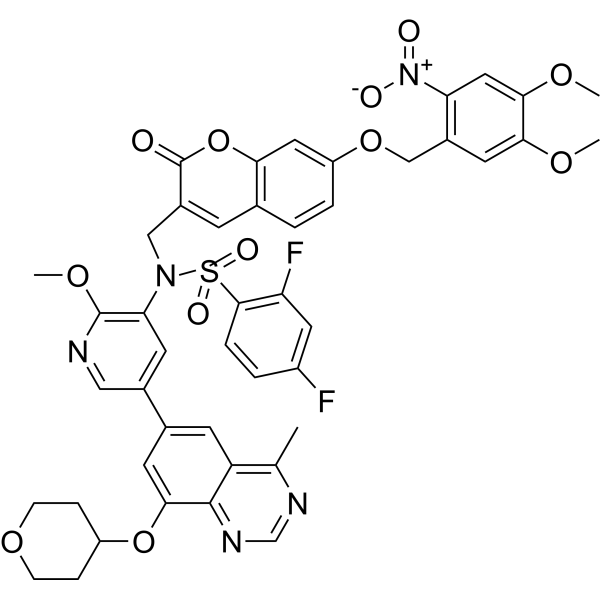 0 ImagesCat. No.: HY-155730PI3K-IN-41 (compound 2) is a photocaged compound, as well as a photocaged PI3K inhibitor (IC50=18.92 nM) with anticancer properties. PI3K-IN-41 has potential to be used in precisely controlled cancer therapeutics. PI3K-IN-41 exhibits potent PI3K ihibition upon UV light irradiation, and enhances antitumor effect.
-
Sinigrin (Standard)
 0 ImagesSynonyms: Allyl-glucosinolate (Standard); 2-Propenyl-glucosinolate (Standard)Sinigrin (Standard) (Allyl-glucosinolate (Standard)) is the analytical standard of Sinigrin (HY-N0404). This product is intended for research and analytical applications. Sinigrin (Allyl-glucosinolate) is an orally active glucosinolate found in cruciferous plants. Sinigrin possesses multiple activities such as anti-cancer, antibacterial, antifungal, anti-inflammatory, antioxidant, and inhibition of fat synthesis. Sinigrin can be used in the research of tumors, inflammatory, and metabolic diseases.
-
LAS195319
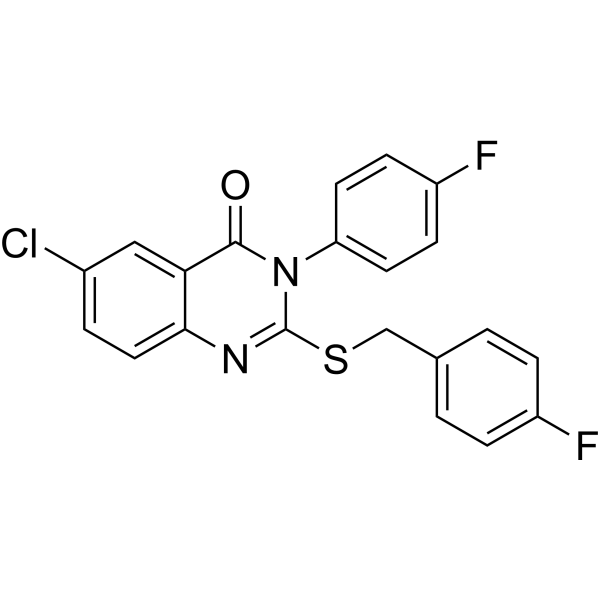
 0 ImagesCat. No.: HY-123862CAS No.: 1605328-04-8LAS195319 is an orally active and potent inhibitor against PI3Kδ with an IC50 value of 0.5 nM. LAS195319 is also a highly selective inhibitor against an extensive panel of proteins, lipid kinases and GPCRs. LAS195319 causes an inhibition of neutrophil and eosinophil infiltration. LAS195319 is promising for research of respiratory diseases such as asthma and chronic obstructive pulmonary disease (COPD).
-
D-Allose-13C-2
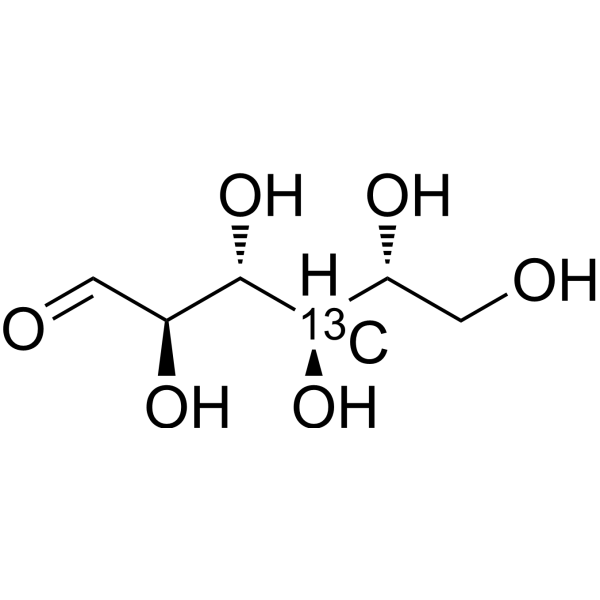 0 ImagesCat. No.: HY-128741S2D-Allose-13C-2 is the 13C labeled D-Allose (HY-128741). D-Allose exhibits antitumor activity against various cancer cells. D-Allose scavenges reactive oxygen species (ROS) and reduces oxidative stress damage. D-Allose exhibits anti-inflammatory and neuroprotective through inhibition of TLR4/PI3K/AKT signaling pathway. D-Allose exhibits antihypertensive, cryoprotective, and anti-osteoporotic activities.
-
Dihydrocapsaicin (Standard)
 0 ImagesDihydrocapsaicin (Standard) is the analytical standard of Dihydrocapsaicin. This product is intended for research and analytical applications. Dihydrocapsaicin, a capsaicin, is a potent and selective TRPV1 (transient receptor potential vanilloid channel 1) agonist. Dihydrocapsaicin reduces AIF, Bax, and Caspase-3 expressions, and increased Bcl-2, Bcl-xL and p-Akt levels. Dihydrocapsaicin enhances the hypothermia-induced neuroprotection following ischemic stroke via PI3K/Akt regulation in rat.




