



PI3K
Phosphoinositide 3-kinase
PI3K (Phosphoinositide 3-kinase), via phosphorylation of the inositol lipid phosphatidylinositol 4,5-bisphosphate (PI(4,5)P2), forms the second messenger molecule phosphatidylinositol (3,4,5)-trisphosphate (PI(3,4,5)P3) which recruits and activates pleckstrin homology domain containing proteins, leading to downstream signalling events crucial for proliferation, survival and migration. Class I PI3K enzymes consist of four distinct catalytic isoforms, PI3Kα, PI3Kβ, PI3Kδ and PI3Kγ.
There are three major classes of PI3K enzymes, being class IA widely associated to cancer. Class IA PI3K are heterodimeric lipid kinases composed of a catalytic subunit (p110α, p110β, or p110δ; encoded by PIK3CA, PIK3CB, and PIK3CD genes, respectively) and a regulatory subunit (p85).
The PI3K pathway plays an important role in many biological processes, including cell cycle progression, cell growth, survival, actin rearrangement and migration, and intracellular vesicular transport.
PI3K Isoform Specific Products
-
PI3Kα
(233)
View all products
-
PI3Kβ
(162)
View all products
-
PI3Kγ
(182)
View all products
-
PI3Kδ
(200)
View all products
-
PI3KC2α
(8)
View all products
-
PI3KC2β
(12)
View all products
-
PI3KC2γ
(4)
View all products
-
Vps34
(24)
View all products
-
PI3K
(658)
View all products
-
PI3KC3
(1)
View all products
-
p120γ
(1)
View all products
All Product Categories
-
PI3K Inhibitors
(853)
View all products
-
PI3K Agonists
(9)
View all products
-
PI3K Antagonist
(1)
View all products
-
PI3K Activators
(126)
View all products
-
PI3K Modulators
(22)
View all products
-
PI3K Inducers
(3)
View all products
-
PI3K Degraders
(6)
View all products
-
PI3K Controls
(4)
View all products
-
PI3K Substrate
(1)
View all products
-
PI3K Ligands
(9)
View all products
-
PI3K Related Products (1097)
Related Products (1097)

-
Antibodies (16)
-
PI3K Signaling Pathway
-
PI3K Isoform Comparison
-
PI3Kα-IN-28
 0 ImagesCat. No.: HY-178984CAS No.: 3095278-75-1PI3Kα-IN-28 (Compound 23) is an efficient dual targeted PI3K/BRD4 inhibitor. PI3Kα-IN-28 can inhibit the proliferation of various cells, such as KYSE180 and KYSE450 cells. PI3Kα-IN-28 can concentration dependently inhibit migration and colony formation, induce G0/G1 phase arrest, significantly inhibit DNA synthesis, and significantly increase the proportion of senescent cells. PI3Kα-IN-28 can inhibit the expression of p-AKT and c-Myc and activate the AMPK-p27 pathway. PI3Kα-IN-28 can be used for research on cancers such as esophageal cancer.
-
9(R)-PAHSA
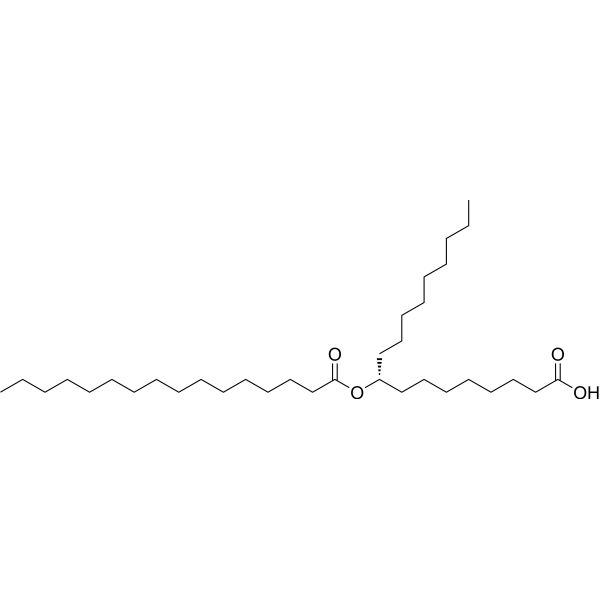 0 ImagesCat. No.: HY-124281CAS No.: 2097130-84-09(R)-PAHSA is a R-enantiomer of 9-PAHSA. 9-PAHSA is an orally available anti-inflammatory lipid that lowers blood sugar and reduces inflammation.
-
Levomilnacipran-d5 hydrochloride
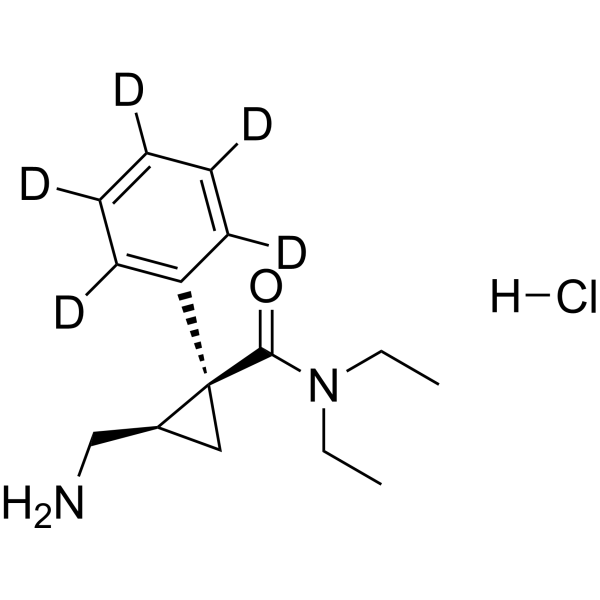 0 ImagesCat. No.: HY-B0168BSSynonyms: (1S,2R)-Milnacipran-d5 hydrochloride; F-2695-d5 hydrochlorideLevomilnacipran-d5 ((1S,2R)-Milnacipran-d5) hydrochloride is deuterium labeled Levomilnacipran hydrochloride (HY-B0168B). Levomilnacipran ((1S,2R)-Milnacipran) hydrochloride is the enantiomer of Milnacipran (HY-B0168) and a strong substrate of P-gp that can cross the blood-brain barrier. Levomilnacipran hydrochloride is a serotonin and norepinephrine reuptake inhibitor, with IC50 values of 10.5 nM and 19.0 nM, and Ki values of 92.2 nM and 1.2 nM for human norepinephrine transporter (NET) and serotonin transporter (SERT), respectively. Levomilnacipran hydrochloride has antidepressant and anxiolytic activities. Levomilnacipran hydrochloride can be used for the research of depression.
-
Momordin Ic (Standard)
 0 ImagesMomordin Ic (Standard) is the analytical standard of Momordin Ic. This product is intended for research and analytical applications. Momordin Ic is an orally active triterpenoid saponin that can be isolated from Kochia scoparia. It is also a SUMO specific protease 1 (SENP1) inhibitor, SENP1/c-MYC signaling pathway inhibitor, and apoptosis inducer. Momordin Ic induces autophagy and apoptosis in liver cancer cells through the PI3K/Akt and MAPK signaling pathways mediated by reactive oxygen species. Momordin Ic has the ability to control glucose induced blood glucose elevation, inhibit gastric emptying, resist rheumatoid arthritis, reduce CCl4 (HY-Y0298) induced hepatotoxicity and anti-tumor activity.
-
PIK-39
 0 ImagesCat. No.: HY-116882CAS No.: 371242-53-4PIK-39 is a selective PI3Kδ inhibitor with an IC50 of 0.30 μM. PIK-39 has a propeller-like structure that induces conformational changes in the ATP-binding region of its target. PIK-39 is applicable to the research of autoimmune diseases.
-
FOXM1-IN-3
 0 ImagesCat. No.: HY-181076FOXM1-IN-3 is a potent FOXM1 inhibitor. FOXM1-IN-3 downregulates FOXM1 expression at protein and mRNA levels, suppressing downstream effectors CCNB1 and CDC25. FOXM1-IN-3 induces G2/M cell cycle arrest and apoptosis in colorectal cancer cells. FOXM1-IN-3 inhibits colony formation and cell migration in colorectal cancer cells. FOXM1-IN-3 targets the cancer stem cell phenotype in colorectal cancer cells, reducing cancer stem cell marker expression. FOXM1-IN-3 reduces tumor growth in a zebrafish xenograft model. FOXM1-IN-3 can be used for the research of colorectal cancer.
-
PI3K/AKT-IN-4
 0 ImagesCat. No.: HY-162802PI3K/AKT-IN-4 (compound 3) is a diterpenoid that can be isolated from the roots and rhizomes of Salvia castanea Dielsf. PI3K/AKT-IN-4 has antitumor activity, inhibiting cell viability and proliferation (IC50=4.72 μM) and promoting apoptosis by blocking the G0/G1 phase of the Hep3B cell cycle, inducing mitochondrial dysfunction and oxidative stress. In addition, PI3K/AKT-IN-4 inhibits hepatocellular carcinoma by inhibiting the PI3K-Akt signaling pathway and binding to PARP1 and CDK2 targets.
-
Vasicine hydrochloride (Standard)
 0 ImagesCat. No.: HY-N1103ARCAS No.: 7174-27-8Synonyms: Peganine hydrochloride (Standard)Vasicine (hydrochloride) (Standard) is the analytical standard of Vasicine (hydrochloride). This product is intended for research and analytical applications. Vasicine hydrochloride (peganine hydrochloride) is a quinazoline alkaloid isolated from Justicia adhatoda. Vasicine hydrochloride activates PI3K/Akt signaling pathway, exhibits antioxidant, anti-inflammatory and antibacterial activities.
-
Erucic acid-d18-1
 0 ImagesCat. No.: HY-N7109S3Erucic acid-d18-1 is the deuterium labeled Erucic acid (HY-N7109). Erucic acid, a monounsaturated fatty acid (MUFA), is isolated from the seed of Raphanus sativus L. Erucic acid can readily cross the blood-brain barrier (BBB), it has been reported to normalize the accumulation of very long-chain fatty acids in the brain. Erucic acid can improve cognitive impairment and be effective against dementia.
-
PI3Kα-IN-21
 0 ImagesCat. No.: HY-158029PI3Kα-IN-21 (compound 8) is a PI3Kα inhibitor, and its selectivity for PI3Kα is 10.41/16.99/37.53 times higher than PI3Kβ/γ/δ respectively (IC50: 96.89/568.24/397.48 nM ). PI3Kα-IN-21 inhibits cancer cell activity, proliferation, and migration, and induces mitochondrial apoptosis through the PI3K/Akt/mTOR pathway. PI3Kα-IN-21 exhibits in vivo antitumor potency in a mouse model of non-small cell lung cancer.
-
HDAC-IN-43
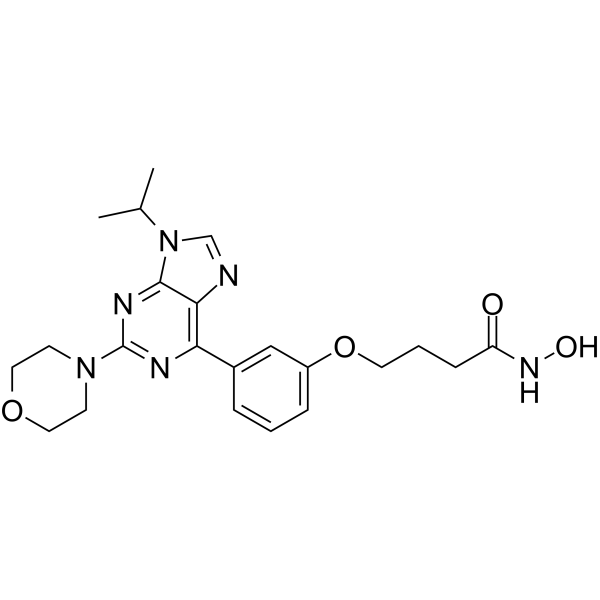 0 ImagesCat. No.: HY-147966CAS No.: 1809163-24-3HDAC-IN-43 is a potent HDAC 1/3/6 inhibitor with IC50 values of 82, 45, and 24 nM, respectively. HDAC-IN-43 is a weak PI3K/mTOR inhibitors with IC50 values of 3.6 and 3.7 μM, respectively. HDAC-IN-43 shows broad anti-proliferative activity .
-
Anticancer agent 319
 0 ImagesCat. No.: HY-183316Anticancer agent 319 is an anticancer agent. Anticancer agent 319 inhibits the proliferation of liver cancer cells. Anticancer agent 319 inhibits AKT phosphorylation and blocks the PI3K/AKT signaling axis; meanwhile, it inhibits ERK1/2 phosphorylation and blocks the MAPK/ERK signaling axis. Anticancer agent 319 induces G2/M phase cell cycle arrest, triggers apoptosis, and reduces mitochondrial membrane potential in liver cancer cells. Anticancer agent 319 can be used for the research of hepatocellular carcinoma.
-
FLT3-IN-36
 0 ImagesCat. No.: HY-178996FLT3-IN-36 is a potent FLT3 inhibitor. FLT3-IN-36 exhibits antitumor activity against FLT3-mutated acute myeloid leukemia (AML) cells. FLT3-IN-36 induces cell cycle arrest, reduces mitochondrial membrane potential, and induces apoptosis, downregulating FLT3 and downstream protein expression (including AKT, ERK, PI3K, and STAT5). FLT3-IN-36 can be used for AML research.
-
LQEQ-19 (mouse, rat)
 0 ImagesCat. No.: HY-P11130CAS No.: 322644-72-4LQEQ-19 (mouse, rat) is a VGF derived peptide that exerts neuroprotective effects. LQEQ-19 (mouse, rat) activates the PI3K/Akt and MEK/ERK signaling pathways by promoting phosphorylation of Akt and ERK1/2. LQEQ-19 (mouse, rat) is commonly used in the study of neurological conditions.

-
PI3KC2γ-IN-1
 0 ImagesCat. No.: HY-178371PI3KC2γ-IN-1 (Compound 23) is an orally active and selective PI3KC2γ inhibitor (IC50 = 4 nM). PI3KC2γ-IN-1 downregulats the Akt2-glycogen synthase (GS) signaling pathway, ultimately inhibiting the conversion of glucose to glycogen and reduces excessive glycogen accumulation in the liver. PI3KC2γ-IN-1 can significantly inhibit insulin-induced PI(3,4)P2 accumulation in both primary hepatocytes and HepG2 liver cancer cells. PI3KC2γ-IN-1 can be used for the study of glycogen storage diseases (GSDs).
-
PI3K/HDAC-IN-3
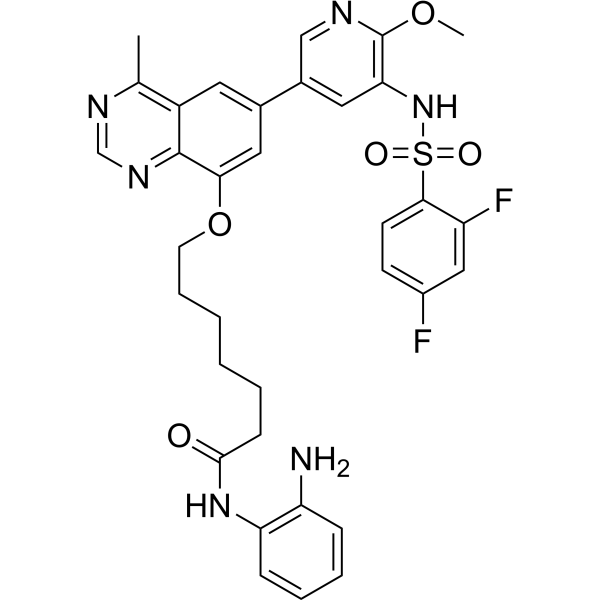 0 ImagesCat. No.: HY-157295CAS No.: 3006905-22-9PI3K/HDAC-IN-3 (36) is a PI3K and HDAC dual inhibitor, with IC50 values of 0.23 nM and 172 nM for PI3Kα and HDAC1, respectively. PI3K/HDAC-IN-3 (36) suppresses AKT phosphorylation and increased H3 acetylation in MV4-11 cells. PI3K/HDAC-IN-3 (36) exhibits significant and dose-dependent anticancer efficacy in a MV4-11 xenograft model.
-
PI3K/Akt/mTOR-IN-4
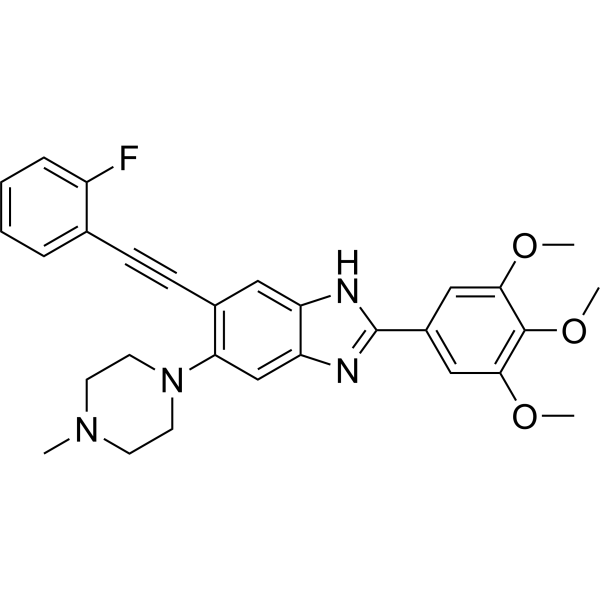 0 ImagesCat. No.: HY-163511PI3K/Akt/mTOR-IN-4 (compound 4r) is a potent PI3K/Akt/mTOR and tubulin polymerization inhibitor. PI3K/Akt/mTOR-IN-4 induce apoptosis and cell cycle arrest at G2/M phase. PI3K/Akt/mTOR-IN-4 decreases the expression of p-PI3K, p-Akt, and p-mTOR, β-tubulin.
-
VVD-484
 0 ImagesCat. No.: HY-185205CAS No.: 3055745-21-3VVD-484 is a PI3K p110α inhibitor with an IC50 of 0.59 μM against human targets.,VVD-484, classified as a "silent ligand", forms a covalent bond with Cys242 of PI3K p110α without disrupting the p110α-KRASG12C interaction. VVD-484 inhibits phosphorylation (S473) of AKT via a RAS-independent pathway. VVD-484 can be used in the research of HER2-overexpressing cancers.




