



PI3K
Phosphoinositide 3-kinase
PI3K (Phosphoinositide 3-kinase), via phosphorylation of the inositol lipid phosphatidylinositol 4,5-bisphosphate (PI(4,5)P2), forms the second messenger molecule phosphatidylinositol (3,4,5)-trisphosphate (PI(3,4,5)P3) which recruits and activates pleckstrin homology domain containing proteins, leading to downstream signalling events crucial for proliferation, survival and migration. Class I PI3K enzymes consist of four distinct catalytic isoforms, PI3Kα, PI3Kβ, PI3Kδ and PI3Kγ.
There are three major classes of PI3K enzymes, being class IA widely associated to cancer. Class IA PI3K are heterodimeric lipid kinases composed of a catalytic subunit (p110α, p110β, or p110δ; encoded by PIK3CA, PIK3CB, and PIK3CD genes, respectively) and a regulatory subunit (p85).
The PI3K pathway plays an important role in many biological processes, including cell cycle progression, cell growth, survival, actin rearrangement and migration, and intracellular vesicular transport.
PI3K Isoform Specific Products
-
PI3Kα
(233)
View all products
-
PI3Kβ
(162)
View all products
-
PI3Kγ
(182)
View all products
-
PI3Kδ
(200)
View all products
-
PI3KC2α
(8)
View all products
-
PI3KC2β
(12)
View all products
-
PI3KC2γ
(4)
View all products
-
Vps34
(24)
View all products
-
PI3K
(659)
View all products
-
PI3KC3
(1)
View all products
-
p120γ
(1)
View all products
All Product Categories
-
PI3K Inhibitors
(854)
View all products
-
PI3K Agonists
(9)
View all products
-
PI3K Antagonist
(1)
View all products
-
PI3K Activators
(126)
View all products
-
PI3K Modulators
(22)
View all products
-
PI3K Inducers
(3)
View all products
-
PI3K Degraders
(6)
View all products
-
PI3K Controls
(4)
View all products
-
PI3K Substrate
(1)
View all products
-
PI3K Ligands
(9)
View all products
-
PI3K Related Products (1098)
Related Products (1098)

-
Antibodies (16)
-
PI3K Signaling Pathway
-
PI3K Isoform Comparison
-
Multi-target kinase inhibitor 4
 0 ImagesCat. No.: HY-172771Multi-target kinase inhibitor 4 (Compound 2) is a PI3K/DNA-PK inhibitor and potent chemosensitizer that can increase the amount of DNA double strand breaks induced by Doxorubicin (HY-15142A). Multi-target kinase inhibitor 4, is an efficient inhibitor of multidrug resistance (MDR) that exhibits inhibitory activity toward P-glycoprotein-mediated drug efflux. Multi-target kinase inhibitor 4 can be loaded into PEG-coated LNPs.
-
PI3K-IN-58
 0 ImagesCat. No.: HY-172886CAS No.: 3067572-78-2PI3K-IN-58 (Compound 17f) is a PI3Kα inhibitor (IC50: 0.039 μM). PI3K-IN-58 exhibits significant antiproliferative effects on PC-3, 22RV1, MDA-MB-231 and MDA-MB-453 cell lines with IC50s of 3.48 μM, 1.06 μM, 2.21 μM and 0.93 μM, respectively. PI3K-IN-58 induces apoptosis by downregulating the expression levels of anti-apoptotic proteins Bcl-XL and Bcl-2 and upregulating the expression of anti-apoptosis protein BAX. PI3K-IN-58 can be used in PI3K-targeted cancer research.
-
Calebin A
 0 ImagesCalebin A is a PI3K/Akt/mTOR, MAPK, and NF-κB inhibitor with oral effectiveness. Calebin A can block the autophagy-repressive, inhibiting apoptosis. Calebin A has anti-tumor activity by epigenetic regulation. Calebin A suppresses adipogenesis, modulates thermogenesis, and enriches gut probiotics. Calebin A can be used in research on osteoarthritis, Alzheimer's disease, type 2 diabetes, malignant peripheral nerve sheath tumors, and colorectal cancer.
-
PI3Kγ inhibitor 6
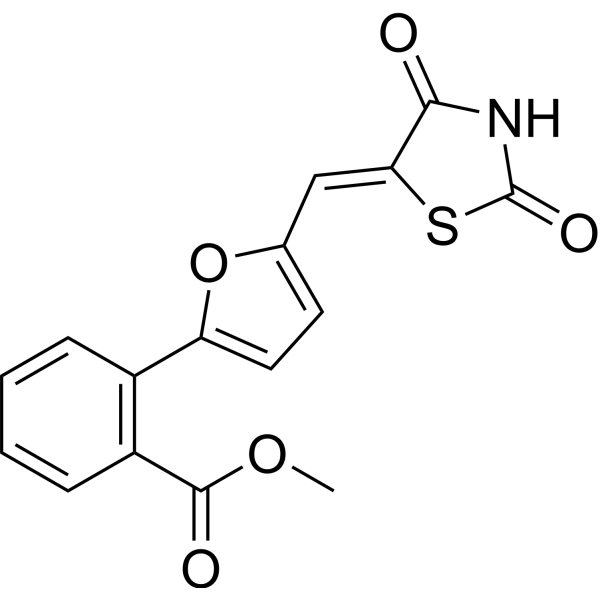 0 ImagesCat. No.: HY-148317CAS No.: 900515-01-7PI3Kγ inhibitor 6 (compound 9) is a PI3Kγ inhibitor. PI3Kγ inhibitor 6 can be used for the research of inflammatory and autoimmune diseases.
-
SOS1-IN-26
 0 ImagesCat. No.: HY-184422SOS1-IN-26 is a potent, orally active selective allosteric SOS1 inhibitor with a KD of 33 nM and SOS1-KRAS binding IC50 of 4.0 nM. SOS1-IN-26 disrupts SOS1-KRAS interaction, inhibits MAPK/PI3K signaling, induces G1 phase arrest and tumor cell apoptosis. SOS1-IN-26 serves as a balanced lead therapeutic candidate for pan-KRAS-driven colorectal cancer studies.

-
PI3K/mTOR Inhibitor-12
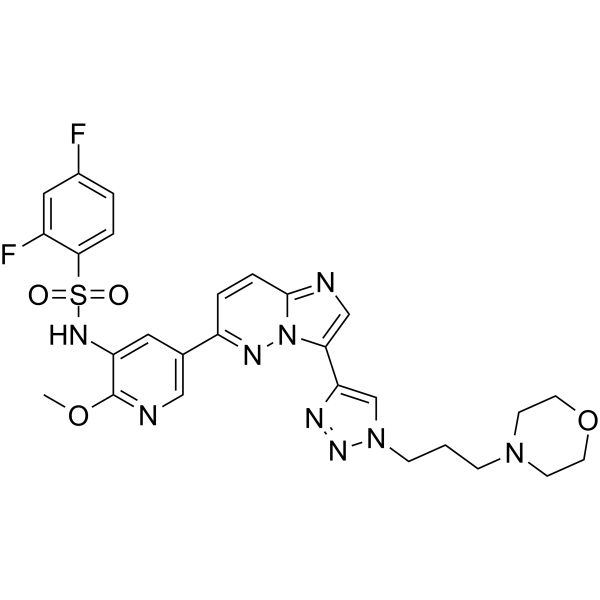 0 ImagesCat. No.: HY-152238CAS No.: 2891692-83-2
-
SIBP-03
 0 ImagesCat. No.: HY-P991984SIBP-03 is a specifical anti-HER3 antibody. SIBP-03 binds strongly and specifically to recombinant HER3 protein. SIBP-03 inhibits HER3 activation, as well as the downstream PI3K/AKT signaling pathway. SIBP-03 exhibits anticancer activity against squamous cell carcinoma, non-small cell lung cancer, gastric cancer, and breast cancer. SIBP-03 synergistically enhances the antitumor activity of DS-8201 (HY-138298A) and Cetuximab (HY-P9905).
-
Polygalasaponin F (Standard)
 0 ImagesCat. No.: HY-N0392RCAS No.: 882664-74-6Polygalasaponin F (Standard) is the analytical standard of Polygalasaponin F. This product is intended for research and analytical applications. Polygalasaponin F is an orally active triterpenoid saponin monomer. Polygalasaponin F downregulates the expression of Bax, p53, caspase-3, NF-κB p65 and MEK1; restores and upregulates the expression of Bcl-2; activates the PI3K/Akt signaling pathway; inhibits the phosphorylation of p38 MAPK, nuclear translocation of NF-κB, TLR4-mediated signaling pathway, mitophagy (Mitophagy) and ROS production; enhances cell viability and suppresses apoptosis (Apoptosis). Polygalasaponin F maintains mitochondrial function, alleviates Ca2+ overload, upregulates pCREB and BDNF, preserves cell viability and inhibits the release of inflammatory cytokines. Polygalasaponin F alleviates lung injury induced by influenza A H1N1 and cerebral ischemia-reperfusion injury. Polygalasaponin F is applicable to researches related to Parkinson's disease, cerebral ischemia, pneumonia induced by influenza A H1N1, stroke and Alzheimer's disease.
-
Taxamairin B
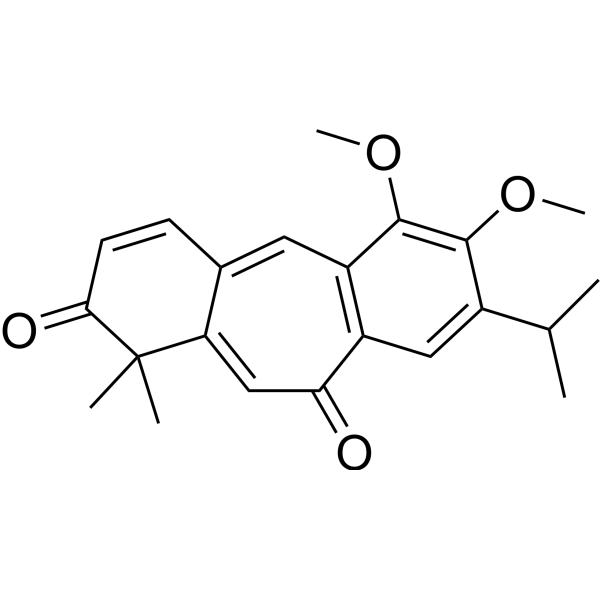 0 ImagesCat. No.: HY-N12042CAS No.: 110300-77-1Taxamairin B is a potent anti-inflammatory agent. Taxamairin B decreases proinflammatory cytokines (TNF-α, IL-1β and IL-6) expression and the production of NO and ROS in LPS-induced RAW264.7 cells. Taxamairin B exhibits significant protective effects in LPS-induced acute lung injury in mice.
-
NVP-BBD130
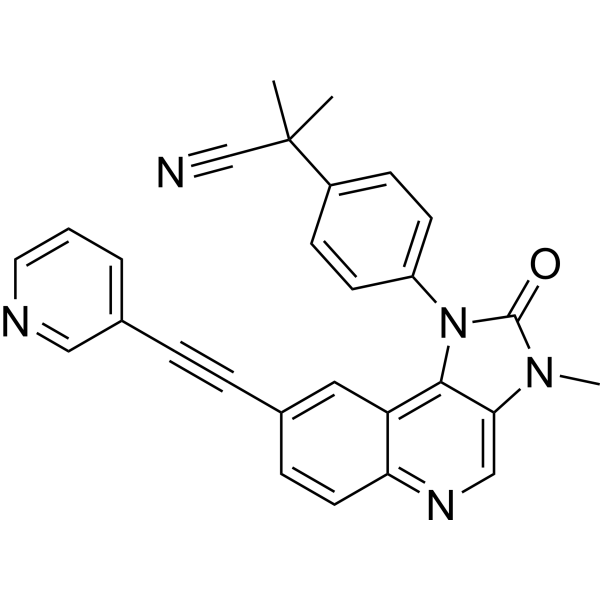 0 ImagesCat. No.: HY-150061CAS No.: 853910-61-9
-
A2073
 0 ImagesCat. No.: HY-174321CAS No.: 2834742-70-8A2073 is a flavagline derivative that potently inhibits the proliferation of erythroleukemia cells by causing cell cycle arrest and suppressing the MAPK, NF-κB, and PI3K signaling pathways. A2073 formes stable interactions with cell cycle-related proteins (CDK1, CCNA2, PRIM1). A2073 exhibits significant anti-proliferative activity against tumor cells while maintaining a favorable toxicity profile in a zebrafish xenograft tumor model. A2073 can be used for the study of acute erythroleukemia.
-
AS-605240 potassium
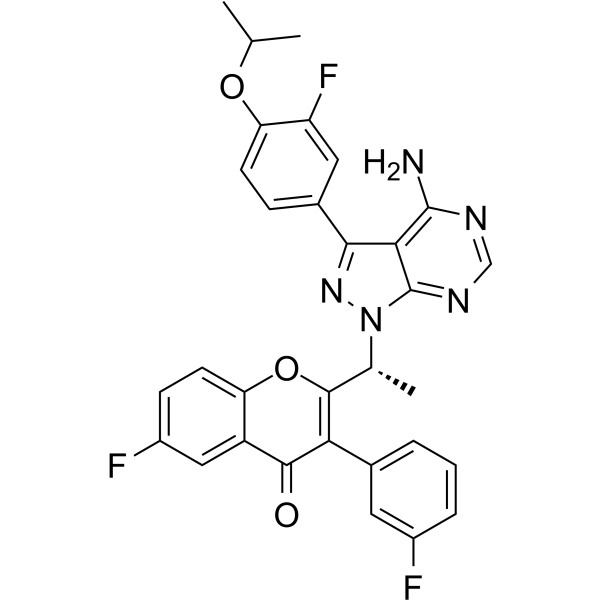
 0 ImagesCat. No.: HY-10109AAS-605240 (potassium) is an orally active PI3Kγ inhibitor (IC50: 8 nM; Ki: 7.8 nM). AS-605240 (potassium) inhibits MCP-1- and CSF1-induced PKB phosphorylation (IC50 values are 0.181 and 0.550 µM, respectively). AS-605240 (potassium) reduces neutrophil recruitment in RANTES (CCL5)- and thioglycolate-induced peritonitis mouse models (EC50 values are 9.1 and 10 mg/kg, respectively). AS-605240 (potassium) ameliorates αCII-IA-induced arthritis in mice.
-
EGFR-IN-214
 0 ImagesCat. No.: HY-184311CAS No.: 3077316-17-4EGFR-IN-214 is an orally active EGFR inhibitor with an EC50 of 3.353 μM. EGFR-IN-214 blocks the downstream PI3K/Akt signaling pathway, induces intracellular ROS accumulation and Caspase-dependent apoptosis. EGFR-IN-214 exhibits antiproliferative activity in cancer cells and inhibits tumor growth in xenograft models. EGFR-IN-214 can be used in studies related to hepatocellular carcinoma.
-
20-5,14-HEDE-d2
 0 ImagesCat. No.: HY-160099SSynonyms: WIT003-d220-5,14-HEDE-d2 (WIT003-d2) is the deuterated-labeled 20-5,14-HEDE (HY-160099). 20-5,14-HEDE (WIT003) is an analog of 20-HETE. 20-5,14-HEDE activates PI3K/Akt signaling pathway, thereby exhibiting anti-apoptotic and cell survival promoting effects. 20-5,14-HEDE is the agonist for 20-HETE that increases intracellular Ca2+ concentrations, thereby enhancing vasoconstriction.

-
COX-2/PI3K-IN-2
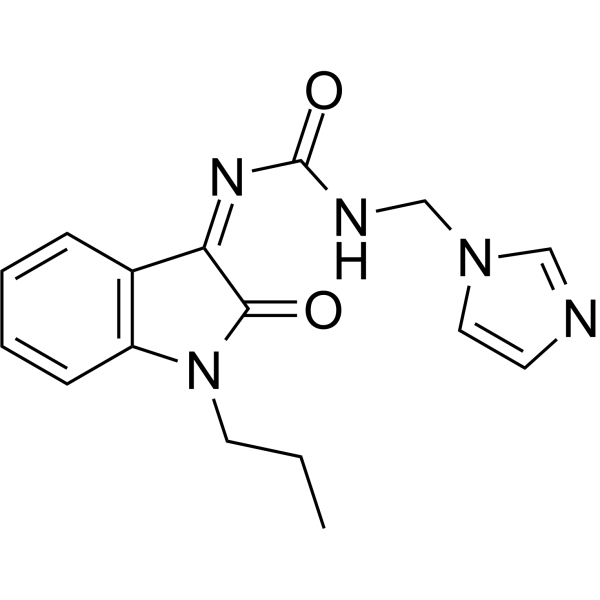 0 ImagesCat. No.: HY-147912CAS No.: 2459938-28-2
-
Toyaburgine
 0 ImagesCat. No.: HY-172259Toyaburgine is a unique isoquinoline compound that exhibits anti-tumor activity. It packs a punch by disrupting the PI3K/AKT/mTOR signaling pathway, causing significant morphological changes and cell death in MIA PaCa-2 cells. On top of that, it puts the brakes on cell migration and colony formation. This compound is showing a lot of promise in the realm of pancreatic cancer research.
-
MEK/PI3K-IN-2
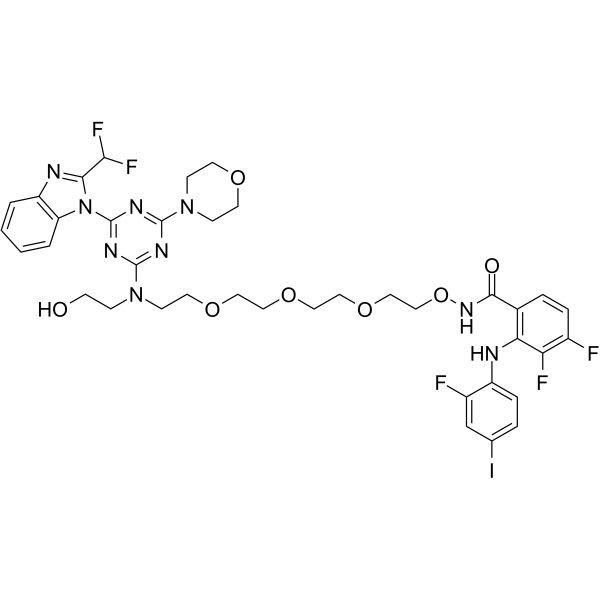 0 ImagesCat. No.: HY-144693CAS No.: 2281803-33-4




