



TNF Receptor
Tumor Necrosis Factor Receptor; TNFR
Tumor necrosis factor (TNF) is a major mediator of apoptosis as well as inflammation and immunity, and it has been implicated in the pathogenesis of a wide spectrum of human diseases, including sepsis, diabetes, cancer, osteoporosis, multiple sclerosis, rheumatoid arthritis, and inflammatory bowel diseases.
TNF-α is a 17-kDa protein consisting of 157 amino acids that is a homotrimer in solution. In humans, the gene is mapped to chromosome 6. Its bioactivity is mainly regulated by soluble TNF-α–binding receptors. TNF-α is mainly produced by activated macrophages, T lymphocytes, and natural killer cells. Lower expression is known for a variety of other cells, including fibroblasts, smooth muscle cells, and tumor cells. In cells, TNF-α is synthesized as pro-TNF (26 kDa), which is membrane-bound and is released upon cleavage of its pro domain by TNF-converting enzyme (TACE).
Many of the TNF-induced cellular responses are mediated by either one of the two TNF receptors, TNF-R1 and TNF-R2, both of which belong to the TNF receptor super-family. In response to TNF treatment, the transcription factor NF-κB and MAP kinases, including ERK, p38 and JNK, are activated in most types of cells and, in some cases, apoptosis or necrosis could also be induced. However, induction of apoptosis or necrosis is mainly achieved through TNFR1, which is also known as a death receptor. Activation of the NF-κB and MAPKs plays an important role in the induction of many cytokines and immune-regulatory proteins and is pivotal for many inflammatory responses.
TNF Receptor Isoform Specific Products
-
TNF Receptor
(684)
View all products
-
TNFRSF1A/CD120a
(8)
View all products
-
TNFRSF3/CD18
(1)
View all products
-
TNFRSF4
(5)
View all products
-
TNFRSF5/CD40
(107)
View all products
-
TNFRSF6/Fas/CD95
(2)
View all products
-
TNFRSF7/CD27
(2)
View all products
-
TNFRSF8/CD30
(3)
View all products
-
TNFRSF9/4-1BB/CD137
(3)
View all products
-
TNFRSF10B/DR5/CD262
(1)
View all products
-
TNFRSF12A/TWEAK
(5)
View all products
-
TNFRSF16/NGF Receptor/CD271
(1)
View all products
-
TNFRSF18/GITR/CD357
(6)
View all products
All Product Categories
-
TNF Receptor Inhibitors
(845)
View all products
-
TNF Receptor Agonists
(35)
View all products
-
TNF Receptor Antagonists
(25)
View all products
-
TNF Receptor Activators
(72)
View all products
-
TNF Receptor Modulators
(8)
View all products
-
TNF Receptor Inducers
(9)
View all products
-
TNF Receptor Controls
(4)
View all products
-
TNF Receptor Ligands
(2)
View all products
-
TNF Receptor Superfamily Proteins
(282)
View all products
-
TNF Receptor Related Products (1186)
Related Products (1186)

-
Recombinant Proteins (282)
-
Antibodies (23)
-
TNF Receptor Signaling Pathway
-
TNF Receptor Isoform Comparison
-
Akt/NF-κB/MAPK-IN-1
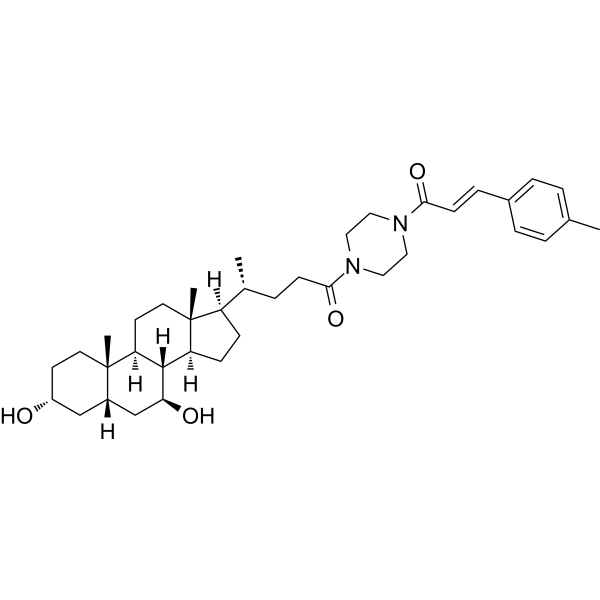 0 ImagesCat. No.: HY-149496CAS No.: 2994215-72-2Akt/NF-κB/MAPK-IN-1 (compound 2m) is a potent and orally active inhibitor against NO (IC50=7.70 μM) with no significant toxicity. Akt/NF-κB/MAPK-IN-1 shows anti-inflammatory activity by inhibiting Akt/NF-κB and MAPK signaling pathways.
-
rel-Cleroindicin F
 0 ImagesCat. No.: HY-N3602ACAS No.: 94535-01-0Synonyms: Rengyolonerel-Cleroindicin F (Rengyolone) is a cyclohexyl acetyl compound that can be isolated from the fruit of forsythia and has anti-inflammatory activity. It strongly inhibits the production of nitric oxide (NO) and tumor necrosis factor-alpha (TNF-α). rel-Cleroindicin F does this by downregulating the activity of NF-κB and NF-κB kinases in RAW 264.7 cells stimulated by LPS (HY-D1056), thus inhibiting the expression of inducible nitric oxide synthase (NO Synthase) and nitric oxide production.
-
JNJ-64164711
 0 ImagesCat. No.: HY-P992395Synonyms: JNJ-711JNJ-64164711 (JNJ-711) is a bifunctional antibody that simultaneously targets human GITR/TNFRSF18 and FcγRIIIa. JNJ-64164711 binds to the GITR domain to activate the NF-κB signaling pathway, while binding to FcγRIIIa to support antibody-dependent cellular cytotoxicity (ADCC). JNJ-64164711 can specifically eliminate GITR-positive hematological tumor cells, activated T cells and intratumoral regulatory T cells through the ADCC mechanism, thereby significantly enhancing the body's anti-tumor immune response. JNJ-64164711 can be used in research related to non-small cell lung cancer, colorectal cancer, prostate cancer, renal cell carcinoma and hematological tumors.
-
CO delivery molecule 1
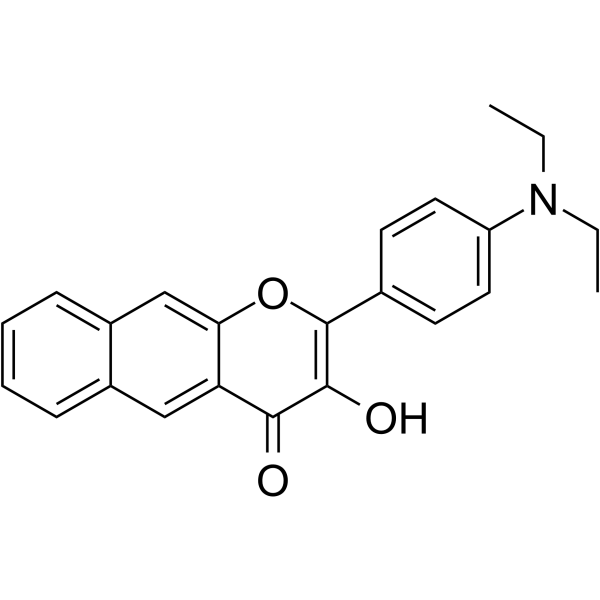 0 ImagesCat. No.: HY-144368CAS No.: 1972616-04-8CO delivery molecule 1 (compound 4) localizes to the endoplasmic reticulum, mitochondria, and lysosomes. Subcellular localization of CO delivery molecule 1 results in CO-induced toxicity effects. Anti-inflammatory effects of CO delivery molecule 1, as measured by TNF-α suppression, occur at the nanomolar level in the absence of CO release, and are enhanced with visible-light-induced CO release.
-
XmAb-2513
 0 ImagesCat. No.: HY-P991638XmAb-2513 is a humanized monoclonal antibody inhibitor targeting CD30. XmAb-2513 has significant anti-proliferative activity and superior antibody-dependent cell-mediated cytotoxicity (ADCC) as well as antibody-dependent cell-mediated phagocytosis (ADCP). XmAb-2513 can be used for hematologic malignancies like Hodgkin Lymphoma (HL) and Anaplastic Large Cell Lymphoma (ALCL) research.
-
Apremilast-d3
 0 ImagesCat. No.: HY-12085S3CAS No.: 1258597-46-4Synonyms: CC-10004-d3Apremilast-d3 (CC-10004-d3) is deuterium labeled Apremilast. Apremilast (CC-10004) is an orally available inhibitor of type-4 cyclic nucleotide phosphodiesterase (PDE-4) with an IC50 of 74 nM. Apremilast inhibits TNF-α release by lipopolysaccharide (LPS) with an IC50 of 104 nM.
-
TNFR1-IN-2
 0 ImagesCat. No.: HY-P11834CAS No.: 3053449-34-3TNFR1-IN-2 is a selective TNFR1 inhibitor with a Kd of 0.1 nM for hTNFR1. TNFR1-IN-1 inhibits TNFα-induced NF-κB signal transduction, with an IC50 value of 2.8 nM. TNFR1-IN-1 can be used in research related to inflammatory and immune diseases.
-
PDE4-IN-10
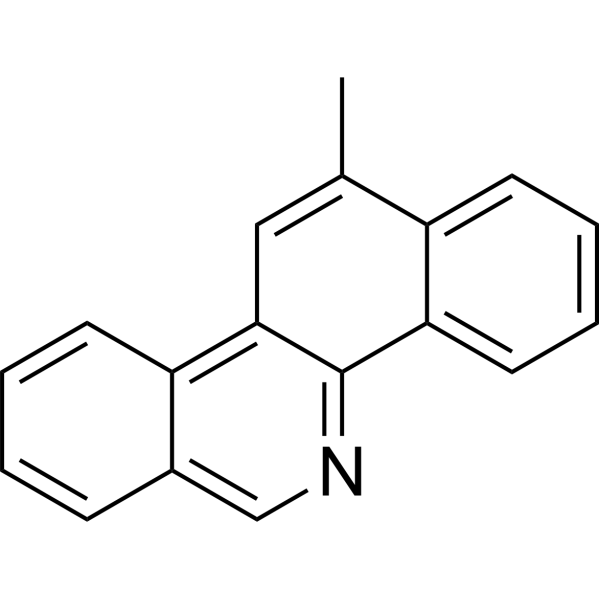 0 ImagesCat. No.: HY-147950CAS No.: 2413564-66-4PDE4-IN-10 (compound 7a) is a potent PDE4 inhibitor, with an IC50 of 7.01 μM for PDE4B. PDE4-IN-10 shows selectivity, microsomal stability, inhibition of TNF-α and no major toxicities in vitro.
-
ASP1951
 0 ImagesCat. No.: HY-P992315Synonyms: PTZ-522ASP1951 (PTZ-522) is a monoclonal antibody that targets GITR and is a GITR agonist. ASP1951 can be used for the research of advanced solid tumours.
-
1,4-Dicaffeoylquinic acid (Standard)
 0 Images1,4-Dicaffeoylquinic acid (Standard) (1,4-DCQA (Standard)) is the analytical standard of 1,4-Dicaffeoylquinic acid (HY-N0358). This product is intended for research and analytical applications. 1,4-Dicaffeoylquinic acid (1,4-DCQA) is a phenylpropanoid compound that can be isolated from Xanthii fructus and an inhibitor of xanthine oxidase (IC50: 7.36 μM). 1,4-Dicaffeoylquinic acid has anti-inflammatory activity and can inhibit the production of TNF-α induced by LPS (HY-D1056).
-
Anti-Mouse CD70 Antibody (TAN 1-7)
 0 ImagesCat. No.: HY-P991809Anti-Mouse CD70 Antibody (TAN 1-7) reacts with the mouse CD70. Anti-Mouse CD70 Antibody (TAN 1-7) is a non-depleting antibody which blocks the CD70-CD27 interaction. Recommend Isotype Controls: Rat IgG2a kappa, Isotype Control (HY-P990679).
-
PF-05230905
 0 ImagesCat. No.: HY-P991407Synonyms: ATN-192PF-05230905 is a human monoclonal antibody (mAb) targeting TNFSF2/TNFa. PF-05230905 can be used in Rheumatoid arthritis research.
-
BMAP-27
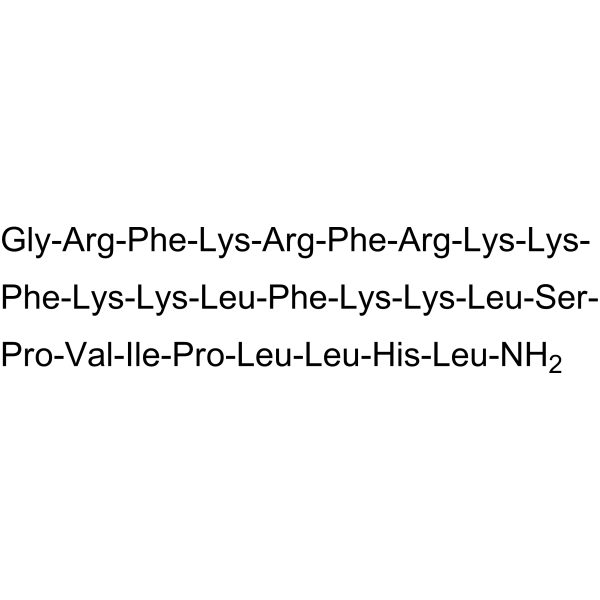 0 ImagesCat. No.: HY-P5286CAS No.: 184870-30-2BMAP-27 is a cationic amphipathic α-helical antimicrobial peptide with anticancer activity. BMAP-27 disrupts the integrity and permeability of cell membranes, leading to the leakage of intracellular DNA, proteins and alkaline phosphatase. BMAP-27 increases intracellular ROS levels and reduces plasma endotoxin and TNF-α concentrations. BMAP-27 can be used in studies related to Salmonella infection, breast cancer, lung cancer and obstructive jaundice.
-
SKF 104351
 0 ImagesCat. No.: HY-105480CAS No.: 111908-94-2SKF 104351 is an orally active cytokine suppressive anti-inflammatory drug. SKF 104351 can inhibit TNF-α production.
-
NS-6740 hydrochloride
 0 ImagesCat. No.: HY-118646ACAS No.: 753499-14-8NS-6740 hydrochloride is a silent agonist of α7 nicotinic acetylcholine receptor (α7 nAChR) with an IC50 of 3 nM. NS-6740 hydrochloride reduces LPS-induced TNF-α release and regulates the cholinergic anti-inflammatory pathway. NS-6740 hydrochloride exerts anti-inflammatory effects. NS-6740 hydrochloride reduces long-term potentiation in hippocampal brain slices. NS-6740 hydrochloride can be used in research related to neuroinflammation and schizophrenia.
-
1-(2,5-Dihydroxyphenyl)-3-hydroxybutan-1-one
 0 ImagesCat. No.: HY-N19110CAS No.: 1083202-40-71-(2,5-Dihydroxyphenyl)-3-hydroxybutan-1-one is an inhibitor of iNOS and COX-2. 1-(2,5-Dihydroxyphenyl)-3-hydroxybutan-1-one inhibits LPS-induced excessive production of NO and PGE2, as well as the mRNA expression of pro-inflammatory cytokines TNF-α, IL-1β, IL-6 and IL-12. 1-(2,5-Dihydroxyphenyl)-3-hydroxybutan-1-one can be used in inflammation-related research.
-
CT-133
 0 ImagesCat. No.: HY-160844CAS No.: 2417155-47-4CT-133 is a selective and potent CRTH2 Receptor antagonist, with a Ki value of 2.2 nM. The Ki value for the DP1 receptor is greater than 3800 nM. CT-133 inhibits neutrophil migration induced by PGD2 (HY-101988). CT-133 significantly alleviates lung inflammation and improves lung function impairment in a mouse model of acute lung injury (ALI) induced by cigarette smoke. CT-133 effectively inhibits the excessive expression of pro-inflammatory cytokines (TNF-α, IL-1β, and IL-6) and chemokines (KC), and reverses the inhibition of the anti-inflammatory factor IL-10. CT-133 can be used for the study of ALI.
-
PF-06940434
 0 ImagesCat. No.: HY-P992519Synonyms: ADWA-11PF-06940434 (ADWA-11) is a monoclonal antibody targeting integrin αvβ8. PF-06940434 inhibits αvβ8-mediated TGF-β activation. PF-06940434 increases the accumulation of tumor-infiltrating CD8+ T cells and upregulates the expression of granzyme B and TNF-γ. PF-06940434 blocks the inhibitory effect of CD4+CD25+ T cells on the cytotoxic activity of tumor CD8+ T cells. PF-06940434 enhances the anti-tumor efficacy of combination therapies with other immunomodulators or radiotherapy and induces long-term anti-tumor immunity. PF-06940434 can be used in the research of squamous cell carcinoma, breast cancer, colon cancer, and prostate adenocarcinoma.
-
Arucadiol
 0 ImagesCat. No.: HY-134028CAS No.: 105037-85-2Arucadiol is a rosane-type diterpenoid anti-inflammatory agent. 5 μM Arucadiol significantly inhibits LPS-induced TNF-α, IL-1β, and IL-8 production (inhibition rates of 39.8%, 44.4%, and 34.5%, respectively). Arucadiol exerts its anti-inflammatory activity by inhibiting the mRNA and protein expression of inflammatory cytokines and can be used in research on inflammation-related cardiovascular diseases such as atherosclerosis. Arucadiol can be naturally extracted from the roots of Salvia miltiorrhiza var. alba.




