



EBV
Epstein-Barr Virus
Epstein-Barr virus (EBV), also known as human herpesvirus 4, is a member of the herpes virus family. It is one of the most common human viruses. EBV is found all over the world. Most people get infected with EBV at some point in their lives. EBV spreads most commonly through bodily fluids, primarily saliva. Primary EBV infection is usually asymptomatic and for many occurs during childhood, but when it occurs in adolescence or adulthood, 30%–50% cases manifest clinically as infectious mononucleosis (IM). EBV also cause infectious mononucleosis (IM), Burkitt lymphoma (BL), nasopharyngeal carcinoma (NPC), Hodgkin’s disease, and other illnesses. Many people become infected with EBV in childhood. EBV infections in children usually do not cause symptoms, or the symptoms are not distinguishable from other mild, brief childhood illnesses.
All Product Categories
-
EBV Related Products (79)
Related Products (79)

-
11-Oxomogroside II A1
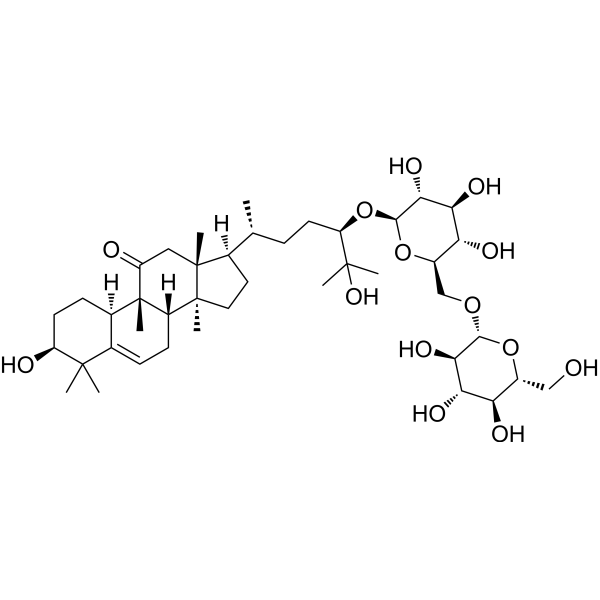 0 ImagesCat. No.: HY-N11009CAS No.: 942612-74-011-Oxomogroside II A1 (compound 7) is an oxidized cucurbitin. It can be isolated from the ethanol extract of Rohanberry fruit. 11-Oxomogroside II A1 inhibits the activation of Epstein-Barr virus (EBV) early antigen (EBV-EA) induced by 12-O-tetradecanoylphorbol-13-acetate (TPA). 11-Oxomogroside II A1 also weakly inhibits the activation of (±)-(E)-methyl-2-[(E)-hydroxyimino]-5-nitro-6-methoxy-3-hexemide (NOR 1), a nitric oxide (NO) donor.
-
YLLEMLWRL
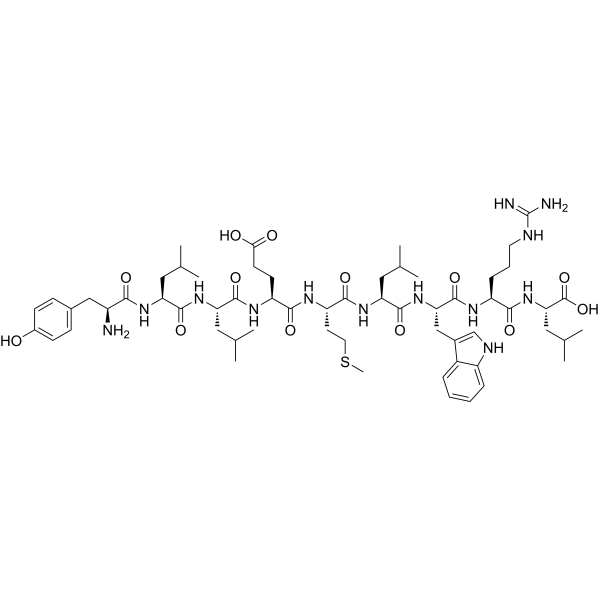 0 ImagesCat. No.: HY-P5294CAS No.: 203515-09-7YLLEMLWRL is an HLA-A2-restricted T cell epitope sequence corresponding to codon 125-133. Among them, YLLEMLWRL sequence is the main mutation site of HLA-A2-restricted CTL epitope sequence.
-
10-Hydroxypheophorbide A
 0 ImagesCat. No.: HY-N17999CAS No.: 83688-53-3
-
EBNA3B 399-408
 0 ImagesCat. No.: HY-P11713CAS No.: 179815-06-6
-
EBNA-1 (386–405 aa)
 0 ImagesCat. No.: HY-P11299CAS No.: 3082858-70-3EBNA-1 (386-405 aa) is a cross-reactive viral antigen peptide. EBNA-1 (386-405 aa) has a high molecular similarity to GlialCAM (370-389 aa) and it induces the production of cross-reactive antibodies that recognize both EBV antigens and glial cells in the central nervous system, thereby triggering autoimmune responses. EBNA-1 (386-405 aa) can used for Epstein-Barr virus (EBV) infection and multiple sclerosis (MS) research.
-
EBNA3 246-254
 0 ImagesCat. No.: HY-P11714CAS No.: 457881-09-3EBNA3 246-254 (RYSIFFDYM) is an EBV peptide. EBNA3 246-254 is submitted by HLA-A24. EBNA3 246-254 is amplified in vitro, followed by HLA multimer staining to measure EBV-specific CTLs. EBNA3 246-254 can be used for the research of lung cancer.
-
23-Hydroxyohchininolide
 0 ImagesCat. No.: HY-N18117ACAS No.: 1429747-10-323-Hydroxyohchininolide is a limonoid found in the leaves of Melia azedarach L.. 23-Hydroxyohchininolide inhibits LPS (HY-D1056)-induced NO production and exerts cytotoxic activity against human leukemia and stomach cancer cells. 23-Hydroxyohchininolide inhibits TPA (HY-18739)-induced Epstein-Barr virus early antigen activation. 23-Hydroxyohchininolide can be used for the research of cancer, infection and inflammatory disease.
-
11-Oxomogroside I A1
 0 ImagesCat. No.: HY-N18238CAS No.: 476468-78-711-Oxomogroside I A1 is a cucurbitane-type triterpenoid glycoside and also an EBV-EA inhibitor. 11-Oxomogroside I A1 exerts 100% inhibitory effect on the induction of EBV-EA. 11-Oxomogroside I A1 can be used for cancer research.
-
Maribavir-d7
 0 ImagesCat. No.: HY-16305S2Synonyms: 1263W94-d7; BW1263W94-d7; GW257406X-d7
-
Cimigenol-3-one
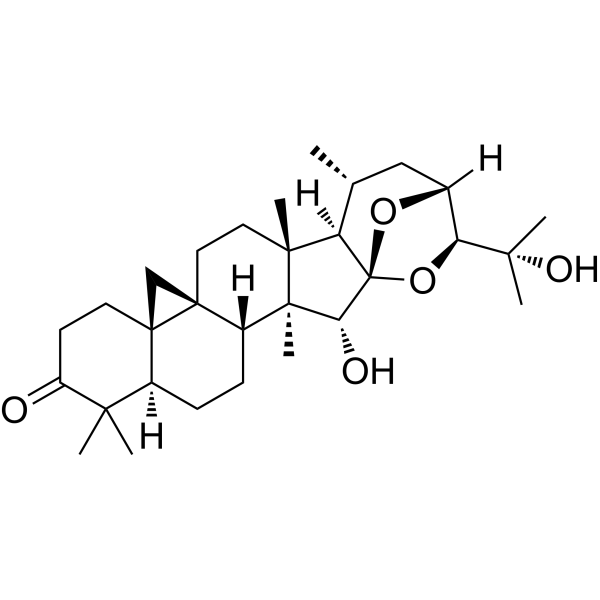 0 ImagesCat. No.: HY-130789CAS No.: 31222-32-9Cimigenol-3-one inhibits Epstein-Barr virus early antigen (EBV-EA) activation.
-
L2P4
 0 ImagesCat. No.: HY-P10772CAS No.: 2141991-98-0L2P4 is a peptide-based and EBNA1 targeting fluorescent probe, which inhibits the EBNA1 homodimer formation and selectively inhibits EBV+ tumor growth. L2P4 exhibits cytotoxicity in EBV-positive C666-1 cell with LC50 of 46.4 μM.
-
Valerianol
 0 ImagesCat. No.: HY-W714047CAS No.: 20489-45-6Valerianol is a sesquiterpene alcohol with anticancer, antibacterial, and antiviral activities. Valerianol selectively inhibits TPA (HY-18739)-induced Epstein-Barr virus early antigen (EBV-EA) activation (IC50=300 μM). Valerianol inhibits tumor promoter-mediated EBV-EA activation and also inhibits pathogenic bacteria such as Staphylococcus aureus.
-
Euphominoid A
 0 ImagesCat. No.: HY-N21643CAS No.: 2113766-67-7
-
CEF27, Epstein-Barr Virus BRLF-1 lytic (148-156)
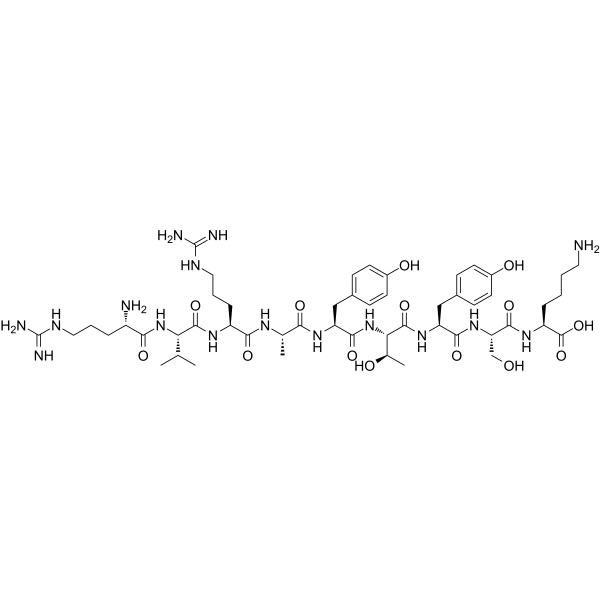 0 ImagesCat. No.: HY-P1911CAS No.: 254110-79-7CEF27, Epstein-Barr Virus BRLF-1 lytic 148-156 corresponding to amino acids 148-156 of the BRLF1 protein. BRLF1 is a transcriptional activator that binds directly to a GC-rich motif present in some Epstein-Barr virus (EBV) lytic gene promoters.
-
Mogroside II B
 0 ImagesCat. No.: HY-N9752CAS No.: 942615-25-0Mogroside II B is a cucurbitane-type glycoside with a sweet taste in water. Mogroside II B inhibits the activation of Epstein Barr virus early antigen (EBV-EA) induced by Phorbol 12-myristate 13-acetate (TPA) (HY-18739). Mogroside II B exerts weak inhibitory effects on the activation of the nitric oxide (NO) donor (NOR1).
-
Amygdalinic acid
 0 ImagesCat. No.: HY-N18106CAS No.: 66427-92-7Amygdalinic acid (Compound 3) is a glycoside. Amygdalinic acid can be isolated from Persicae Semen. Amygdalinic acid inhibits Epstein-Barr virus early antigen activation. Amygdalinic acid delays two-stage chemical carcinogenesis in mouse skin, reduces papilloma incidence.
-
Minumicrolin
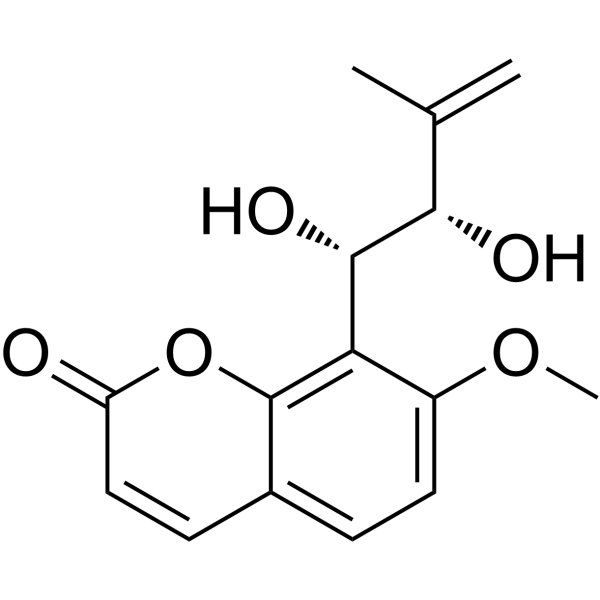 0 ImagesCat. No.: HY-N3254CAS No.: 88546-96-7Synonyms: Murpanidin; (+)-MurpanidinMinumicrolin is a plant growth inhibitor. Minumicrolin can be isolated from Murraya paniculata. Minumicrolin inhibits Epstein-Barr virus early antigen (EBV-EA) activation.
-
Vidarabine monohydrate (Standard)
 0 ImagesVidarabine monohydrate (Standard) is the analytical standard of Vidarabine monohydrate (HY-N6666). This product is intended for research and analytical applications. Vidarabine monohydrate is a Purine nucleoside derivative and Antiviral agent. The triphosphate derivative of Vidarabine monohydrate competitively inhibits DNA polymerase, incorporates into the terminus of elongating DNA molecules, and interferes with the early steps of viral DNA synthesis. Vidarabine monohydrate inhibits the replication of herpes simplex virus, varicella-zoster virus, cytomegalovirus, Epstein-Barr virus and vaccinia virus, reduces viral shedding, and accelerates skin healing. Vidarabine monohydrate is metabolized to arabinosyl hypoxanthine, causes minimal impairment of corneal wound healing in rabbit models, and is associated with recurrence of herpes simplex encephalitis. Vidarabine monohydrate can be used in the research of herpetic keratoconjunctivitis, herpes simplex encephalitis, herpetic uveitis, and chronic active hepatitis associated with hepatitis B virus.
-
L-I-OddU
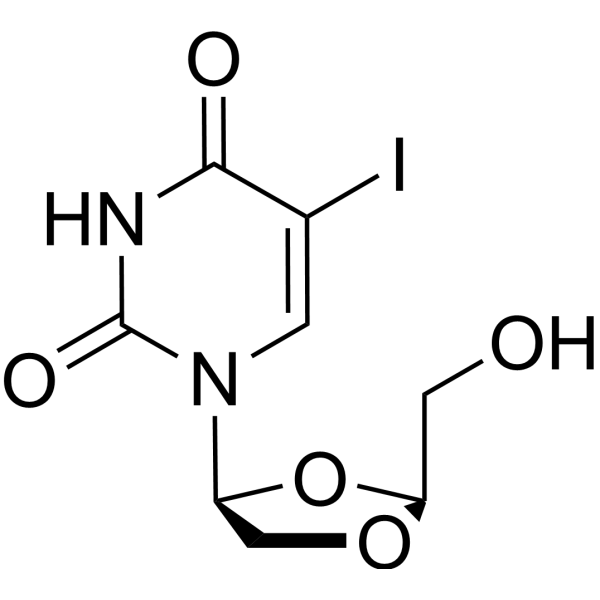 0 ImagesCat. No.: HY-148170CAS No.: 207920-87-4L-I-OddU, a L-5'-halo- dioxolane nucleoside analogue, is a potent and selective anti-Epstein-Barr virus (EBV) agent with an EC50 value of 0.03μM. L-I-OddU has low cytotoxicity with a CC50 value of 1000 nM. L-I-OddU has antiviral activity by suppressing replicative EBV DNA and viral protein synthesis.
-
CEF19, Epstein-Barr Virus latent NA-3A (458-466)
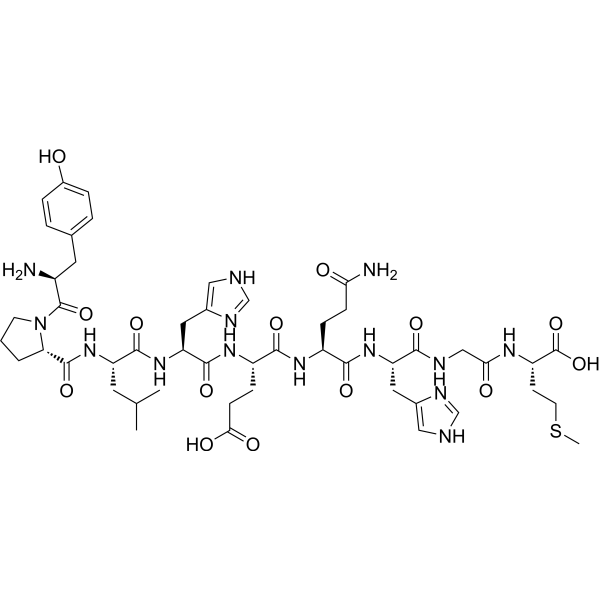 0 ImagesCat. No.: HY-P1920CAS No.: 157876-41-0CEF19, Epstein-Barr Virus latent NA-3A (458-466) is a single peptide epitope, YPLHEQHGM, representing residues 458-466 of the type 1 Epstein-Barr Virus (EBV) nuclear antigen 3A protein (B95.8 strain). CEF19, Epstein-Barr Virus latent NA-3A (458-466) can significantly affect cytotoxic T-lymphocyte (CTL) recognition.



