



Fluorescent Dye
Fluorescence is a phenomenon of photoluminescence in luminescence. When an atom is irradiated by light, some electrons around the nucleus jump from their original orbitals to higher energy orbitals under the influence of light energy, i.e., from the ground state to the first or second excited single-line state, etc. Due to the instability of the first or second excited singlet state, the electron returns from the excited singlet state to the ground state accompanied by released energy, resulting in fluorescence.
Fluorescent dyes can be covalently bound or physically adsorbed in the structure of the substance. The fluorescence properties allow for the characterization, localization and quantitative analysis of the labeled object. Fluorescent dyes have shown great potential for the detection of proteins, nucleic acids, cells, and immunoassays, attributed to the advantages in non-radioactive contamination, simple experimental operation and easy observation.
Fluorescent dyes have penetrated many fields such as pharmacology, physiology, environmental science, and information science, as well as functional studies of proteins and drug screening.
All Product Categories
-
Fluorescent Dye Related Products (4894)
Related Products (4894)

-
Antibodies (4)
-
INDO 1
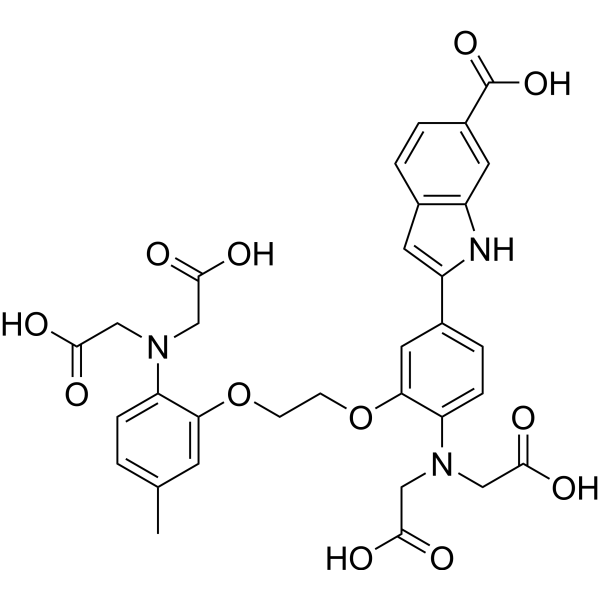 0 ImagesCat. No.: HY-D0121CAS No.: 96314-96-4INDO 1 is a cell-impermeable, dual-emission ratiometric fluorescent calcium indicator with a KD·β value of 0.44 μM. INDO 1 binds to intracellular free calcium ions and undergoes wavelength-dependent fluorescence changes. In the unbound state (free form) without Ca2+, its fluorescence emission peak is at 485 nm upon excitation with ultraviolet light (350 nm). When INDO 1 pentasodium binds to Ca2+ (bound state), the emission peak shifts to 405 nm (Ex = 350 nm; dual emission at Em= 405/485 nm).
-
Streptavidin, R-Phycoerythrin conjugate (SAPE)
 0 ImagesCat. No.: HY-D3321Streptavidin, R-Phycoerythrin conjugate (SAPE) is a streptavidin-labeled phycoerythrin. Streptavidin, R-Phycoerythrin conjugate (SAPE) can be used in conjunction with biotinylated reagents in anti-Biotin/biotin-labeled systems, suitable for flow cytometry detection, microarray analysis, and microplate detection (Ex/Em = 450-500 nm/575 nm).
-
Sulfo-Cy5 diacid potassium
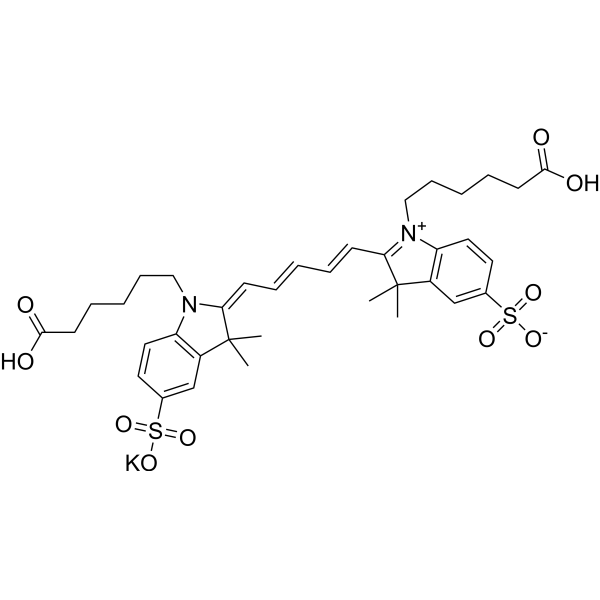 0 ImagesCat. No.: HY-D1096CAS No.: 252255-40-6Sulfo-Cy5 diacid potassium is a water-soluble, inactive Cy5 carboxylic acid.
-
Rhodamine B thiolactone
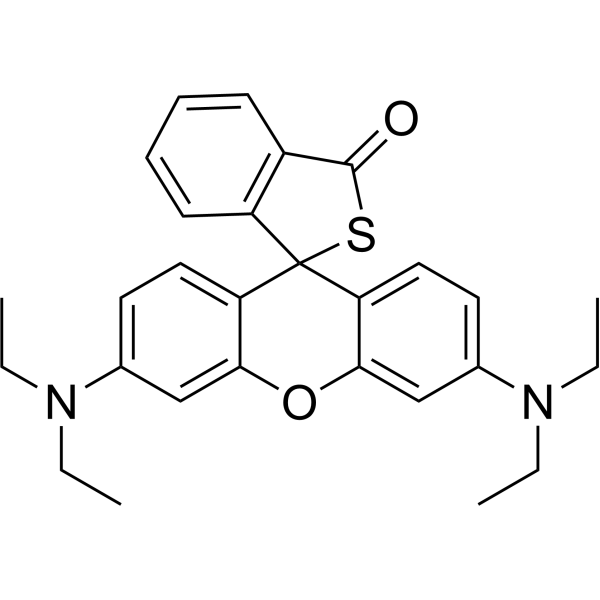 0 ImagesCat. No.: HY-D1750CAS No.: 111883-10-4Rhodamine B thiolactone is a high-sensitive Hg2+ indicator used for measuring Hg2+ concentration.
-
CY5 (solution)
 0 ImagesCat. No.: HY-DY1064CAS No.: 146368-11-8CY5 (solution) is a CY dye. CY, short for Cyanine, is a compound consisting of two nitrogen atoms connected by an odd number of methyl units. Cyanine compounds have the characteristics of long wavelength, adjustable absorption and emission, high extinction coefficient, good water solubility and relatively simple synthesis. CY dyes are of en used for the labeling of proteins, antibodies and small molecular compounds. For the labeling of protein antibodies, the combination can be completed through a simple mixing reaction. Below, we introduce the labeling method of protein antibody labeling, which has certain reference significance.
Solvent and concentration: DMSO: 10 mM
-
FAM labled Patisiran sodium
 0 ImagesCat. No.: HY-132609BFAM labled Patisiran sodiumis a FAM labled Patisiran sodium.
-
DNP-Pro-Leu-Ala-Leu-Trp-Ala-Arg-OH
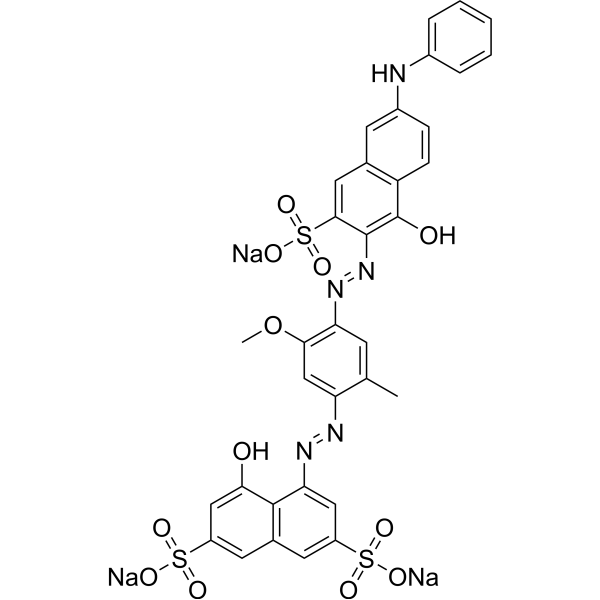
 0 ImagesCat. No.: HY-P2608CAS No.: 135662-04-3DNP-Pro-Leu-Ala-Leu-Trp-Ala-Arg-OH is the substrate for matrix metalloproteinase MMP-1, with a Km of 26.61 μM. DNP-Pro-Leu-Ala-Leu-Trp-Ala-Arg-OH is utilized as fluorescence probe for detecting protein activity.
-
DiOC14(3) (hydroxyethanesulfonate)
 0 ImagesCat. No.: HY-D3421CAS No.: 3083251-08-2DiOC14 (3) (hydroxyethanesulfonate) is a water-soluble lipophilic carbocyanine green fluorescent membrane dye used as a fluorescent probe for living cell membranes and lipid bilayers. DiOC14 (3) (hydroxyethanesulfonate) acts as a lipophilic tracer that integrates into cell membranes, with its fluorescence generated upon membrane integration independent of enzymatic hydrolysis, pH, or membrane potential. The Ex/Em of DiOC14 (3) (hydroxyethanesulfonate) is 477/525 nm.

-
Lycopersicon esculentum (Tomato) Lectin-Cy3
 0 ImagesCat. No.: HY-NP071JSynonyms: LEL-Cy3Lycopersicon esculentum (Tomato) Lectin-Cy3 (LEL-Cy3) is Lycopersicon esculentum lectin (LEL) labeled with the Cy3 fluorescent dye. Lycopersicon esculentum (Tomato) lectin specifically recognizes and binds to glycan structures, primarily targeting N-acetyl-β-D-glucosamine residues. Lycopersicon esculentum (Tomato) Lectin-Cy3 can be used to study glycosylation and localize glycan structures on cell surfaces and in tissue sections (Ex/Em = 554/568 nm).
-
Sulfo-Cyanine5.5 azide tripotassium
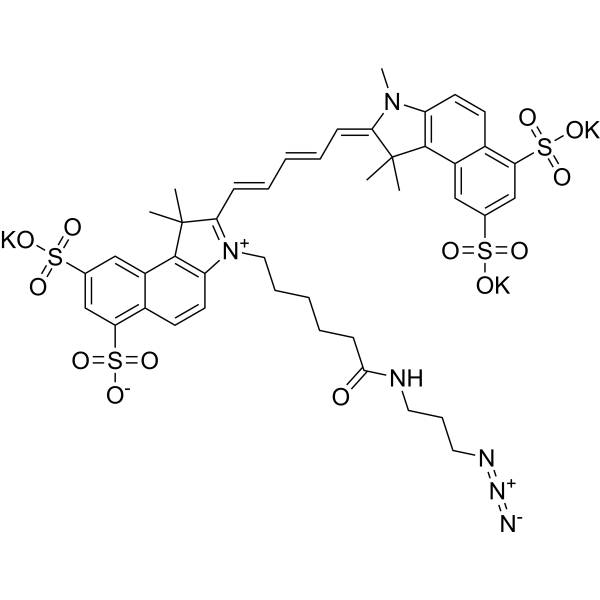 0 ImagesCat. No.: HY-D1308CAS No.: 2382994-65-0Sulfo-Cyanine5.5 azide tripotassium, a near-infrared (NIR) fluorescent dye, is an azide-functionalized Sulfo-Cyanine5.5 (Ex=678 nm, Em=694 nm). Sulfo-Cyanine5.5 azide tripotassium can react with alkynes for Click Chemistry labeling. It contains an azide group and can undergo copper-catalyzed azide-alkyne cycloaddition (CuAAc) with molecules containing alkyne groups. It can also undergo ring strain-promoted alkyne-azide cycloaddition (SPAAC) with molecules containing DBCO or BCN groups.
-
Ulex Europaeus Agglutinin I-AF680
 0 ImagesCat. No.: HY-NP090JSynonyms: UEA I-AF680Ulex Europaeus Agglutinin I-AF680 (UEA I-AF680) is an AF680-labeled glehnia littoralis lectin I (UEA-I). Ulex Europaeus Agglutinin I exhibits specificity for cell surface glycoconjugates containing α-L-fucosylate. Ulex Europaeus Agglutinin I-AF680 can be used for vascular endothelial labeling, glycan imaging, and tissue staining studies (Ex/Em = 684/707 nm).
-
Boc-Ala-Gly-Pro-Arg-AMC
 0 ImagesCat. No.: HY-P11367CAS No.: 118850-78-5Boc-Ala-Gly-Pro-Arg-AMC is a synthetic fluorescent substrate, widely used for the detection of protease activity. Boc-Ala-Gly-Pro-Arg-AMC can be used to detect the activity of serine proteases and the oligopeptide enzyme B of Trypanosoma brucei.
-
Z-VDVAD-AFC
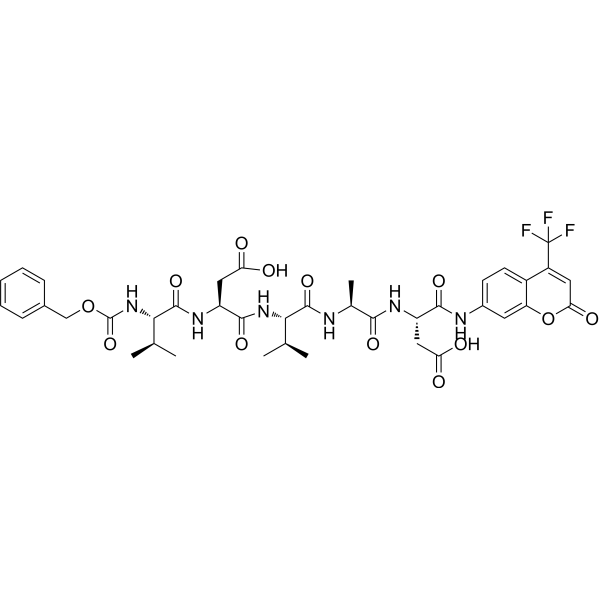 0 ImagesCat. No.: HY-P4400CAS No.: 219138-08-6Z-VDVAD-AFC is a fluorogenic substrate. Z-VDVAD-AFC is used to measure the activity of cysteine protease 3 (Caspase-3). Z-VDVAD-AFC undergoes hydrolysis to release 7-amino-4-trifluoromethylcoumarin (AFC). AFC is fluorescent under ultraviolet light and can emit fluorescent signals.
-
Disulfo-ICG-NHS disodium
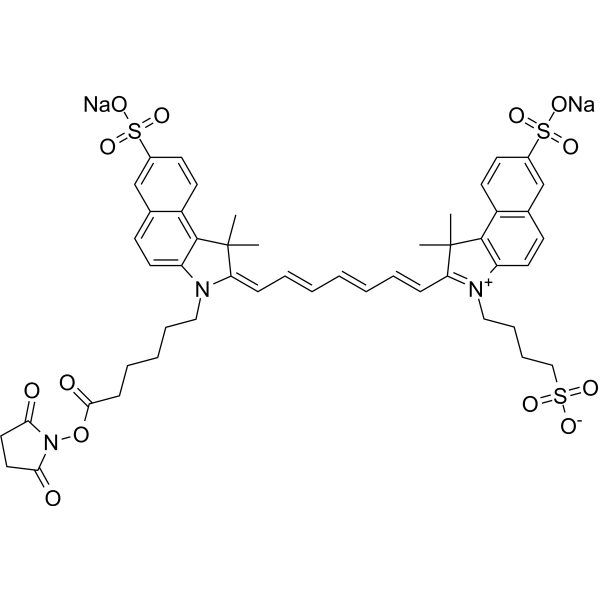 0 ImagesCat. No.: HY-D2238Disulfo-ICG-NHS disodium is a fluorescent dye.
-
Rhodamine B-Chitosan (MW 100000)
 0 ImagesCat. No.: HY-D3048ERhodamine B-Chitosan (MW 100000) is a Rhodamine B (HY-Y0016)-labeled chitosan with a molecular weight of 100,000. Rhodamine B-Chitosan (MW 100000) combines the polysaccharide properties of chitosan with the fluorescence properties of Rhodamine B, playing an important role in fields such as fluorescent labeling, cell imaging, and drug delivery research (Ex/Em = 546/610 nm).
-
N-Succinyl-Ile-Ile-Trp-AMC
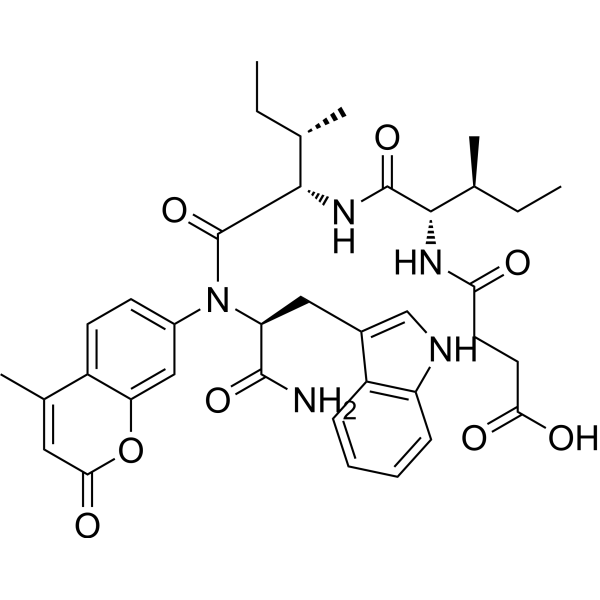 0 ImagesCat. No.: HY-P3791CAS No.: 133525-12-9N-Succinyl-Ile-Ile-Trp-AMC is a peptide-based fluorescent substrate or probe for carboxypeptidase Y (CPY).
-
Azure A eosinate
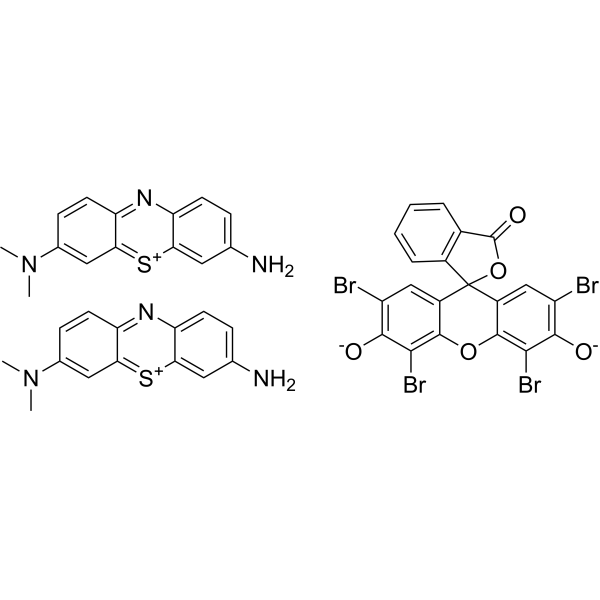 0 ImagesCat. No.: HY-D1472CAS No.: 62298-43-5Azure A eosinate is a dye for hematological and histological applications. Azure A eosinate can be used as new photosensitizer prototypes to determine growth inhibition of Candida albicans.




