Fluorescent Dye
Fluorescence is a phenomenon of photoluminescence in luminescence. When an atom is irradiated by light, some electrons around the nucleus jump from their original orbitals to higher energy orbitals under the influence of light energy, i.e., from the ground state to the first or second excited single-line state, etc. Due to the instability of the first or second excited singlet state, the electron returns from the excited singlet state to the ground state accompanied by released energy, resulting in fluorescence.
Fluorescent dyes can be covalently bound or physically adsorbed in the structure of the substance. The fluorescence properties allow for the characterization, localization and quantitative analysis of the labeled object. Fluorescent dyes have shown great potential for the detection of proteins, nucleic acids, cells, and immunoassays, attributed to the advantages in non-radioactive contamination, simple experimental operation and easy observation.
Fluorescent dyes have penetrated many fields such as pharmacology, physiology, environmental science, and information science, as well as functional studies of proteins and drug screening.
All Product Categories
-
Fluorescent Dye Related Products (4894)
Related Products (4894)

-
Antibodies (4)
-
ATTO 390
 0 ImagesATTO 390 is a new fluorescent marker based on the Rhodamine structure. It has strong absorption, high fluorescence quantum yield, high thermal stability and photochemical stability, and is suitable for single molecule detection and high-resolution microscopy.
-
FITC-PEG3400-N3
 0 ImagesCat. No.: HY-D2802BFITC-PEG3400-N3 is an azide fluorescent dye containing polyethylene glycol (PEG) and FITC (HY-66019). FITC-PEG3400-N3 is a click chemistry reagent, it contains an Azide group and can undergo copper-catalyzed azide-alkyne cycloaddition reaction (CuAAc) with molecules containing Alkyne groups. It can also undergo strain-promoted alkyne-azide cycloaddition (SPAAC) reactions with molecules containing DBCO or BCN groups.
-
Vari Fluor 568 Carboxylic acid(free acid)
 0 ImagesCat. No.: HY-D1829Synonyms: VF 568 Carboxylic acid(free acid)Vari Fluor 568 Carboxylic acid (VF 568 Carboxylic acid) free acid is a carboxylic acid derivative of Vari Fluor. Vari Fluor carboxylic acid derivatives are unactivated labeled fluorescent dyes for protein, antibody, and polysaccharide labeling that require carboxylic acid activation for use.
-
Cys modifier 1
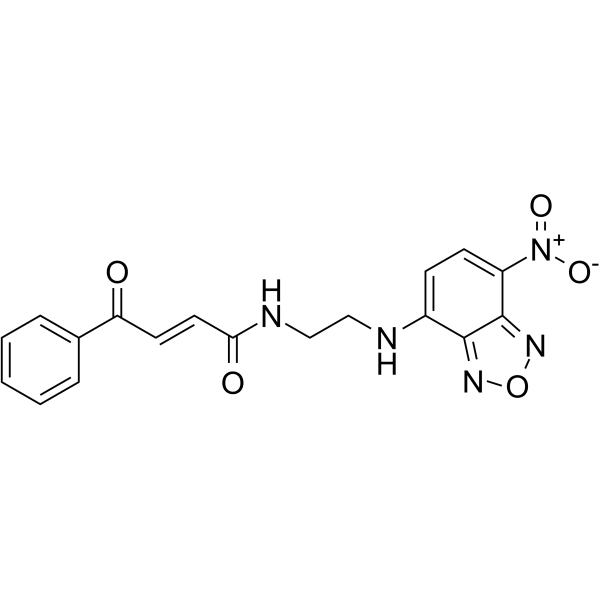 0 ImagesCys modifier 1 (compound 7) is a cysteine-selective protein modifier for protein bioconjugation. A fluorescent carbonylacrylic derivative bearing nitrobenzofurazan (λex=465nm and λem539 nm)[1].
-
Indanthren Brown LMG
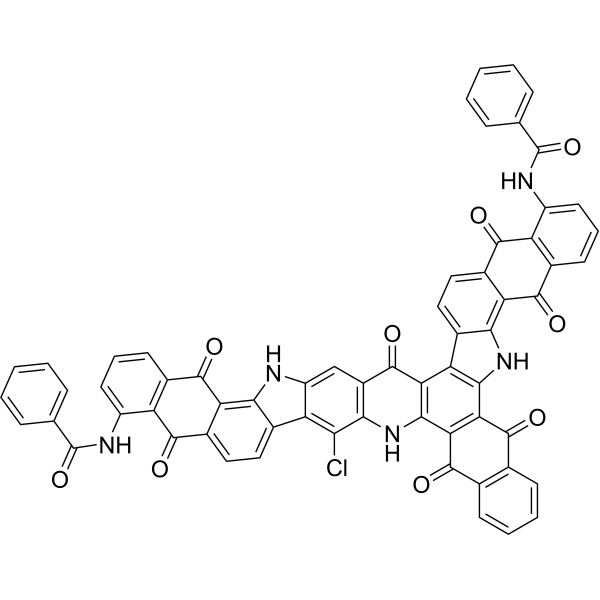 0 ImagesIndanthren Brown LMG is a multifunctional dye. Dyes are important tools in biological experiments. They can help researchers observe and analyze cell structures, track biomolecules, evaluate cell functions, distinguish cell types, detect biomolecules, study tissue pathology and monitor microorganisms. Their applications range from basic scientific research to clinical A wide range of diagnostics. Dyes are also widely used in traditional fields such as textile dyeing, as well as in emerging fields such as functional textile processing, food pigments and dye-sensitized solar cells.
-
N-Ethyl-o-toluidine
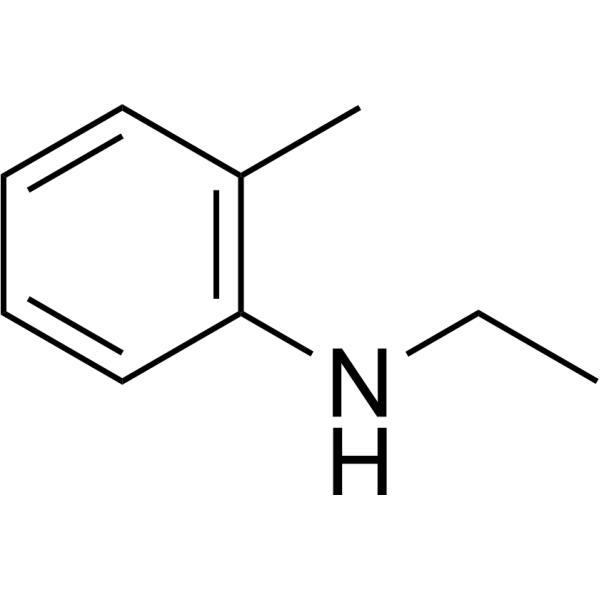 0 ImagesN-Ethyl-o-toluidine is a multifunctional dye. Dyes are important tools in biological experiments. They can help researchers observe and analyze cell structures, track biomolecules, evaluate cell functions, distinguish cell types, detect biomolecules, study tissue pathology and monitor microorganisms. Their applications range from basic scientific research to clinical A wide range of diagnostics. Dyes are also widely used in traditional fields such as textile dyeing, as well as in emerging fields such as functional textile processing, food pigments and dye-sensitized solar cells.
-
Fluo-3 pentapotassium
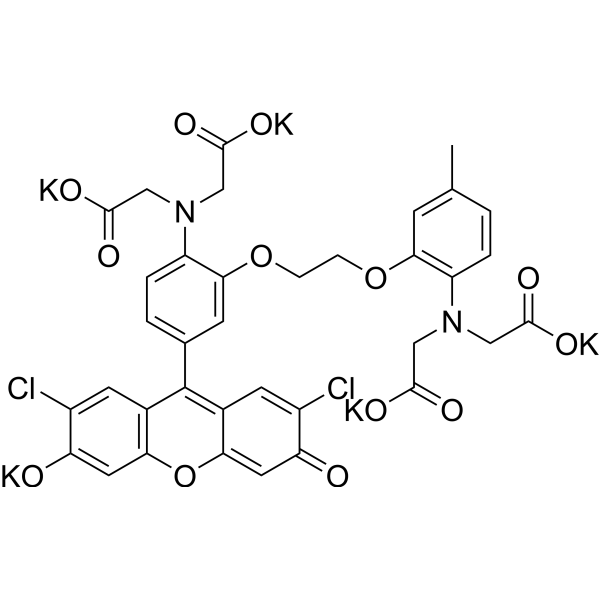 0 ImagesCat. No.: HY-129547CAS No.: 853400-67-6Fluo-3 pentapotassium is a cell-impermeable calcium ion (Ca2+) indicator. Fluo-3 pentapotassium itself is not fluorescent, but it becomes fluorescent after binding to calcium ions (Ex/Em = 488/525 nm).
-
DiSulfo-ICG hydrazide
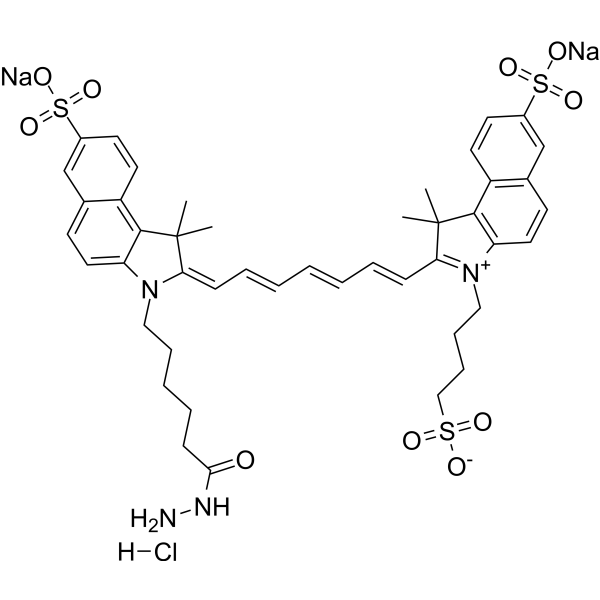 0 ImagesCat. No.: HY-D2251DiSulfo-ICG hydrazide is a fluorescent dye.
-
Narcissus Pseudonarcissus (Daffodil) Lectin
 0 ImagesCat. No.: HY-NP075Synonyms: NPLNarcissus Pseudonarcissus (Daffodil) Lectin (NPL) is a plant lectin that can be used as a probe to specifically bind biomolecules (such as polysaccharides, peptides, etc.).Narcissus Pseudonarcissus (Daffodil) Lectin (NPL) is a biological material or organic compound that can be used in life science research.
-
PYSNO
 0 ImagesCat. No.: HY-D3250CAS No.: 2445485-84-5PYSNO is a lysosome-targeted fluorescent probe based on a pyridazinone skeleton (λem=515-565 nm, λex=405 nm) that can be used to track nitric oxide (NO) production in vivo. PYSNO exhibits a rapid, highly sensitive and highly selective "turn-on" response to endogenous and exogenous NO by blocking photoinduced electron transfer and regulating radiative decay rates. PYSNO enables precise in vivo monitoring in a mouse model of myocardial fibrosis and can be applied to the research of related diseases.
-
CDG-DNB3
 0 ImagesCat. No.: HY-D2991CAS No.: 2081872-38-8CDG-DNB3 is a selective fluorescent probe for Mycobacterium tuberculosis. CDG-DNB3 provides rapid and specific labeling of live Mycobacterium tuberculosis. CDG-DNB3 can image Bacillus Calmette-Guérin phagocytosis in real time.
-
Oenthacid-4-(trifluormethyl)-umbelliferone
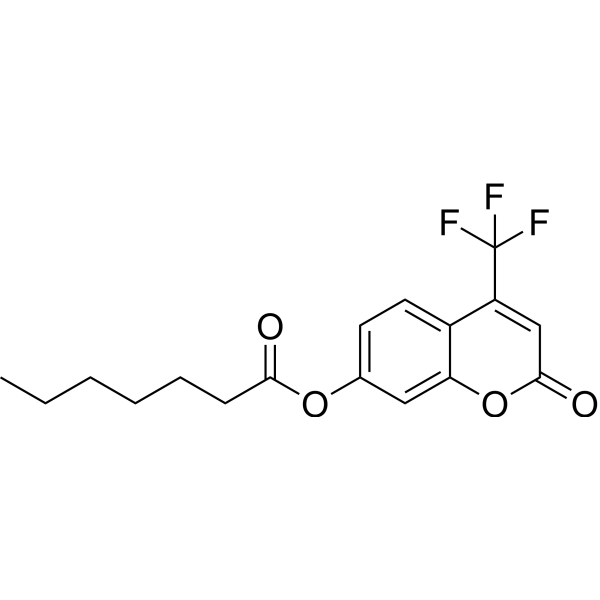 0 ImagesCat. No.: HY-D0793CAS No.: 351002-79-4Oenthacid-4-(trifluormethyl)-umbelliferone is a multifunctional dye. Dyes are important tools in biological experiments. They can help researchers observe and analyze cell structures, track biomolecules, evaluate cell functions, distinguish cell types, detect biomolecules, study tissue pathology and monitor microorganisms. Their applications range from basic scientific research to clinical A wide range of diagnostics. Dyes are also widely used in traditional fields such as textile dyeing, as well as in emerging fields such as functional textile processing, food pigments and dye-sensitized solar cells.
-
Mito-Cu(II)
 0 ImagesCat. No.: HY-D3269CAS No.: 2088127-60-8Mito-Cu (II) is a mitochondria-targeted fluorescent probe (Ex/Em = 370/450 nM). Mito-Cu (II) specifically accumulates in mitochondria of living cells and enables real-time detection of exogenous Cu2+ within mitochondria of living cells. Mito-Cu (II) achieves "on-off-on" fluorescence switching through sequential exposure to Cu2+ and ethylenediaminetetraacetic acid (EDTA) (HY-Y0682). Its fluorescence is quenched after forming a 1:1 complex with Cu2+, and the fluorescence recovers when Cu2+ is chelated by EDTA.
-
M-2420
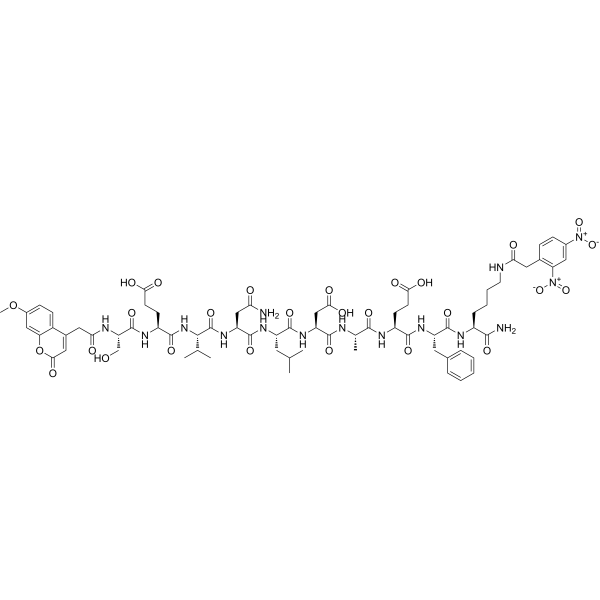 0 ImagesCat. No.: HY-P1729CAS No.: 310427-95-3M-2420 is a fluorogenic substrate containing β-secretase site of the Swedish mutation of amyloid precursor protein (APP).
-
Cyanine5.5 hydrazide dichloride
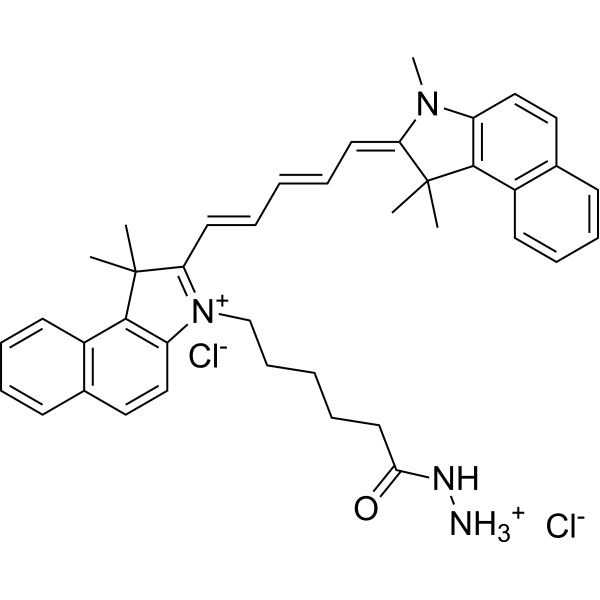 0 ImagesCat. No.: HY-D1324Cyanine5.5 hydrazide, an analog of Cyanine5.5 fluorophore, is a near-infrared (NIR) fluorescent dye. Cyanine5.5 hydrazide is used for labeling of biomolecules through the condensation between the hydrazide groups and the carbonyl groups. (λex=684 nm, λem=710 nm).
-
BO-TAP-1
 0 ImagesCat. No.: HY-D3417CAS No.: 157199-57-0BO-TAP-1 is a cell-impermeable cyan fluorescent carbocyanine monomeric nucleic acid dye that can be used for microarray nucleic acid staining, multicolor fluorescent labeling of cell nuclei and chromosomes, cell detection and counting, and flow cytometry. BO-TAP-1 is non-fluorescent in the absence of nucleic acids, but its fluorescence is significantly enhanced upon binding to double-stranded DNA. The maximum excitation and emission wavelengths of the BO-TAP-1–DNA complex are 454 nm and 487 nm, respectively. BO-TAP-1 can be used in research related to nucleic acid detection and cell analysis.
-
Disperse Violet 33
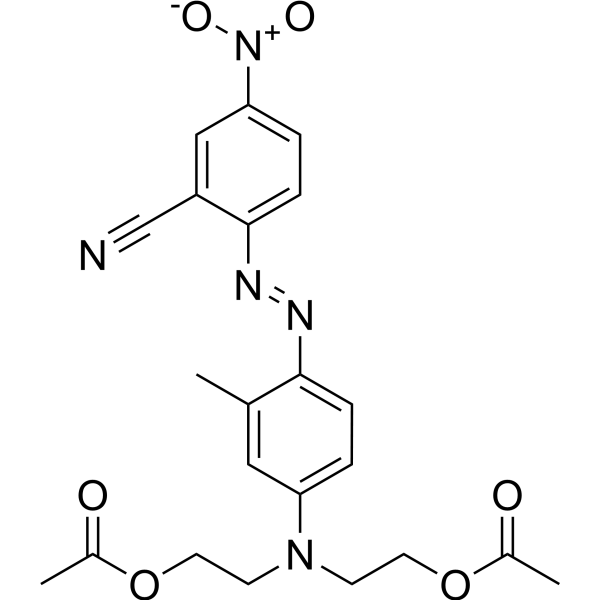 0 ImagesCat. No.: HY-D0610CAS No.: 66882-16-4Disperse Violet 33 is a violet dye commonly used for fiber dyeing.
-
Pt-Luc
 0 ImagesCat. No.: HY-D3436Pt-Luc is a bioluminescent probe used for real-time, non-invasive monitoring of Pt (IV) prodrug reduction in living cells and animal models. The detection mechanism of Pt-Luc relies on the intracellular reduction mediated by active cysteine residues in proteins. Pt-Luc can penetrate the membrane of living cells; after entering cells, active cysteine thiolates in high-molecular-weight protein components reduce the Pt (IV) complex, thereby cleaving the caged aminoluciferin substrate. The released free aminoluciferin is then oxidized by luciferase in the presence of ATP to generate a bioluminescent signal, whose intensity is directly correlated with the reduction degree of Pt (IV).