



GCGR
Glucagon Receptor
GCGR (glucagon receptor) is in the G protein-coupled receptor family, that is important in controlling blood glucose levels. The glucagon receptor is a 62 kDa protein that is activated by glucagon and is a member of the class B G-protein coupled family of receptors, coupled to G alpha i, Gs and to a lesser extent G alpha q. Stimulation of the receptor results in activation of adenylate cyclase and increased levels of intracellular cAMP. In humans, the glucagon receptor is encoded by the GCGR gene. Glucagon receptors are mainly expressed in liver and in kidney with lesser amounts found in heart, adipose tissue, spleen, thymus, adrenal glands, pancreas, cerebral cortex, and gastrointestinal tract.
All Product Categories
-
GCGR Related Products (195)
Related Products (195)

-
Recombinant Proteins (15)
-
Antibodies (3)
-
VU0453379 hydrochloride
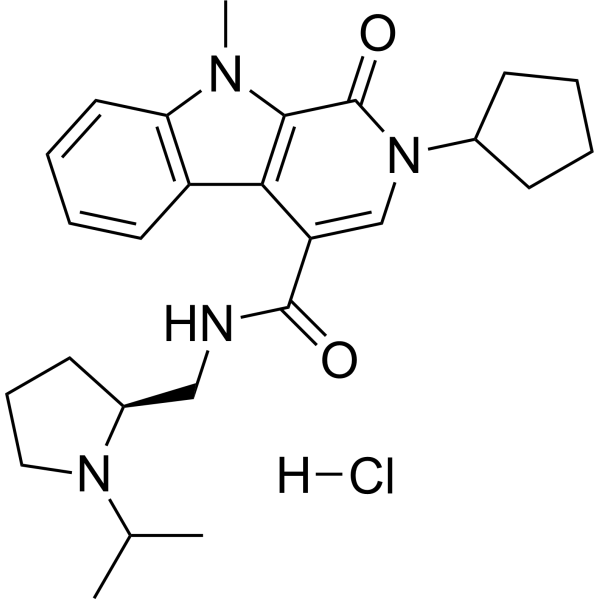 0 ImagesCat. No.: HY-116819APurity: 99.0%VU0453379 hydrochloride is a highly selective and central nervous system (CNS) penetrant positive allosteric modulator (PAM) of glucagon-like peptide-1R (GLP-1R) with an EC50 of 1.3 μM.
-
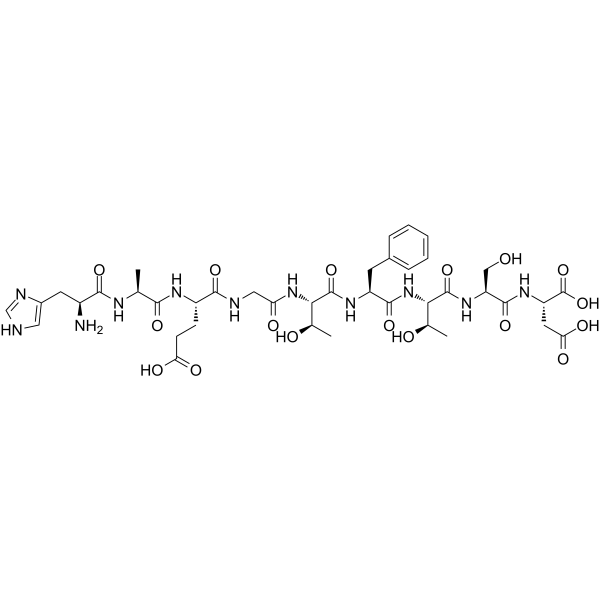
[Des-His1,Glu9]-Glucagon amide
![[Des-His1,Glu9]-Glucagon amide](https://file.medchemexpress.com/product_pic/hy-p1143.gif "Click to View [Des-His1,Glu9]-Glucagon amide Product Detail") 0 Images[Des-His1,Glu9]-Glucagon amide is a potent and peptide antagonist of the glucagon receptor, with a pA2 of 7.2. [Des-His1,Glu9]-Glucagon amide is potentially useful in the study of the pathogenesis of diabetes.
0 Images[Des-His1,Glu9]-Glucagon amide is a potent and peptide antagonist of the glucagon receptor, with a pA2 of 7.2. [Des-His1,Glu9]-Glucagon amide is potentially useful in the study of the pathogenesis of diabetes.

-
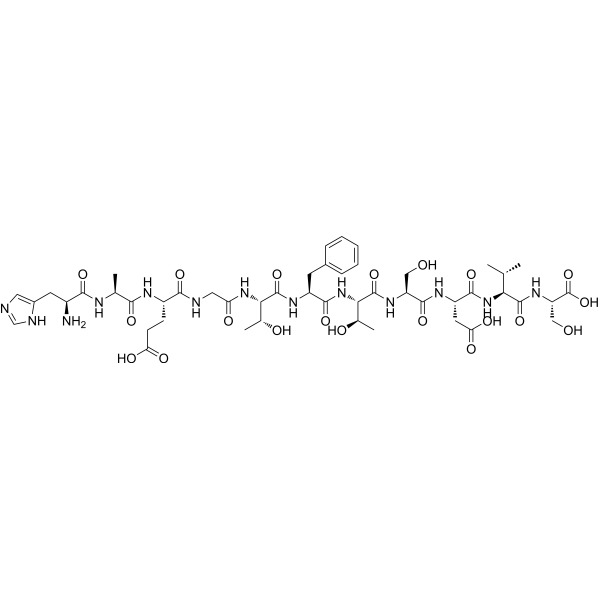
ZP3022
 0 ImagesZP3022 is a dual agonist of glucagon-like peptide-1 (GLP-1) and gastrin that has the ability to sustainably improve glycemic control. Additionally, ZP3022 can effectively increase β-cell mass, promote β-cell proliferation, and enhance the function of pancreatic islets. ZP3022 can be used in anti-diabetic research.
-
GLP-1R agonist 9
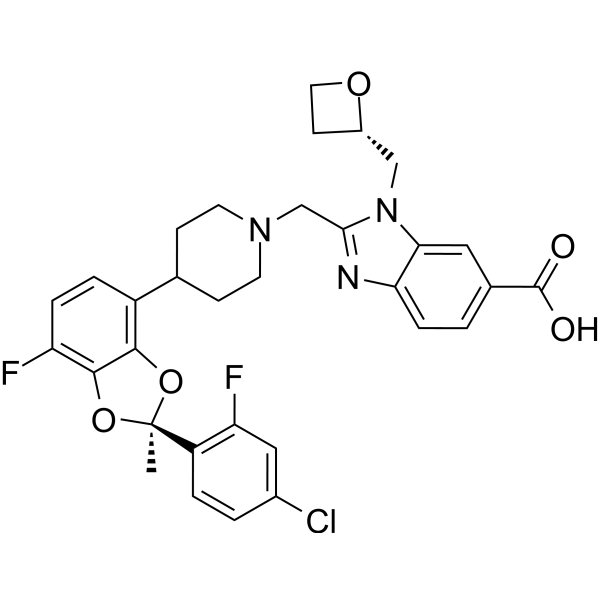 0 ImagesCat. No.: HY-147622CAS No.: 2401894-00-4GLP-1R agonist 9 (Compound 96) is a GLP-1R agonist with EC50 values of 1.1 nM and 11 nM against CHO GLP-1R Clone H6 and CHO GLP-1R Clone C6, respectively.


-
Exendin-3/4 (59-86)
 0 ImagesExendin-3/4 (59-86) is a Exendin-4 peptide derivative.

-
GLP-1R agonist 4
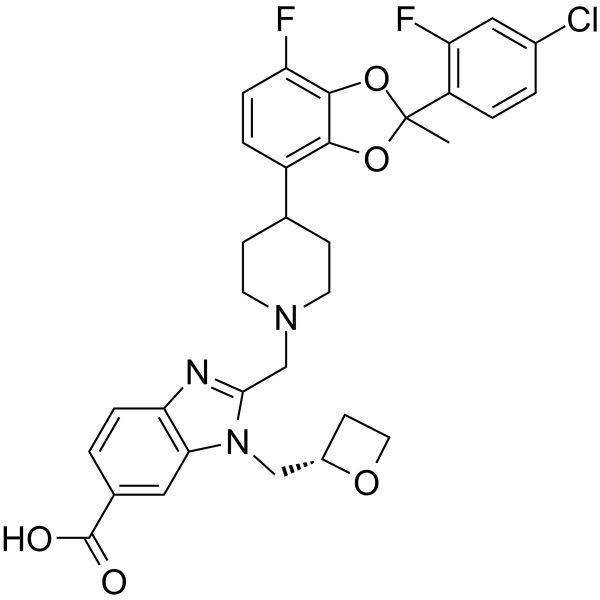 0 ImagesGLP-1R agonist 4 is a glucagon-like peptide-1 (GLP-1) receptor agonist. GLP-1 is an intestinal hypoglycemic hormone secreted by L-cells in the lower gastrointestinal tract. GLP-1R agonist 4 can be used for the research of type 2 diabetes mellitus, obesity, non-alcoholic steatohepatitis, insulin resistance and etc.
-
(S,R)-LSN3318839
 0 Images(S,R)-LSN3318839 is the stereoisomer of LSN3318839 (HY-142162). LSN3318839 is an orally active positive modulator of the glucagon-like peptide-1 receptor (GLP-1R). LSN3318839 can increase the secretion of insulin and has the effect of lowering blood sugar.
-
Zenagamtide
 0 ImagesCat. No.: HY-P11274CAS No.: 3005889-81-3Synonyms: Amycretin; NN 9487Zenagamtide (Amycretin; NN 9487) is an orally active, blood-brain barrier permeable triple agonist that targets GLP-1, amylin (Amylin Receptor) and calcitonin receptor (Calcitonin Receptor). Zenagamtide is a single peptide consisting of 68 amino acids that can target brain regions regulating food intake, significantly suppress appetite and reduce energy intake. Therefore, Zenagamtide improves body weight, waist circumference, glycated hemoglobin and lipid profile, and also alleviates the histological features of metabolic dysfunction-associated steatotic liver disease (MASLD) and enhances insulin sensitivity. Zenagamtide may cause transient increases in heart rate and fluctuations in serum calcium levels, but it is an important compound for the study of overweight, obesity, insulin resistance and related metabolic diseases.
-
Glucagon receptor antagonist-5
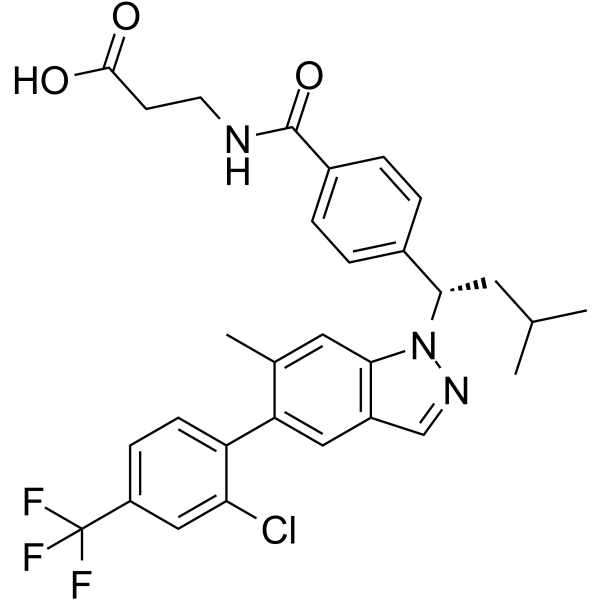 0 ImagesCat. No.: HY-128781CAS No.: 2200274-63-9Glucagon receptor antagonist-5 (compound 13K) is a potent and orally bioavailable indazole-based glucagon receptor antagonist (Ki=32 nM). Glucagon receptor antagonist-5 has potential for the treatment of type 2 diabetes mellitus (T2DM).
-
Retagliptin hydrochloride
 0 ImagesCat. No.: HY-112668BCAS No.: 1174038-86-8Synonyms: SP2086 hydrochloride
-
Dasiglucagon
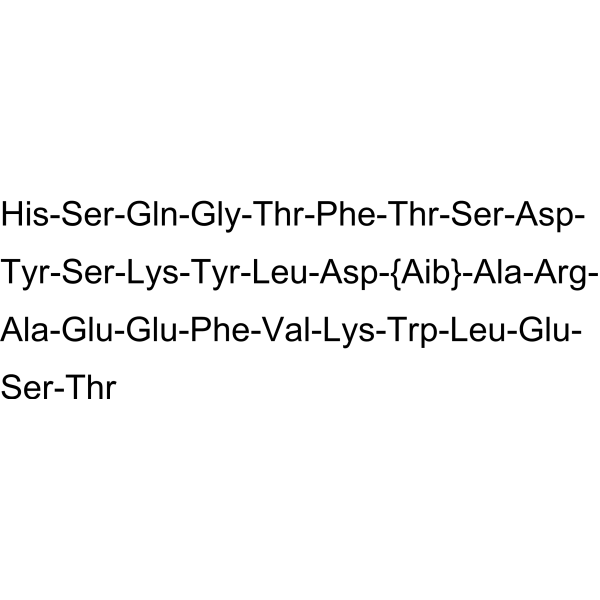 0 ImagesCat. No.: HY-P3469CAS No.: 1544300-84-6Dasiglucagon is a human glucagon analog, and can increase plasma glucose. Dasiglucagon can be used in hypoglycemia research.
-
GLP-1 receptor agonist 8
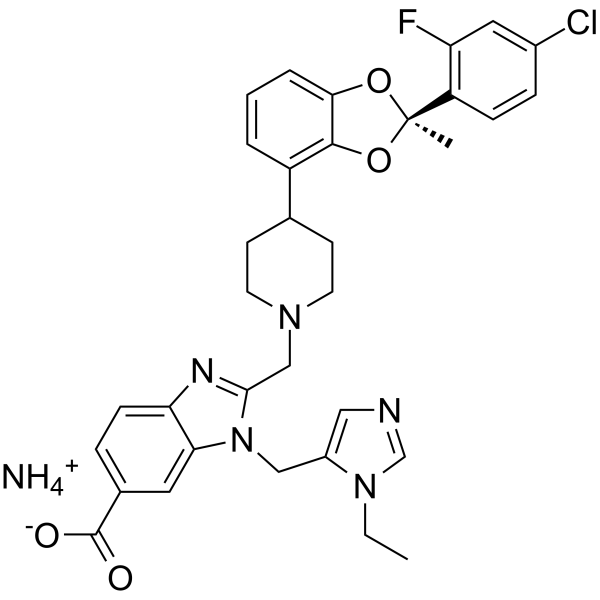 0 ImagesCat. No.: HY-138996CAS No.: 2401892-86-0GLP-1 receptor agonist 8 is a potent agonist of GLP-1 R. GLP-1 receptor agonist 8 has the potential for the research of diabetes, obesity, and nonalcoholic fatty liver disease (NAFLD) (extracted from patent WO2019239319A1, compound 17).

-
A8SGLP-1
 0 ImagesCat. No.: HY-P5578CAS No.: 753024-08-7A8SGLP-1 is an orally active GLP-1 analogue that the alanine at position 8 substituted with serine. A8SGLP-1 reduces blood glucose in db/db mice without affecting its function.




