



Isotope-Labeled Compounds
Isotope-labeled compounds are chemical substances in which some atoms in their molecules are replaced by isotope atoms. The range of stable isotope products can cover from gases to complex molecules. Isotope-labeled compounds could provide a site-specific investigation of structures, making molecules easily detectable by mass spectrometry and NMR, and maintaining the physico-chemical properties of the target molecule at the same time.
MCE isotope-labeled compounds are all stable isotope-labeled compounds and are non-radioactive labeled substances. MCE isotope-labeled compounds are unique tools for identifying and understanding biological and chemical processes. Stable isotope-labeled products are now getting more and more popular among scientists. The scope of application is gradually penetrating into various scientific fields, such as life sciences, food and medicine, agriculture, environment, geology, etc. Stable isotope-labeled compounds have a wide range of applications in the Life Science areas, such as Metabolomics, Proteomics, Clinical studies, Deuterium drugs, etc.
All Product Categories
-
Isotope-Labeled Compounds Related Products (11101)
Related Products (11101)

-
2-Phenylpropionic acid-d3
 0 ImagesCat. No.: HY-W015608SCAS No.: 192198-54-22-Phenylpropionic acid-d3 is the deuterated-labeled 2-Phenylpropionic acid (HY-W015608). 2-Phenylpropionic acid is an intermediate in the metabolism of alpha-Methylstyrene. 2-Phenylpropionic acid covalently binds to rat liver protein. 2-Phenylpropionic acid can be used in the research of nonsteroidal anti-inflammatory agents.
-
Methyl 2-(4-(tert-butyl)benzyl)propanoate-3,3,3-d3
 0 ImagesCat. No.: HY-W713989Methyl 2-(4-(tert-butyl)benzyl)propanoate-3,3,3-d3 is the deuterium labeled Methyl 2-(4-(tert-butyl)benzyl)propanoate.
-
13-Oxo-ODE-d3
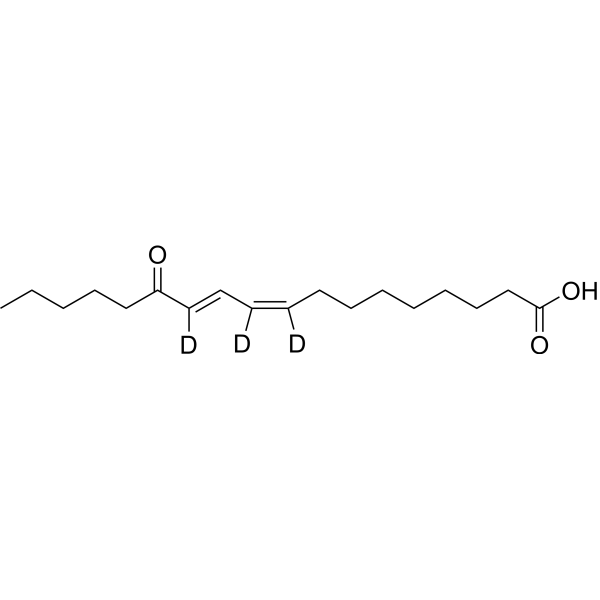 0 ImagesCat. No.: HY-131376S13-Oxo-ODE-d3 is deuterated labeled 13-Oxo-ODE (HY-131376) 13-Oxo-ODE is an octadecadienoic acid, that can be isolated from the leaves of Artemisia argyi.
-
N-Nitroso-N-methylurea-d5
 0 ImagesCat. No.: HY-W717139CAS No.: 2733722-92-2N-Nitroso-N-methylurea-d5 is the deuterium labeled N-Nitroso-N-methylurea (HY-34758). N-Nitroso-N-methylurea (NMU;MNU;NMH) is a potent carcinogen, mutagen and teratogenand. N-Nitroso-N-methylurea is a direct-acting alkylating agent that interacts with DNA. N-Nitroso-N-methylurea targets multiple animal organs to cause various cancer and/or degenerative disease. N-Nitroso-N-methylurea is also a precursor in the synthesis of diazomethane.
-
Flumequine-13C3
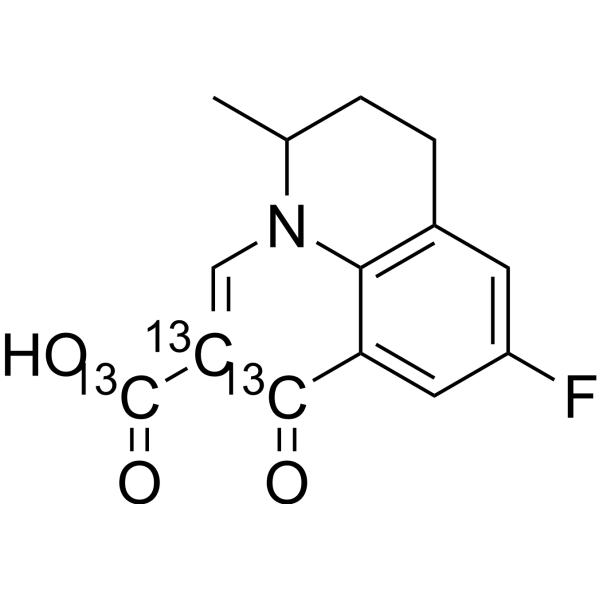 0 ImagesCat. No.: HY-B0526SCAS No.: 1185049-09-5Flumequine-13C3 is the 13C3 labeled Flumequine. Flumequine (R-802) is a quinolone antibiotic, and acts as a topoisomerase II inhibitor, with an IC50 of 15 μM (3.92 μg/mL).
-
Methyl tridecanoate-d25
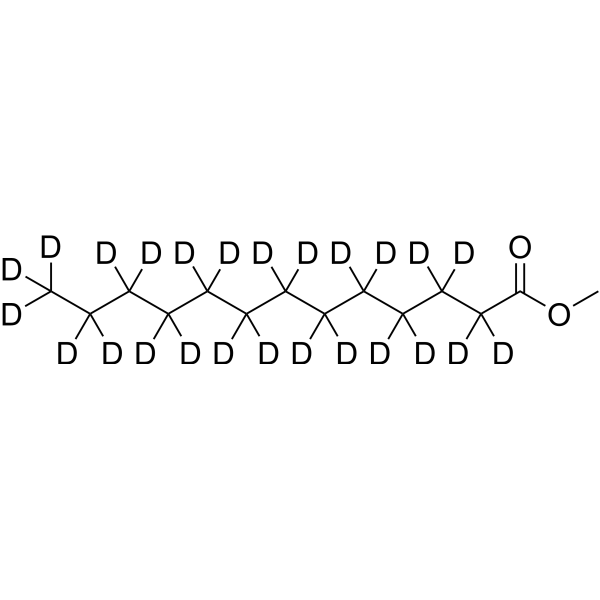 0 ImagesCat. No.: HY-W004287SCAS No.: 1219804-90-6Methyl tridecanoate-d25 is the deuterium labeled Methyl tridecanoate. Methyl tridecanoate moderately inhibits β-amyloid aggregation. Methyl tridecanoate weakly inhibits acetylcholinesterase (AChE).
-
Uridine 5'-monophosphate-15N2,d11 dilithium
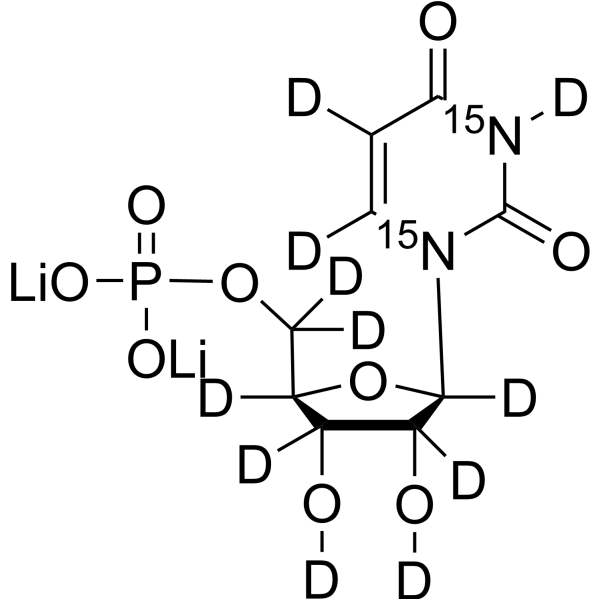 0 ImagesCat. No.: HY-101981S1Synonyms: 5'-Uridylic acid-15N2,d11 dilithiumUridine 5'-monophosphate-15N2,d11 (5'- Uridylic acid-15N2,d11) dilithium is deuterium and 15N labeled Uridine 5'-monophosphate (HY-101981). Uridine 5'-monophosphate (5'-Uridylic acid) is an orally active mitochondrial ATP-dependent potassium channel activator that has a protective effect on the heart. Uridine 5'-monophosphate can promote the synthesis of CDP-choline and induce apoptosis in intestinal epithelial cells, which is beneficial for gut development and reduces diarrhea.
-
1-Bromoundecane-d4
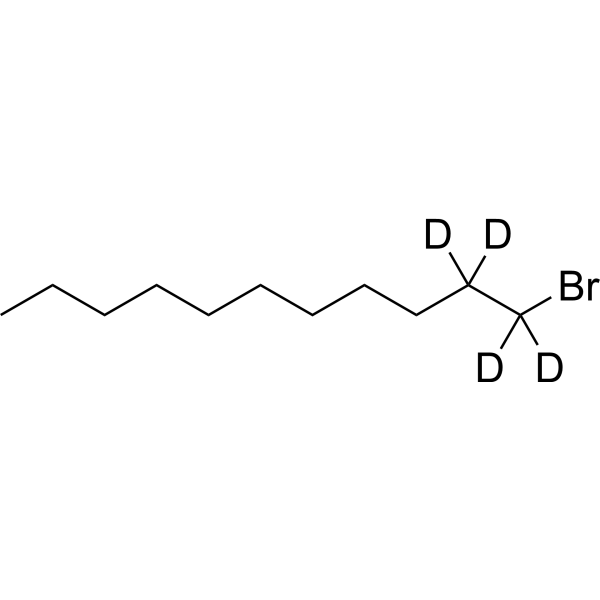 0 ImagesSynonyms: Undecyl bromide-d4; undecane, 1-bromo-d41-Bromoundecane-d4 is the deuterium labeled 1-Bromoundecane.
-
N-Pivaloylglycine-13C2,15N
 0 ImagesCat. No.: HY-W765303N-Pivaloylglycine-13C2,15N is the 13C- and 15N-labeled N-Pivaloylglycine (HY-W141930). N-Pivaloylglycine is a Glycine (HY-Y0966) derivative.
-
Propoxur-d7
 0 ImagesCat. No.: HY-W750153CAS No.: 2140327-65-5Propoxur-d7 is the deuterium labeled Propoxur. Propoxur is a reversible, competitive, orally active AChE inhibitor that can cross the blood-brain barrier. Propoxur inhibits AChE activity to induce neurotoxicity, while promoting MMP-2 expression and enhancing tumor cell migration and invasion by inducing intracellular ROS generation and activating the ERK/Nrf2 signaling pathway. On the one hand, Propoxur inhibits AChE, leading to acetylcholine accumulation and causing neurological dysfunction; on the other hand, it promotes Nrf2 nuclear translocation through ROS-dependent ERK1/2 phosphorylation, and upregulates MMP-2 and other invasion-related proteins. Propoxur is also a carbamate insecticide used to combat turf, forestry, and household pests.
-
(1R,3S,4R)-ent-Entecavir-13C2,15N
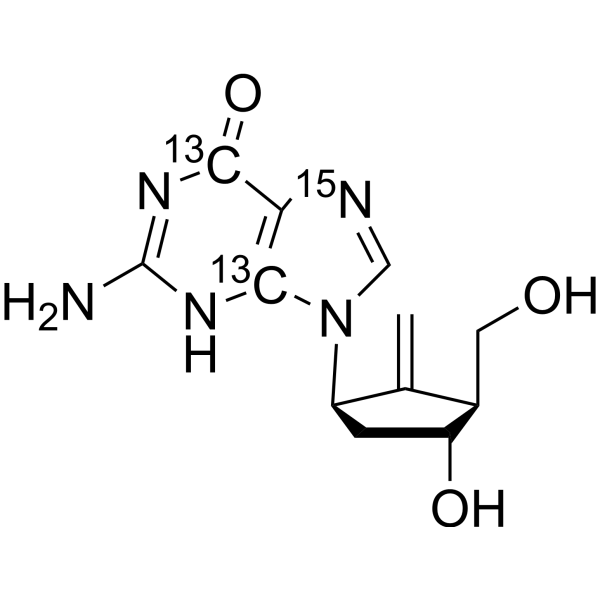 0 ImagesCat. No.: HY-13623CS(1R,3S,4R)-ent-Entecavir-13C2,15N is the 13C and 15N labeled (1R,3S,4R)-ent-Entecavir.
-
Diphenyldiethyltin-d10
 0 ImagesCat. No.: HY-W704349Diphenyldiethyltin-d10 is the deuterium labeled Diethyldiphenylstannane (HY-W796152).
-
1-(2,4-Dimethoxyphenyl)ethanone-d6
 0 ImagesCat. No.: HY-W716213Synonyms: 2',4'-Dimethoxyacetophenone-d61-(2,4-Dimethoxyphenyl)ethanone-d6 (2',4'-Dimethoxyacetophenone-d6) is the deuterium labeled 1-(2,4-Dimethoxyphenyl)ethanone (HY-W040456).
-
L-2-Aminobutyric acid-d5
 0 ImagesCat. No.: HY-W710927L-2-Aminobutyric acid-d5 is the deuterium labeled H-Abu-OH (HY-W010589). H-Abu-OH, one of the three isomers of aminobutyric acid, is elevated in the plasma of children with with Reye's syndrome, tyrosinemia, homocystinuria, nonketotic hyperglycinemia, and ornithine transcarbamylase deficiency.
-
Pulegone-d8
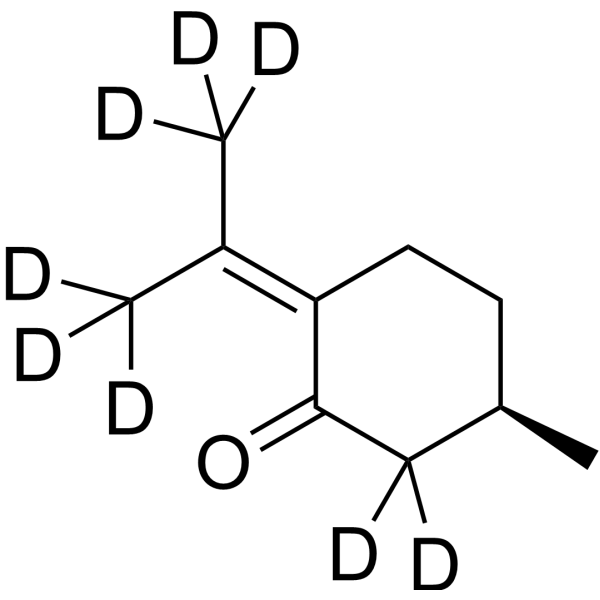 0 ImagesCat. No.: HY-N1500S1CAS No.: 62385-90-4Pulegone-d8 is deuterated labeled Pulegone (HY-N1500). Pulegone is a monoterpene ketone compound widely present in the essential oils of many plants. Pulegone can also be used as a bird repellent. Pulegone has multiple activities such as anti-inflammatory, antibacterial, antifungal, and anti-hyperalgesic effects. Pulegone is particularly effective against bacteria of the Salmonella species.
-
L-Glutamic acid-15N,d5
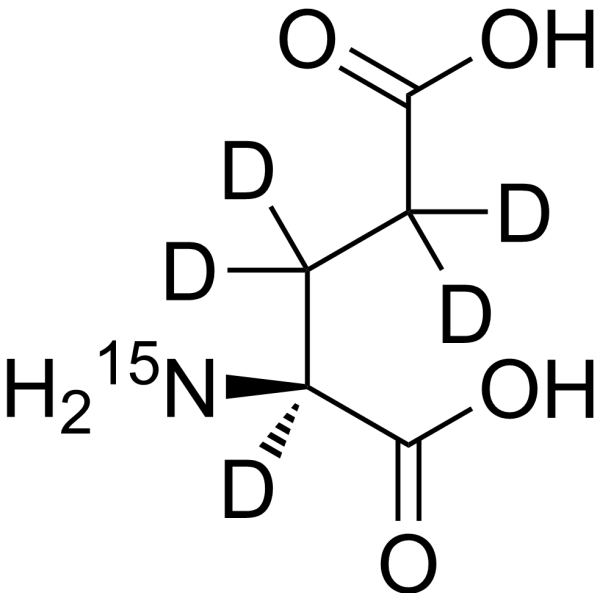 0 ImagesCat. No.: HY-14608S9L-Glutamic acid-15N,d5 is the deuterium and 15N-labeled L-Glutamic acid. L-Glutamic acid acts as an excitatory transmitter and an agonist at all subtypes of glutamate receptors (metabotropic, kainate, NMDA, and AMPA). L-Glutamic acid shows a direct activating effect on the release of DA from dopaminergic terminals.
-
D-Gulose-13C
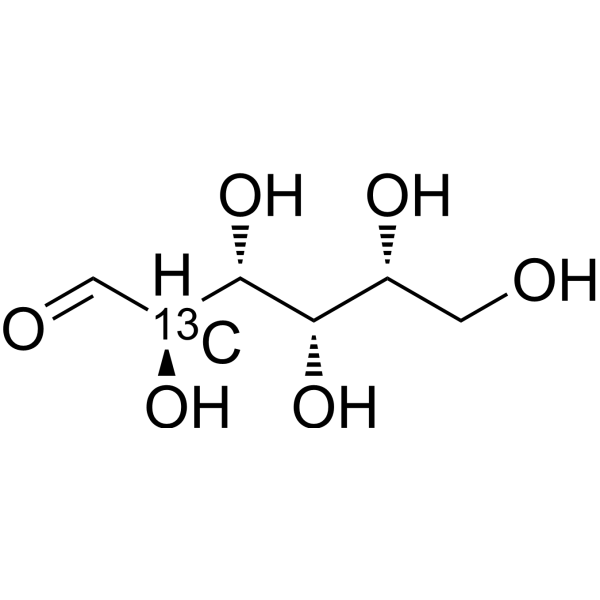 0 ImagesCat. No.: HY-W242887S2CAS No.: 478529-73-6D-Gulose-13C is the 13C labeled (2R,3R,4S,5R)-2,3,4,5,6-Pentahydroxyhexanal.
-
16:0-18:2 PC-d5
 0 ImagesCat. No.: HY-167585SCAS No.: 2936622-37-4Synonyms: 1-Palmitoyl-2-linoleoyl(-d5)-sn-glycero-3-phosphocholine16:0-18:2 PC-d5 (1-Palmitoyl-2-linoleoyl(d5)-sn-glycero-3-phosphocholine) is deuterium labeled 16:0-18:2 PC.
-
NQVSLWC-(Leu-13C6,15N)-VK TFA
 0 ImagesCat. No.: HY-P60515SNQVSLWC-(Leu-13C6,15N)-VK TFA is the 13C- and 15N-labeled NQVSLWCVK TFA.
-
Triphenyl(propyl)phosphonium-d5 bromide
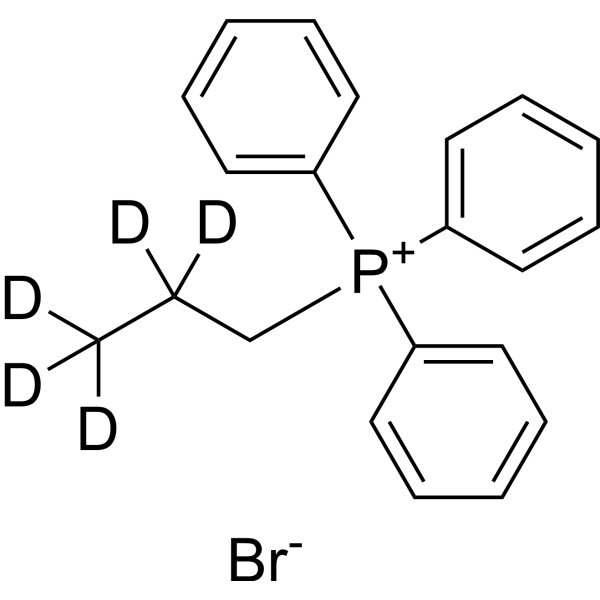 0 ImagesTriphenyl(propyl)phosphonium-d5 (bromide) is the deuterium labeled Triphenyl(propyl)phosphonium bromide.



