



Liposome
Liposomes (NPs typically 100–500 nm in diameter) are fabricated from the self-assembly of phospholipids, which consist of a polar phosphate head group and hydrophobic lipid tails. In aqueous environments, the hydrophobic tails self-orient, resulting in a spherical structure comprised of an aqueous core surrounded by a lipophilic bilayer membrane. Liposomes are both biocompatible and biodegradable (e.g., at certain pH and temperature), which can be controlled by modifying the lipid composition. Furthermore, liposomes are amenable to various modifications that improve their efficacy as drug delivery carriers.
All Product Categories
-
Liposome Related Products (1266)
Related Products (1266)

-
Lipid 14
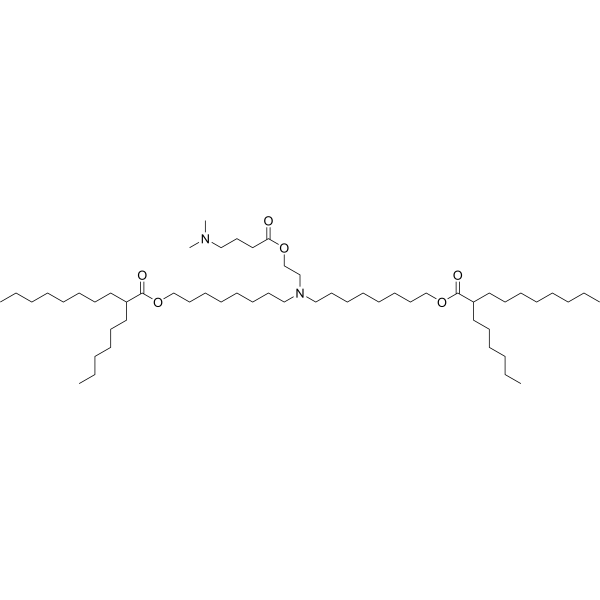 0 ImagesCat. No.: HY-153377CAS No.: 2430034-05-0Lipid 14 is an ionizable amino lipid. Lipid 14 delivers mRNA into target cells, significantly enhancing the in vivo expression efficiency and immunogenicity of mRNA. Lipid 14 can be used to synthesize lipid nanoparticles (LNPs). Lipid 14 can be used for studies of SARS-CoV-2 and Yersinia pestis.

-
Tri-N-tridecyl 3-(ethyl(methyl)amino)propanoate
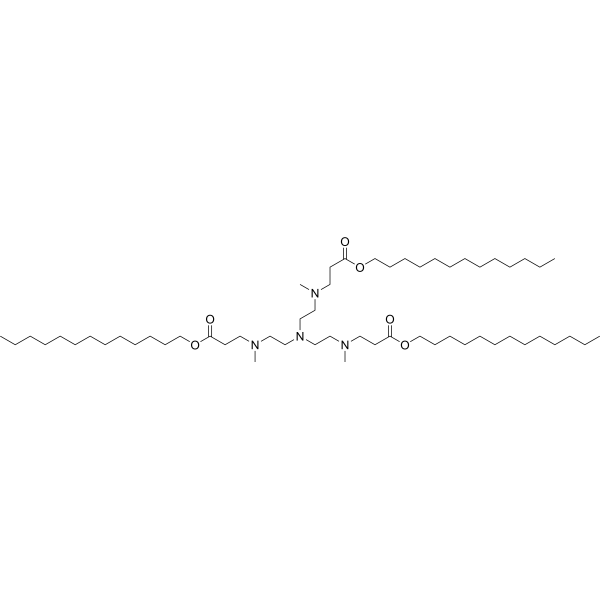 0 ImagesSynonyms: 304O13Tri-N-tridecyl 3-(ethyl(methyl)amino)propanoate is a biodegradable lipid prepared by the conjugate addition of alkylamines to acrylates. Tri-N-tridecyl 3-(ethyl(methyl)amino)propanoate can be used in various drug delivery systems to deliver polynucleotides, siRNA for example.
-
ssPalmE-P4-C2
 0 ImagesssPalmE-P4-C2 is a SS-cleavable and pH-sensitive lipid-like material (ssPalm) with a vitamin E‑scaffold. ssPalmE-P4-C2 improves gene knockdown activity against FVII with an ED50 of 0.5 mg/kg. ssPalmE-P4-C2 can be used to synthesize lipid nanoparticles (LNPs) for delivering siRNA to the hepatocyte. ssPalmE-P4-C2 can be used for the RNA therapies for dyslipidemia, hepatitis B/C infections and transthyretin amyloidosis research.

-
16:0 EPC chloride
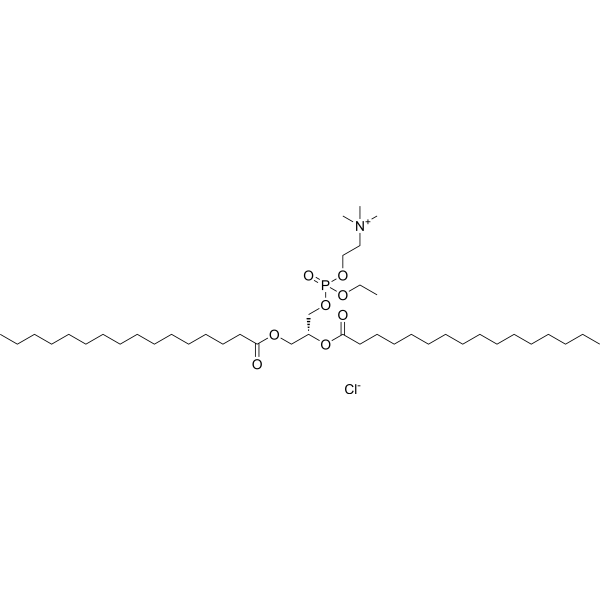 0 Images16:0 EPC chloride, a P-O-ethyl derivative, is a saturated cationic lipid. 16:0 EPC chloride can serve as a DNA and RNA transfecting agent. 16:0 EPC chloride can be used as a co-adjuvant for preparing vaccines and promote drug delivery.
-
Lipid C24
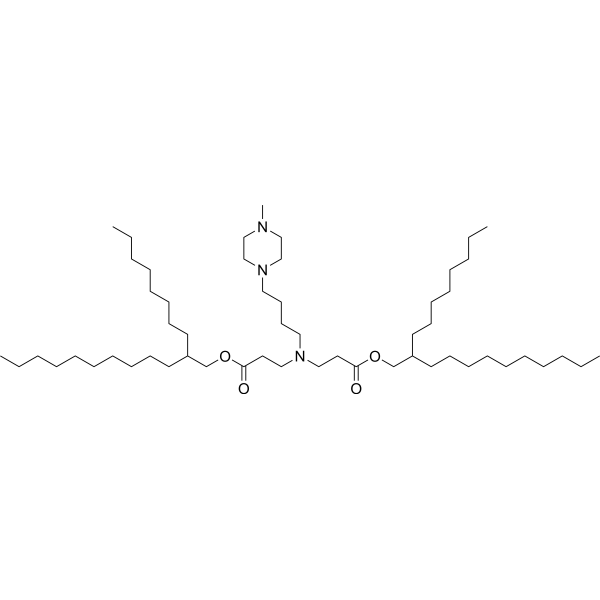 0 ImagesLipid C24 is a cationic ionizable lipid that can be used for synthesizing lipid nanoparticles. Lipid C24 can be used in the study of drug delivery.
-
LNP Lipid-4
 0 ImagesCat. No.: HY-153187CAS No.: 2795397-84-9LNP Lipid-4 (Compound 8-8) is a lipid compound. LNP Lipid-4 is involved in the synthesis of lipid nanoparticles compositions. LNP Lipid-4 has potential applications in the transportation of biologically active substances.

-
1-Thio-β-D-glucose sodium
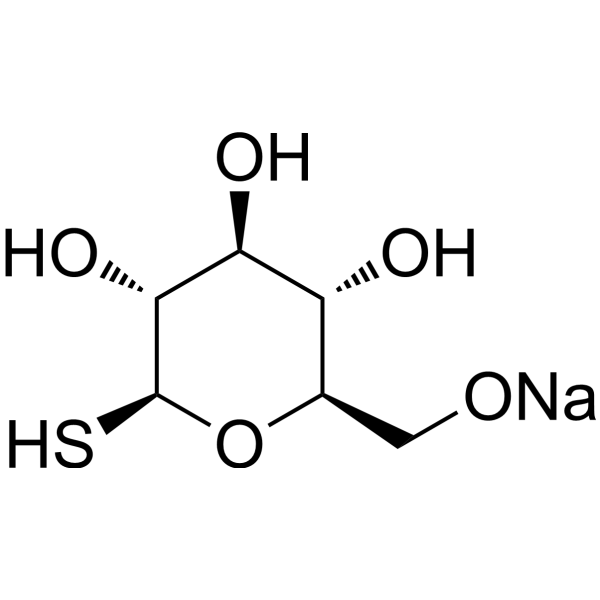 0 Images1-Thio-β-D-glucose sodium is the sodium salt form of 1-Thio-β-D-glucose. 1-Thio-β-D-glucose forms hydrophilic self-assembled monolayer with metal, stablizes the lipid bilayer and protects the proteins from denaturation.
-
16:0 Biotinyl PE
 0 ImagesSynonyms: 1,2-dipalmitoyl-sn-glycero-3-phosphoethanolamine-N-(biotinyl)16:0 Biotinyl PE is a biotin-functionalized lipid attached to a phosphoethanolamine linked to two palmitic acid groups.

-
DSPE-PEG3400-azide
 0 ImagesCat. No.: HY-W440833Purity: 99.95%DSPE-PEG3400-azide is a polydisperse PEG covalently attached to a phospholipid. The polymer is an amphiphilic molecule with hydrophobic fatty acid chains and hydrophilic PEG head which enables lipid bilayer or micelles formation in water. The phospholipid PEG can be used to prepare liposome or nanoparticles for targeted drug delivery and is reactive with alkyne to form triazole bond.
-
1-Palmitoyl-2-oleoyl-sn-glycero-3-phosphate
 0 ImagesSynonyms: 16:0-18:1 PA1-Palmitoyl-2-oleoyl-sn-glycero-3-phosphate is a phospholipid containing saturated palmitic acid (16:0) and monounsaturated oleic acid (18:1) inserted at the sn-1 and sn-2 positions, respectively. It can be used in the generation of micelles, liposomes, and other types of artificial membranes.
-
1-Stearoyl-2-myristoyl-sn-glycero-3-PC
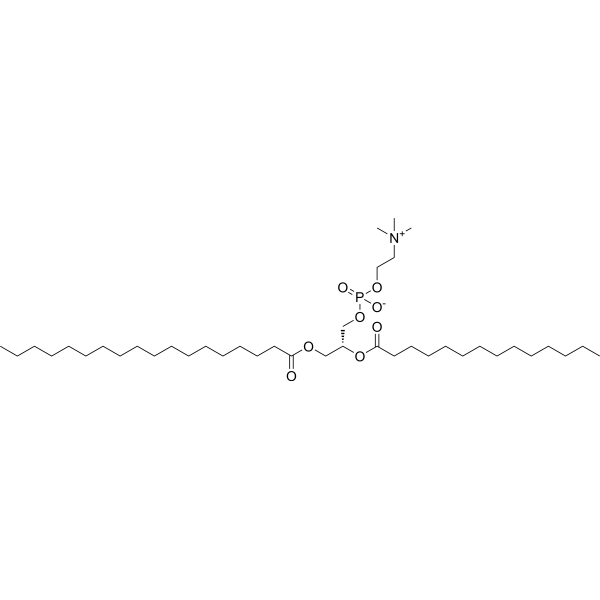 0 ImagesSynonyms: 1S-2M-PC1-Stearoyl-2-myristoyl-sn-glycero-3-PC (1S-2M-PC) belongs to the class of asymmetric phospholipids. 1-Stearoyl-2-myristoyl-sn-glycero-3-PC is abundant in biological membranes.
-
DSPE-PEG1000-NHS
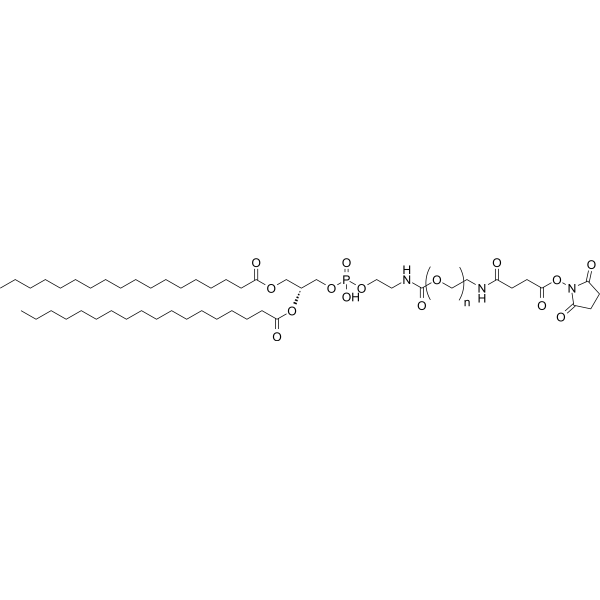 0 ImagesCat. No.: HY-W441013DSPE-PEG1000-NHS is a PEG-modified phospholipid derivative that can be used to prepare liposomes. DSPE-PEG1000-NHS is commonly employed as a linker molecule for the surface modification of liposomes to confer targeting capabilities. DSPE-PEG1000-NHS can be used in the study of drug delivery.
-
Cholesterol Pelargonate
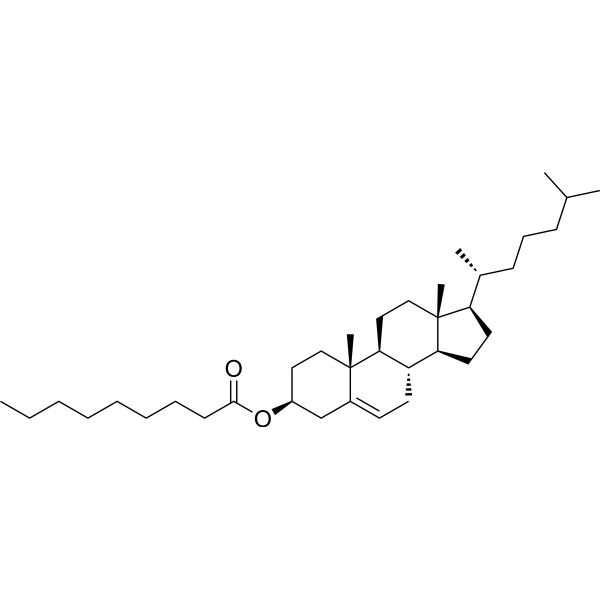 0 ImagesCholesterol Pelargonate, a Cholesterol derivative, can be used as a triggered release liposome tested.
-
1,2-Diarachidonoyl-sn-glycero-3-phosphoethanolamine
 0 Images1,2-Diarachidonoyl-sn-glycero-3-phosphoethanolamine (DAPE) is a phospholipid phosphatidylethanolamine. Unlike other phospholipid phosphatidylethanolamines, 1,2-Diarachidonoyl-sn-glycero-3-phosphoethanolamine has no significant effect on protein phosphatase PP2A activity and does not inhibit insulin-stimulated GLUT4 translocation.
-
L-DPPG
 0 ImagesCat. No.: HY-130671ACAS No.: 1190099-61-6Synonyms: (R)-1,2-Dipalmitoyl-sn-glycero-3-phosphoglycerol sodiumL-DPPG ((R)-1,2-Dipalmitoyl-sn-glycero-3-phosphoglycerol sodium) is a phospholipid targeting biological membranes. L-DPPG interacts with lipid bilayers through hydrophobic and electrostatic interactions. L-DPPG is used in research on drug delivery systems.



