



Liposome
Liposomes (NPs typically 100–500 nm in diameter) are fabricated from the self-assembly of phospholipids, which consist of a polar phosphate head group and hydrophobic lipid tails. In aqueous environments, the hydrophobic tails self-orient, resulting in a spherical structure comprised of an aqueous core surrounded by a lipophilic bilayer membrane. Liposomes are both biocompatible and biodegradable (e.g., at certain pH and temperature), which can be controlled by modifying the lipid composition. Furthermore, liposomes are amenable to various modifications that improve their efficacy as drug delivery carriers.
All Product Categories
-
Liposome Related Products (1268)
Related Products (1268)

-
Lipid 16
 0 ImagesCat. No.: HY-159858CAS No.: 3097638-11-1Lipid 16 is an ionizable lipid that can be used to synthesize lipid nanoparticles (LNP) for delivering mRNA and other payloads. Lipid 16 as a potent cell type-specific ionizable lipid for the CD11bhi macrophage population without an additional targeting moiety.
-
Glycerophosphoglycerol
 0 ImagesGlycerophosphoglycerol is a precursor for phospholipid biosynthesis. Glycerophosphoglycerol supports tumor cell membrane reconstruction and proliferation by promoting phospholipid synthesis. Glycerophosphoglycerol is promising for research of breast cancers.
-
1-Stearoyl-2-linoleoyl-sn-glycero-3-phospho-L-serine sodium
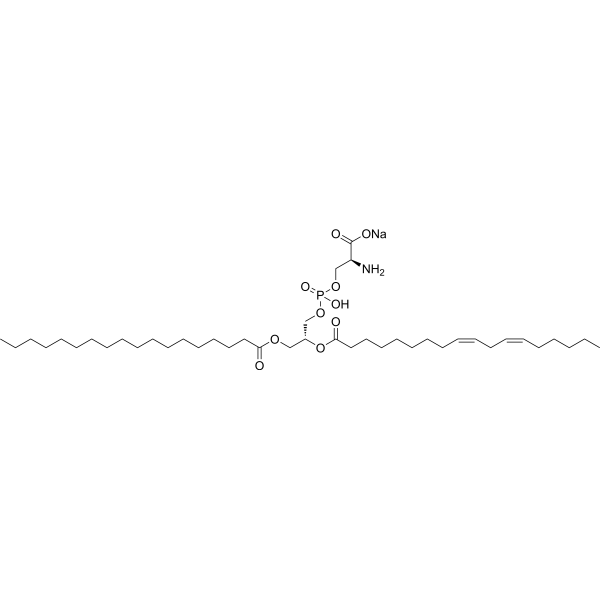 0 ImagesSynonyms: 18:0 -18:2 PS1-Stearoyl-2-linoleoyl-sn-glycero-3-phospho-L-serine sodium is a glycerophospholipid.
-
C12-113
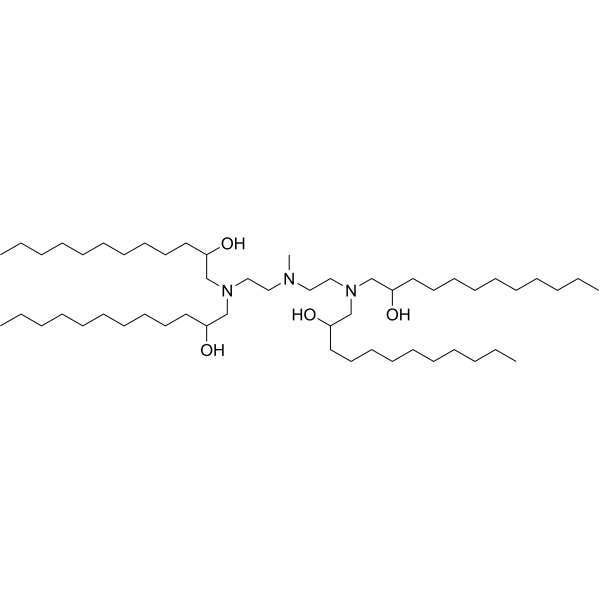 0 ImagesC12-113 is a lipidoid delivery agent that can be used to transfect siRNA into cells. C12-113 can also be combined with other lipids to form lipid nanoparticles (LNPs) for the delivery of mRNA encoding the spike glycoprotein of severe acute respiratory syndrome coronavirus 2 (SARS-CoV-2) in mice.
-
DSPE-PEG5000-FITC
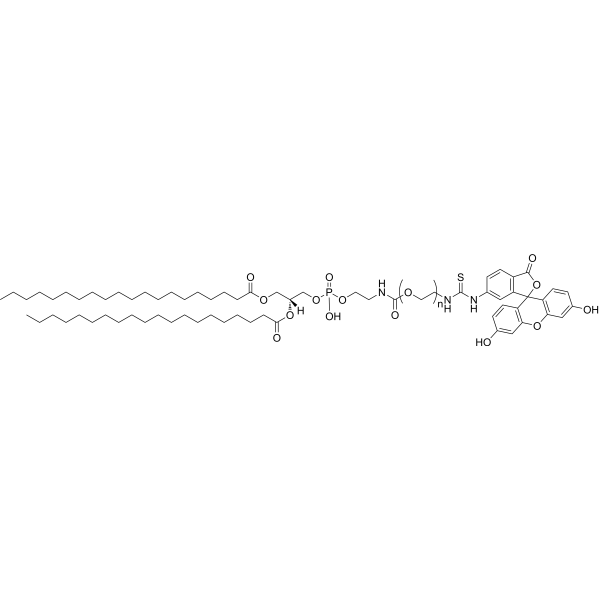 0 ImagesDSPE-PEG5000-FITC is a fluorescein attached PEG lipid. It can be used to prepare liposomes as drug carrier in targeted drug delivery. The polymer is modified with fluorescein (green) dye which can be used for staining cells, tissues, biomarkers, or nanoparticles.
-
1,2-Dimyristoyl-sn-glycero-3-phosphate monosodium
 0 ImagesSynonyms: 1,2-DPPA sodium; PA(14:0/14:0) sodium; 1,2-Dimyristoyl-sn-glycero-3-phosphate sodium1,2-Dimyristoyl-sn-glycero-3-phosphate monosodium is a phospholipid containing the long-chain (14:0) myristic acid inserted at the sn-1 and sn-2 positions. It can be used in the generation of micelles, liposomes, and other types of artificial membranes.

-
SM-102 (GMP Like)
 0 ImagesCat. No.: HY-134541GLCAS No.: 2089251-47-6SM-102 (GMP Like) is SM-102 (HY-134541) produced by using GMP like guidelines. GMP Like small molecules works appropriately as an auxiliary reagent for cell therapy manufacture. SM-102 is an amino cationic lipid useful in the formation of lipid nanoparticles (LNPs). SM-102 has higher transfection efficiency. SM-102 plays an important role in the effectiveness of lipid nanoparticles (LNPs) in delivering mRNA therapeutics and vaccines.
-
1,3-Diolein
 0 Images1,3-Diolein is a phospholipid compound that has the activity of regulating cell membrane fluidity and signal transduction. 1,3-Diolein is widely used in cell biology research to study lipid-mediated signal transduction pathways and membrane protein interactions. 1,3-Diolein can also serve as a functional carrier in compound delivery systems to help improve the bioavailability of compounds.
-
Liposomal Curcumin
 0 ImagesCat. No.: HY-177840Liposomal Curcumin is a specialized delivery system that encapsulates Curcumin (HY-N0005) within tiny liposomes. These liposomes act as protective shells, enhancing the absorption and bioavailability of Curcumin. Curcumin (Diferuloylmethane), a natural phenolic compound, is a p300/CREB-binding protein-specific inhibitor of acetyltransferase, represses the acetylation of histone/nonhistone proteins and histone acetyltransferase-dependent chromatin transcription. Curcumin is a photosensitizer against microorganisms. Curcumin shows inhibitory effects on NF-κB and MAPKs, and has diverse pharmacologic effects including anti-inflammatory, antioxidant, antiproliferative and antiangiogenic activities. Curcumin induces stabilization of Nrf2 protein through Keap1 cysteine modification.
The product size below only indicate the effective content of Curcumin.
-
DSPE-PEG3400-Biotin
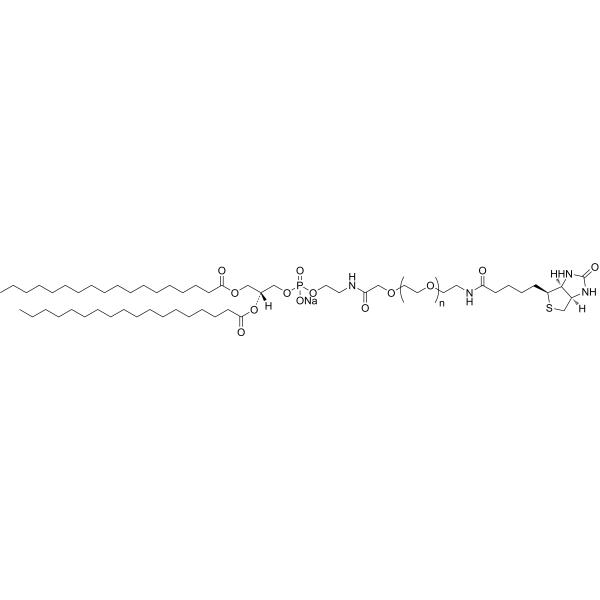 0 ImagesCat. No.: HY-W440886Purity: 98.43%DSPE-PEG3400-Biotin is a phospholipid PEG for biotinylation. The amphiphilic property of the DSPE-PEG is useful for precision drug delivery and cancer therapy.
-
18:1(11-cis) PC
 0 Images18:1(11-cis) PC (Compound 18:1, c 11 (cis-vaccenic)) is an unsaturated fatty acid consisting of 18 carbon atoms with a cis double bond at the 11th position. 18:1(11-cis) PC can regulate membrane fluidity and is mainly used in the synthesis of artificial liposomes.
-
Paclitaxel liposome
 0 ImagesCat. No.: HY-185373Synonyms: Liposomal paclitaxelPaclitaxel liposome (Liposomal paclitaxel) is a liposome-encapsulated form of Paclitaxel (HY-B0015). Paclitaxel is a natural antitumor agent that stabilizes tubulin polymerization. Paclitaxel liposome exhibits reduced acute toxicity, prolonged circulating half-life of paclitaxel, and enhanced accumulation at tumor sites. Paclitaxel liposome can be used in cancer-related research.
-
Stearamide (Standard)
 0 ImagesCat. No.: HY-W130610RCAS No.: 124-26-5Ginsenoside C-K (Standard) is the analytical standard of Ginsenoside C-K. This product is intended for research and analytical applications. Ginsenoside C-K, a bacterial metabolite of G-Rb1, exhibits anti-inflammatory effects by reducing iNOS and COX-2. Ginsenoside C-K exhibits an inhibition against the activity of CYP2C9 and CYP2A6 in human liver microsomes with IC50s of 32.0±3.6 μM and 63.6±4.2 μM, respectively.
-
Vaxfectin
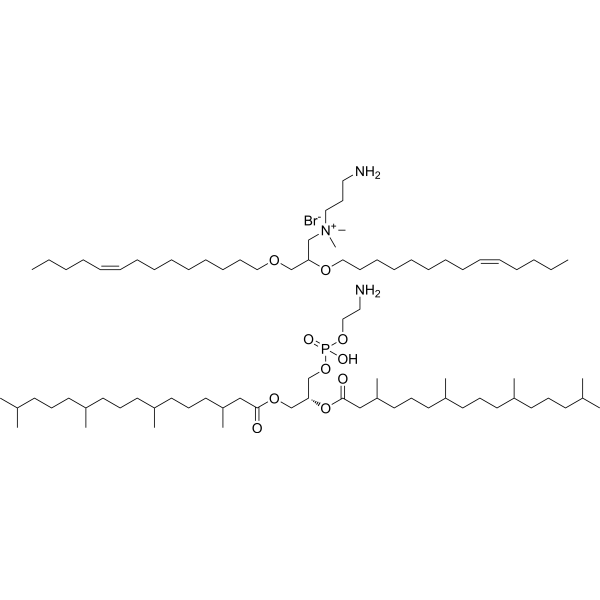 0 ImagesVaxfectin is a second-generation cationic lipid-based suspension that adjuvants effectively both pDNA and protein-based vaccines. Vaxfectin can boost the immune response against a range of pDNA-expressed pathogenic antigens in vivo. Vaxfectin can increase IgG titers and give rise to an IL-6 dependent enhancement of the humoral immune response without altering the Th1 type immune response. Vaxfectin can be studied for vaccine formulation.

-
DSPE-PEG1000-GNYTCEVTELTREGETIIELK
 0 ImagesCat. No.: HY-182097DSPE-PEG1000-GNYTCEVTELTREGETIIELK is a PEG compound which composed of DSPE and a peptide mimicking the function of CD47 (GNYTCEVTELTREGETIIELK). Modifying the surface of LNPs with GNYTCEVTELTREGETIIELK significantly reduced the recognition and clearance of LNPs by the mononuclear phagocytic system (MPS), and decreased their accumulation in non-target tissues such as the liver and spleen. DSPE-PEG1000-GNYTCEVTELTREGETIIELK can be used for drug delivery.
-
mPEG2000-DMG (GMP Like)
 0 ImagesmPEG2000-DMG (GMP Like) is mPEG2000-DMG (HY-112764) produced by using GMP like guidelines. GMP Like small molecules works appropriately as an auxiliary reagent for cell therapy manufacture. mPEG2000-DMG is used for the preparation of liposome for siRNA delivery with improved transfection efficiency in vitro. mPEG2000-DMG is also used for the lipid nanoparticle for an oral plasmid DNA delivery approach in vivo through a facile surface modification to improve the mucus permeability and delivery efficiency of the nanoparticles.
-
DSPE-PEG2000-GNYTCEVTELTREGETIIELK
 0 ImagesCat. No.: HY-177916DSPE-PEG2000-GNYTCEVTELTREGETIIELK is a PEG compound which composed of DSPE and a peptide mimicking the function of CD47 (GNYTCEVTELTREGETIIELK). Modifying the surface of LNPs with GNYTCEVTELTREGETIIELK significantly reduced the recognition and clearance of LNPs by the mononuclear phagocytic system (MPS), and decreased their accumulation in non-target tissues such as the liver and spleen. DSPE-PEG2000-GNYTCEVTELTREGETIIELK can be used for drug delivery.
-
Lipid 50
 0 ImagesCat. No.: HY-159716CAS No.: 2440135-57-7Lipid 50 (compound 50) is an ionizable lipid that can be used for the generation of lipid nanoparticles (LNPs). Lipid 50 is a carrier for both siRNA and mRNA.



