



Molecular Glues
Protein degradation agents based on the ubiquitin-proteasome pathway include a part of molecular glues. Molecular glues are a class of small molecule compounds that can induce or stabilize the interaction between proteins. If one of the protein is ubiquitin ligase, molecular glue can cause another protein to undergo ubiquitin modification and degradation through the proteasome pathway, which is similar to PROTAC. However, these molecules are classified as ligand for E3 ligase as functional molecules in subsequent classification. Older drugs, thalidomide, lenalidomide, and pomalidomide, together with CC-90009 and CC-92480 reported later all belong to this category.
All Product Categories
-
Molecular Glues Related Products (347)
Related Products (347)

-
Related Compound Screening Libraries (1)

-
Asukamycin
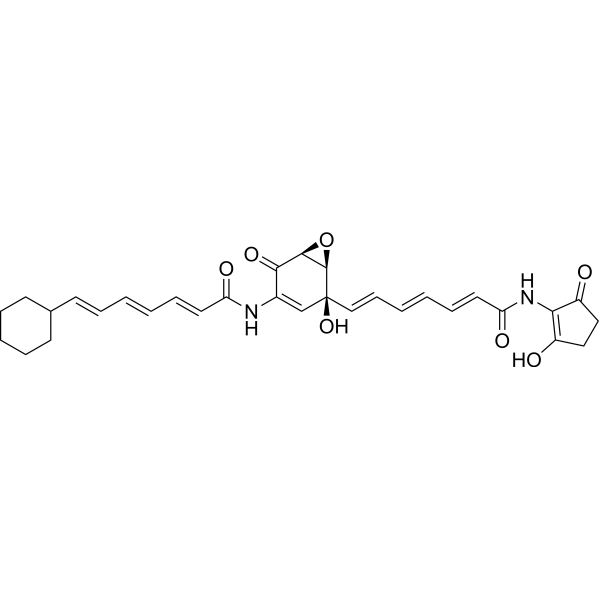 0 ImagesCat. No.: HY-118893CAS No.: 61116-33-4Asukamycin, a manumycin-type metabolite, could be isolated from Streptomyces nodosus subsp. asukaensis. Asukamycin is an antibiotic and has antimicrobial activity. Asukamycin inhibits growth of various tumor cell lines.
-
UNC10088
 0 ImagesCat. No.: HY-178321UNC10088 is a molecular glue targeting NSD2. UNC10088 mediates the formation of a stable ternary complex between SCFFBXO22 and the NSD2 PWWP1 domain. UNC10088 promotes ubiquitination of the SCFFBXO22-dependent NSD2 PWWP1 domain through reversible covalent bonding with the C326 region of FBXO22. UNC10088 could be used in cancer research.
-
MRT-31619
 0 ImagesCat. No.: HY-180538MRT-31619 is a selective CRBN Molecular glue degrader, with an IC50 of 14 nM and an EC50 of 72 nM. MRT-31619 triggers ubiquitination and proteasomal degradation of CRBN. MRT-31619 serves as a chemical knockout tool for CRBN depletion to evaluate the dependence of other molecular glues on CRBN. MRT-31619 is applicable to the research of CRBN-related disease models.
-
BMS-986482 acetate
 0 ImagesCat. No.: HY-182467ABMS-986482 acetate is a CRBN-mediated IKZF1-4 (Ikaros family zinc finger 1-4) molecular glue degrader. BMS-986482 acetate's activity is driven by a non-traditional CELMoD core that selectively degrades the IKZF protein family. BMS-986482 acetate can be used for the research of advanced solid tumors.
-
JWJ-01-306
 0 ImagesCat. No.: HY-161767CAS No.: 3069975-17-0JWJ-01-306 is a CRBN-recruiting ZBTB11 Molecular Glues degrader. JWJ-01-306 degrades ZBTB11 and reprograms cellular metabolism, thereby reducing the level of Oxidative Phosphorylation and the activity of the tricarboxylic acid cycle. JWJ-01-306 enhances the response of organoids to K-Ras inhibition. JWJ-01-306 inhibits the proliferation of pancreatic ductal adenocarcinoma cells and melanoma cells. JWJ-01-306 can be used in studies related to pancreatic ductal adenocarcinoma and melanoma.
-
Pomalidomide-15N,13C5
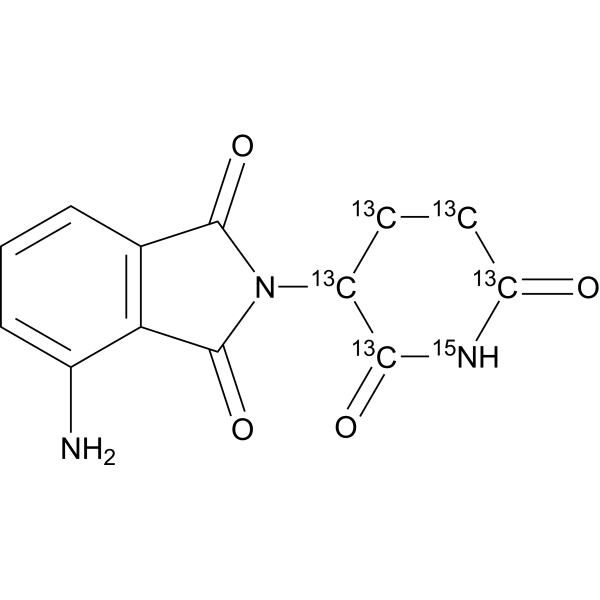 0 ImagesCat. No.: HY-10984S3Synonyms: CC-4047-15N,13C5Pomalidomide-15N,13C5 is 15N and 13C labeled Pomalidomide (HY-10984). Pomalidomide, the third-generation immunomodulatory agent, acts as molecular glue. Pomalidomide interacts with the E3 ligase cereblon and induces degradation of essential Ikaros transcription factors.
-
WIZ degrader 4
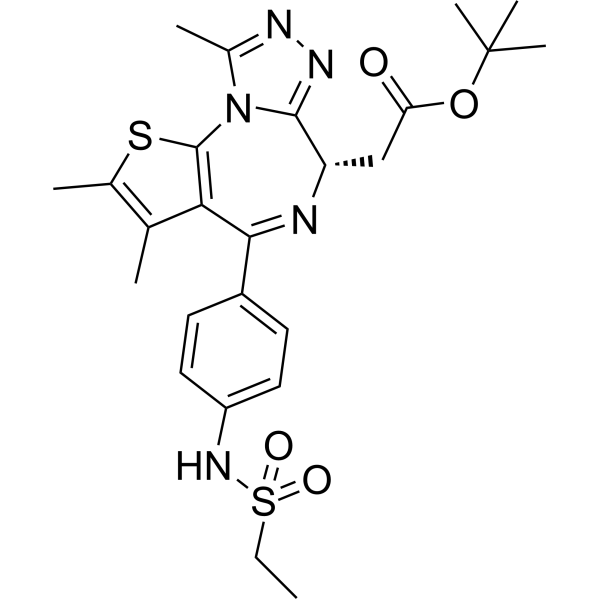
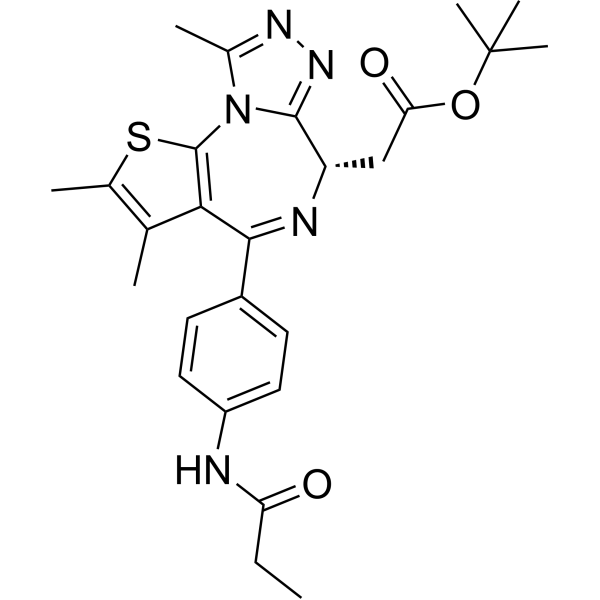
 0 ImagesWIZ degrader 4 is a WIZ molecular glue degrader with an AC50 value of 16 nM. WIZ degrader 4 induces the expression of fetal hemoglobin (HbF) with an EC50 of 47 nM. WIZ degrader 4 can be used to investigate sickle cell disease (SCD) and thalassemia.
-
Tacrolimus-d3
 0 ImagesCat. No.: HY-13756S2Synonyms: FK506-d3; Fujimycin-d3; FR900506-d3Tacrolimus-d3 (FK506-d3) is the deuterated-labeled Tacrolimus (HY-13756). Tacrolimus (FK506), a molecular glue, a macrocyclic lactone, binds to FK506 binding protein (FKBP) to form a complex. Tacrolimus inhibits calcineurin phosphatase, which inhibits T-lymphocyte signal transduction and IL-2 transcription. Immunosuppressive properties.
-
Lenalidomide hydrochloride
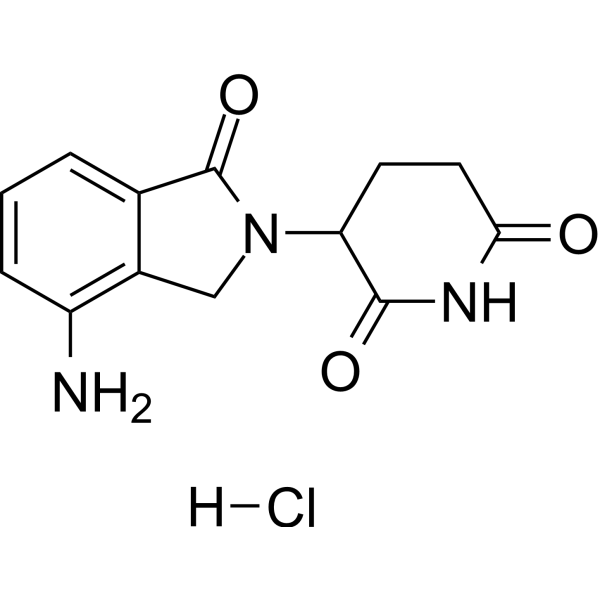 0 ImagesCat. No.: HY-A0003ACAS No.: 1243329-97-6Synonyms: CC-5013 hydrochlorideLenalidomide hydrochloride (CC-5013 hydrochloride), a derivative of Thalidomide, acts as molecular glue. Lenalidomide hydrochloride is an orally active immunomodulator. Lenalidomide hydrochloride (CC-5013 hydrochloride) is a ligand of ubiquitin E3 ligase cereblon (CRBN), and it causes selective ubiquitination and degradation of two lymphoid transcription factors, IKZF1 and IKZF3, by the CRBN-CRL4 ubiquitin ligase. Lenalidomide hydrochloride (CC-5013 hydrochloride) specifically inhibits growth of mature B-cell lymphomas, including multiple myeloma, and induces IL-2 release from T cells.
-
Cyclosporin A-d12
 0 ImagesCat. No.: HY-B0579S5Synonyms: Cyclosporine A-d12; Ciclosporin A-d12; CsA-d12Cyclosporin A-d12 (Cyclosporine A-d12) is the deuterated-labeled Cyclosporin A (HY-B0579). Cyclosporin A (Cyclosporine A) is an immunosuppressant which binds to the cyclophilin and inhibits phosphatase activity of protein phosphatase 2B (PP2B/calcineurin) with an IC50 of 5 nM. Cyclosporin A is a molecular glue, binds to cyclophilin and calcineurin, leading to inactivation of nuclear Factor of activated T Cells (NFAT) and a subsequent decrease in the immune response. Cyclosporin A also inhibits CD11a/CD18 adhesion.
-
NEO-811
 0 ImagesCat. No.: HY-183117CAS No.: 3084635-77-5NEO-811 is a selective and orally active ARNT (HIF-1β) molecular glue degrader. NEO-811 is mediated by CRL4-CRBN E3 ligase for ARNT degradation. NEO-811 can be used for the study of clear cell renal cell carcinoma (ccRCC).
-
AMX-883
 0 ImagesCat. No.: HY-182766CAS No.: 3102636-19-8AMX-883 a selective and orally active BRD9 molecular glue degrader that drives differentiation in acute myeloid leukaemia. AMX-883 shows selectivity over all other bromodomain containing proteins and proteome wide. AMX-883 does not employ the commonly used E3 ligases (cereblon, VHL) but instead drives degradation via DCAF16 as a targeted glue. AMX-883 can be used for the study of acute myeloid leukaemia (AML).
-
XYD113
 0 ImagesCat. No.: HY-184896CAS No.: 3032314-99-8XYD113 is an orally active, selective GSPT1 Molecular glue degrader. XYD113 promotes the formation of the CRBN-GSPT1 ternary complex and mediates GSPT1 degradation in a CRBN-dependent manner via the ubiquitin-proteasome system. XYD113 downregulates genes associated with the occurrence and progression of prostate cancer (c-Myc, AR, AR-V7, KLK3, KLK2, TMPRSS2). XYD113 exhibits anticancer activity against prostate cancer. XYD113 can be used in the research of prostate cancer.
-
KT-333 diammonium
 0 ImagesCat. No.: HY-156730BCAS No.: 2502186-80-1KT-333 diammonium is a molecular glues that degrades STAT3 protein. KT-333 diammonium mediates the selective degradation of STAT3 through the ubiquitin-proteasome system by binding to STAT3 protein and E3 ubiquitin ligase von Hippel-Lindau protein (VHL). KT-333 diammonium has strong selectivity for STAT3 protein degradation and good antitumor activity. KT-333 diammonium can be used in the study of hematologic malignancies such as large granular lymphocytic leukemia (LGL-L), peripheral T-cell lymphoma (PTCL), and cutaneous T-cell lymphoma (CTCL).
-
Avadomide hydrochloride
 0 ImagesCat. No.: HY-100507ACAS No.: 1398053-45-6Synonyms: CC 122 hydrochlorideAvadomide hydrochloride (CC 122 hydrochloride) is the hydrochloride form of Avadomide (HY-100507). Avadomide hydrochloride is an orally active cereblon modulator. Avadomide hydrochloride modulates cereblon E3 ligase activity, inhibits NF-κB pathway, arrests the cell cycle at G1 phase, and thus induces apoptosis in cancer cell PDAC. Avadomide hydrochloride exhibits potent antitumor and immunomodulatory activities.

-
GSPT1 degrader-16
 0 ImagesCat. No.: HY-177765CAS No.: 3060504-68-6GSPT1 degrader-16 (Compound Lib-B-18J) is a potent and selective cereblon-based molecular glue degrader that targets G1 to S phase transition 1 (GSPT1). GSPT1 degrader-16 shows inhibitory effect to RS4;11, Molt4, and MM.1S cells with IC50 values of 0.002, 0.26 and 0.37 μM. GSPT1 degrader-16 can be used for the research of cancer, such as acute lymphoblastic leukemi.



