



PCSK9
Proprotein convertase subtilisin/kexin type 9
The protein convertase subtilisin/kexin type 9 (PCSK9) is an enzyme encoded by the PCSK9 gene located on human chromosome 1. It is the ninth member of the protein convertase family, a group of enzymes that can activate homologous genes found in many species[1]. PCSK9 is a liver-synthesized protease that plays a major role in regulating the levels of low-density lipoprotein receptors (LDLR) on the surface of liver cells and can inhibit the LDLR recycling pathway. PCSK9 binds to LDLR on the surface of liver cells, escorts LDLR to lysosomes for degradation, and prevents LDLR from recirculating to the cell membrane, effectively increasing the level of circulating LDL. Therefore, inhibiting the activity of the PCSK9 protease can down-regulate circulating LDL levels. PCSK9 is closely associated with various cardiovascular diseases, especially hypercholesterolemia and atherosclerosis[2].
All Product Categories
-
PCSK9 Related Products (99)
Related Products (99)

-
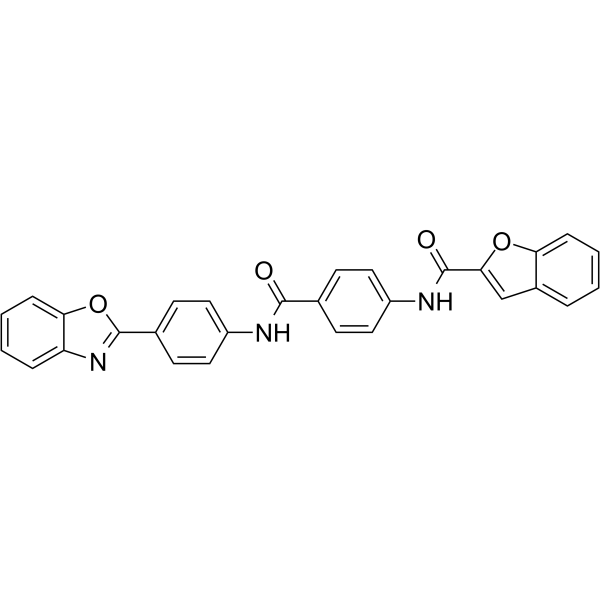
PCSK9-IN-11
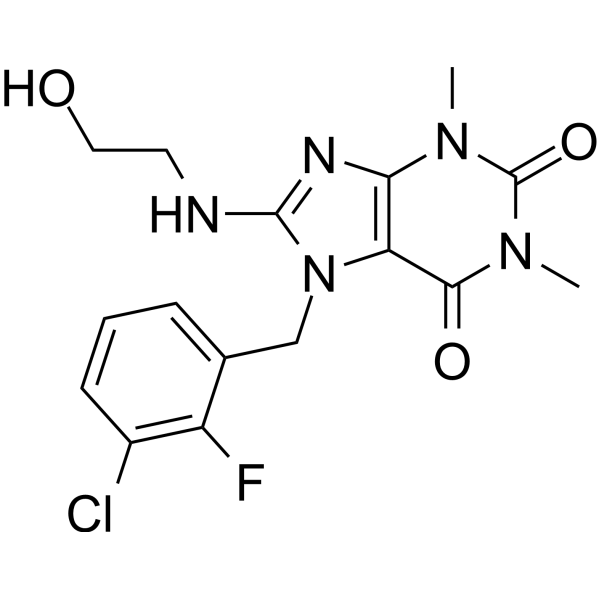 0 ImagesPCSK9-IN-11 (compound 5r) is a potent and orally active PCSK9 inhibitor. PCSK9-IN-11 exhibits PCSK9 transcriptional inhibitory activity in HepG2 cells, with an IC50 of 5.7 μM. PCSK9-IN-11 increases LDL receptor (LDLR) protein level. PCSK9-IN-11 can be used for atherosclerosis research.
-
Vitisin A
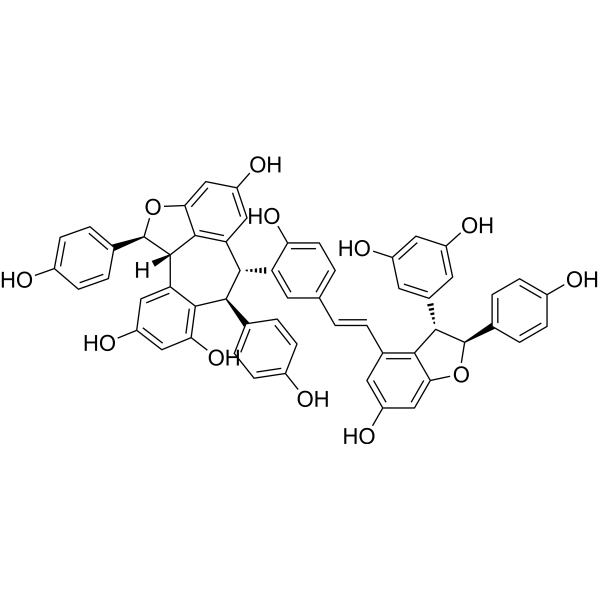 0 ImagesCat. No.: HY-142026CAS No.: 142449-89-6Synonyms: (+)-Vitisin AVitisin A ((+)-Vitisin A) is an orally active natural product with multiple pharmacological activities including anti-inflammatory, anti-tumor, anti-oxidant, anti-pathogenic microorganism, hypoglycemic and lipid-regulating, anti-osteoporotic, neuroprotective and cardiovascular protective effects. Vitisin A exhibits inhibitory effects on human AChE and MAO-B with IC50 values of 1.29 µM and 4.94 µM, respectively. Vitisin A inhibits the ERK, MAPK, NF-κB, STAT1, HMGCR and TRAF6 pathways, downregulates the related phosphorylation and protein expression, while activates the Nrf2/HO-1 pathway and upregulates p21 expression. Vitisin A induces tumor cell apoptosis and cell cycle arrest, inhibits adipogenesis and lipid accumulation, while alleviates oxidative stress, suppresses inflammatory responses, blocks hepatic fibrosis, Cuproptosis and cholesterol synthesis, and increases the expression levels of central BDNF and TrkB. Vitisin A can be used in the research of tumors, infectious diseases, metabolic diseases, bone and joint diseases, liver diseases, skin injuries, as well as neurodegenerative and cognitive dysfunction-related diseases.
-
DC371739
 0 ImagesCat. No.: HY-163794CAS No.: 2135765-21-6

-
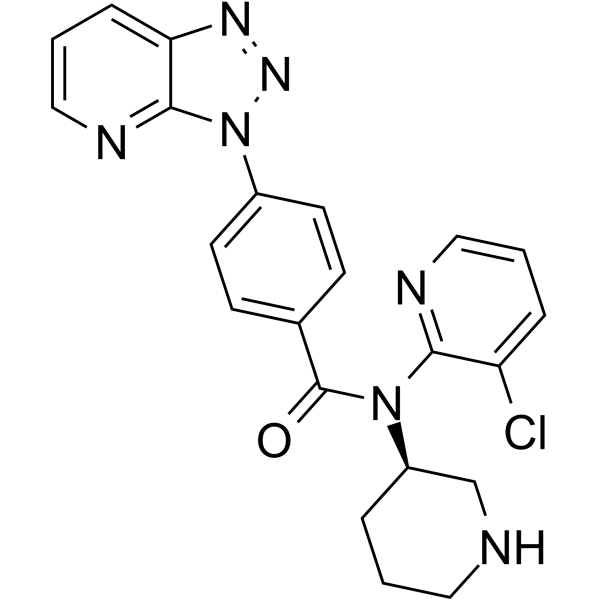
AZD8233 sodium
 0 ImagesCat. No.: HY-158827A
-
Ebronucimab
 0 ImagesCat. No.: HY-P99871CAS No.: 2304800-90-4Synonyms: AK102Ebronucimab (AK102) is an IgG1-λ2 antibody targeting PCSK9 and is primarily expressed by CHO DG44 (Chinese Hamster Ovary) cells.
-
Ongericimab
 0 ImagesCat. No.: HY-P99773CAS No.: 2145096-91-7Synonyms: JS002Ongericimab (JS002) is a humanized anti-PCSK9 monoclonal antibody. Ongericimab has lipid-lowering efficacy. Ongericimab can be used in research of hypercholesteremia and hyperlipidemia.
-
Recaticimab
 0 ImagesSynonyms: SHR-1209Recaticimab (SHR-1209) is a humanized IgG1 mAb that selectively targets PCSK9. Recaticimab reduces low-density lipoprotein cholesterol (LDL-C), non-high-density lipoprotein cholesterol (non-HDL-C), apolipoprotein B (ApoB), triglyceride (TG), and lipoprotein(a) levels. Recaticimab can be used for hyperlipidemia research.
-
Ralpancizumab
 0 ImagesCat. No.: HY-P99816CAS No.: 1407495-04-8Ralpancizumab is a selective PCSK9 inhibitor with potential application in hemorrhagic stroke.
-
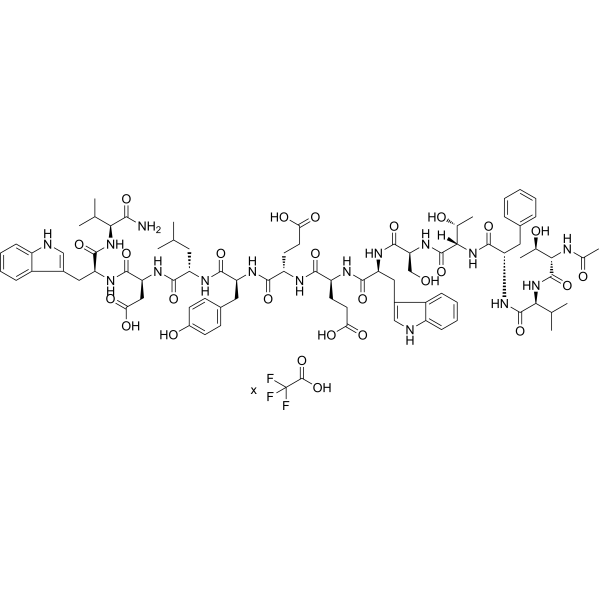
E28362
 0 ImagesCat. No.: HY-162562CAS No.: 930017-01-9E28362 is an orally active lipid-lowering agent and a selective PCSK9 antagonist. E28362 blocks the interaction between PCSK9 and LDLR, and induces PCSK9 degradation via the ubiquitin-proteasome pathway. E28362 significantly increases the levels of cell surface and total LDLR proteins, enhances low-density lipoprotein uptake, thereby effectively reducing plasma lipids, hepatic cholesterol and triglyceride levels. E28362 shows no obvious cytotoxicity at high concentrations, and significantly attenuates atherosclerotic lesions in animal models. E28362 is an important molecule in research of hyperlipidemia and atherosclerosis.
-
7030B-C5
 0 Images7030B-C5 is a PCSK9 inhibitor (IC50=1.61 μM). 7030B-C5 can significantly reduce plasma cholesterol and triglyceride (TG) levels in vivo and slow the progression of atherosclerosis. 7030B-C5 can be used in the study of cardiovascular diseases.
-
Lodelcizumab
 0 ImagesSynonyms: LGT209; NVP-LGT209Lodelcizumab is a monoclonal antibody targeting PCSK9. Lodelcizumab can be used for the research of hypercholesterolemia.
-
PCSK9-IN-30
 0 ImagesCat. No.: HY-161940PCSK9-IN-30 (Compound 3f) is a PCSK9 inhibitor. PCSK9-IN-30 interacts with a cryptic binding groove of PCSK9, inhibiting the binding of PCSK9 to the low-density lipoprotein receptor (LDLR) (IC50 = 537 nM), restoring the uptake of low-density lipoprotein (LDL) by liver cells, and ultimately reducing plasma cholesterol levels. PCSK9-IN-30 exhibits good bioavailability in mice and can be used for research in the field of cardiovascular diseases.
-
SPC5001
 0 ImagesCat. No.: HY-148687SPC5001 is a locked nucleic acid (LNA)-modifed antisense oligonucleotide (ASO) complementary to human PCSK9 (proprotein convertase subtilisin/kexin type 9) mRNA. SPC5001 can be used for the research of hypercholesterolemia. SPC5001 sequence: 5′-TGmCTACAAAACmCmCA-3′.



