



Valrubicin
Based on 2 publication(s) in Google Scholar
Valrubicin is a chemotherapy agent, inhibits TPA- and PDBu-induced PKC activation with IC50s of 0.85 and 1.25 μM, respectively, and has antitumor and antiinflammatory activity.
For research use only. We do not sell to patients.
- Purity : 99.85%
- CAS No.: 56124-62-0
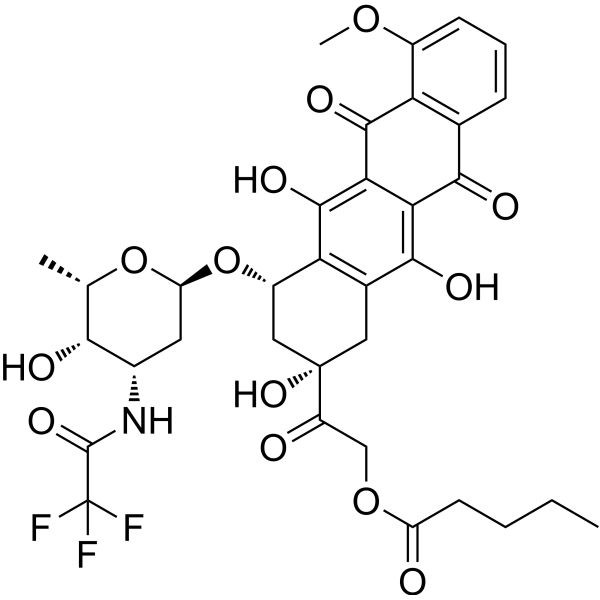
- Formula: C34H36F3NO13
- Molecular Weight:723.64
-
Storage:Powder -20°C, 3 years , 4°C, 2 years ; In solvent -80°C, 6 months , -20°C, 1 month

To place orders, for customer services and technical support, please contact: MedChemExpress USA
Tel: 609-228-6898 E-mail: [email protected] [email protected]


-
 Biological Activity
-
Chemical Information
-
Solvent & Solubility
- Purity & Documentation
- References
-
 Help & FAQs


-
HY-10230
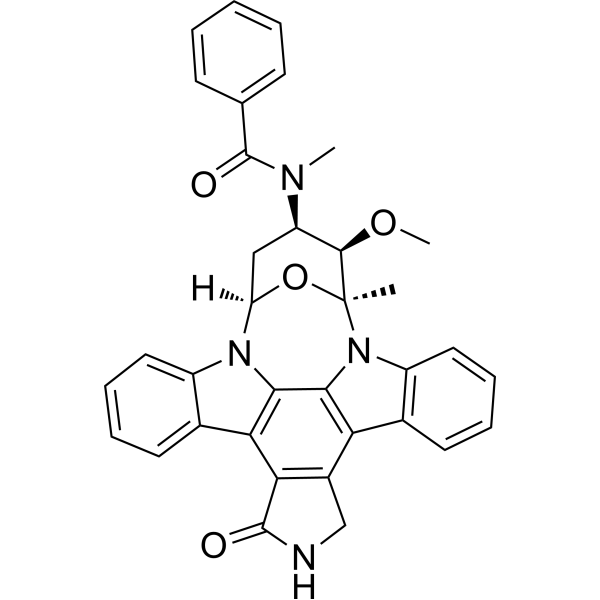
MidostaurinMulti-targeted Protein Kinase Inhibitor -
HY-B0011
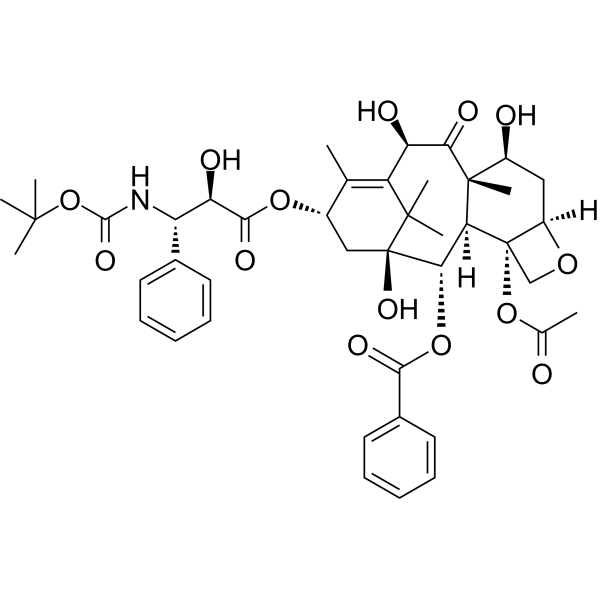
DocetaxelTubulin Stabilizer -
HY-17381
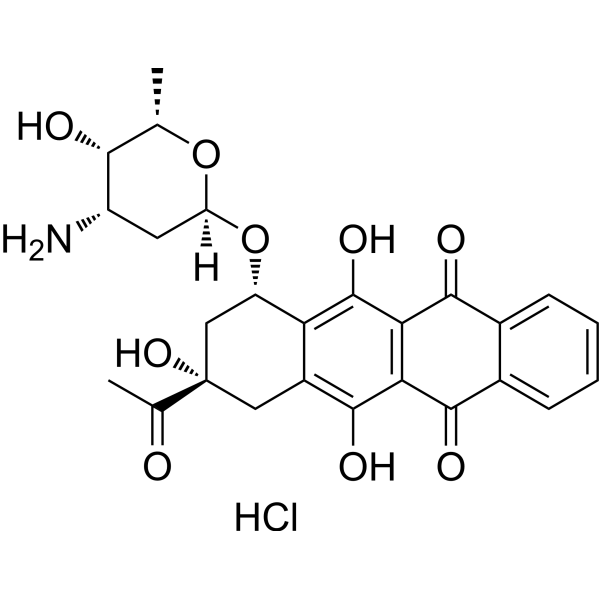
Idarubicin hydrochlorideTopo II Inhibitor -
HY-13502
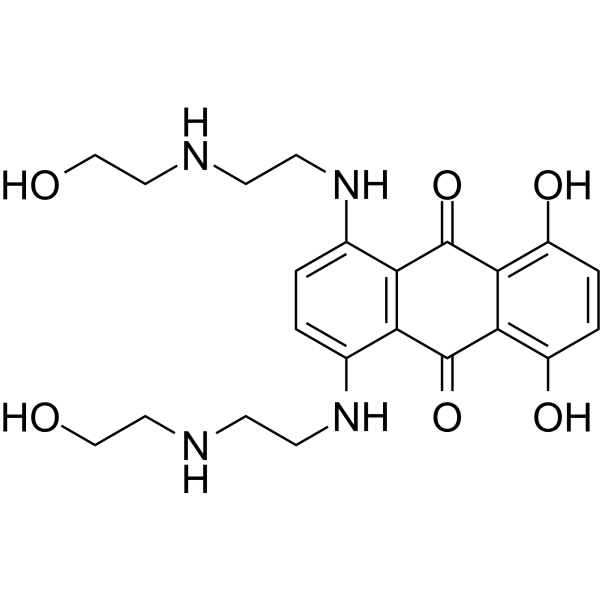
MitoxantroneTop II/PKC Inhibitor -
HY-17536
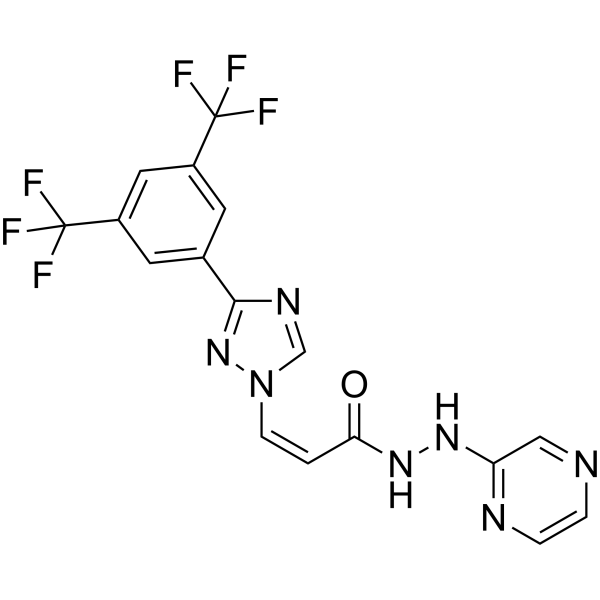
SelinexorCRM1 Inhibitor -
HY-P0093
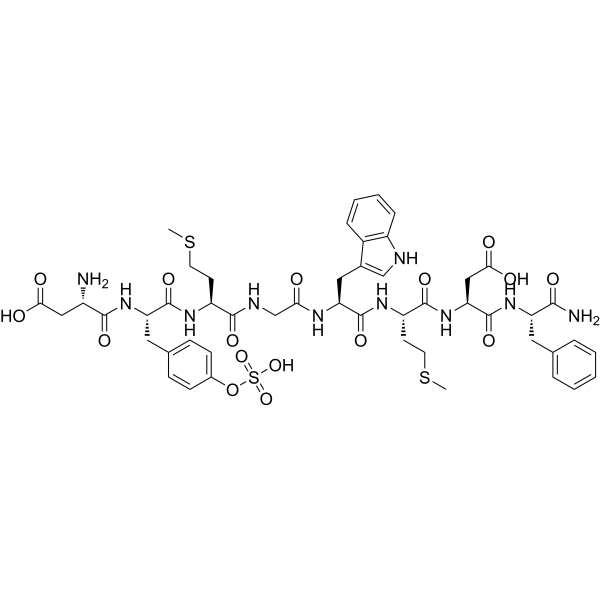
SincalideAmino Acid Polypeptide Hormone Analogue -
HY-14667
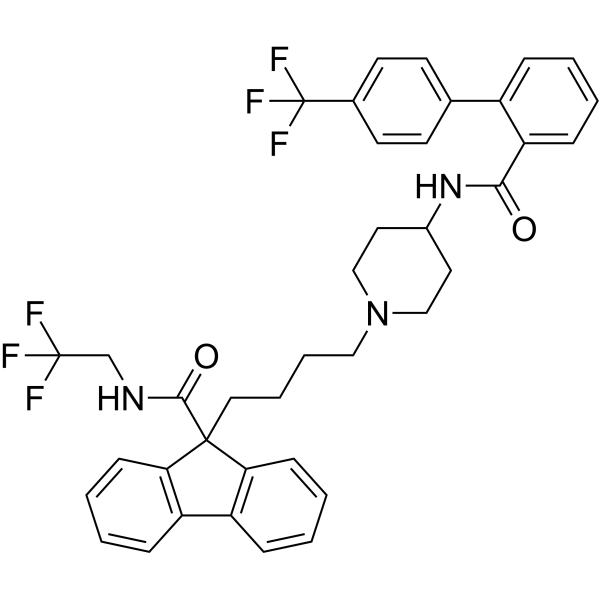
LomitapideMTP Inhibitor -
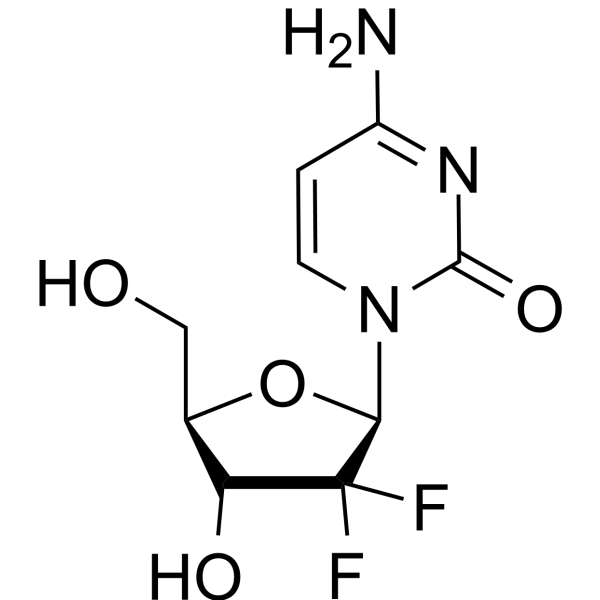
HY-17026
GemcitabineDNA Synthesis Inhibitor -
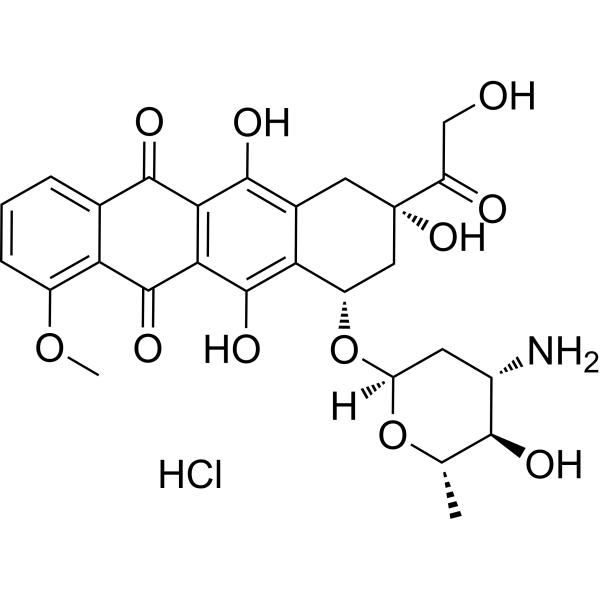
HY-13624A
Epirubicin hydrochlorideDNA/RNA Synthesis Inhibitor -
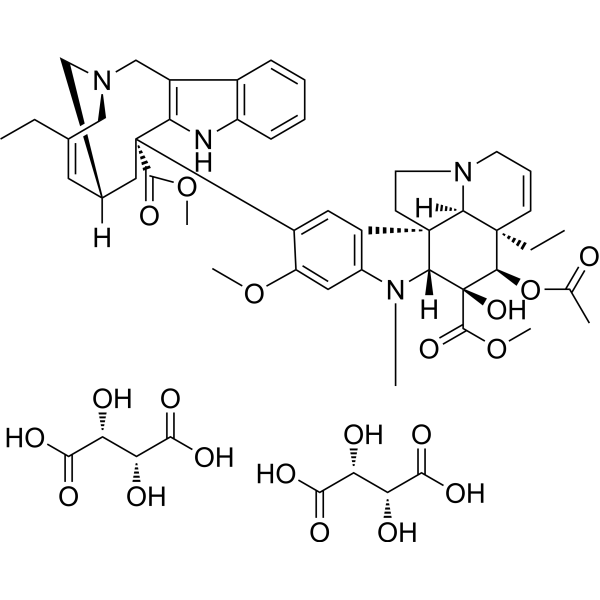
HY-12053A
Vinorelbine ditartrateAnti-mitotic Agent -
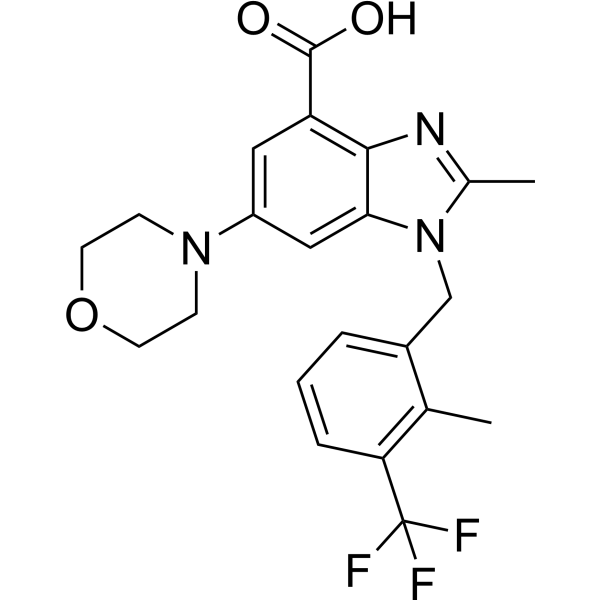
HY-15245
GSK2636771PI3Kβ Inhibitor -
HY-10493
CobicistatCYP3A Inhibitor
Publications Citing Use of MedChemExpress (MCE) Valrubicin
MoreAll Antibiotic Isoforms
More

Biological Activity
Description
IC50 & Target
[1]|
TPA-activated PKC 0.85 μM (IC50) |
PDBu-activated PKC 1.25 μM (IC50) |
In Vitro
Valrubicin (AD 32) is a chemotherapy agent, inhibits TPA- and PDBu-induced PKC activation with IC50s of 0.85 and 1.25 μM, respectively. Valrubicin inhibits the binding of [3H]PDBu to PKC. Therefore, Valrubicin competes with the tumor promoter for the PKC binding site and prevents the latter from both interacting with the phospholipid and binding to PKC[1]. Valrubicin shows cytotoxic activity against squamous cell carcinoma (SCC) cell line colony formation, with IC50s and IC90s of 8.24 ± 1.60 μM and 14.81 ± 2.82 μM for UMSCC5 cells, 15.90 ± 0.90 μM, 29.84 ± 0.84 μM for UMSCC5/CDDP cells, and 10.50 ± 2.39 μM, 19.00 ± 3.91 μM for UMSCC10b cells, respectively. Moreover, Valrubicin in combination with radiation enhances the cytotoxicity[2].
MedChemExpress (MCE) has not independently confirmed the accuracy of these methods. They are for reference only.
In Vivo
MedChemExpress (MCE) has not independently confirmed the accuracy of these methods. They are for reference only.
Clinical Trial
| NCT Number | Sponsor | Condition | Start Date |
Phase

|
|---|---|---|---|---|
| NCT01329991 | Plexxikon| | 2011-05 | PHASE1 |


Chemical Information
-
CAS No. 56124-62-0
-
Appearance Solid
-
Molecular Weight 723.64
-
Formula C34H36F3NO13
-
Color Orange to red
-
SMILES
CCCCC(OCC([C@]1(O)CC2=C(C(O)=C3C(C4=C(C(C3=C2O)=O)C=CC=C4OC)=O)[C@@H](O[C@H]5C[C@H](NC(C(F)(F)F)=O)[C@H](O)[C@H](C)O5)C1)=O)=O
-
Synonyms
AD-32
-
Shipping
Room temperature in continental US; may vary elsewhere.
-
Storage
Powder -20°C 3 years 4°C 2 years In solvent -80°C 6 months -20°C 1 month


Publications (2)
-
Journal Impact Factor
-
Most Recent
-
Cancer Lett
Chemoresistance-motility signature of molecular evolution to chemotherapy in non-muscle-invasive bladder cancer and its clinical implications. [Abstract]2025 Feb 1:610:217339. PMID: 39608442 -


Solvent & Solubility
In Vitro:
DMSO : 125 mg/mL (172.74 mM; Need ultrasonic; Hygroscopic DMSO has a significant impact on the solubility of product, please use newly opened DMSO)
Please refer to the solubility information to select the appropriate solvent. Once prepared, please aliquot and store the solution to prevent product inactivation from repeated freeze-thaw cycles.
Storage method and period of stock solution: -80°C, 6 months; -20°C, 1 month. When stored at -80°C, please use it within 6 months. When stored at -20°C, please use it within 1 month.
Please refer to the solubility information to select the appropriate solvent. Once prepared, please aliquot and store the solution to prevent product inactivation from repeated freeze-thaw cycles.
Storage method and period of stock solution: -80°C, 6 months; -20°C, 1 month. When stored at -80°C, please use it within 6 months. When stored at -20°C, please use it within 1 month.
Concentration (start) × Volume (start) = Concentration (final) × Volume (final)
In Vivo:
Select the appropriate dissolution method based on your experimental animal and administration route.
- For the following dissolution methods, please ensure to first prepare a clear stock solution using an In Vitro approach and then sequentially add co-solvents:
- To ensure reliable experimental results, the clarified stock solution can be appropriately stored based on storage conditions. As for the working solution for In Vivo experiments, it is recommended to prepare freshly and use it on the same day.
- The percentages shown for the solvents indicate their volumetric ratio in the final prepared solution. If precipitation or phase separation occurs during preparation, heat and/or sonication can be used to aid dissolution.
Add each solvent one by one: 10% DMSO 40% PEG300 5% Tween-80 45% Saline
Solubility: ≥ 2.17 mg/mL (3.00 mM); Clear solution
This protocol yields a clear solution of ≥ 2.17 mg/mL (saturation unknown).
Taking 1 mL working solution as an example, add 100 μL DMSO stock solution (21.7 mg/mL) to 400 μL PEG300, and mix evenly; then add 50 μL Tween-80 and mix evenly; then add 450 μL Saline to adjust the volume to 1 mL.
Preparation of Saline: Dissolve 0.9 g sodium chloride in ddH₂O and dilute to 100 mL to obtain a clear Saline solution.
In Vivo Dissolution Calculator
Please enter the basic information of animal experiments:
-
-
-
-
Recommended: Prepare an additional quantity of animals to account for potential losses during experiments.
Please enter your animal formula composition:
-
%DMSO +
Recommended: Keep the proportion of DMSO in working solution below 2% if your animal is weak.
-
%+
-
+%Tween-80 + +
-
%Saline +
The co-solvents required include: DMSO, . All of co-solvents are available by MedChemExpress (MCE). , Tween 80. All of co-solvents are available by MedChemExpress (MCE).
Working solution concentration: 0.22 mg/mL
Method for preparing stock solution: mg drug dissolved in μL DMSO. Stock solution concentration: mg/mL.
1. Take μL DMSO stock solution;
2. Add μL .
μL , mix evenly;
3. Then add μL Tween 80, mix evenly;
4. Then add μL
Please ensure that the stock solution in the first step is dissolved to a clear state, and add co-solvents in sequence. You can use ultrasonic heating (ultrasonic cleaner, recommended frequency 20-40 kHz), vortexing, etc. to assist dissolution.


Purity & Documentation
-
Data Sheet (285 KB)
-
SDS (644 KB)
- English - EN (644 KB)
- Français - FR (644 KB)
- Deutsch - DE (644 KB)
- Norwegian - NO (644 KB)
- Español - ES (644 KB)
- Swedish - SV (644 KB)
- Italian - IT (644 KB)
- Korean - KR (644 KB)
- Portuguese - PT (644 KB)
-
Handling Instructions (2659 KB)
References
[1]. Chuang LF, et al. Activation of human leukemia protein kinase C by tumor promoters and its inhibition by N-trifluoroacetyladriamycin-14-valerate (AD 32). Biochem Pharmacol. 1992 Feb 18;43(4):865-72. [Content Brief]
[2]. Wani MK, et al. Rationale for intralesional valrubicin in chemoradiation of squamous cell carcinoma of the head and neck. Laryngoscope. 2000 Dec;110(12):2026-32. [Content Brief]
[3]. Hauge E, et al. Topical valrubicin application reduces skin inflammation in murine models. Br J Dermatol. 2012 Aug;167(2):288-95. [Content Brief]


Complete Stock Solution Preparation Table
Please refer to the solubility information to select the appropriate solvent. Once prepared, please aliquot and store the solution to prevent product inactivation from repeated freeze-thaw cycles.
Storage method and period of stock solution: -80°C, 6 months; -20°C, 1 month. When stored at -80°C, please use it within 6 months. When stored at -20°C, please use it within 1 month.
| Optional Solvent | Concentration Solvent Mass | 1 mg | 5 mg | 10 mg | 25 mg |
|---|---|---|---|---|---|
| DMSO | 1 mM | 1.3819 mL | 6.9095 mL | 13.8190 mL | 34.5476 mL |
| 5 mM | 0.2764 mL | 1.3819 mL | 2.7638 mL | 6.9095 mL | |
| 10 mM | 0.1382 mL | 0.6910 mL | 1.3819 mL | 3.4548 mL | |
| 15 mM | 0.0921 mL | 0.4606 mL | 0.9213 mL | 2.3032 mL | |
| 20 mM | 0.0691 mL | 0.3455 mL | 0.6910 mL | 1.7274 mL | |
| 25 mM | 0.0553 mL | 0.2764 mL | 0.5528 mL | 1.3819 mL | |
| 30 mM | 0.0461 mL | 0.2303 mL | 0.4606 mL | 1.1516 mL | |
| 40 mM | 0.0345 mL | 0.1727 mL | 0.3455 mL | 0.8637 mL | |
| 50 mM | 0.0276 mL | 0.1382 mL | 0.2764 mL | 0.6910 mL | |
| 60 mM | 0.0230 mL | 0.1152 mL | 0.2303 mL | 0.5758 mL | |
| 80 mM | 0.0173 mL | 0.0864 mL | 0.1727 mL | 0.4318 mL | |
| 100 mM | 0.0138 mL | 0.0691 mL | 0.1382 mL | 0.3455 mL |


Valrubicin Related Classifications
HY-13772 Related Classifications
 Powered by Bioz