



SNAI1 Antibody
(Synonyms: SNAI1_HUMAN; Zinc finger protein SNAI1; SNAI1; SNAH; SNAI 1; SNA; SNAIL1; dJ710H13.1; Protein snail homolog 1 (Protein sna); Protein snail homolog 1; Protein sna; )Based on 1 publication(s) in Google Scholar
SNAI1 Antibody is a Rabbit-derived and non-conjugated IgG polyclonal antibody, targeting to SNAI1.
-
Host:
Rabbit
-
Isotype:
IgG
-
Application:
WB, IHC-P, ICC/IF, ELISA
-
Reactivity :
Human, Mouse, Monkey
-
Formulation:
Supplied in PBS containing 50% glycerol, 0.5% BSA and 0.02% sodium azide, pH 7.3.
-
Conjugation:
Non-conjugated


To place orders, for customer services and technical support, please contact: MedChemExpress USA
Tel: 609-228-6898 E-mail: [email protected] [email protected]



Publications Citing Use of MedChemExpress (MCE) SNAI1 Antibody
More

Applications
| Application |
WB

WB: Western Blot
|
IHC-P
IHC-P: Immunohistochemistry-Paraffin
|
ICC/IF
ICC/IF: Immunocytochemistry/
Immunofluorescence |
ELISA
ELISA: Enzyme Linked Immunosorbent Assay
|
|---|---|---|---|---|
| Dilution Ratio | 1:500-1:1000 | 1:50-1:100 | 1:50-1:200 | 1:10000 |


Product Details
SNAI1 Antibody is a Rabbit-derived and non-conjugated IgG polyclonal antibody, targeting to SNAI1.
-
Host Rabbit

-
Clonality Polyclonal

-
Species ReactivityHuman, Mouse, Monkey
-
Observed Molecular WeightObserved band size: 29 kDa
Note: Due to possible protein modifications or aggregation, the molecular weight should be confirmed by actual measurement, and the predicted value is for reference only.

-
Calculated Molecular Weight Predicted band size: 29 kDa

The antiserum was produced against synthesized peptide derived from human SNAI1 aa215-264.
Endogenous
affinity purified
Non-conjugated
Unmodified
IgG


Product Properties
-
Appearance
Solution
-
Formulation
Supplied in PBS containing 50% glycerol, 0.5% BSA and 0.02% sodium azide, pH 7.3.
-
Concentration
Batch-dependent, Please check the COA for the concentration of each lot. Check Lot Concentration
-
Storage & Stability
Stored at -20°C for 1 year. Avoid repeated freeze / thaw cycles.
-
Shipping
Shipping with blue ice.


Publications (1)
-
Journal Impact Factor
-
Most Recent
-
Cell Death Dis
M6A-METTL3-dependent nuclear PANC754/PSPC1/H3K4me1 repression complex regulate immune evasive LGALS7 signal to enhance immunotherapy against colorectal cancer. [Abstract]2025 Jul 9;16(1):506. PMID: 40634299


Verification Images
-
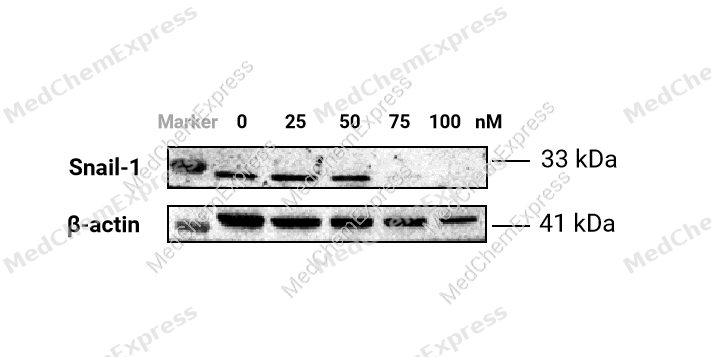 HCT 116 cells were seeded at 1*105 cells/well in a 24-well plate and were cultured overnight. Then, cells are treated with 0-75 nM μg/mL CYD19 (HY-144315) for 48 hours to assess the expression of Snail-1 via Western blotting. The results demonstrated that CYD19 inhibited the expression of Snail-1 at 75 and 100 nM. Primary antibody: SNAI1 antibody (HY-P81135).
 -
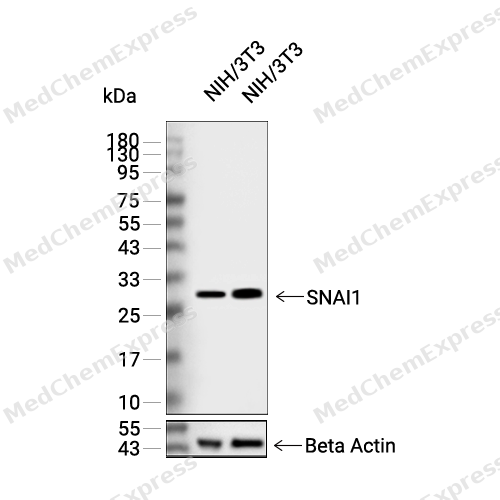 Western blot analysis of extracts from NIH/3T3 (lane 2(20μg), NIH/3T3 (lane 3(40μg), using SNAI1 Antibody. Proteins were transferred to a PVDF membrane and blocked with 5% BSA in TBST for 2 hour at room temperature. The primary antibody and Loading control antibody (Beta Actin, HY-P80438, 1/3000) was used in 5% BSA in TBST at 4°C overnight. Goat Anti-Mouse/Rabbit IgG-HRP Secondary Antibody (HY-P8004/HY-P8001, 1/10,000) was used for 1 hour at room temperature.
 -
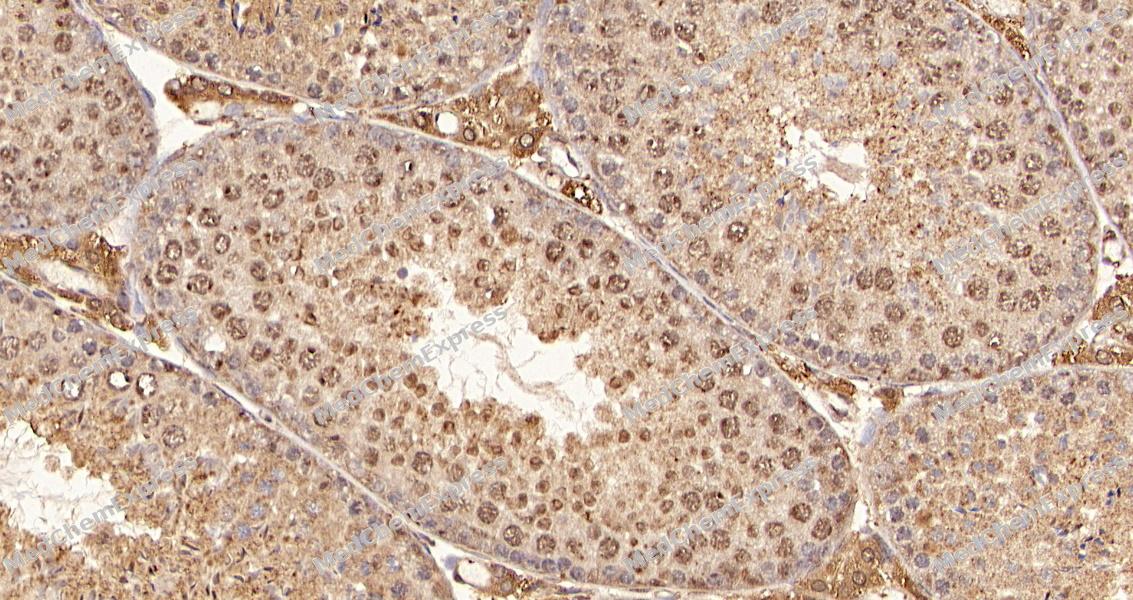 Immunohistochemical analysis of paraffin-embedded mouse testis tissue using SNAI1 Antibody. The section was pre-treated using heat mediated antigen retrieval with sodium citrate buffer (pH 6.0) for 8 minutes. The tissues were blocked in QuickBlock for 20 minutes at room temperature, washed with ddH2O and PBS, and then probed with the primary antibody at 1/100 dilution in 4℃ overnight. The detection was performed using an HRP conjugated compact polymer system. DAB was used as the chromogen. Tissues were counterstained with hematoxylin and mounted with DPX.
 -
Immunohistochemical analysis of paraffin-embedded mouse testis tissue using SNAI1 Antibody. The section was pre-treated using heat mediated antigen retrieval with sodium citrate buffer (pH 6.0) for 8 minutes. The tissues were blocked in QuickBlock for 20 minutes at room temperature, washed with ddH2O and PBS, and then probed with the primary antibody at 1/100 dilution in 4℃ overnight. The detection was performed using an HRP conjugated compact polymer system. DAB was used as the chromogen. Tissues were counterstained with hematoxylin and mounted with DPX.
-
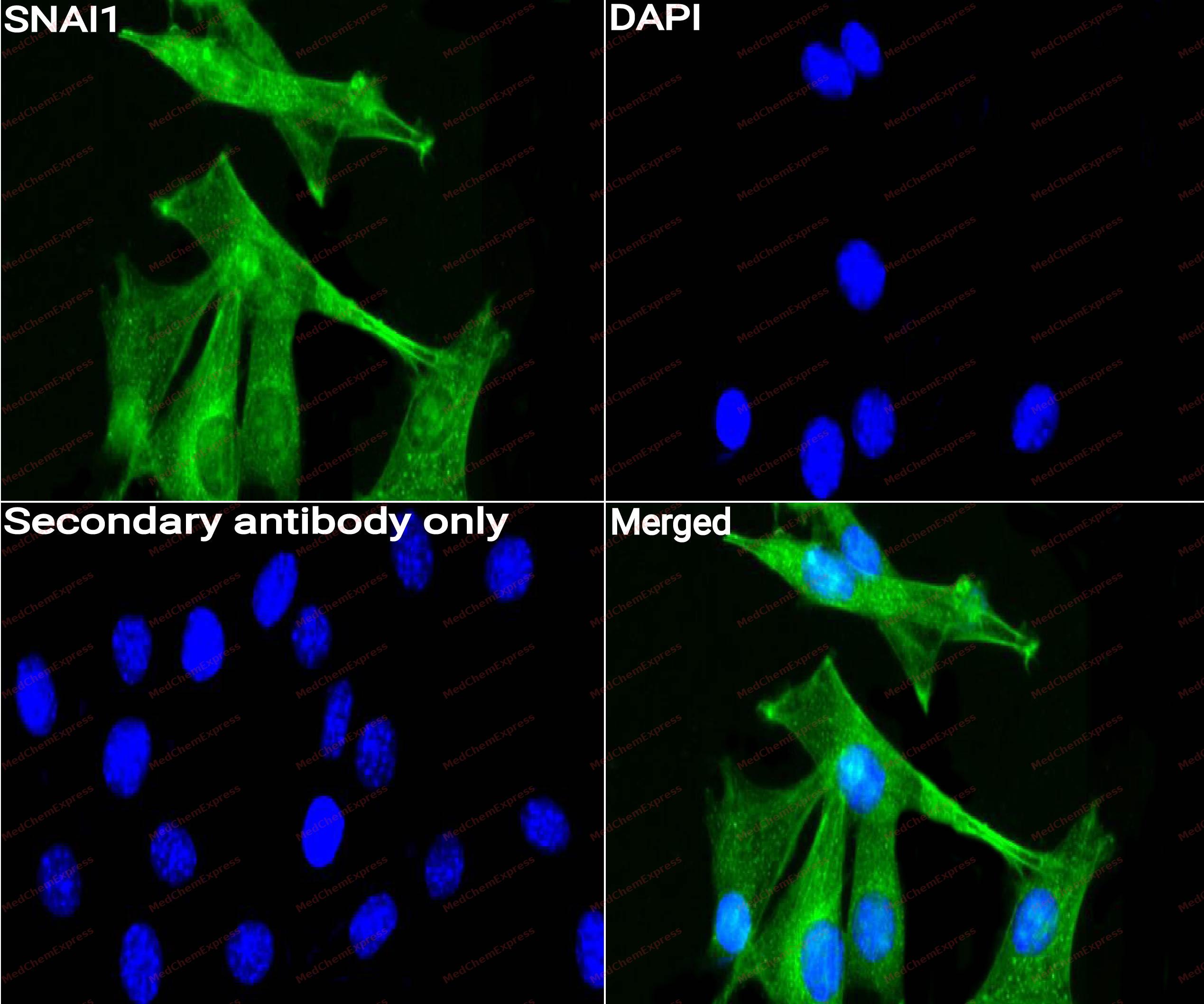 Immunocytochemistry analysis of HUVEC cells labeling SNAI1 with SNAI1 Antibody (HY-P81135) at 1/50 dilution. Cells were fixed in 4% paraformaldehyde for 15 minutes at room temperature, permeabilized with 0.1% Triton X-100 for 10 minutes at room temperature, then blocked with QuickBlock™ Blocking Buffer for Immunol Staining for 10 min at room temperature. Cells were then incubated with SNAI1 Antibody (HY-P81135) at 1/50 dilution in QuickBlock™ Blocking Buffer for Immunol Staining at 4 ℃. Alexa Fluor® 488-conjugated AffiniPure Goat Anti-Rabbit IgG H&L(HY-P8002, Green) was used as the secondary antibody at 1/1,000 dilution. PBS instead of the primary antibody was used as the secondary antibody only control. The Nuclear counterstain was DAPI (Blue).
 -
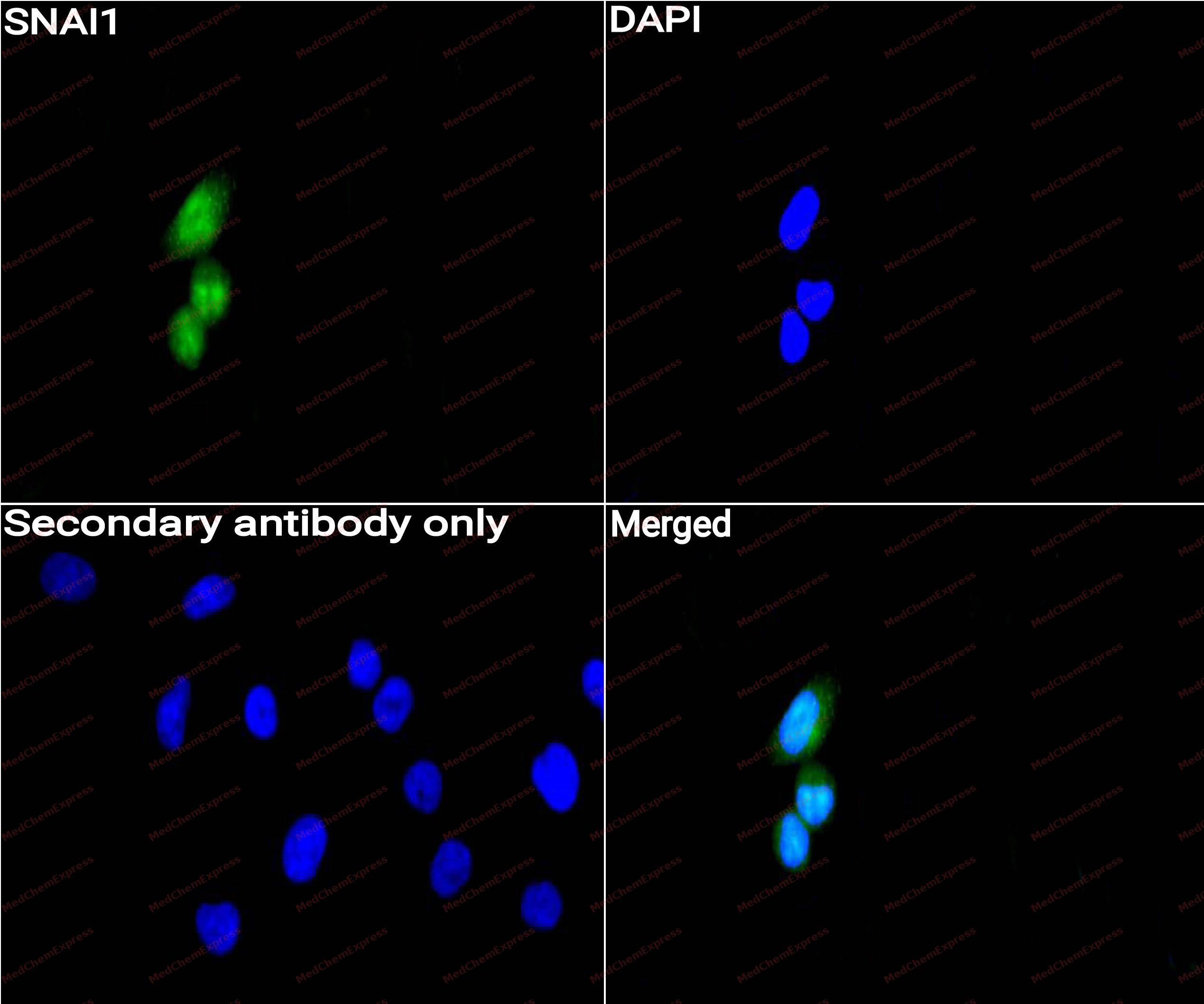 Immunocytochemistry analysis of A549 cells labeling SNAI1 with SNAI1 Antibody (HY-P81135) at 1/50 dilution. Cells were fixed in 4% paraformaldehyde for 15 minutes at room temperature, permeabilized with 0.1% Triton X-100 for 10 minutes at room temperature, then blocked with QuickBlock™ Blocking Buffer for Immunol Staining for 10 min at room temperature. Cells were then incubated with SNAI1 Antibody (HY-P81135)at 1/50 dilution in QuickBlock™ Blocking Buffer for Immunol Staining at 4 ℃. Alexa Fluor® 488-conjugated AffiniPure Goat Anti-Rabbit IgG H&L(HY-P8002,Green) was used as the secondary antibody at 1/1,000 dilution. PBS instead of the primary antibody was used as the secondary antibody only control. The Nuclear counterstain was DAPI (Blue).


Background
-
Function
SNAI1 is involved in induction of the epithelial to mesenchymal transition (EMT), formation and maintenance of embryonic mesoderm, growth arrest, survival and cell migration. Binds to 3 E-boxes of the E-cadherin/CDH1 gene promoter and to the promoters of CLDN7 and KRT8 and, in association with histone demethylase KDM1A which it recruits to the promoters, causes a decrease in dimethylated H3K4 levels and represses transcription. The N-terminal SNAG domain competes with histone H3 for the same binding site on the histone demethylase complex formed by KDM1A and RCOR1, and thereby inhibits demethylation of histone H3 at 'Lys-4' (in vitro). During EMT, involved with LOXL2 in negatively regulating pericentromeric heterochromatin transcription. SNAI1 recruits LOXL2 to pericentromeric regions to oxidize histone H3 and repress transcription which leads to release of heterochromatin component CBX5/HP1A, enabling chromatin reorganization and acquisition of mesenchymal traits. Associates with EGR1 and SP1 to mediate tetradecanoyl phorbol acetate (TPA)-induced up-regulation of CDKN2B, possibly by binding to the CDKN2B promoter region 5'-TCACA-3. In addition, may also activate the CDKN2B promoter by itself[1][2][3][4][5][6][7][8][9][10].
-
Subcellular Localization
Nucleus; Cytoplasm
-
Expression
Tissue_specificity:It is expressed in a variety of tissues, with the highest expression in the kidney. It is also expressed in both mesenchymal cells and epithelial cell lines.
Induction:Induced by TPA maximally by 2.5-fold at 4 hours, in HepG2 cells (at protein level) -
Subunit
Interacts (via SNAG domain) with WTIP (via LIM domains) (By similarity). Interacts (via SNAG domain) with LIMD1 (via LIM domains), and AJUBA (via LIM domains) (PubMed:18331720). Interacts with LOXL2 and LOXL3 (PubMed:16096638).
-
SwissProt ID
-
Synonyms
SNAI1_HUMAN; Zinc finger protein SNAI1; SNAI1; SNAH; SNAI 1; SNA; SNAIL1; dJ710H13.1; Protein snail homolog 1 (Protein sna); Protein snail homolog 1; Protein sna;
Documentation
-
Data Sheet (263 KB)
-
SDS (252 KB)
- English - EN (252 KB)
- Français - FR (252 KB)
- Deutsch - DE (252 KB)
- Norwegian - NO (252 KB)
- Español - ES (252 KB)
- Swedish - SV (252 KB)
- Italian - IT (252 KB)
- Korean - KR (252 KB)
- Portuguese - PT (252 KB)
-
User Guide for Antibodies (1077 KB)
References
[1]. Batlle E, et al. The transcription factor snail is a repressor of E-cadherin gene expression in epithelial tumour cells. Nat Cell Biol. 2000 Feb;2(2):84-9. [Content Brief]
[2]. Yook JI, et al. Wnt-dependent regulation of the E-cadherin repressor snail. J Biol Chem. 2005 Mar 25;280(12):11740-8. [Content Brief]
[3]. Lin Y, et al. The SNAG domain of Snail1 functions as a molecular hook for recruiting lysine-specific demethylase 1. EMBO J. 2010 Jun 2;29(11):1803-16. [Content Brief]
[4]. Lin T, et al. Requirement of the histone demethylase LSD1 in Snai1-mediated transcriptional repression during epithelial-mesenchymal transition. Oncogene. 2010 Sep 2;29(35):4896-904. [Content Brief]
[5]. Zhang K, et al. Lats2 kinase potentiates Snail1 activity by promoting nuclear retention upon phosphorylation. EMBO J. 2012 Jan 4;31(1):29-43. [Content Brief]
[6]. Jin Y, et al. FBXO11 promotes ubiquitination of the Snail family of transcription factors in cancer progression and epidermal development. Cancer Lett. 2015 Jun 28;362(1):70-82. [Content Brief]
[7]. Baron R, et al. Molecular mimicry and ligand recognition in binding and catalysis by the histone demethylase LSD1-CoREST complex. Structure. 2011 Feb 9;19(2):212-20. [Content Brief]
[8]. Tortorici M, et al. Protein recognition by short peptide reversible inhibitors of the chromatin-modifying LSD1/CoREST lysine demethylase. ACS Chem Biol. 2013 Aug 16;8(8):1677-82. [Content Brief]
[9]. Peinado H, et al. A molecular role for lysyl oxidase-like 2 enzyme in snail regulation and tumor progression. EMBO J. 2005 Oct 5;24(19):3446-58. [Content Brief]
[10]. Hu CT, et al. Snail associates with EGR-1 and SP-1 to upregulate transcriptional activation of p15INK4b. FEBS J. 2010 Mar;277(5):1202-18. [Content Brief]

 Powered by Bioz
