



Lexibulin
Based on 2 publication(s) in Google Scholar
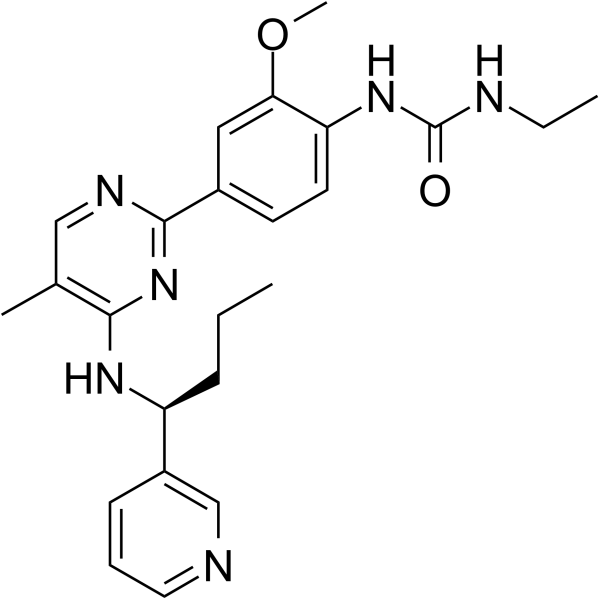
Lexibulin (CYT-997) is a potent and orally active tubulin polymerisation inhibitor with IC50s of 10-100 nM in cancer cell lines; with potent cytotoxic and vascular disrupting activity in vitro and in vivo. Lexibulin induces cell apoptosis and induces mitochondrial ROS generation in GC cells.
For research use only. We do not sell to patients.
- Purity : 99.10%
- CAS No.: 917111-44-5
- Formula: C24H30N6O2
- Molecular Weight:434.53
-
Storage:Powder -20°C, 3 years , 4°C, 2 years ; In solvent -80°C, 2 years , -20°C, 1 year

To place orders, for customer services and technical support, please contact: MedChemExpress USA
Tel: 609-228-6898 E-mail: [email protected] [email protected]


-
 Biological Activity
-
Chemical Information
-
Solvent & Solubility
- Protocols
- Purity & Documentation
- References
-
 Help & FAQs


-
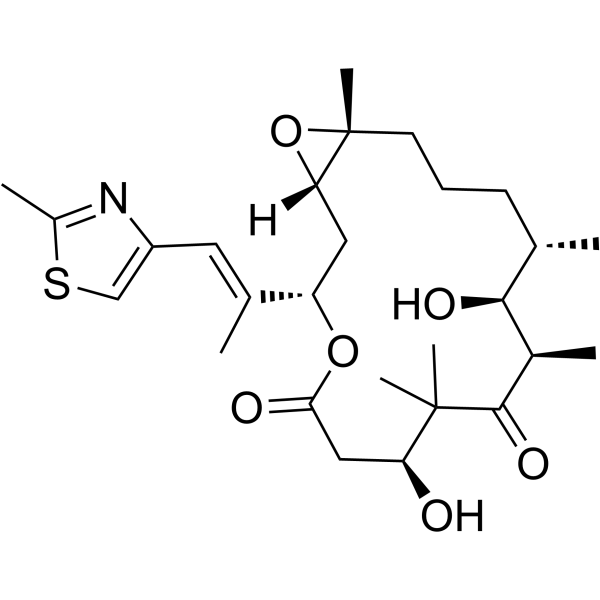
HY-17029
Epothilone BMicrotubule Stabilizer -
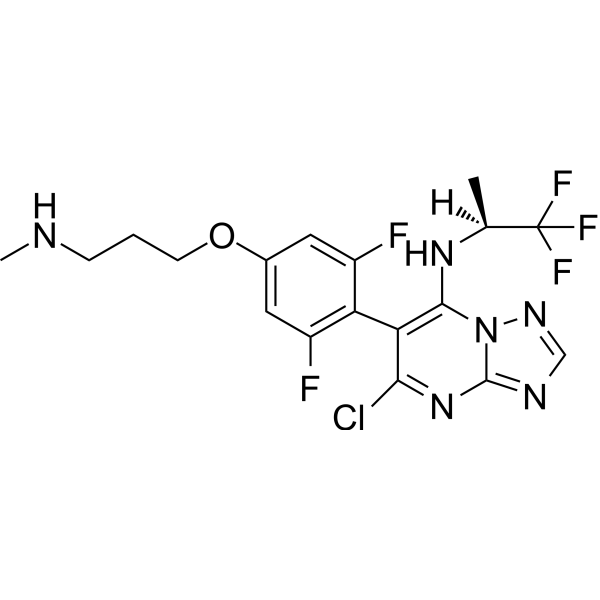
HY-14949
Cevipabulin -
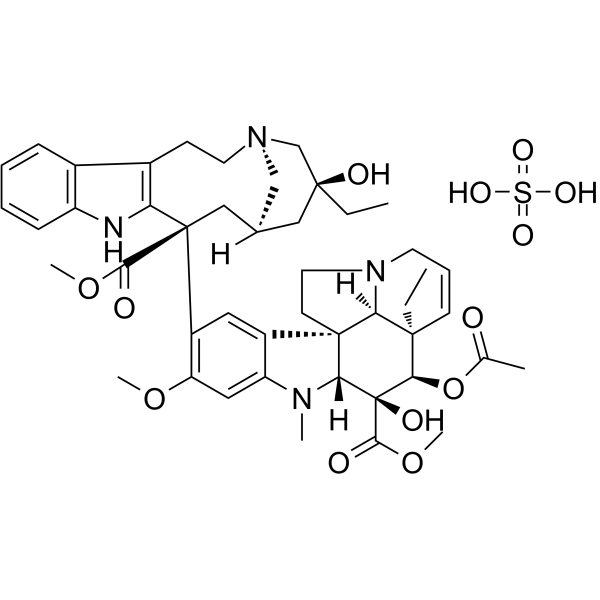
HY-13780
Vinblastine sulfatenAChR Inhibitor -
HY-B0215
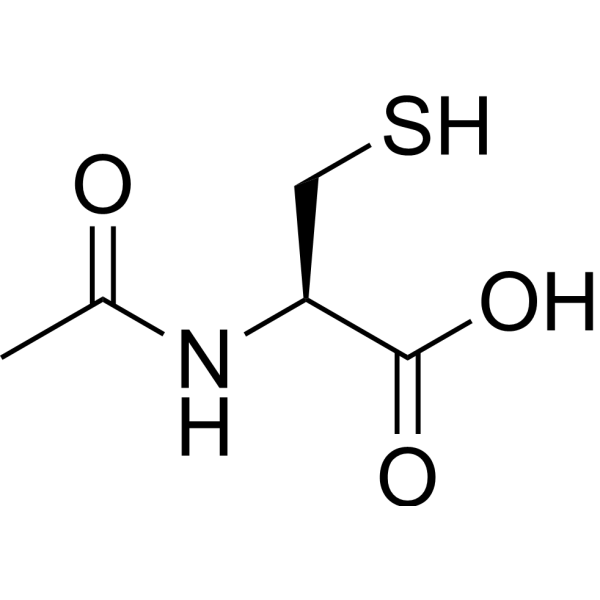
AcetylcysteineMucolytic Agent -
HY-B0015
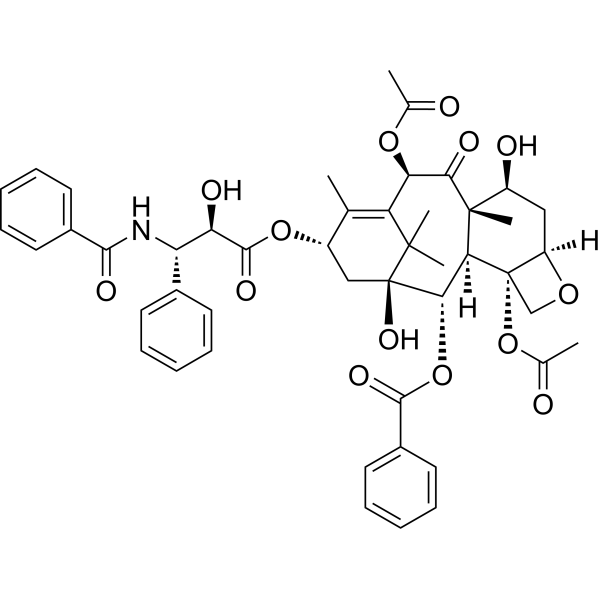
PaclitaxelAntitumor Agent -
HY-W008956
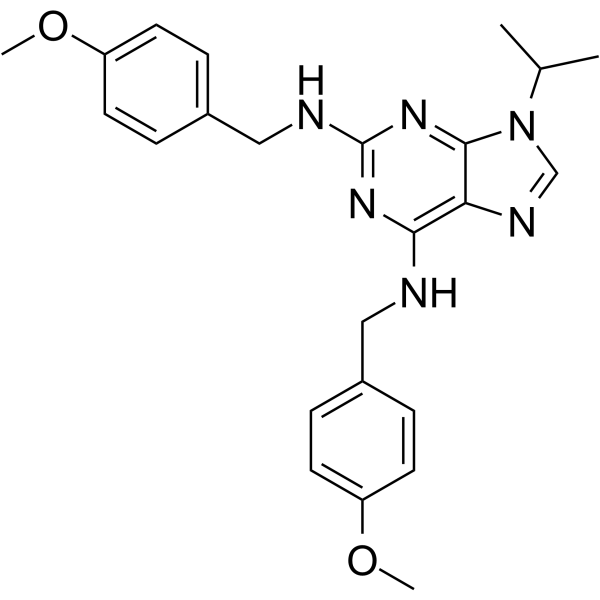
MyoseverinMicrotubule-Binding Molecule -
HY-12069
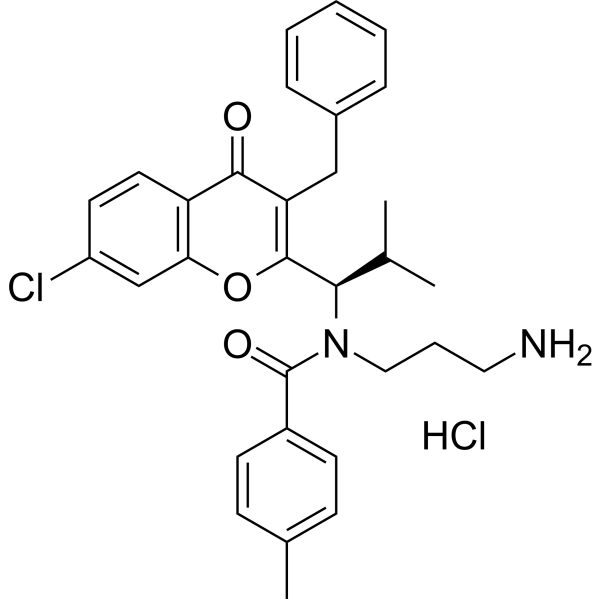
SB-743921 hydrochlorideEg5 Inhibitor -
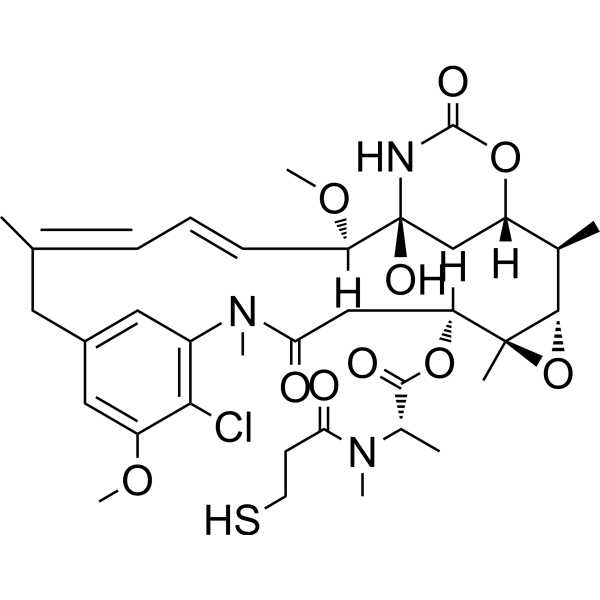
HY-19792
MertansineMicrotubule-Targeted Cytotoxin -
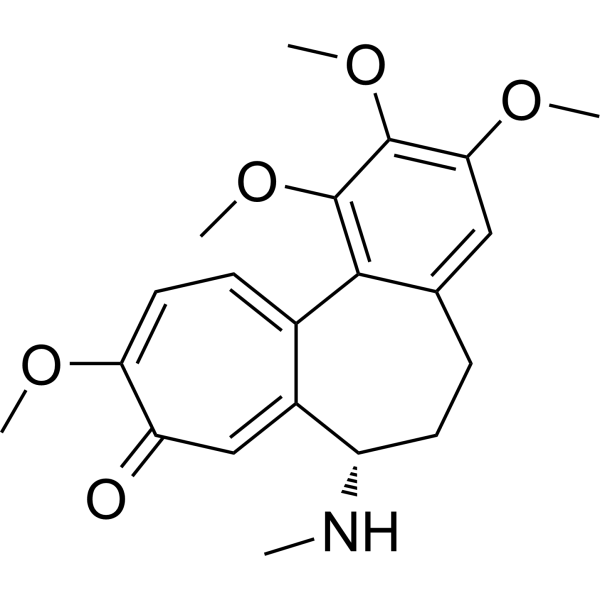
HY-N0282
DemecolcineTubulin Inhibitor -
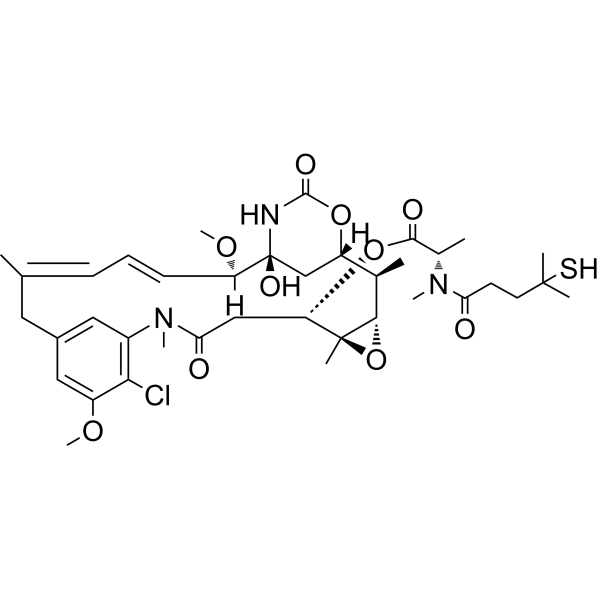
HY-12454
DM4Tubulin Inhibitor -
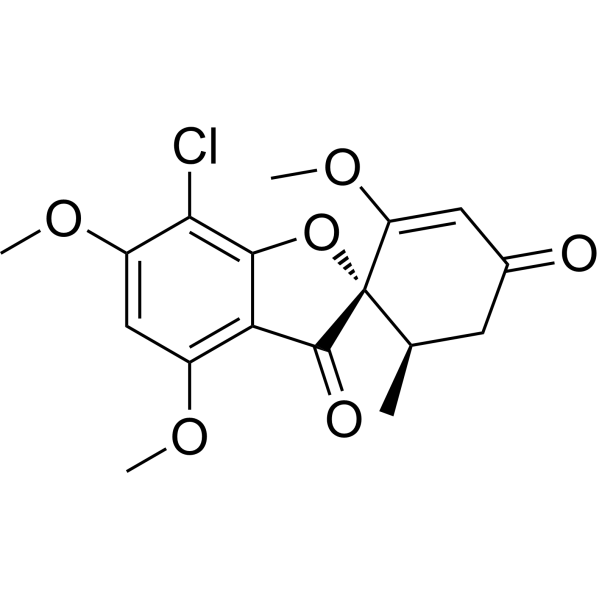
HY-17583
GriseofulvinAntifungal Antibiotic -
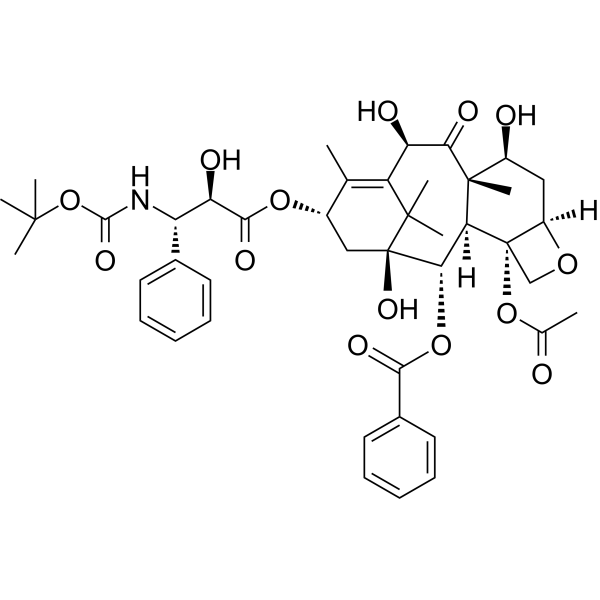
HY-B0011
DocetaxelTubulin Stabilizer
Publications Citing Use of MedChemExpress (MCE) Lexibulin
More

Biological Activity
Description
IC50 & Target
IC50 value: 10-100 nM(cell assay)[1]
Cellular Effect
|
Cell Line

|
Type | Value | Description | References |
|---|---|---|---|---|
| A549 | IC50 |
338 nM
Compound: 12, CYT997
|
Cytotoxicity against human A549 cells assessed as growth inhibition after 72 hrs by MTT assay
Cytotoxicity against human A549 cells assessed as growth inhibition after 72 hrs by MTT assay
|
[PMID: 24160376] |
| DU-145 | IC50 |
0.06 μM
Compound: 24, CYT997
|
Cytotoxicity against human DU145 cells after 72 hrs by MTT assay
Cytotoxicity against human DU145 cells after 72 hrs by MTT assay
|
[PMID: 19616947] |
| HCT-116 | IC50 |
356 nM
Compound: 12, CYT997
|
Cytotoxicity against human HCT116 cells assessed as growth inhibition after 72 hrs by MTT assay
Cytotoxicity against human HCT116 cells assessed as growth inhibition after 72 hrs by MTT assay
|
[PMID: 24160376] |
| HL-60 | IC50 |
112.3 nM
Compound: 12, CYT997
|
Cytotoxicity against human HL60 cells assessed as growth inhibition after 72 hrs by MTT assay
Cytotoxicity against human HL60 cells assessed as growth inhibition after 72 hrs by MTT assay
|
[PMID: 24160376] |
| HUVEC | GI50 |
2098 ng/mL
Compound: 12, CYT997
|
Toxicity in HUVEC assessed as growth inhibition
Toxicity in HUVEC assessed as growth inhibition
|
[PMID: 24160376] |
| NCI-H460 | IC50 |
272 nM
Compound: 12, CYT997
|
Cytotoxicity against human H460 cells assessed as growth inhibition after 72 hrs by MTT assay
Cytotoxicity against human H460 cells assessed as growth inhibition after 72 hrs by MTT assay
|
[PMID: 24160376] |
| PC-3 | IC50 |
0.06 μM
Compound: 24, CYT997
|
Cytotoxicity against human PC3 cells after 72 hrs by MTT assay
Cytotoxicity against human PC3 cells after 72 hrs by MTT assay
|
[PMID: 19616947] |
In Vitro
Lexibulin (CYT-997) prevents the in vitro polymerization of tubulin with an IC50 of ~3 μmol/L (compared with the half-maximal inhibitory concentration of 2 μmol/L for colchicine under identical conditions) as determined using the conventional turbidimetric assay for tubulin polymerization. Lexibulin is also capable of reversibly disrupting the microtubule network in cells, visualized using fluorescence microscopy. Thus, treatment of A549 cells with Lexibulin (1 μM) lead to the rapid reorganization of microtubules, including the destruction of the existing microtubule network and accumulation of tubulin in plaques within the cytoplasm of some cells. After 24 hours, major alterations in cell morphology are evident, including loss of adhesion and cell rounding. The effect of 1 hour of treatment with Lexibulin is reversible and cells rapidly recovered their normal microtubule architecture. Taken together, the data indicates that Lexibulin belongs to the class of anticancer agents that disrupt, rather than stabilize, tubulin-containing structures. Although vehicle-treated cells show 15% and 19% in G2-M phase at 15 and 24 hours (respectively), cells treated with Lexibulin (1 μM) had 38% and 43% of cells in G2-M at the same time points. Furthermore, at 24 hours post-Lexibulin treatment, only 66% of total cells are in the G1, S, and G2-M phases, which suggests that cells blocked at the G2-M boundary do not exit back to G1, as in the normal cell cycle, but most likely are driven towards apoptosis and cell death[1]. Consistent with the disruption of cellular tubulin, Lexibulin potently inhibits proliferation, induces cell cycle arrest and most importantly apoptosis of both human myeloma cell lines (HMCLs) and primary MM cells[2].
MedChemExpress (MCE) has not independently confirmed the accuracy of these methods. They are for reference only.
In Vivo
MedChemExpress (MCE) has not independently confirmed the accuracy of these methods. They are for reference only.


Chemical Information
-
CAS No. 917111-44-5
-
Appearance Solid
-
Molecular Weight 434.53
-
Formula C24H30N6O2
-
Color White to off-white
-
SMILES
CCC[C@H](NC1=C(C)C=NC(C2=CC=C(NC(NCC)=O)C(OC)=C2)=N1)C3=CN=CC=C3
-
Synonyms
CYT-997
-
Shipping
Room temperature in continental US; may vary elsewhere.
-
Storage
Powder -20°C 3 years 4°C 2 years In solvent -80°C 2 years -20°C 1 year


Publications (2)
-
Journal Impact Factor
-
Most Recent
-
J Exp Clin Cancer Res
Mitochondrial ROS accumulation inhibiting JAK2/STAT3 pathway is a critical modulator of CYT997-induced autophagy and apoptosis in gastric cancer. [Abstract]2020 Jun 23;39(1):119. PMID: 32576206 -


Solvent & Solubility
In Vitro:
DMSO : ≥ 100 mg/mL (230.13 mM; Hygroscopic DMSO has a significant impact on the solubility of product, please use newly opened DMSO)
* "≥" means soluble, but saturation unknown.
Please refer to the solubility information to select the appropriate solvent. Once prepared, please aliquot and store the solution to prevent product inactivation from repeated freeze-thaw cycles.
Storage method and period of stock solution: -80°C, 2 years; -20°C, 1 year. When stored at -80°C, please use it within 2 years. When stored at -20°C, please use it within 1 year.
Please refer to the solubility information to select the appropriate solvent. Once prepared, please aliquot and store the solution to prevent product inactivation from repeated freeze-thaw cycles.
Storage method and period of stock solution: -80°C, 2 years; -20°C, 1 year. When stored at -80°C, please use it within 2 years. When stored at -20°C, please use it within 1 year.
Concentration (start) × Volume (start) = Concentration (final) × Volume (final)
In Vivo:
Select the appropriate dissolution method based on your experimental animal and administration route.
- For the following dissolution methods, please ensure to first prepare a clear stock solution using an In Vitro approach and then sequentially add co-solvents:
- To ensure reliable experimental results, the clarified stock solution can be appropriately stored based on storage conditions. As for the working solution for In Vivo experiments, it is recommended to prepare freshly and use it on the same day.
- The percentages shown for the solvents indicate their volumetric ratio in the final prepared solution. If precipitation or phase separation occurs during preparation, heat and/or sonication can be used to aid dissolution.
Add each solvent one by one: 10% DMSO 40% PEG300 5% Tween-80 45% Saline
Solubility: ≥ 2.5 mg/mL (5.75 mM); Clear solution
This protocol yields a clear solution of ≥ 2.5 mg/mL (saturation unknown).
Taking 1 mL working solution as an example, add 100 μL DMSO stock solution (25.0 mg/mL) to 400 μL PEG300, and mix evenly; then add 50 μL Tween-80 and mix evenly; then add 450 μL Saline to adjust the volume to 1 mL.
Preparation of Saline: Dissolve 0.9 g sodium chloride in ddH₂O and dilute to 100 mL to obtain a clear Saline solution.
In Vivo Dissolution Calculator
Please enter the basic information of animal experiments:
-
-
-
-
Recommended: Prepare an additional quantity of animals to account for potential losses during experiments.
Please enter your animal formula composition:
-
%DMSO +
Recommended: Keep the proportion of DMSO in working solution below 2% if your animal is weak.
-
%+
-
+%Tween-80 + +
-
%Saline +
The co-solvents required include: DMSO, . All of co-solvents are available by MedChemExpress (MCE). , Tween 80. All of co-solvents are available by MedChemExpress (MCE).
Working solution concentration: 0.22 mg/mL
Method for preparing stock solution: mg drug dissolved in μL DMSO. Stock solution concentration: mg/mL.
1. Take μL DMSO stock solution;
2. Add μL .
μL , mix evenly;
3. Then add μL Tween 80, mix evenly;
4. Then add μL
Please ensure that the stock solution in the first step is dissolved to a clear state, and add co-solvents in sequence. You can use ultrasonic heating (ultrasonic cleaner, recommended frequency 20-40 kHz), vortexing, etc. to assist dissolution.


Purity & Documentation
-
Data Sheet (290 KB)
-
SDS (393 KB)
- English - EN (393 KB)
- Français - FR (393 KB)
- Deutsch - DE (393 KB)
- Norwegian - NO (393 KB)
- Español - ES (393 KB)
- Swedish - SV (393 KB)
- Italian - IT (393 KB)
- Korean - KR (393 KB)
- Portuguese - PT (393 KB)
-
Handling Instructions (2659 KB)
References
[1]. Burns CJ, et al. CYT997: a novel orally active tubulin polymerization inhibitor with potent cytotoxic and vascular disrupting activity in vitro and in vivo. Mol Cancer Ther. 2009 Nov;8(11):3036-45. [Content Brief]
[2]. Monaghan K, et al. CYT997 causes apoptosis in human multiple myeloma. Invest New Drugs. 2011 Apr;29(2):232-8. [Content Brief]
[3]. Ya Cao, wt al. Mitochondrial ROS Accumulation Inhibiting JAK2/STAT3 Pathway Is a Critical Modulator of CYT997-induced Autophagy and Apoptosis in Gastric Cancer. J Exp Clin Cancer Res. 2020 Jun 23;39(1):119. [Content Brief]


Complete Stock Solution Preparation Table
Please refer to the solubility information to select the appropriate solvent. Once prepared, please aliquot and store the solution to prevent product inactivation from repeated freeze-thaw cycles.
Storage method and period of stock solution: -80°C, 2 years; -20°C, 1 year. When stored at -80°C, please use it within 2 years. When stored at -20°C, please use it within 1 year.
| Optional Solvent | Concentration Solvent Mass | 1 mg | 5 mg | 10 mg | 25 mg |
|---|---|---|---|---|---|
| DMSO | 1 mM | 2.3013 mL | 11.5067 mL | 23.0134 mL | 57.5334 mL |
| 5 mM | 0.4603 mL | 2.3013 mL | 4.6027 mL | 11.5067 mL | |
| 10 mM | 0.2301 mL | 1.1507 mL | 2.3013 mL | 5.7533 mL | |
| 15 mM | 0.1534 mL | 0.7671 mL | 1.5342 mL | 3.8356 mL | |
| 20 mM | 0.1151 mL | 0.5753 mL | 1.1507 mL | 2.8767 mL | |
| 25 mM | 0.0921 mL | 0.4603 mL | 0.9205 mL | 2.3013 mL | |
| 30 mM | 0.0767 mL | 0.3836 mL | 0.7671 mL | 1.9178 mL | |
| 40 mM | 0.0575 mL | 0.2877 mL | 0.5753 mL | 1.4383 mL | |
| 50 mM | 0.0460 mL | 0.2301 mL | 0.4603 mL | 1.1507 mL | |
| 60 mM | 0.0384 mL | 0.1918 mL | 0.3836 mL | 0.9589 mL | |
| 80 mM | 0.0288 mL | 0.1438 mL | 0.2877 mL | 0.7192 mL | |
| 100 mM | 0.0230 mL | 0.1151 mL | 0.2301 mL | 0.5753 mL |


Lexibulin Related Classifications
HY-10498 Related Classifications
 Powered by Bioz