



DM4
Based on 6 publication(s) in Google Scholar
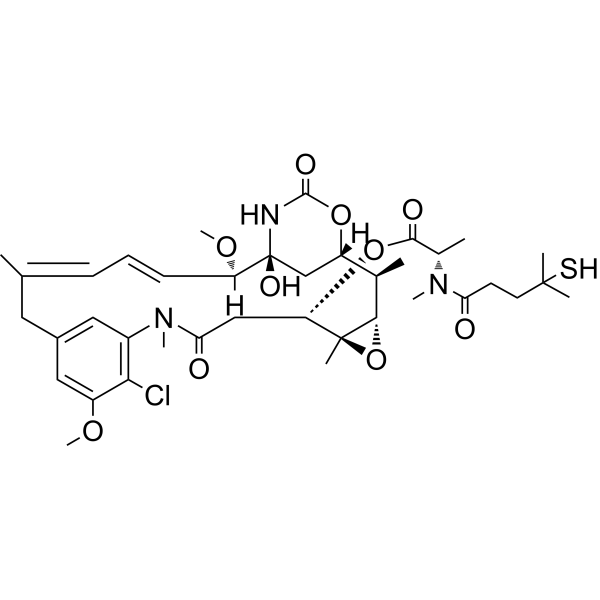
DM4 is is an antitubulin agent that inhibit cell division. DM4 can be used in the preparation of antibody agent conjugate.
For research use only. We do not sell to patients.
- Purity : 99.64%
- CAS No.: 796073-69-3
- Formula: C38H54ClN3O10S
- Molecular Weight:780.37
-
Storage:Powder -20°C, 3 years , 4°C, 2 years ; In solvent -80°C, 6 months , -20°C, 1 month

To place orders, for customer services and technical support, please contact: MedChemExpress USA
Tel: 609-228-6898 E-mail: [email protected] [email protected]


-
 Biological Activity
-
Chemical Information
-
Solvent & Solubility
- Protocols
- Purity & Documentation
- References
-
 Help & FAQs


-
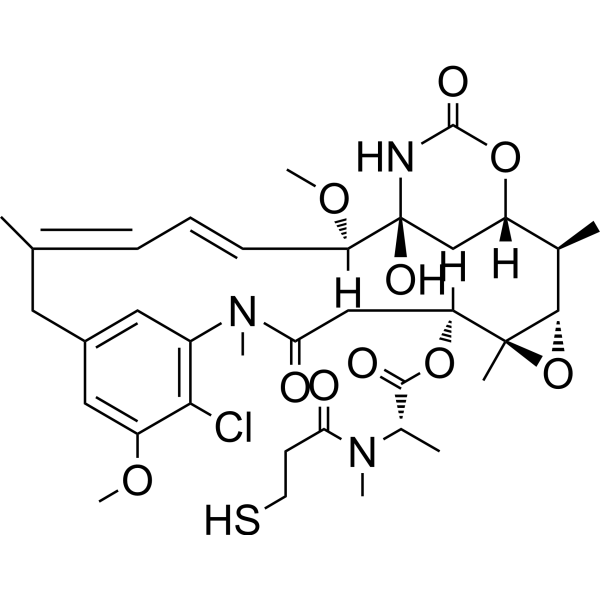
HY-19792
MertansineMicrotubule-Targeted Cytotoxin -
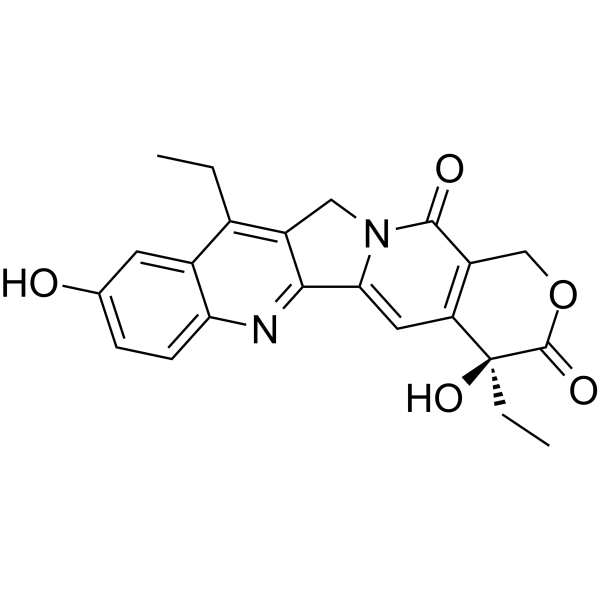
HY-13704
SN-38Topoisomerase I Inhibitor -
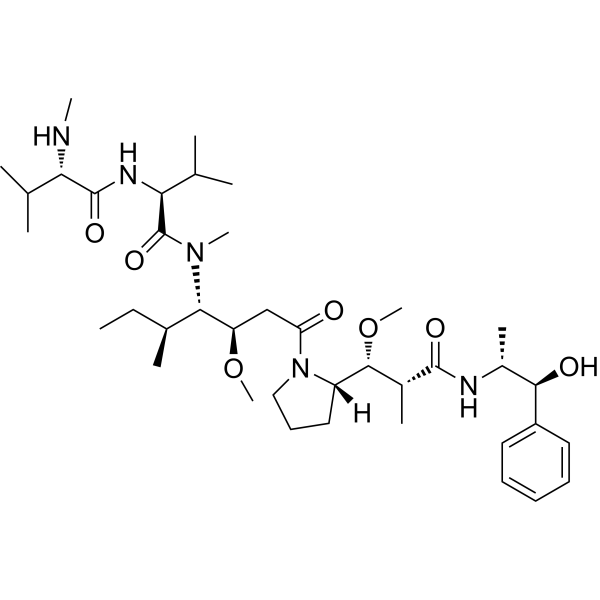
HY-15162
Monomethyl auristatin EAntimitotic Agent -
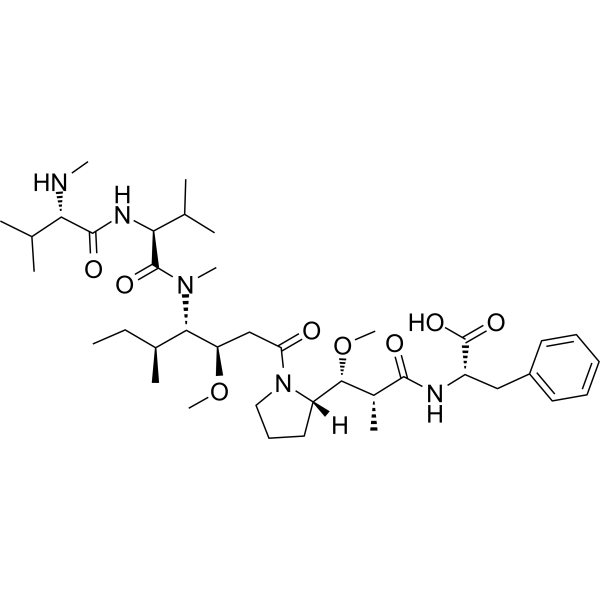
HY-15579
MMAFTubulin Inhibitor -
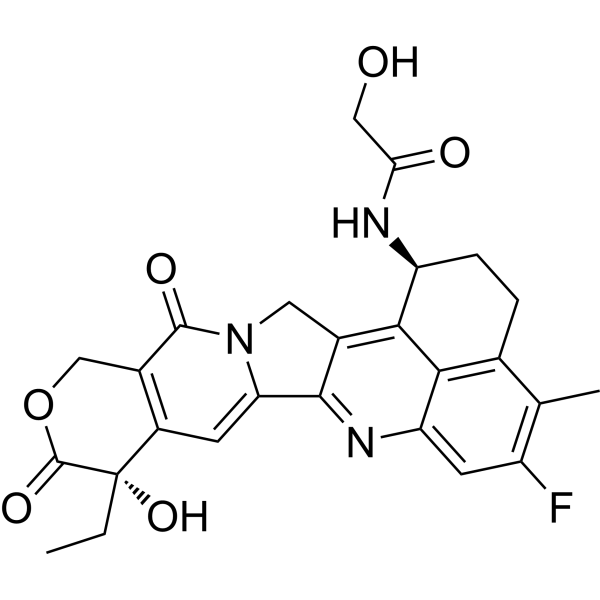
HY-13631D
DXdTopoisomerase I Inhibitor -
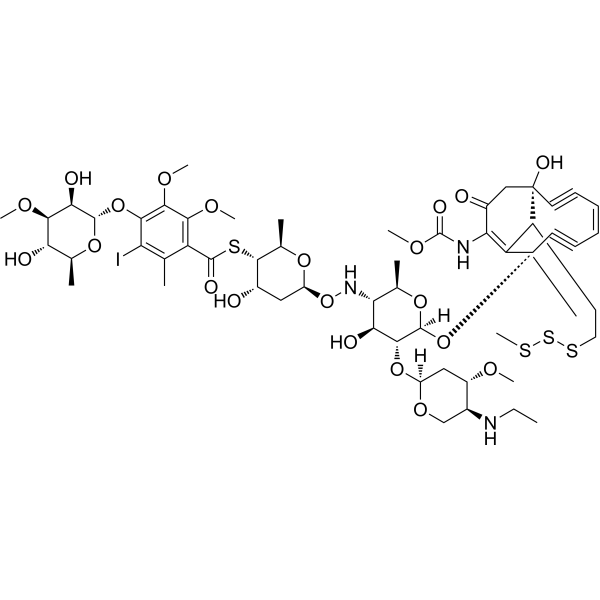
HY-19609
CalicheamicinDNA-binding ADC Cytotoxin -
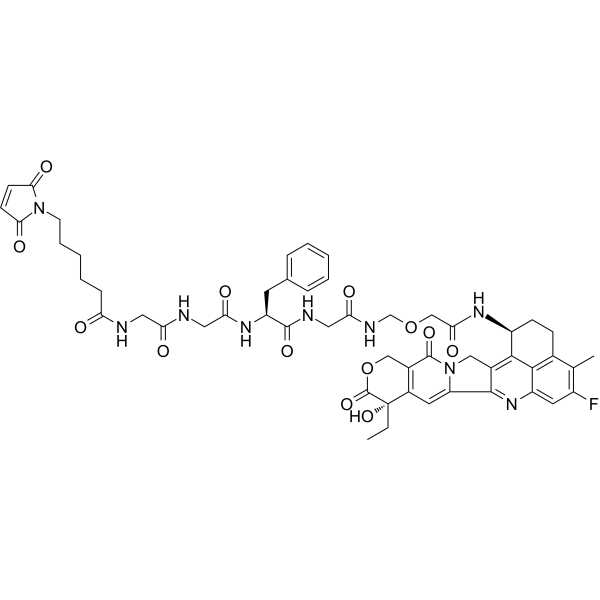
HY-13631E
DeruxtecanDrug-Linker Conjugates for ADC -
HY-15575
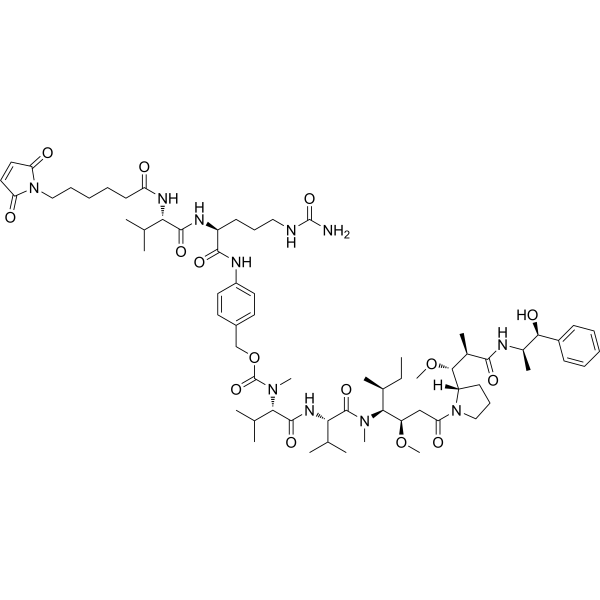
VcMMAEDrug-Linker Conjugate for ADC -
HY-B0015
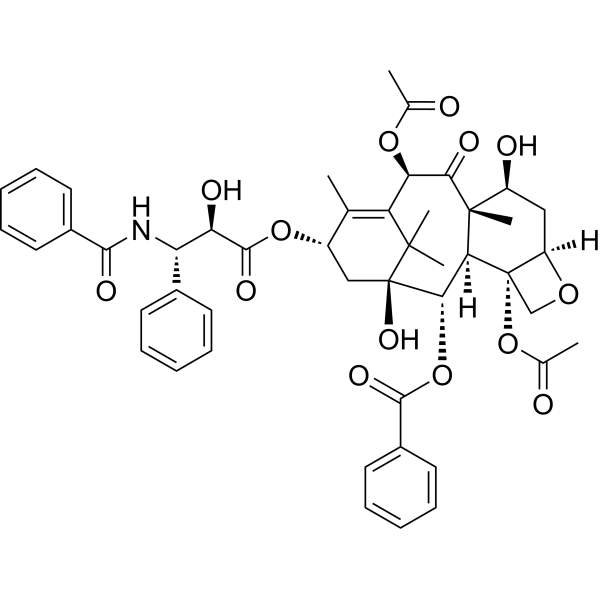
PaclitaxelAntitumor Agent -
HY-13442
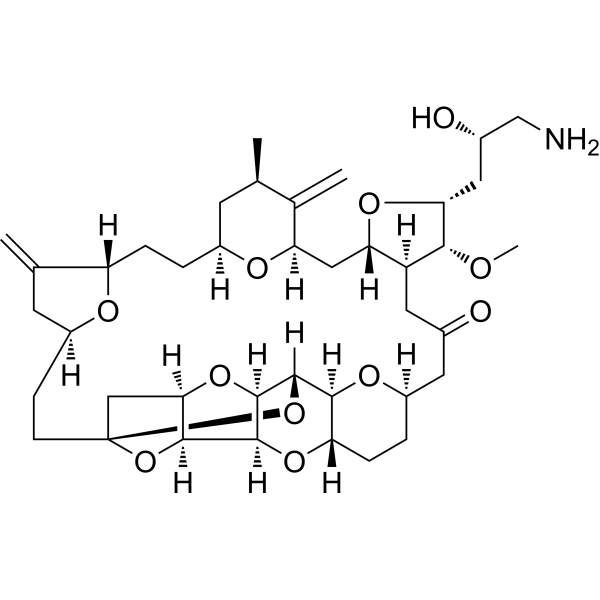
EribulinMicrotubule Inhibitor -
HY-13631
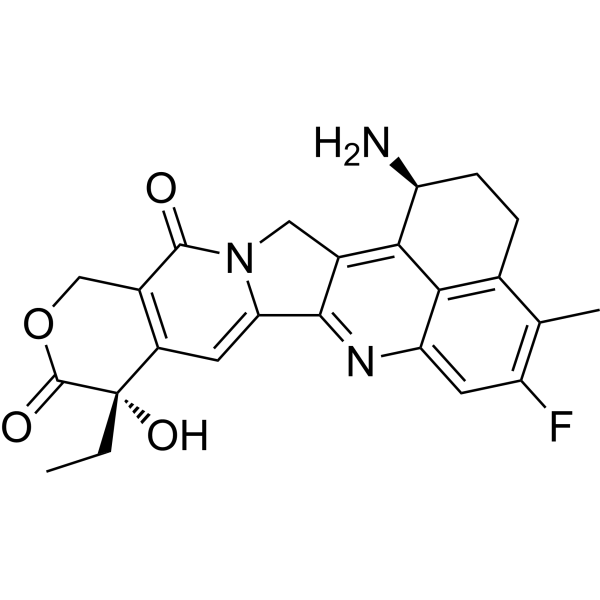
ExatecanTopoisomerase I Inhibitor -
HY-15142
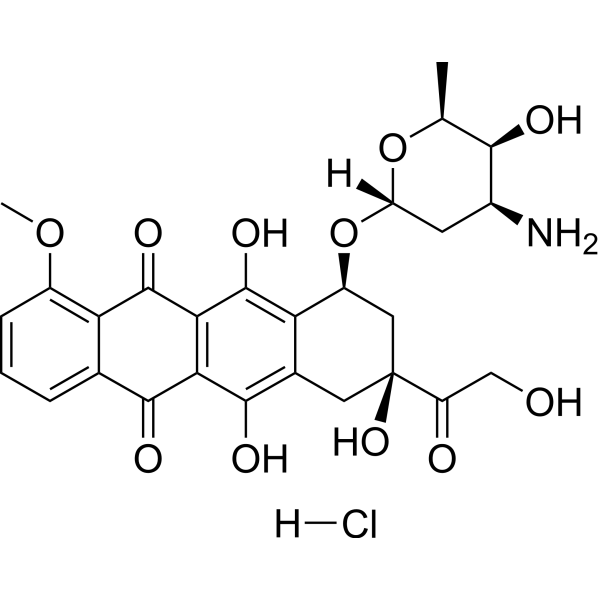
Doxorubicin hydrochlorideTopoisomerase Inhibitor
Publications Citing Use of MedChemExpress (MCE) DM4
More Customer Validation & Images

-
Cell Proliferation/Viability Assay
-
Flow Cytometry
-
In Vivo Efficacy Study
-
In Vivo Efficacy Study
-
Cell Proliferation/Viability Assay


Biological Activity
Description
In Vitro
DM4, a structural analogue of maytansine, is a new thiol-containing and potent maytansinoid. DM4 is a cytotoxic maytansinoid drug. It is synthesized in order to link maytansinoids to antibodies via disulfide bonds. Maytansinoids inhibit tubulin polymerization and microtubule assembly and enhance microtubule destabilization, so there is potent suppression of microtubule dynamics resulting in a mitotic block and subsequent apoptotic cell death[1].
MedChemExpress (MCE) has not independently confirmed the accuracy of these methods. They are for reference only. Further protocols information, click here.
Clinical Trial
| NCT Number | Sponsor | Condition | Start Date |
Phase

|
|---|---|---|---|---|
| NCT01329991 | Plexxikon| | 2011-05 | PHASE1 |


Chemical Information
-
CAS No. 796073-69-3
-
Appearance Solid
-
Molecular Weight 780.37
-
Formula C38H54ClN3O10S
-
Color White to light yellow
-
SMILES
C[C@]1([C@H](CC(N(C(C=C2C=C3OC)=C3Cl)C)=O)OC([C@H](C)N(C)C(CCC(C)(S)C)=O)=O)[C@H]([C@@H]([C@](OC4=O)([H])C[C@]([C@](/C=C/C=C(C)/C2)([H])OC)(N4)O)C)O1
-
Synonyms
Ravtansine
-
Shipping
Room temperature in continental US; may vary elsewhere.
-
Storage
Powder -20°C 3 years 4°C 2 years In solvent -80°C 6 months -20°C 1 month


Publications (6)
-
Journal Impact Factor
-
Most Recent
-
J Transl Med
LGALS3BP antibody-drug conjugate enhances tumor-infiltrating lymphocytes and synergizes with immunotherapy to restrain neuroblastoma growth. [Abstract]2025 Apr 11;23(1):431. PMID: 40217513
DM4 purchased from MedChemExpress. Usage Cited in: J Transl Med. 2025 Apr 11;23(1):431. [Abstract]
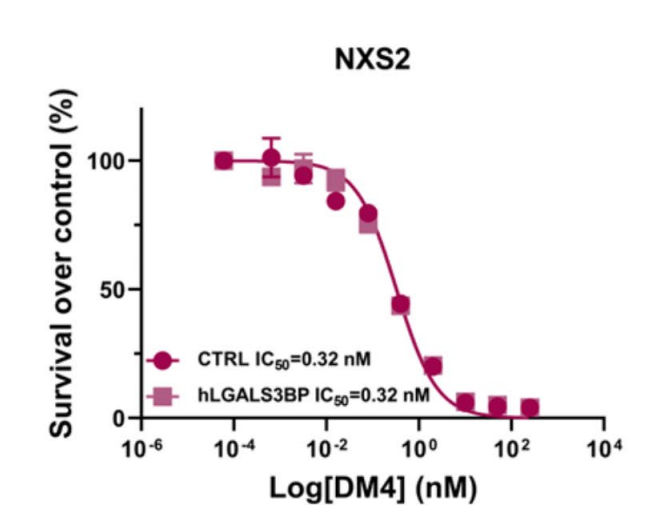
In vitro IC50 curves were assessed through cytotoxicity assays by exposing NXS2 CTRL and hLGALS3BP cells to increasing doses of payload DM4 (0.00064 to 250 nM; 72 h).
DM4 purchased from MedChemExpress. Usage Cited in: J Transl Med. 2025 Apr 11;23(1):431. [Abstract]
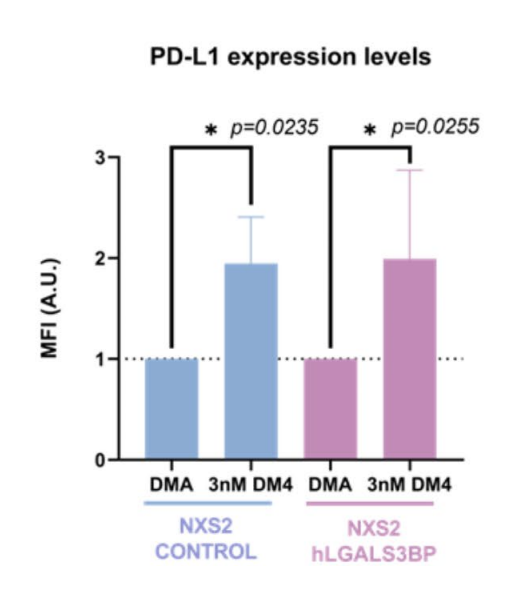
Surface levels of PD-L1 evaluated through FACS analysis expressed as fold change of mean fluorescence intensity signals of treated samples over controls of NXS2 control and hLGALS3BP cells treated with DM4 (3 nM; 72 h) or with DMA. DM4 has the ability to induce a potential resistance mechanism.
DM4 purchased from MedChemExpress. Usage Cited in: J Transl Med. 2025 Apr 11;23(1):431. [Abstract]
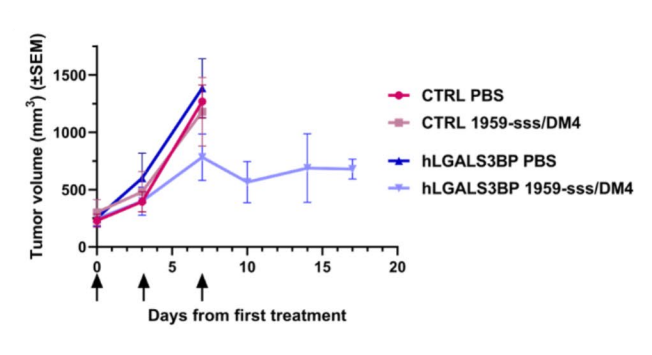
1959-sss/DM4 (ADC) (10 mg/kg; twice weekly; three total i.v.) treatment resulted in a significant shrinkage of hLGALS3BP-expressing tumors in syngeneic A/J mice.
-
ACS Omega
Evaluation of Antibody-Drug Conjugate Performances Using a Novel HPLC-DAD Method for Tumor-Specific Detection of DM4 and S‑Methyl-DM4. [Abstract]2025 Oct 15;10(42):50382-50393. PMID: 41179189
DM4 purchased from MedChemExpress. Usage Cited in: ACS Omega. 2025 Oct 15;10(42):50382-50393. [Abstract]
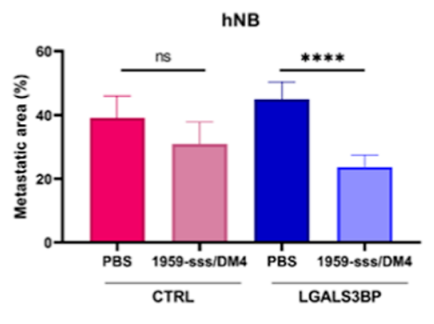
1959-sss/DM4 (ADC) (10 mg/kg; twice weekly; three total i.v.) significantly reduced metastatic lesion area, especially in mice injected with LGALS3BP-expressing hNB cells.
-
Curr Issues Mol Biol
Targeting GD2-Positive Tumor Cells by Pegylated scFv Fragment-Drug Conjugates Carrying Maytansinoids DM1 and DM4. [Abstract]2023 Oct 5;45(10):8112-8125. PMID: 37886955
DM4 purchased from MedChemExpress. Usage Cited in: Curr Issues Mol Biol. 2023 Oct 5;45(10):8112-8125. [Abstract]
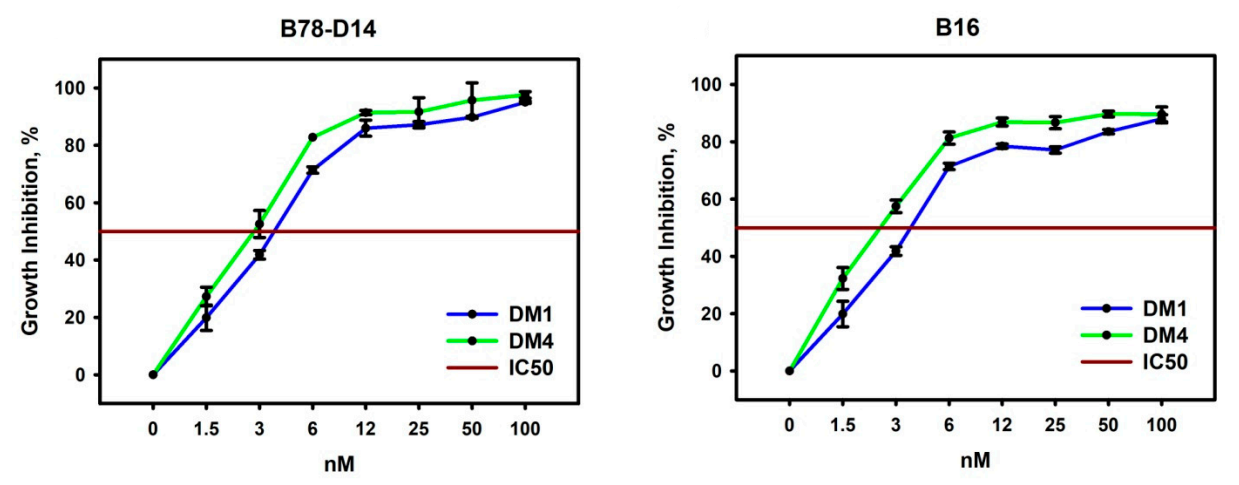
Cytotoxic activity of pegylated antibody fragment-drug conjugates in GD2-positive B78-D14 cell line. scFv-PEG4-DM4 (0-370 nM; 72 h) was more effective than scFv-PEG4-DM1 in inhibiting cell growth because the cytotoxicity was approximately twice as high for the FDC loaded with DM4 as opposed to that with DM1.
-
J Pharm Biomed Anal
HPLC-DAD validated method for DM4 and its metabolite S-Me-DM4 quantification in biological matrix for clinical and pharmaceutical applications. [Abstract]2023 Oct 25:235:115642. PMID: 37586307 -
Oral Dis
LGALS3BP is a potential target of antibody-drug conjugates in oral squamous cell carcinoma. [Abstract]2024 May;30(4):2039-2050. PMID: 37649401 -


Solvent & Solubility
In Vitro:
DMSO : 100 mg/mL (128.14 mM; Need ultrasonic; Hygroscopic DMSO has a significant impact on the solubility of product, please use newly opened DMSO)
Please refer to the solubility information to select the appropriate solvent. Once prepared, please aliquot and store the solution to prevent product inactivation from repeated freeze-thaw cycles.
Storage method and period of stock solution: -80°C, 6 months; -20°C, 1 month. When stored at -80°C, please use it within 6 months. When stored at -20°C, please use it within 1 month.
Please refer to the solubility information to select the appropriate solvent. Once prepared, please aliquot and store the solution to prevent product inactivation from repeated freeze-thaw cycles.
Storage method and period of stock solution: -80°C, 6 months; -20°C, 1 month. When stored at -80°C, please use it within 6 months. When stored at -20°C, please use it within 1 month.
Concentration (start) × Volume (start) = Concentration (final) × Volume (final)
In Vivo:
Select the appropriate dissolution method based on your experimental animal and administration route.
- For the following dissolution methods, please ensure to first prepare a clear stock solution using an In Vitro approach and then sequentially add co-solvents:
- To ensure reliable experimental results, the clarified stock solution can be appropriately stored based on storage conditions. As for the working solution for In Vivo experiments, it is recommended to prepare freshly and use it on the same day.
- The percentages shown for the solvents indicate their volumetric ratio in the final prepared solution. If precipitation or phase separation occurs during preparation, heat and/or sonication can be used to aid dissolution.
Add each solvent one by one: 10% DMSO 40% PEG300 5% Tween-80 45% Saline
Solubility: ≥ 2.5 mg/mL (3.20 mM); Clear solution
This protocol yields a clear solution of ≥ 2.5 mg/mL (saturation unknown).
Taking 1 mL working solution as an example, add 100 μL DMSO stock solution (25.0 mg/mL) to 400 μL PEG300, and mix evenly; then add 50 μL Tween-80 and mix evenly; then add 450 μL Saline to adjust the volume to 1 mL.
Preparation of Saline: Dissolve 0.9 g sodium chloride in ddH₂O and dilute to 100 mL to obtain a clear Saline solution.
Add each solvent one by one: 10% DMSO 90% (20% SBE-β-CD in Saline)
Solubility: ≥ 2.5 mg/mL (3.20 mM); Clear solution
This protocol yields a clear solution of ≥ 2.5 mg/mL (saturation unknown).
Taking 1 mL working solution as an example, add 100 μL DMSO stock solution (25.0 mg/mL) to 900 μL 20% SBE-β-CD in Saline, and mix evenly.
Preparation of 20% SBE-β-CD in Saline (4°C, storage for one week): 2 g SBE-β-CD powder is dissolved in 10 mL Saline, completely dissolve until clear.
In Vivo Dissolution Calculator
Please enter the basic information of animal experiments:
-
-
-
-
Recommended: Prepare an additional quantity of animals to account for potential losses during experiments.
Please enter your animal formula composition:
-
%DMSO +
Recommended: Keep the proportion of DMSO in working solution below 2% if your animal is weak.
-
%+
-
+%Tween-80 + +
-
%Saline +
The co-solvents required include: DMSO, . All of co-solvents are available by MedChemExpress (MCE). , Tween 80. All of co-solvents are available by MedChemExpress (MCE).
Working solution concentration: 0.22 mg/mL
Method for preparing stock solution: mg drug dissolved in μL DMSO. Stock solution concentration: mg/mL.
1. Take μL DMSO stock solution;
2. Add μL .
μL , mix evenly;
3. Then add μL Tween 80, mix evenly;
4. Then add μL
Please ensure that the stock solution in the first step is dissolved to a clear state, and add co-solvents in sequence. You can use ultrasonic heating (ultrasonic cleaner, recommended frequency 20-40 kHz), vortexing, etc. to assist dissolution.

Protocols
-
CFSE Dye Dilution Proliferation Assay
The CFSE (carboxyfluorescein diacetate succinimidyl ester) dye dilution proliferation assay is based on the covalent labeling of intracellular proteins by a cell-permeant fluorescent dye that becomes fluorescent upon intracellular ester cleavage and then is stably retained within cells. As labeled cells divide, the dye is partitioned equally between daughter cells, resulting in a stepwise halving of fluorescence intensity that can be quantified by flow cytometry to determine the number of cell divisions undergone by each cell population. This fluorescence dilution approach enables quantitative tracking of lymphocyte proliferation at the single-cell level over multiple rounds of division. CFSE-based proliferation analysis has been widely applied to measure antigen-driven lymphocyte expansion in vitro, where discrete fluorescence peaks correspond to successive cell divisions and allow reconstruction of proliferative history within heterogeneous populations.
-
Dye-dilution cell tracking and proliferation staining
Dye-dilution cell tracking assays quantify cell proliferation by covalently labeling intracellular proteins with a stable fluorescent dye that is equally partitioned between daughter cells during mitosis, resulting in stepwise halving of fluorescence intensity with each cell division as measured by flow cytometry histograms. Carboxyfluorescein diacetate succinimidyl ester (CFSE) is a prototypical dye that diffuses into cells, is enzymatically converted into a fluorescent compound, and then covalently binds intracellular amine groups, producing long-lived fluorescence suitable for tracking multiple rounds of division in vitro and in vivo. Successive generations of dividing cells form discrete peaks of decreasing fluorescence intensity, enabling estimation of proliferation history, precursor frequency, and division index within heterogeneous populations. Alternative dyes such as CellTrace Violet (CTV) and far-red membrane dyes (e. g. , PKH26) follow the same dilution principle but differ


Purity & Documentation
-
Data Sheet (275 KB)
-
SDS (643 KB)
- English - EN (643 KB)
- Français - FR (643 KB)
- Deutsch - DE (643 KB)
- Norwegian - NO (643 KB)
- Español - ES (643 KB)
- Swedish - SV (643 KB)
- Italian - IT (643 KB)
- Korean - KR (643 KB)
- Portuguese - PT (643 KB)
-
Handling Instructions (2659 KB)
References


Complete Stock Solution Preparation Table
Please refer to the solubility information to select the appropriate solvent. Once prepared, please aliquot and store the solution to prevent product inactivation from repeated freeze-thaw cycles.
Storage method and period of stock solution: -80°C, 6 months; -20°C, 1 month. When stored at -80°C, please use it within 6 months. When stored at -20°C, please use it within 1 month.
| Optional Solvent | Concentration Solvent Mass | 1 mg | 5 mg | 10 mg | 25 mg |
|---|---|---|---|---|---|
| DMSO | 1 mM | 1.2814 mL | 6.4072 mL | 12.8144 mL | 32.0361 mL |
| 5 mM | 0.2563 mL | 1.2814 mL | 2.5629 mL | 6.4072 mL | |
| 10 mM | 0.1281 mL | 0.6407 mL | 1.2814 mL | 3.2036 mL | |
| 15 mM | 0.0854 mL | 0.4271 mL | 0.8543 mL | 2.1357 mL | |
| 20 mM | 0.0641 mL | 0.3204 mL | 0.6407 mL | 1.6018 mL | |
| 25 mM | 0.0513 mL | 0.2563 mL | 0.5126 mL | 1.2814 mL | |
| 30 mM | 0.0427 mL | 0.2136 mL | 0.4271 mL | 1.0679 mL | |
| 40 mM | 0.0320 mL | 0.1602 mL | 0.3204 mL | 0.8009 mL | |
| 50 mM | 0.0256 mL | 0.1281 mL | 0.2563 mL | 0.6407 mL | |
| 60 mM | 0.0214 mL | 0.1068 mL | 0.2136 mL | 0.5339 mL | |
| 80 mM | 0.0160 mL | 0.0801 mL | 0.1602 mL | 0.4005 mL | |
| 100 mM | 0.0128 mL | 0.0641 mL | 0.1281 mL | 0.3204 mL |


DM4 Related Classifications
HY-12454 Related Classifications
 Powered by Bioz