



BAY-386
BAY-386, a chemical probe, is a PAR-1 antagonist that inhibits the expression of pro-inflammatory factors MCP-1 and CXCL1 in HUVEC.
For research use only. We do not sell to patients.
- CAS No.: 1256941-06-6
- Formula: C22H25F3N4O5S
- Molecular Weight:514.52
-
Storage:
Please store the product under the recommended conditions in the Certificate of Analysis.


To place orders, for customer services and technical support, please contact: MedChemExpress USA
Tel: 609-228-6898 E-mail: [email protected] [email protected]


-
 Biological Activity
-
Chemical Information
- Protocols
- Purity & Documentation
- References
-
 Help & FAQs


-
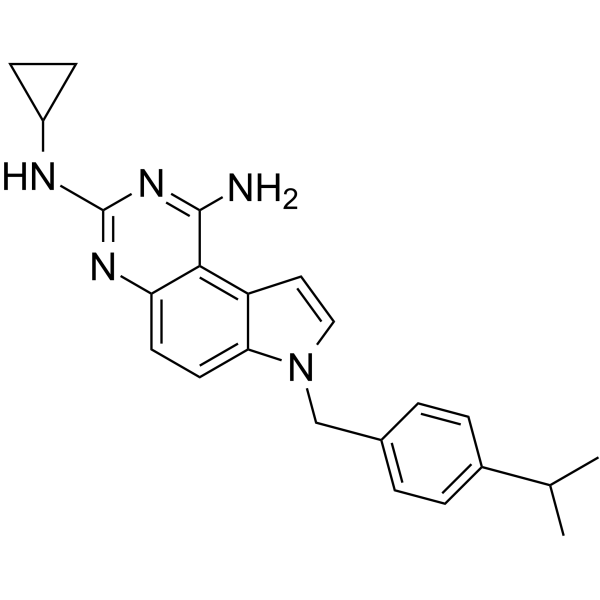
HY-14993
SCH79797PAR1 Antagonist -
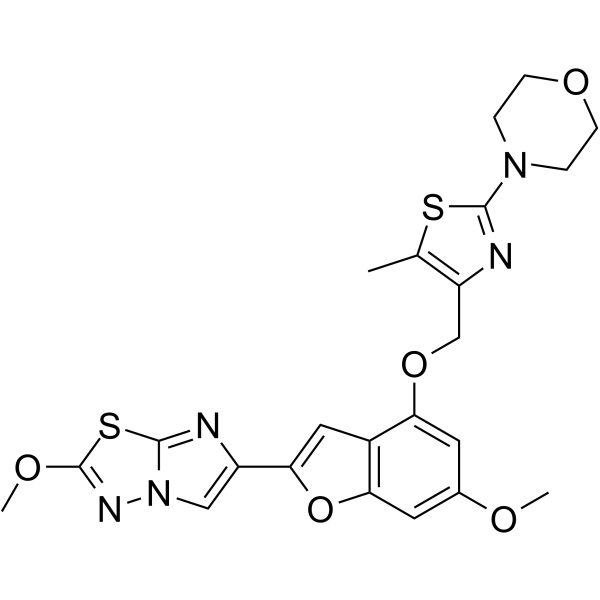
HY-19837
BMS-986120PAR4 Antagonist -
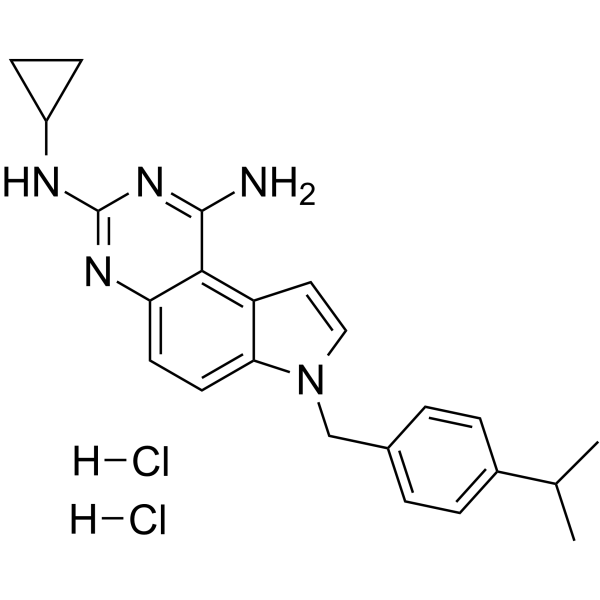
HY-14994
SCH79797 dihydrochloridePAR1 Antagonist -
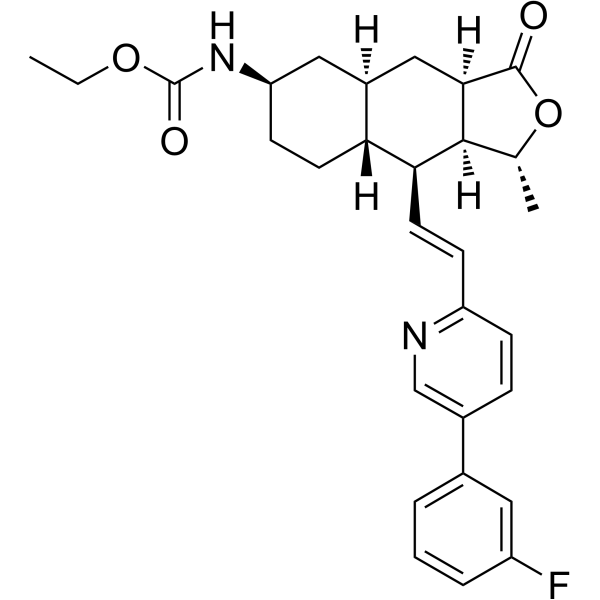
HY-10119
VorapaxarPAR-1 Antagonist -
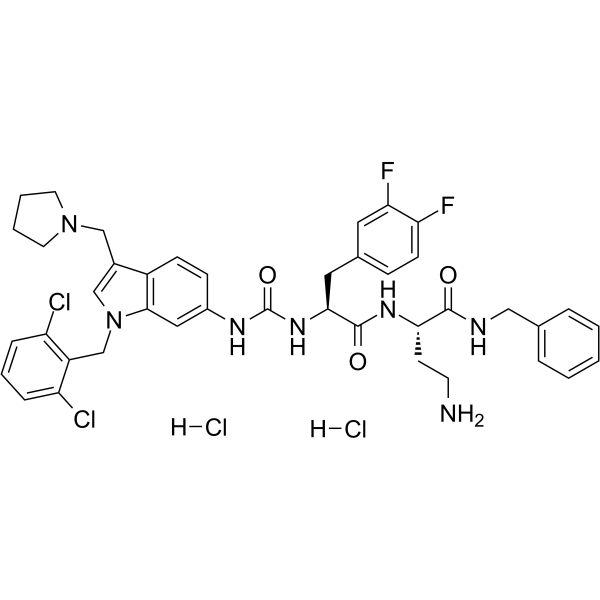
HY-108556A
RWJ-56110 dihydrochloridePAR-1 Inhibitor -
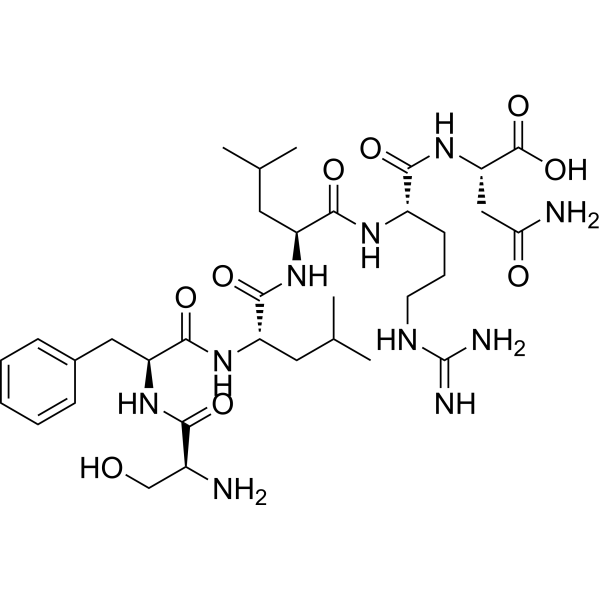
HY-P0078
TRAP-6PAR1 Agonist -
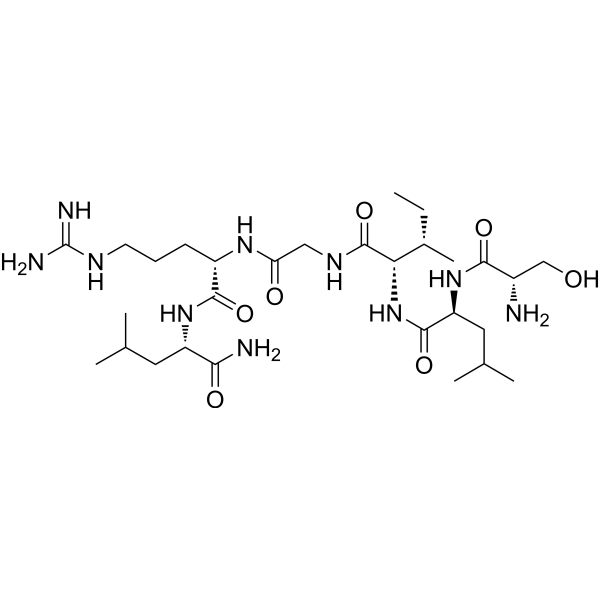
HY-P1308
SLIGRL-NH2PAR-2 Agonist -
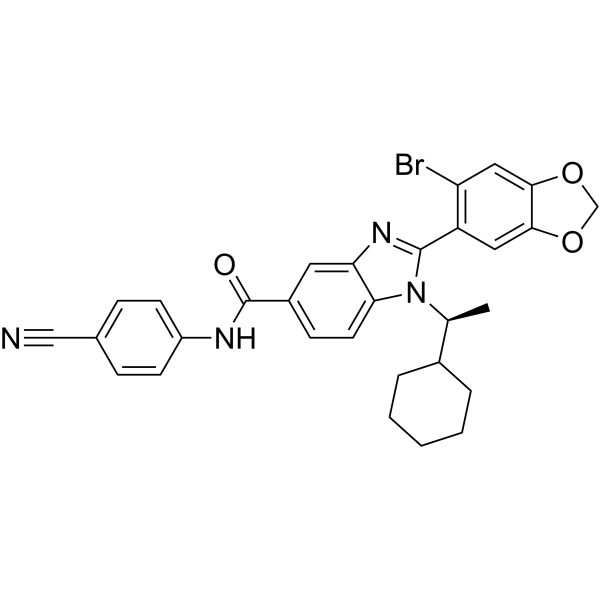
HY-112558
AZ3451PAR2 Antagonist -
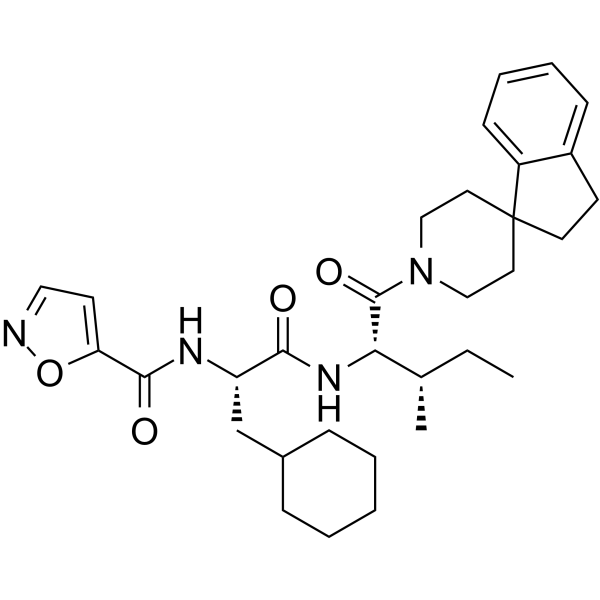
HY-124061
GB83PAR2 Antagonist -
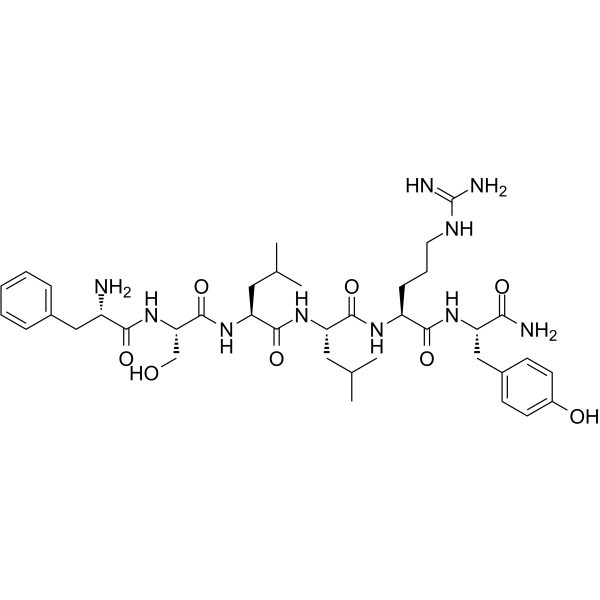
HY-P1260
FSLLRY-NH2PAR2 Inhibitor -
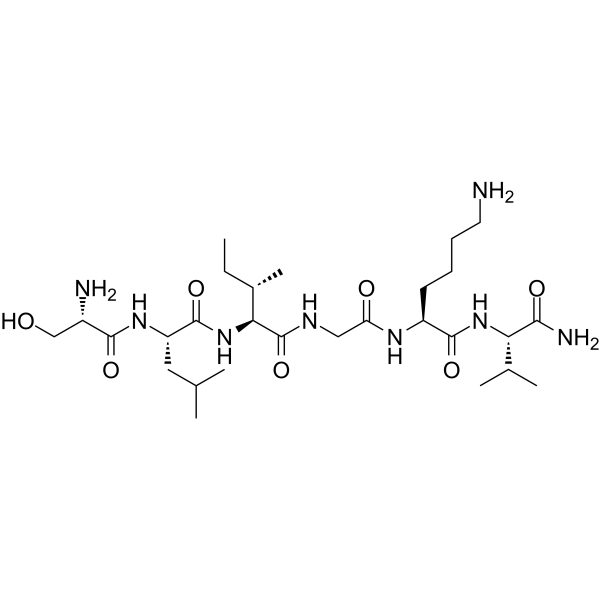
HY-P0283
Protease-Activated Receptor-2, amidePAR2 Activator -
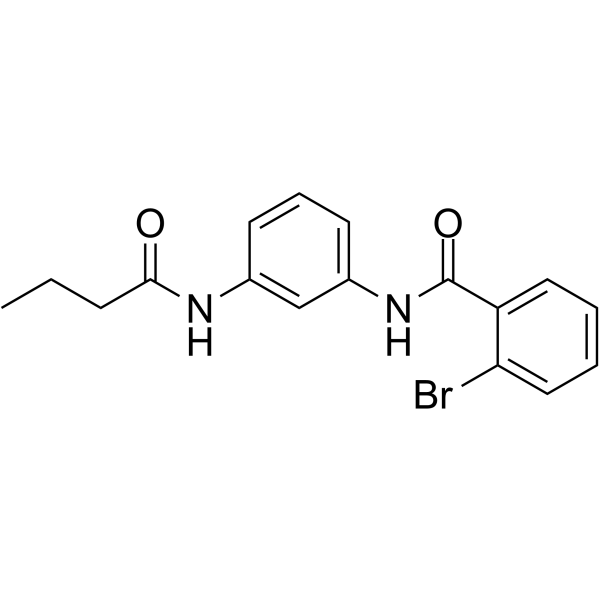
HY-13965
Parmodulin 2PAR1 Inhibitor


Biological Activity
Description
IC50 & Target
PAR-1, CXCL1[1]
Cellular Effect
|
Cell Line

|
Type | Value | Description | References |
|---|---|---|---|---|
| Platelet | IC50 |
>100 μM
Compound: EUB0000291
|
Inhibition of platelet aggregation (human plasma, ADP, Collagen)
Inhibition of platelet aggregation (human plasma, ADP, Collagen)
|
10.6019/CHEMBL4507269 |
| Platelet | IC50 |
0.14 μM
Compound: EUB0000291
|
Inhibition of platelet aggregation (human plasma, thrombin)
Inhibition of platelet aggregation (human plasma, thrombin)
|
10.6019/CHEMBL4507269 |
| Platelet | IC50 |
0.43 μM
Compound: EUB0000291
|
Inhibition of platelet aggregation (human plasma, TRAP-6) (IC50)
Inhibition of platelet aggregation (human plasma, TRAP-6) (IC50)
|
10.6019/CHEMBL4507269 |


Chemical Information
-
CAS No. 1256941-06-6
-
Molecular Weight 514.52
-
Formula C22H25F3N4O5S
-
SMILES
O=C(N1C[C@@H](C2=NC(C3CC3)=NO2)C[C@@H](C4=CC=C(OC(F)(F)F)C=C4)C1)N5CCS(CC5)(=O)=O
-
Shipping
Room temperature in continental US; may vary elsewhere.
-
Storage
Please store the product under the recommended conditions in the Certificate of Analysis.


Purity & Documentation
References

Calculators
Concentration (start) × Volume (start) = Concentration (final) × Volume (final)


BAY-386 Related Classifications
HY-120544 Related Classifications
 Powered by Bioz