



RO5454948
Based on 1 publication(s) in Google Scholar
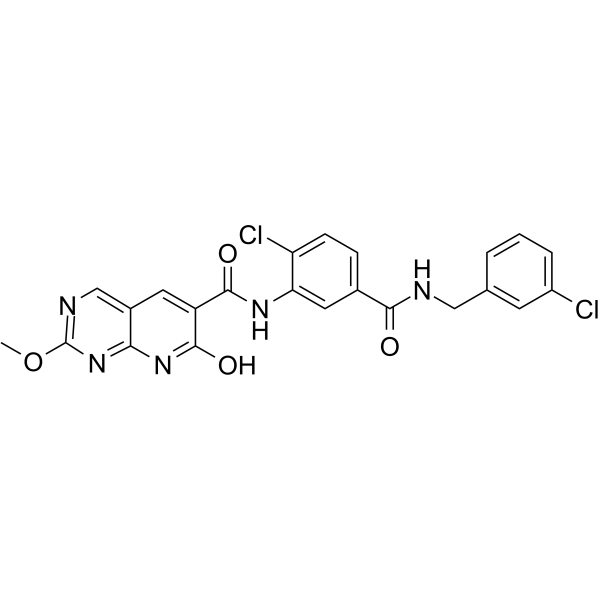
RO5454948 (Compound 9) is the inhibitor for Dyrk1B and Dyrk1A with IC50 of 68 nM and 22 nM. RO5454948 exhibits cytotoxicity in cancer cell SW620 with EC50 of 1.9 μM.
For research use only. We do not sell to patients.
- Purity : 99.53%
- CAS No.: 1386979-55-0
- Formula: C23H17Cl2N5O4
- Molecular Weight:498.32
-
Storage:Powder -20°C, 3 years , 4°C, 2 years ; In solvent -80°C, 2 years , -20°C, 1 year

To place orders, for customer services and technical support, please contact: MedChemExpress USA
Tel: 609-228-6898 E-mail: [email protected] [email protected]


-
 Biological Activity
-
Chemical Information
-
Solvent & Solubility
- Protocols
- Purity & Documentation
- References
-
 Help & FAQs


-
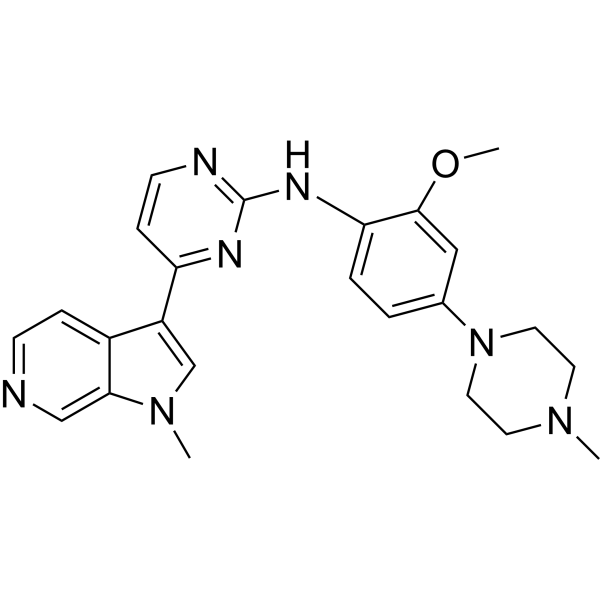
HY-12277
AZ191DYRK1B Inhibitor -
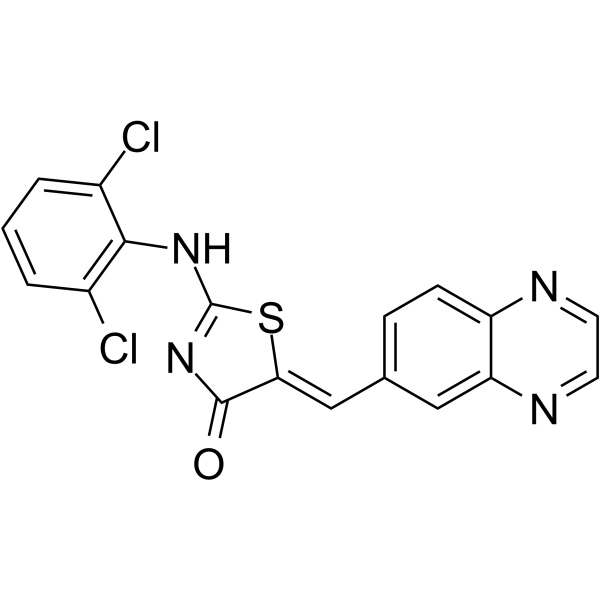
HY-105309
GSK-626616DYRK3 Inhibitor -
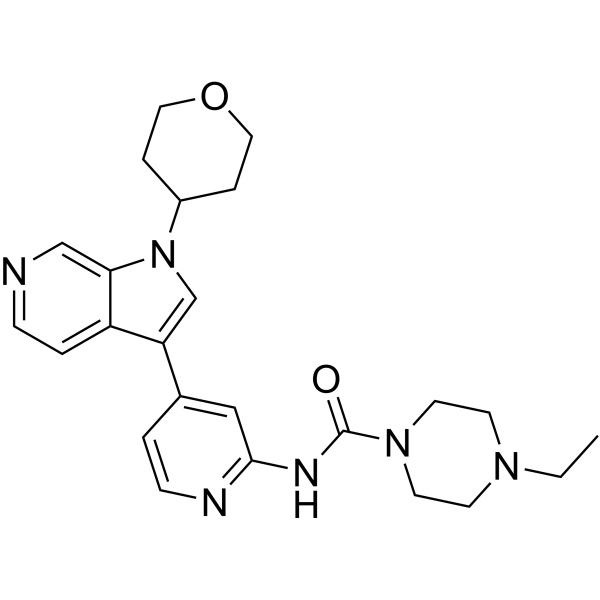
HY-142295
GNF2133DYRK1A Inhibitor -
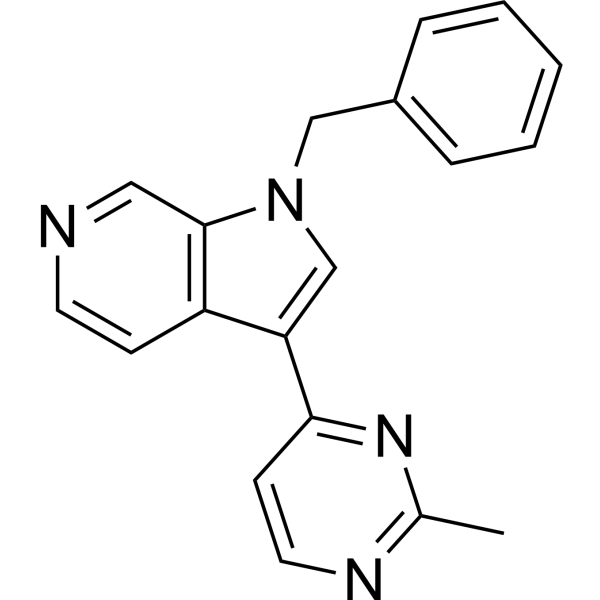
HY-117391
AZ-Dyrk1B-33Dyrk1B Kinase Inhibitor -
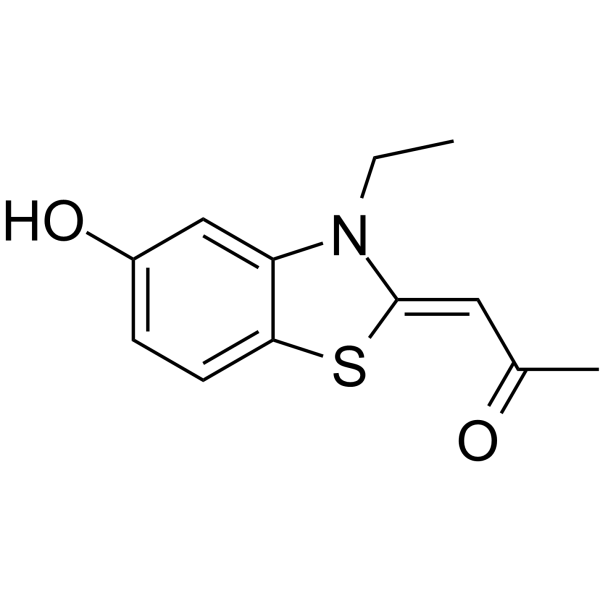
HY-108476
INDYDyrk1A And Dyrk1B Inhibitor -
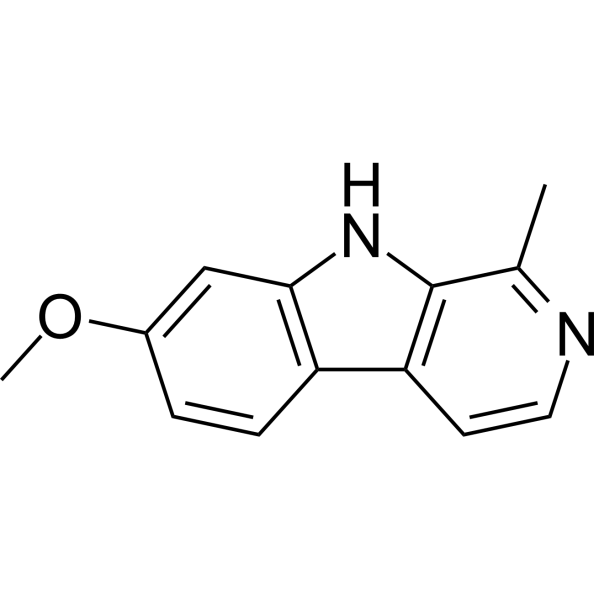
HY-N0737A
HarmineDYRK Inhibitor -
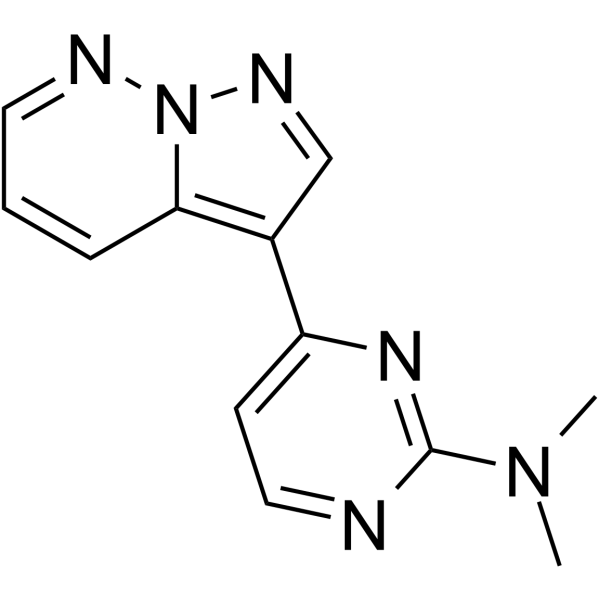
HY-132308
DYRK1-IN-1DYRK1A Inhibitor -
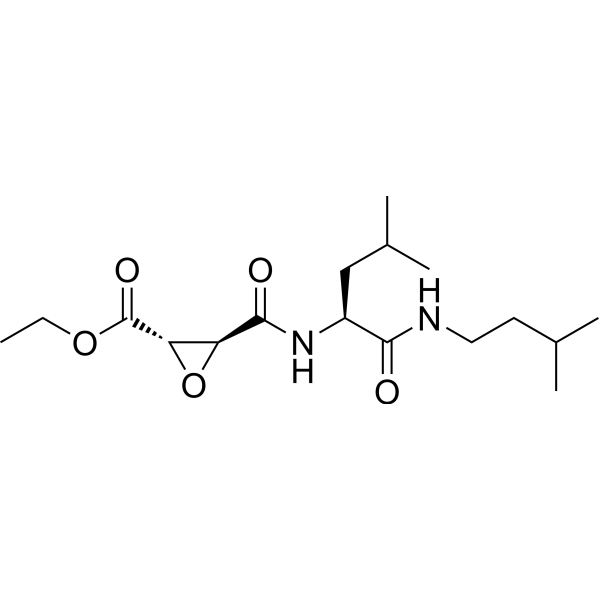
HY-100229
AloxistatinCysteine Protease Inhibitor -
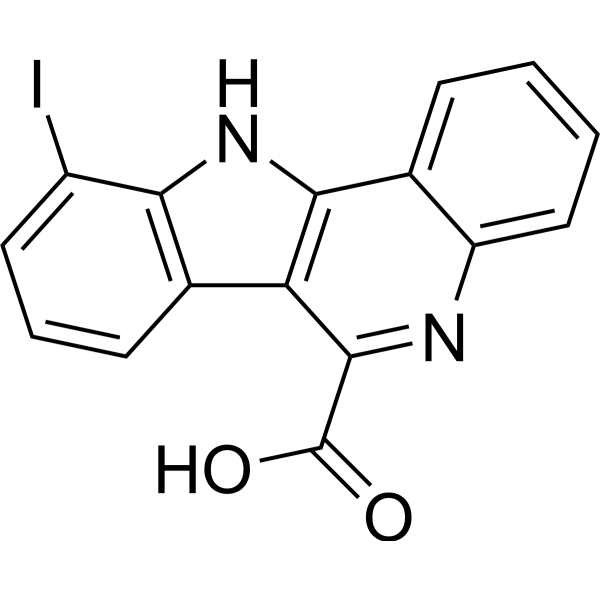
HY-146221
Dyrk1A-IN-5DYRK1A Inhibitor -
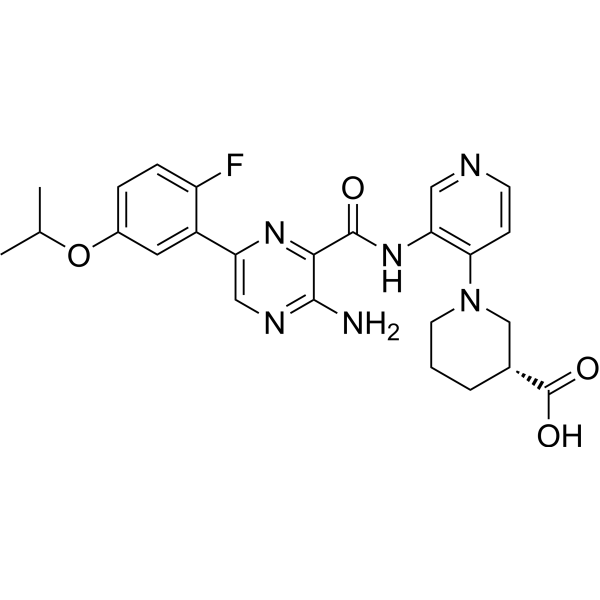
HY-129492
GNF4877DYRK1A/GSK3β Inhibitor -
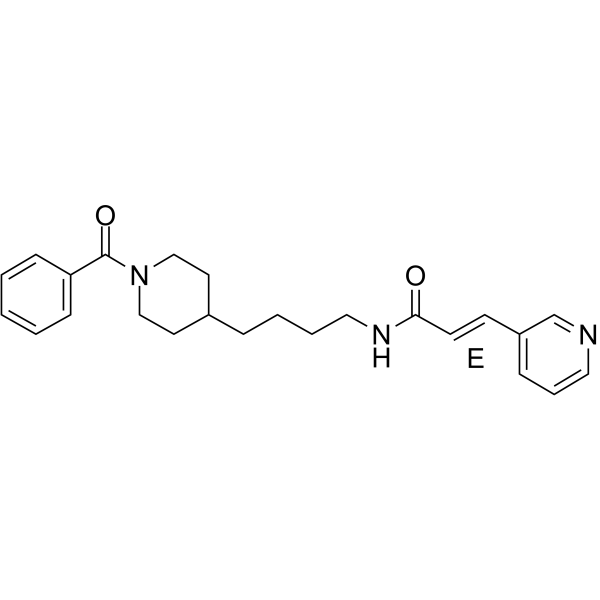
HY-50876
DaporinadNMPRT Inhibitor -
HY-100519
NVS-PAK1-1PAK1 Inhibitor
Publications Citing Use of MedChemExpress (MCE) RO5454948
More

Biological Activity
Description
IC50 & Target
[2]|
DYRK1A 22 nM (IC50) |
DYRK1B 68 nM (IC50) |
Cellular Effect
|
Cell Line

|
Type | Value | Description | References |
|---|---|---|---|---|
| SW-620 | EC50 |
1.9 μM
Compound: 9
|
Cytotoxicity against human SW620 cells
Cytotoxicity against human SW620 cells
|
[PMID: 24239188] |
In Vitro
RO5454948 (0-2.5 μM, 48 h) promotes cancer cells to enter the cell cycle from the quiescent phase, stimulates the generation of ROS, induces DNA damage and apoptosis in cancer cell Panc1[3].
MedChemExpress (MCE) has not independently confirmed the accuracy of these methods. They are for reference only.
-
Cell Line:Panc1
-
Concentration:0-2.5 μM
-
Incubation Time:48 h
-
Result:Increased expression of cleaved PARP and γH2AX.


Chemical Information
-
CAS No. 1386979-55-0
-
Appearance Solid
-
Molecular Weight 498.32
-
Formula C23H17Cl2N5O4
-
Color White to off-white
-
SMILES
ClC1=CC=C(C(NCC2=CC(Cl)=CC=C2)=O)C=C1NC(C3=CC4=CN=C(OC)N=C4N=C3O)=O
-
Synonyms
Mirk-IN-1; Dyrk1B/A-IN-1
-
Shipping
Room temperature in continental US; may vary elsewhere.
-
Storage
Powder -20°C 3 years 4°C 2 years In solvent -80°C 2 years -20°C 1 year


Publications (1)
-
Journal Impact Factor
-
Most Recent
-
Biol Res
DYRK1-mediated phosphorylation of endocytic components is required for extracellular lumen expansion in ascidian notochord. [Abstract]2023 Mar 11;56(1):10. PMID: 36899423


Solvent & Solubility
In Vitro:
DMSO : 2 mg/mL (4.01 mM; Need ultrasonic; Hygroscopic DMSO has a significant impact on the solubility of product, please use newly opened DMSO)
H2O : < 0.1 mg/mL (insoluble)
Please refer to the solubility information to select the appropriate solvent. Once prepared, please aliquot and store the solution to prevent product inactivation from repeated freeze-thaw cycles.
Storage method and period of stock solution: -80°C, 2 years; -20°C, 1 year. When stored at -80°C, please use it within 2 years. When stored at -20°C, please use it within 1 year.
Please refer to the solubility information to select the appropriate solvent. Once prepared, please aliquot and store the solution to prevent product inactivation from repeated freeze-thaw cycles.
Storage method and period of stock solution: -80°C, 2 years; -20°C, 1 year. When stored at -80°C, please use it within 2 years. When stored at -20°C, please use it within 1 year.
Concentration (start) × Volume (start) = Concentration (final) × Volume (final)


Purity & Documentation
-
Data Sheet (272 KB)
-
SDS (393 KB)
- English - EN (393 KB)
- Français - FR (393 KB)
- Deutsch - DE (393 KB)
- Norwegian - NO (393 KB)
- Español - ES (393 KB)
- Swedish - SV (393 KB)
- Italian - IT (393 KB)
- Korean - KR (393 KB)
- Portuguese - PT (393 KB)
-
Handling Instructions (2659 KB)
References
[1]. Ewton DZ, et al. Inactivation of mirk/dyrk1b kinase targets quiescent pancreatic cancer cells. Mol Cancer Ther. 2011 Nov;10(11):2104-14. [Content Brief]
[2]. Anderson K, et al. Pyrido[2,3-d]pyrimidines: discovery and preliminary SAR of a novel series of DYRK1B and DYRK1A inhibitors. Bioorg Med Chem Lett. 2013 Dec 15;23(24):6610-5. [Content Brief]
[3]. Deng X, et al., Mirk kinase inhibition blocks the in vivo growth of pancreatic cancer cells. Genes Cancer. 2014 Sep;5(9-10):337-47. [Content Brief]


Complete Stock Solution Preparation Table
Please refer to the solubility information to select the appropriate solvent. Once prepared, please aliquot and store the solution to prevent product inactivation from repeated freeze-thaw cycles.
Storage method and period of stock solution: -80°C, 2 years; -20°C, 1 year. When stored at -80°C, please use it within 2 years. When stored at -20°C, please use it within 1 year.
| Optional Solvent | Concentration Solvent Mass | 1 mg | 5 mg | 10 mg | 25 mg |
|---|---|---|---|---|---|
| DMSO | 1 mM | 2.0067 mL | 10.0337 mL | 20.0674 mL | 50.1686 mL |


RO5454948 Related Classifications
HY-12838 Related Classifications
 Powered by Bioz