



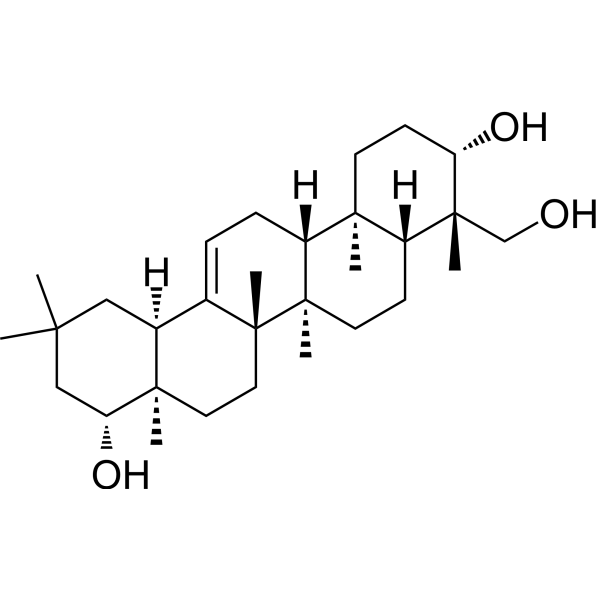
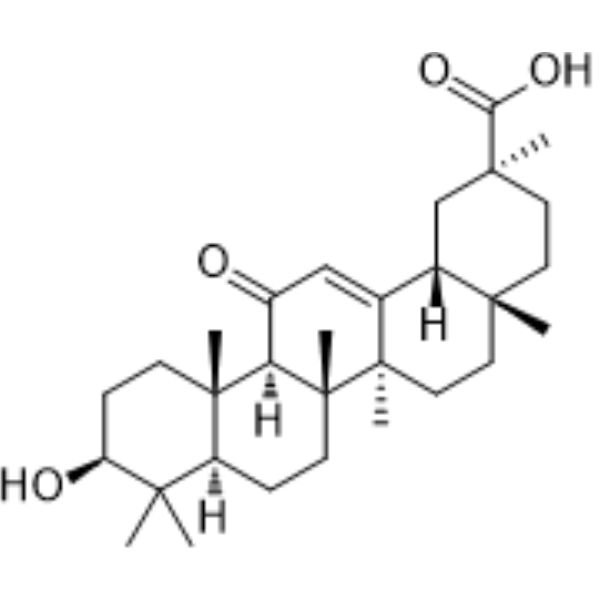
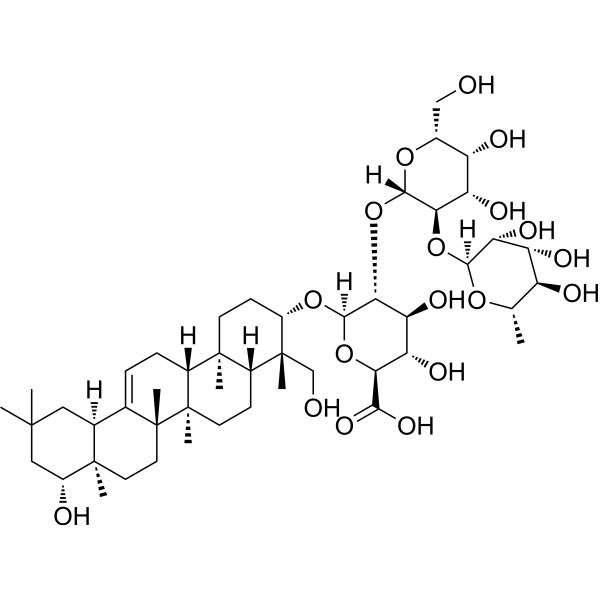
Soyasapogenol B
Based on 1 publication(s) in Google Scholar
Soyasapogenol B is a component of soy that has oral activity. Soyasapogenol B promotes autophagy and apoptosis. Soyasapogenol B has anti-inflammatory, antioxidant and antitumor activities.
For research use only. We do not sell to patients.
- Purity: 99.91%
- CAS No.: 595-15-3
- Formula: C30H50O3
- Molecular Weight:458.72
-
Storage:
4°C, protect from light
* In solvent : -80°C, 6 months; -20°C, 1 month (protect from light)

To place orders, for customer services and technical support, please contact: MedChemExpress USA
Tel: 609-228-6898 E-mail: [email protected] [email protected]


-
 Biological Activity
-
Chemical Information
-
Solvent & Solubility
- Purity & Documentation
- References
-
 Help & FAQs


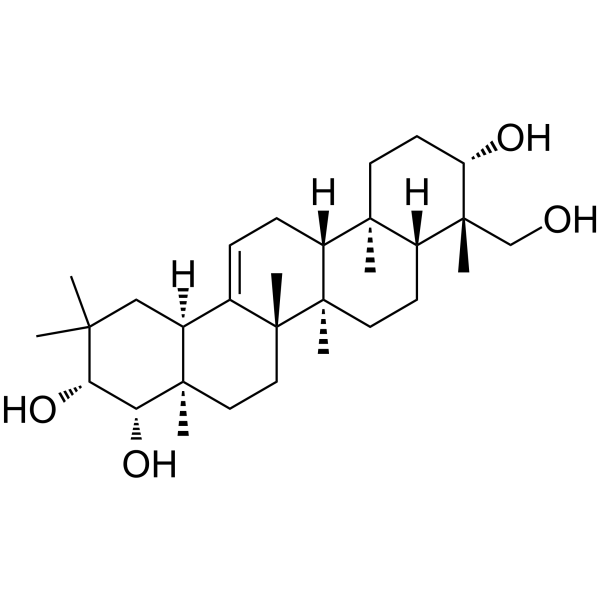
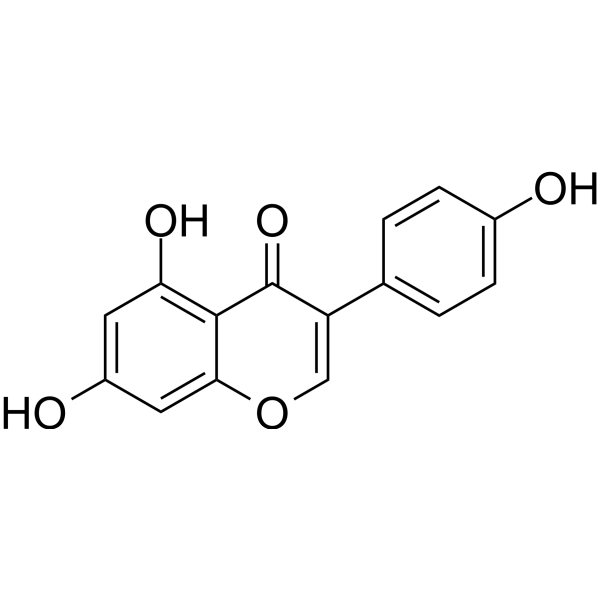
Publications Citing Use of MedChemExpress (MCE) Soyasapogenol B
More

Biological Activity
Description
Cellular Effect
|
Cell Line

|
Type | Value | Description | References |
|---|---|---|---|---|
| A549 | IC50 |
2.104 μM
Compound: 11
|
Cytotoxicity against human A549 cells assessed as reduction in cell viability after 48 hrs by MTT assay
Cytotoxicity against human A549 cells assessed as reduction in cell viability after 48 hrs by MTT assay
|
[PMID: 28482219] |
| DU-145 | IC50 |
10.93 μM
Compound: 11
|
Cytotoxicity against human DU145 cells assessed as reduction in cell viability after 48 hrs by MTT assay
Cytotoxicity against human DU145 cells assessed as reduction in cell viability after 48 hrs by MTT assay
|
[PMID: 28482219] |
| HEK293 | IC50 |
123.7 μM
Compound: 11
|
Cytotoxicity against human HEK293 cells assessed as reduction in cell viability after 48 hrs by MTT assay
Cytotoxicity against human HEK293 cells assessed as reduction in cell viability after 48 hrs by MTT assay
|
[PMID: 28482219] |
| HeLa | IC50 |
3.491 μM
Compound: 11
|
Cytotoxicity against human HeLa cells assessed as reduction in cell viability after 48 hrs by MTT assay
Cytotoxicity against human HeLa cells assessed as reduction in cell viability after 48 hrs by MTT assay
|
[PMID: 28482219] |
| MCF7 | IC50 |
2.328 μM
Compound: 11
|
Cytotoxicity against human MCF7 cells assessed as reduction in cell viability after 48 hrs by MTT assay
Cytotoxicity against human MCF7 cells assessed as reduction in cell viability after 48 hrs by MTT assay
|
[PMID: 28482219] |
| RAW264.7 | IC50 |
>100 μM
Compound: 3
|
Antiinflammatory activity against mouse RAW264.7 cells assessed as inhibition of HMGB1-induced NO production pretreated with compounds for 15 mins followed by HMGB1 stimulation measured after 24 hrs by Griess reagent based assay
Antiinflammatory activity against mouse RAW264.7 cells assessed as inhibition of HMGB1-induced NO production pretreated with compounds for 15 mins followed by HMGB1 stimulation measured after 24 hrs by Griess reagent based assay
|
[PMID: 34800877] |
In Vitro
Soyasapogenol B (5-20 μM, 48 h) can reduce tumor cell viability and promote apoptosis and autophagy of colorectal cancer cells through endoplasmic reticulum stress[1].
Sovasapogenol B (1-10 μM, 48 h) shows anti-growth and anti-metastasis activity in clear cell renal cell carcinoma (ccRCC)[2].
MedChemExpress (MCE) has not independently confirmed the accuracy of these methods. They are for reference only.
-
Cell Line:HCT116, SW480
-
Concentration:5, 10, 20 μM
-
Incubation Time:24, 48 h
-
Result:Decreased the viability of tumor cells.
-
Cell Line:HCT116, SW480
-
Concentration:10, 20 μM
-
Incubation Time:48 h
-
Result:Increased the level of caspase-3 and PARP. Decreased the expression of Bcl-2 and increased the expression of Bax. Increased the expression of LC3-II/LC3-I, Beclin 1 and Atg5, decreased the expression of p62.
-
Cell Line:HCT116, SW480
-
Concentration:10, 20 μM
-
Incubation Time:48 h
-
Result:Increased the number of TUNEL positive cells. Increased the apoptotic percentage in HCT116 cells by more than 4 folds and 9 folds respectively, elevated to over 10% and 20% in SW480 cells.
In Vivo
Soyasapogenol B (10 mg/kg, oral) alleviates memory impairment induced by lipopolysaccharide (HY-D1056) in mice by regulating the expression of BDNF mediated by NF-κB[3].
MedChemExpress (MCE) has not independently confirmed the accuracy of these methods. They are for reference only.
-
Animal Model:Xenograft murine models[1]
-
Dosage:25 or 50 mg/kg
-
Administration:i.p.
-
Result:Increased the apoptotic cell death dose-dependently. Increased the expression of cleaved caspase-3, Bax, CHOP, GRP78 and LC3BII. Decreased the expression of Bcl-2 and Ki-67.
-
Animal Model:Lipopolysaccharide-induced memory impairment in mice[3]
-
Dosage:10 mg/kg
-
Administration:p.o.
-
Result:Increased LPS-suppressed BDNF expression and inhibited NF-κB activation and TNF-α expression.


Chemical Information
-
CAS No. 595-15-3
-
Appearance Solid
-
Molecular Weight 458.72
-
Formula C30H50O3
-
Color White to off-white
-
SMILES
C[C@]12[C@]3(C([C@@]4([H])[C@](C)([C@@H](CC(C)(C)C4)O)CC3)=CC[C@]1([H])[C@@]5([C@@]([C@](C)([C@@H](O)CC5)CO)([H])CC2)C)C
-
Structure Classification
-
Initial Source
-
Shipping
Room temperature in continental US; may vary elsewhere.
-
Storage
4°C, protect from light
* In solvent : -80°C, 6 months; -20°C, 1 month (protect from light)


Publications (1)
-
Journal Impact Factor
-
Most Recent


Solvent & Solubility
In Vitro:
DMSO : 33.33 mg/mL (72.66 mM; ultrasonic and warming and heat to 60°C; Hygroscopic DMSO has a significant impact on the solubility of product, please use newly opened DMSO)
Please refer to the solubility information to select the appropriate solvent. Once prepared, please aliquot and store the solution to prevent product inactivation from repeated freeze-thaw cycles.
Storage method and period of stock solution: -80°C, 6 months; -20°C, 1 month (protect from light). When stored at -80°C, please use it within 6 months. When stored at -20°C, please use it within 1 month.
Please refer to the solubility information to select the appropriate solvent. Once prepared, please aliquot and store the solution to prevent product inactivation from repeated freeze-thaw cycles.
Storage method and period of stock solution: -80°C, 6 months; -20°C, 1 month (protect from light). When stored at -80°C, please use it within 6 months. When stored at -20°C, please use it within 1 month.
Concentration (start) × Volume (start) = Concentration (final) × Volume (final)
In Vivo:
Select the appropriate dissolution method based on your experimental animal and administration route.
- For the following dissolution methods, please ensure to first prepare a clear stock solution using an In Vitro approach and then sequentially add co-solvents:
- To ensure reliable experimental results, the clarified stock solution can be appropriately stored based on storage conditions. As for the working solution for In Vivo experiments, it is recommended to prepare freshly and use it on the same day.
- The percentages shown for the solvents indicate their volumetric ratio in the final prepared solution. If precipitation or phase separation occurs during preparation, heat and/or sonication can be used to aid dissolution.
In Vivo Dissolution Calculator
Please enter the basic information of animal experiments:
-
-
-
-
Recommended: Prepare an additional quantity of animals to account for potential losses during experiments.
Please enter your animal formula composition:
-
%DMSO +
Recommended: Keep the proportion of DMSO in working solution below 2% if your animal is weak.
-
%+
-
+%Tween-80 + +
-
%Saline +
The co-solvents required include: DMSO, . All of co-solvents are available by MedChemExpress (MCE). , Tween 80. All of co-solvents are available by MedChemExpress (MCE).
Working solution concentration: 0.22 mg/mL
Method for preparing stock solution: mg drug dissolved in μL DMSO. Stock solution concentration: mg/mL. * In solvent : -80°C, 6 months; -20°C, 1 month (protect from light)
1. Take μL DMSO stock solution;
2. Add μL .
μL , mix evenly;
3. Then add μL Tween 80, mix evenly;
4. Then add μL
Please ensure that the stock solution in the first step is dissolved to a clear state, and add co-solvents in sequence. You can use ultrasonic heating (ultrasonic cleaner, recommended frequency 20-40 kHz), vortexing, etc. to assist dissolution.


Purity & Documentation
-
Data Sheet (280 KB)
-
SDS (252 KB)
- English - EN (252 KB)
- Français - FR (252 KB)
- Deutsch - DE (252 KB)
- Norwegian - NO (252 KB)
- Español - ES (252 KB)
- Swedish - SV (252 KB)
- Italian - IT (252 KB)
- Korean - KR (252 KB)
- Portuguese - PT (252 KB)
-
Handling Instructions (2659 KB)
References
[1]. Wang L, et al. Endoplasmic reticulum stress triggered by Soyasapogenol B promotes apoptosis and autophagy in colorectal cancer. Life Sci. 2019 Feb 1;218:16-24. [Content Brief]
[2]. Wang L, et al. Soyasapogenol B exhibits anti-growth and anti-metastatic activities in clear cell renal cell carcinoma. Naunyn Schmiedebergs Arch Pharmacol. 2019 May;392(5):551-563. [Content Brief]
[3]. Lee HJ, et al. Soyasapogenol B and Genistein Attenuate Lipopolysaccharide-Induced Memory Impairment in Mice by the Modulation of NF-κB-Mediated BDNF Expression. J Agric Food Chem. 2017 Aug 16;65(32):6877-6885. [Content Brief]


Complete Stock Solution Preparation Table
Please refer to the solubility information to select the appropriate solvent. Once prepared, please aliquot and store the solution to prevent product inactivation from repeated freeze-thaw cycles.
Storage method and period of stock solution: -80°C, 6 months; -20°C, 1 month (protect from light). When stored at -80°C, please use it within 6 months. When stored at -20°C, please use it within 1 month.
| Optional Solvent | Concentration Solvent Mass | 1 mg | 5 mg | 10 mg | 25 mg |
|---|---|---|---|---|---|
| DMSO | 1 mM | 2.1800 mL | 10.8999 mL | 21.7998 mL | 54.4995 mL |
| 5 mM | 0.4360 mL | 2.1800 mL | 4.3600 mL | 10.8999 mL | |
| 10 mM | 0.2180 mL | 1.0900 mL | 2.1800 mL | 5.4499 mL | |
| 15 mM | 0.1453 mL | 0.7267 mL | 1.4533 mL | 3.6333 mL | |
| 20 mM | 0.1090 mL | 0.5450 mL | 1.0900 mL | 2.7250 mL | |
| 25 mM | 0.0872 mL | 0.4360 mL | 0.8720 mL | 2.1800 mL | |
| 30 mM | 0.0727 mL | 0.3633 mL | 0.7267 mL | 1.8166 mL | |
| 40 mM | 0.0545 mL | 0.2725 mL | 0.5450 mL | 1.3625 mL | |
| 50 mM | 0.0436 mL | 0.2180 mL | 0.4360 mL | 1.0900 mL | |
| 60 mM | 0.0363 mL | 0.1817 mL | 0.3633 mL | 0.9083 mL |


Soyasapogenol B Related Classifications
HY-N6074 Related Classifications
 Powered by Bioz