



Dihydropleuromutilin
Dihydropleuromutilin is a reduced product of Pleuromutilin, which is active against gram-positive bacteria and shows lower toxicity.
For research use only. We do not sell to patients.
- CAS No.: 42302-24-9
- Formula: C22H36O5
- Molecular Weight:380.52
-
Storage:
Please store the product under the recommended conditions in the Certificate of Analysis.


To place orders, for customer services and technical support, please contact: MedChemExpress USA
Tel: 609-228-6898 E-mail: [email protected] [email protected]


-
 Biological Activity
-
Chemical Information
- Protocols
- Purity & Documentation
- References
-
 Help & FAQs


-
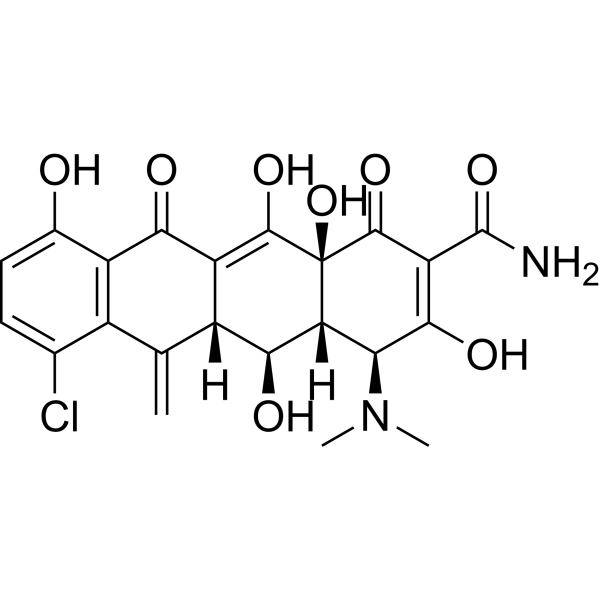
HY-B1366A
MeclocyclineTetracycline Derivative -
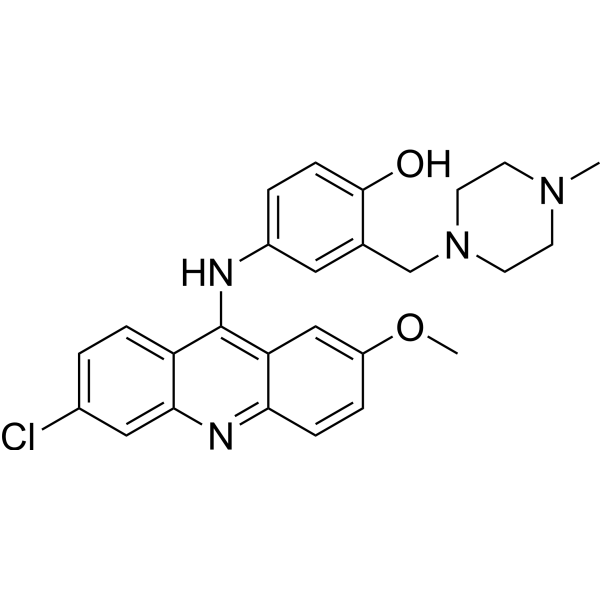
HY-125974
HM03HSPA5 Inhibitor -

HY-13952
TP-808Drug Intermediate -
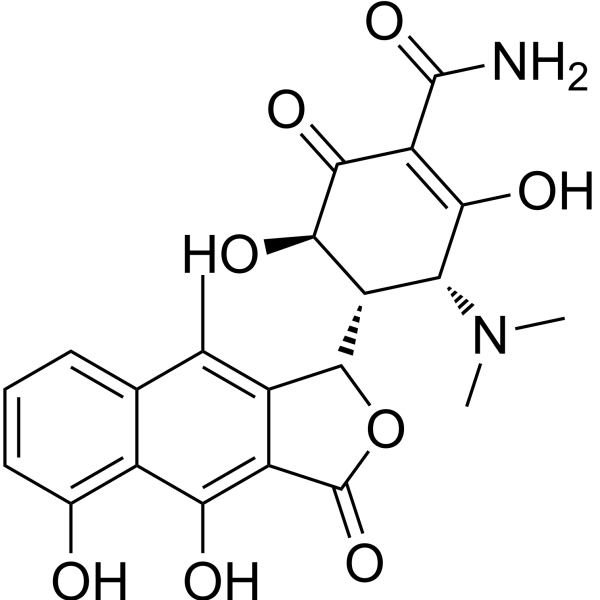
HY-135577
β-ApooxytetracyclineOxytetracycline Degradation Product -

HY-W145053
ChloraMine-T hydrate -

HY-121294
Indanomycin -

HY-135577R
β-Apooxytetracycline (Standard)Oxytetracycline Degradation Product -

HY-N12164
Linearmycin BAntimicrobial Agent -
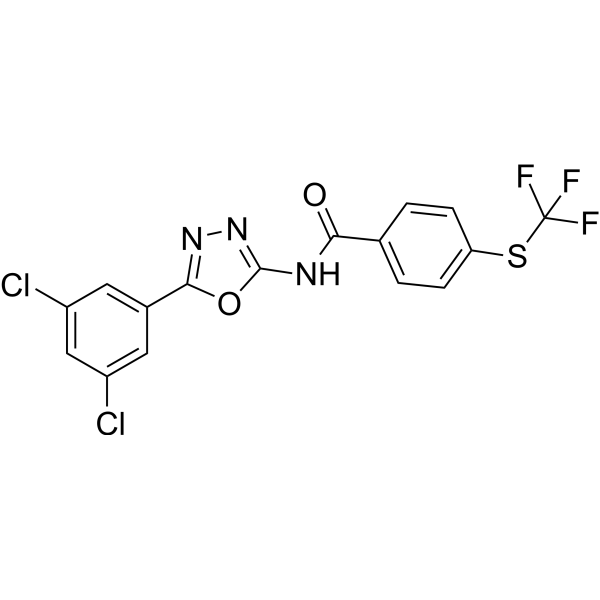
HY-163042
HSGN-218Antibacterial Agent -
HY-118351
N-Tridecanoyl-L-homserine lactoneBiochemical Assay Reagent


Biological Activity
Description


Chemical Information
-
CAS No. 42302-24-9
-
Molecular Weight 380.52
-
Formula C22H36O5
-
SMILES
O=C(O[C@H]1[C@@]([C@H](C)CC2)(C)[C@@](C(CC3)=O)([H])[C@]32[C@@H](C)[C@H](O)[C@](C)(CC)C1)CO
-
Shipping
Room temperature in continental US; may vary elsewhere.
-
Storage
Please store the product under the recommended conditions in the Certificate of Analysis.

Protocols
-
Gram Staining of Tissue Sections
Gram staining of tissue sections is a histochemical technique used to differentiate Gram-positive and Gram-negative bacteria within histological specimens based on differences in bacterial cell wall structure and dye retention, adapted from classical bacteriological Gram staining into tissue-compatible “histological Gram stain” variants. In tissue applications, modifications of the Brown-Hopps and Brown-Brenn methods are commonly used to improve differentiation of microorganisms embedded within host connective tissue and to reduce overstaining or loss of Gram-negative signal, which are known limitations of earlier approaches. The principle relies on crystal violet-iodine complex retention in Gram-positive organisms and subsequent decolorization and counterstaining steps that allow contrast visualization of Gram-negative organisms against tissue background.


Purity & Documentation
References

Calculators
Concentration (start) × Volume (start) = Concentration (final) × Volume (final)


Dihydropleuromutilin Related Classifications
HY-129952 Related Classifications
 Powered by Bioz