1623 Results for "

prostatic

" in MedChemExpress (MCE) Product Catalog:
Products (1623)

1623 Results for "prostatic" in MCE Product Catalog:

Cat. No.: HY-186219
Research Areas:  

Cancer

PIN1 ligand-3 (Compound I-1) is a PIN1 ligand. PIN1 ligand-3 serves as a Ligand for Target Protein for PROTAC for the synthesis of PIN1 PROTAC degraders, such as PROTAC PIN1 degrader-2 (HY-186218). PIN1 ligand-3 is applicable in cancer research .
loading...
    loading...
Cat. No.: HY-N0212R
CAS No.: 23496-41-5
Synonyms: Verticine (Standard); Dihydroisoimperialine (Standard)
Peimine (Standard) is the analytical standard of Peimine. This product is intended for research and analytical applications. Peimine (Verticine; Dihydroisoimperialine) is an orally active natural product. Peimine has anti-inflammatory, analgesic and cough relieving effects. Peimine can be used in cancer and inflammation related research .
loading...
    loading...
Cat. No.: HY-N1022
CAS No.: 72458-85-6
Target:  

NF-κB

Research Areas:  

Inflammation/Immunology Cancer

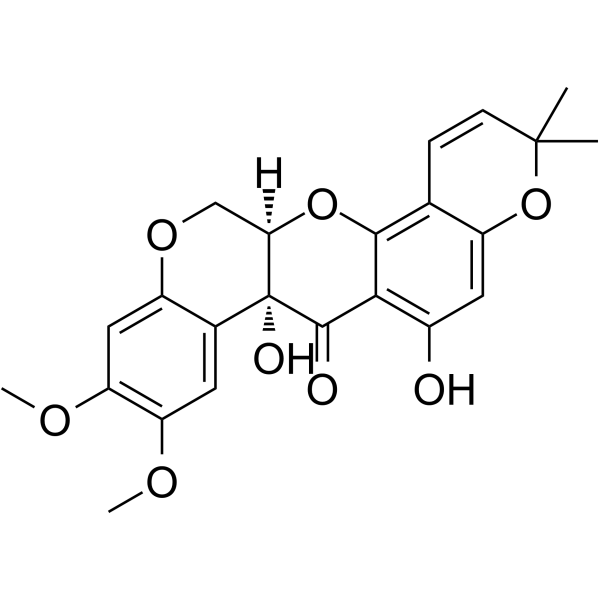
11-Hydroxytephrosin is a potent NF-κB inhibitor with an IC50 of 0.19 μM or 4.21 μM. 11-Hydroxytephrosin is isolated from A. fruticosa. 11-Hydroxytephrosin inhibits the activation of NF-κB. 11-Hydroxytephrosin can be used in research related to cervical cancer and inflammatory diseases .
loading...
    loading...
Cat. No.: HY-N18991
CAS No.: 15806-48-1
D-Mannitol 1-phosphate is a non-nucleotide phosphate ester. D-Mannitol 1-phosphate is isolable from Lactobacillus arabinosus. D-Mannitol 1-phosphate is associated with active polyol metabolism in Lactobacillus arabinosus .
loading...
    loading...
Cat. No.: HY-N6656R
CAS No.: 6093-68-1
6-Hydroxycoumarin (Standard) is the analytical standard of 6-Hydroxycoumarin (HY-N6656). This product is intended for research and analytical applications. 6-Hydroxycoumarin is a plant-derived secondary metabolite of the coumarin class, possessing insecticidal, antitumor, and other biological activities . 6-Hydroxycoumarin targets the midgut tissue of the red imported fire ant (Solenopsis invicta), inhibits CYP450, induces elevated activities of GST, CarE, and SOD, disrupts mitochondrial ultrastructure, triggers apoptosis, and also impairs insect neuromuscular behavior. 6-Hydroxycoumarin exhibits photoallergic properties and serves as an intermediate for the synthesis of isoxazolyl and triazolyl derivatives. 6-Hydroxycoumarin is applicable to research related to red imported fire ant control .
loading...
    loading...
Cat. No.: HY-P12121
CAS No.: 932013-61-1
Target:  

Bacterial

Research Areas:  

Infection Cancer

HB43 is a synthetic amphipathic cationic α-helical peptide, as well as an antibacterial/anticancer peptide. HB43 reduces the number of Methicillin (HY-121544)-resistant Staphylococcus aureus in biofilms in a dose-dependent manner. When loaded into chitosan nanoparticles, it achieves sustained release, and this effect is particularly pronounced under acidic conditions .
loading...
    loading...
Cat. No.: HY-P2997B
CAS No.: 9046-27-9
γ-glutamyltransferase, Human participates in glutathione metabolism. Serum γ-glutamyltransferase activity is identified as a predictor of atherosclerotic complications, and has prognostic value for cardiovascular diseases and stroke. γ-glutamyltransferase also serves as a biomarker for carcinogenesis and tumor progression .
loading...
    loading...
Cat. No.: HY-P992373

Target:  

Mucin

Research Areas:  

Cancer

huCC49 is a human monoclonal antibody targeting TAG-72. huCC49 can be used in cancer-related research. The recommended isotype control is human IgG1 kappa, with the isotype control (HY-P99001) .
loading...
    loading...
Cat. No.: HY-W014141
CAS No.: 15042-01-0
Synonyms: L-Ascorbic acid 5,6-acetonide
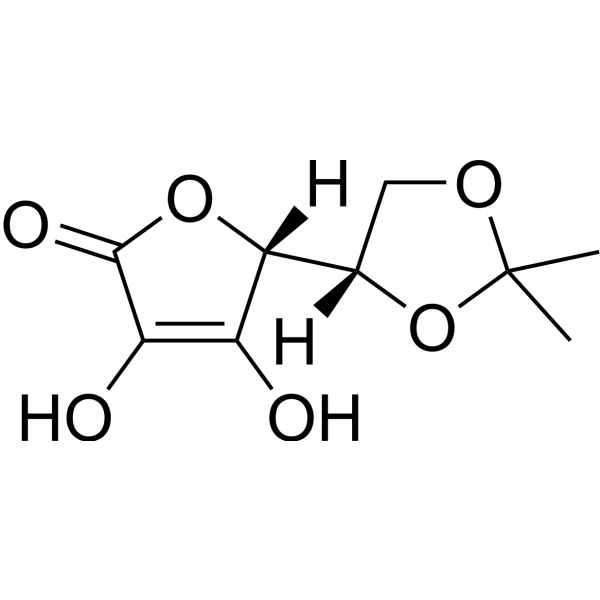
5,6-O-Isopropylidene-L-ascorbic acid (L-Ascorbic acid 5,6-acetonide) is an organic compound and a derivative of L-ascorbic acid (vitamin C). 5,6-O-Isopropylidene-L-ascorbic acid inhibits biofilm formation by pathogenic bacteria. 5,6-O-Isopropylidene-L-ascorbic acid is applicable to studies related to bacterial infections .
loading...
    loading...
Cat. No.: HY-124108
CAS No.: 1191-85-1
Purity:  ≥99.0%
Synonyms: ETYA
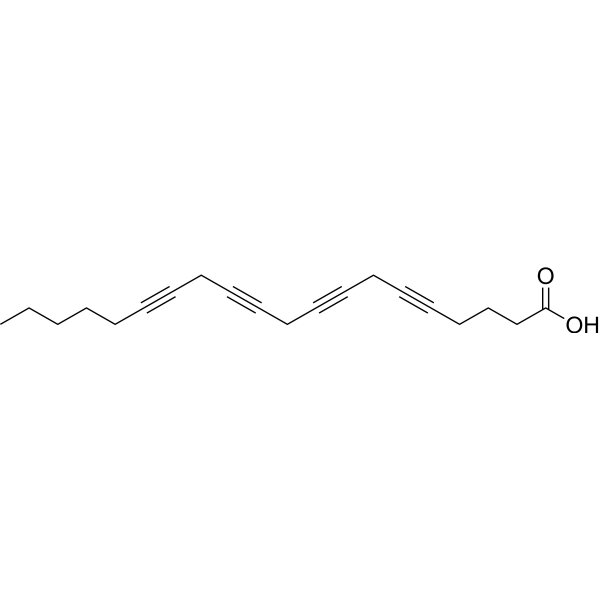
Eicosatetraynoic acid (ETYA) is a non-metabolizable analog of Arachidonic acid (HY-109590) and also an inhibitor of the lipoxygenase (LOX)/cyclooxygenase (COX) pathway (ID50 = 8 μM and 4 μM). Eicosatetraynoic acid acts as a suicide substrate to inhibit the production of inflammatory mediators such as leukotrienes and prostaglandins. Eicosatetraynoic acid acts directly on cell membranes and membrane proteins to exert a wide range of effects, including blocking potassium channels, increasing cell membrane fluidity, elevating intracellular calcium levels, inhibiting DNA synthesis in tumor cells, inducing differentiation of certain cells, and specifically inhibiting the assembly and replication of orthopoxviruses. Eicosatetraynoic acid alleviates acute lung injury induced by chemicals such as phosgene .
loading...
    loading...
Cat. No.: HY-148693
CAS No.: 1689690-20-7
Synonyms: NSC642624
Target:  

STAT Akt JNK ERK

Research Areas:  

Inflammation/Immunology Cancer

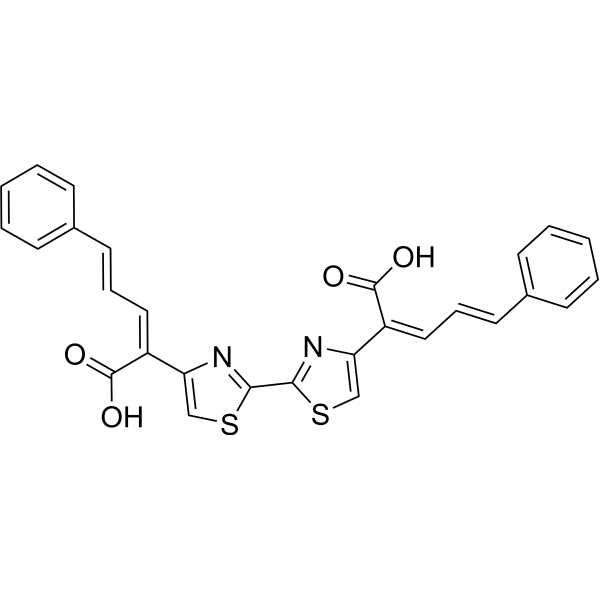
OSM-SMI-8 is an oncostatin M (OSM) inhibitor with a pKi of 44.82 nM against human targets. OSM-SMI-8 inhibits the activation of STAT3, JNK, ERK 42/44 and AKT signaling pathways induced by OSM. OSM-SMI-8 is applicable to research related to cancer metastasis and Crohn's disease .
loading...
    loading...
Cat. No.: HY-148693A
Synonyms: (E/Z)-NSC642624
Target:  

STAT Akt JNK ERK

Research Areas:  

Inflammation/Immunology Cancer

(E/Z)-OSM-SMI-8 ((E/Z)-NSC642624) is the racemate of OSM-SMI-8 (HY-148693). OSM-SMI-8 is an oncostatin M (OSM) inhibitor with a pKi of 44.82 nM against human targets. OSM-SMI-8 inhibits the activation of STAT3, JNK, ERK 42/44 and AKT signaling pathways induced by OSM. OSM-SMI-8 is applicable to research related to cancer metastasis and Crohn's disease .
loading...
    loading...
Cat. No.: HY-181695
CAS No.: 3031606-85-3
Research Areas:  

Cancer

PROTAC KAT2A/B degrader-1 is an orally active CRBN-baed histone acetyltransferase KAT2A/KAT2B PROTAC degrader. PROTAC KAT2A/B degrader-1 induces degradation of KAT2A and KAT2B proteins. PROTAC KAT2A/B degrader-1 inhibits proliferation of acute myeloid leukemia and small cell lung cancer cells. PROTAC KAT2A/B degrader-1 can be used for the research of acute myeloid leukemia, small cell lung cance .
loading...
    loading...
Cat. No.: HY-184193
Target:  

PROTACs Aurora Kinase

Research Areas:  

Cancer

M9101 is a selective Aurora A PROTAC degrader with a DC50 of 2.3 nM. M9101 induces G2/M arrest in triple-negative breast cancer cells and potently inhibits the proliferation of multiple tumor cell lines. M9101 can be used in the research of various cancers including triple-negative breast cancer .
loading...
    loading...
Cat. No.: HY-101488R
CAS No.: 1010100-07-8
CC-885 (Standard) is the analytical standard of CC-885 (HY-101488). This product is intended for research and analytical applications. CC-885, a cereblon (CRBN) modulator, acts as a molecular glue degrader targeting GSPT1 with a Kd of 350 nM. CC-885 binds to CRBN to alter the substrate specificity of the CRL4 E3 ligase, promoting the ubiquitination and proteasomal degradation of GSPT1, BNIP3L, PLK1, CDK4, IKZF1/3, GSPT2, WIZ, CHD7, GOLM1, CK1α and ETS1. CC-885 induces apoptosis, cell cycle arrest, transcriptional downregulation and antiproliferation in cancer cells. CC-885 is applicable to research related to relapsed/refractory acute myeloid leukemia, MYC-driven tumors, metastatic castration-resistant prostate cancer, multiple myeloma, hepatocellular carcinoma, glioblastoma, VHL-deficient clear cell renal cell carcinoma and non-small cell lung cancer .
loading...
    loading...
Cat. No.: HY-125535
CAS No.: 1290069-19-0
OSU-53 is an orally active AMPK activator and mTOR inhibitor, with an IC50 of 0.3 μM for AMPK, an EC50 of 2-5 μM for AMPK, and an IC50 of 8.23 μM for mTOR. OSU-53 inhibits the Akt signaling pathway, directly activates AMPK by binding to its autoinhibitory domain, reduces IKKβ-mediated phosphorylation of Foxo3a, blocks Akt-mediated phosphorylation of MDM2, and promotes the nuclear localization and stabilization of Foxo3a, while directly inhibiting mTOR. OSU-53 inhibits epithelial-mesenchymal transition (EMT), induces epithelial phenotype, suppresses invasion and metastasis, induces autophagy, inhibits the activation of ERK and Akt, reduces the secretion of nitric oxide and proinflammatory cytokines, and inhibits the migration of MDSC; at high doses, it induces MDSC apoptosis, attenuates the immunosuppressive effect of MDSC, reduces MDSC levels, and blocks incision-induced mechanical hyperalgesia. OSU-53 can be used in studies related to breast cancer, prostate cancer, thyroid cancer, melanoma and postoperative pain .
loading...
    loading...
Cat. No.: HY-N0565BR
CAS No.: 24390-14-5
Synonyms: Doxycycline hydrochloride hemiethanolate hemihydrate (Standard); WC2031 (Standard)
Doxycycline hyclate (Standard) is the analytical standard of Doxycycline hyclate (HY-N0565B). This product is intended for research and analytical applications. Doxycycline hyclate is an orally active highly lipophilic, tissue-permeable MMP inhibitor with broad-spectrum antibacterial activity. Doxycycline hyclate is also a semi-synthetic antibiotic with chelating properties, which blocks bacterial protein synthesis and inhibits extracellular matrix degradation through interactions with zinc and calcium atoms. Doxycycline hyclate also inhibits mitochondrial biogenesis, translation, and the expression of respiratory chain proteins. Doxycycline hyclate induces apoptosis, inhibits autophagy and EMT, downregulates stem cell markers, and activates the PI3K-AKT pathway, thereby effectively inhibiting the viability and proliferation of cancer cells such as breast cancer cells. Doxycycline hyclate also promotes the survival and self-renewal of embryonic stem cells and neural stem cells, and reduces the frequency of medium changes in culture. Doxycycline hyclate has been applied in studies related to breast cancer, prostate cancer, bladder cancer, and other cancers .
loading...
    loading...
Cat. No.: HY-N0565S1
Doxycycline-d3 hyclate (major) is the deuterium labeled Doxycycline hyclate (HY-N0565B). Doxycycline hyclate is an orally active highly lipophilic, tissue-permeable MMP inhibitor with broad-spectrum antibacterial activity. Doxycycline hyclate is also a semi-synthetic antibiotic with chelating properties, which blocks bacterial protein synthesis and inhibits extracellular matrix degradation through interactions with zinc and calcium atoms. Doxycycline hyclate also inhibits mitochondrial biogenesis, translation, and the expression of respiratory chain proteins. Doxycycline hyclate induces apoptosis, inhibits autophagy and EMT, downregulates stem cell markers, and activates the PI3K-AKT pathway, thereby effectively inhibiting the viability and proliferation of cancer cells such as breast cancer cells. Doxycycline hyclate also promotes the survival and self-renewal of embryonic stem cells and neural stem cells, and reduces the frequency of medium changes in culture. Doxycycline hyclate has been applied in studies related to breast cancer, prostate cancer, bladder cancer, and other cancers .
loading...
    loading...
Cat. No.: HY-115425
CAS No.: 23734-88-5
Synonyms: DL-Aminoglutethimide phosphate
Target:  

Cytochrome P450

Aminoglutethimide phosphate (DL-Aminoglutethimide phosphate) is an orally active anticonvulsant with various endocrine-related side effects. Aminoglutethimide phosphate blocks multiple steroid hormone synthesis pathways by inhibiting several cytochrome P-450-dependent hydroxylases, such as aromatase, cholesterol side-chain cleavage enzyme, 11-hydroxylase, and 18-hydroxylase, with IC50 values of 0.3, 3.5, 120, and 20 μM, respectively. Aminoglutethimide phosphate reduces cortisol levels. Aminoglutethimide phosphate can be used in research on Cushing's syndrome, breast cancer, and other conditions .
loading...
    loading...
Cat. No.: HY-183310
Research Areas:  

Cancer

EGFR-IN-210 is a EGFR kinase inhibitor with an IC50 of 0.198 μM. EGFR-IN-210 induces antiproliferative, pro-apoptotic, G0/G1 cell cycle arrest, DNA synthesis inhibition and anti-migratory effects in cancer cells. EGFR-IN-210 can be used for the research of various cancers including colorectal cancer .
loading...
    loading...

