



Sufugolix

Based on 1 Customer Validation
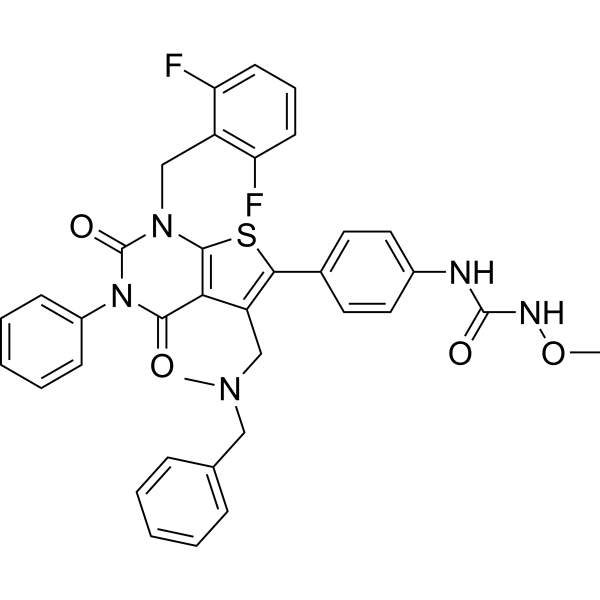
Sufugolix (TAK-013) is a highly potent and orally available luteinizing hormone-releasing hormone (LHRH) receptor antagonist with an IC50 of 0.1 nM.
Para uso exclusivo en investigación. No vendemos a pacientes.
- Pureza : 98.0%
- No. CAS: 308831-61-0
- Fòrmula: C36H31F2N5O4S
- Peso molecular:667.72
-
Almacenamiento:Powder -20°C, 3 years , 4°C, 2 years
* The compound is unstable in solutions, freshly prepared is recommended.

To place orders, for customer services and technical support, please contact: MedChemExpress USA
Tel: 609-228-6898 E-mail: [email protected] [email protected]


-
 Actividad biológica
-
Chemical Information
-
Solvente y solubilidad
- Protocolo
- Pureza y Documentación
- Referencias
-
 Help & FAQs


-
HY-100579
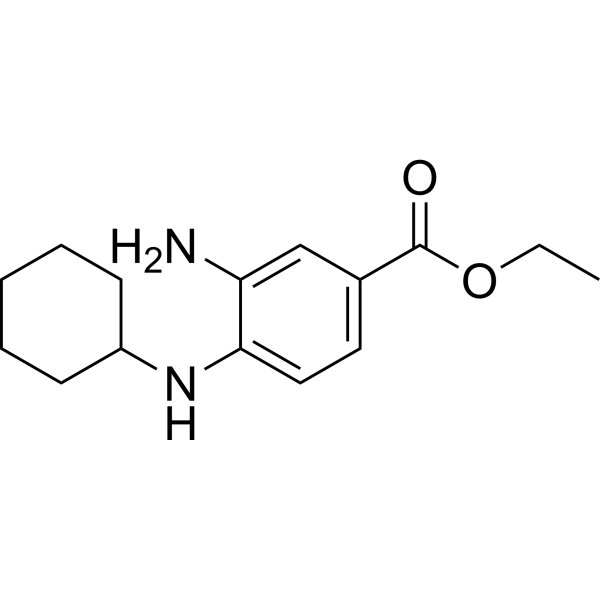
Ferrostatin-1Ferroptosis Inhibitor -
HY-16474
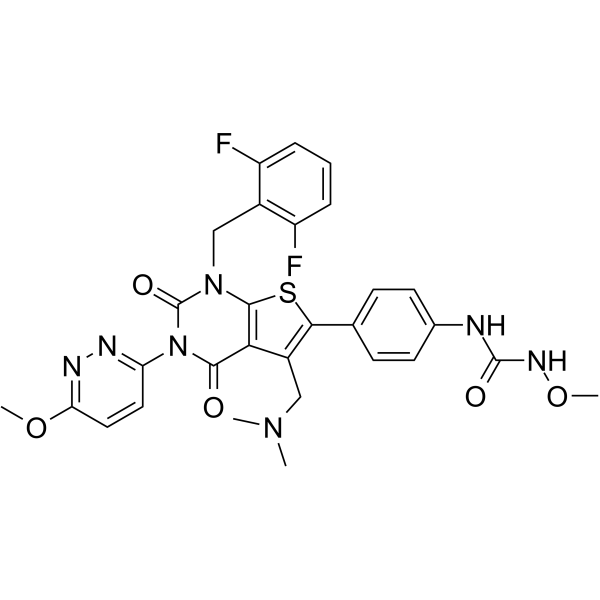
RelugolixGnRH Antagonist -
HY-P0009A
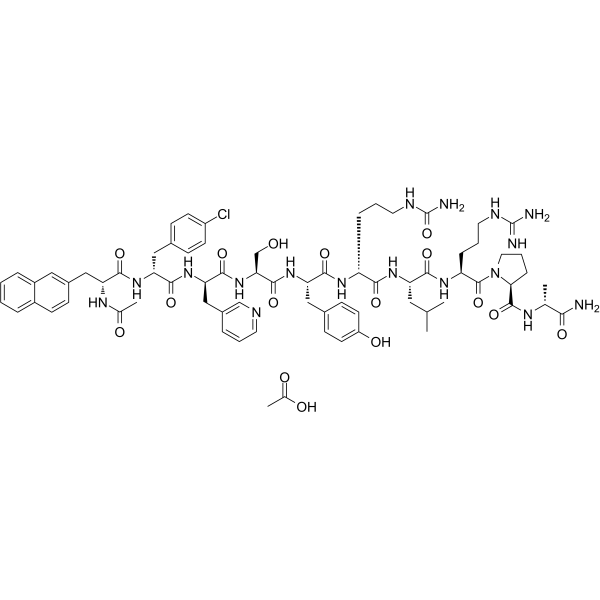
Cetrorelix acetateGnRH Receptor Antagonist -
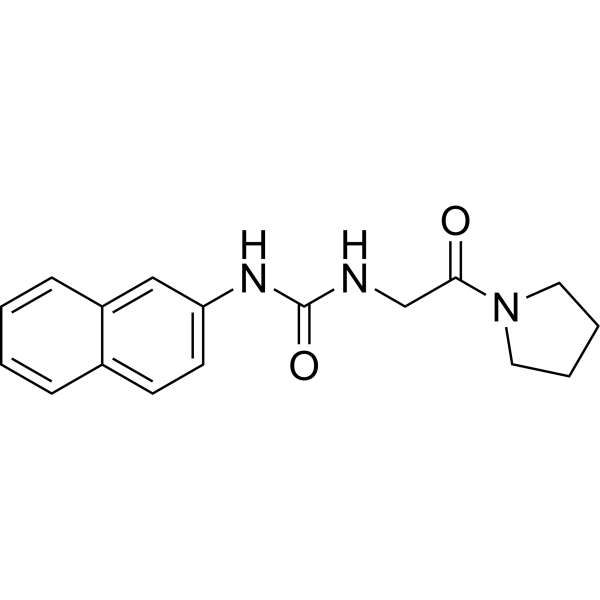
HY-19714
XY1SGC707 Analog -
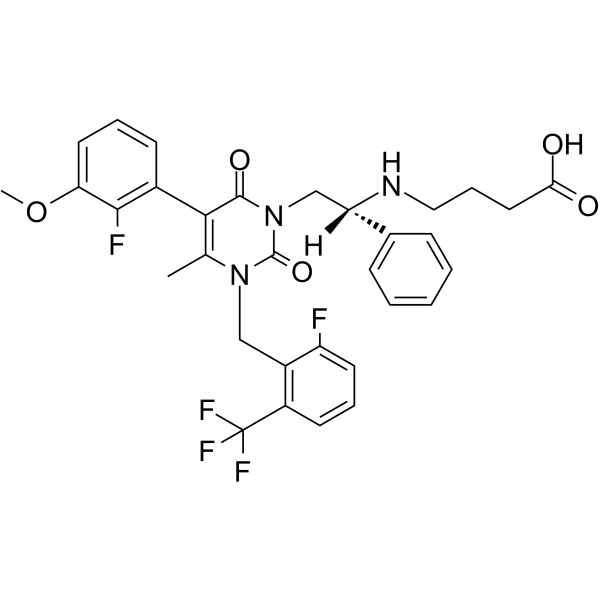
HY-14789
(R)-ElagolixGnRH Receptor Antagonist -
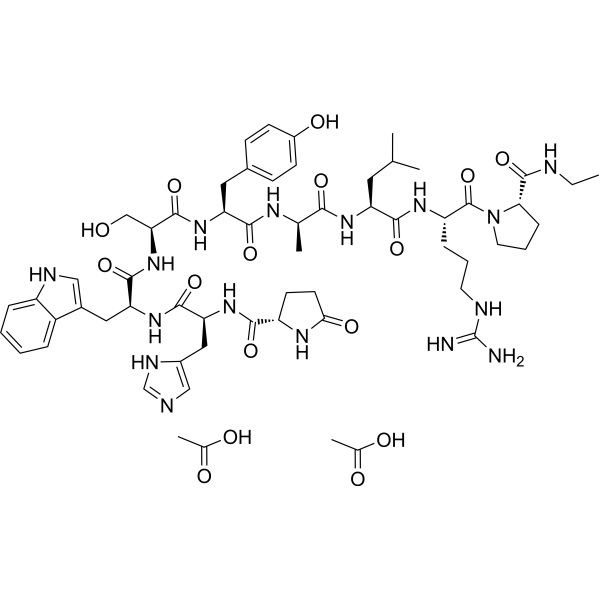
HY-17405
Alarelin AcetateGnRH Receptor Agonist -

HY-16474R
Relugolix (Standard)GnRH Antagonist -
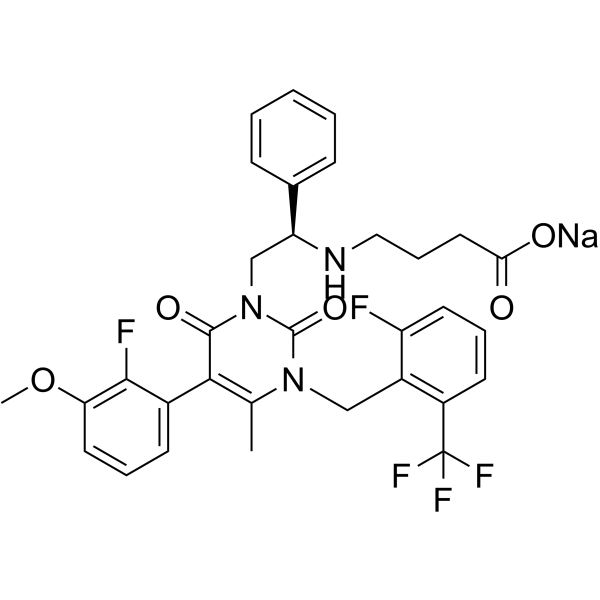
HY-14369
Elagolix sodiumGnRH Receptor Antagonist -
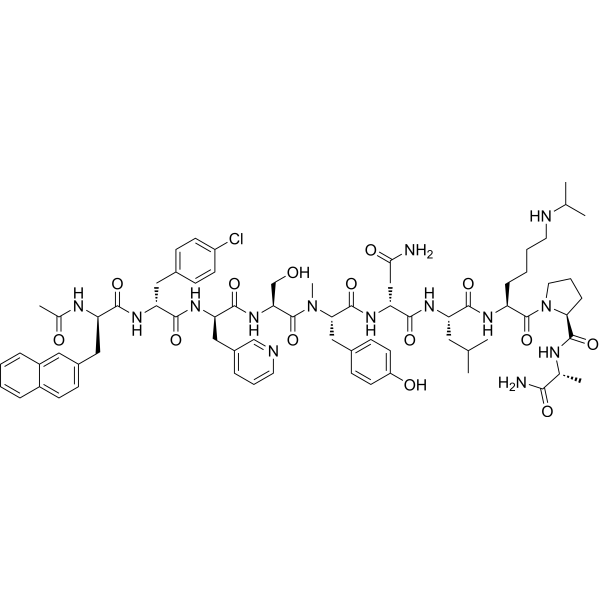
HY-13534
AbarelixGnRH Antagonist -

HY-16168
Degarelix acetateGnRH Anagonist -
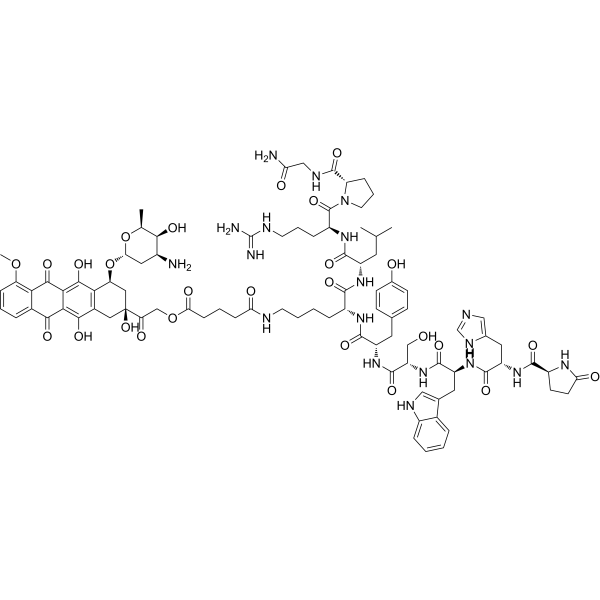
HY-16532
Zoptarelin doxorubicinHybrid Anticancer Agent -
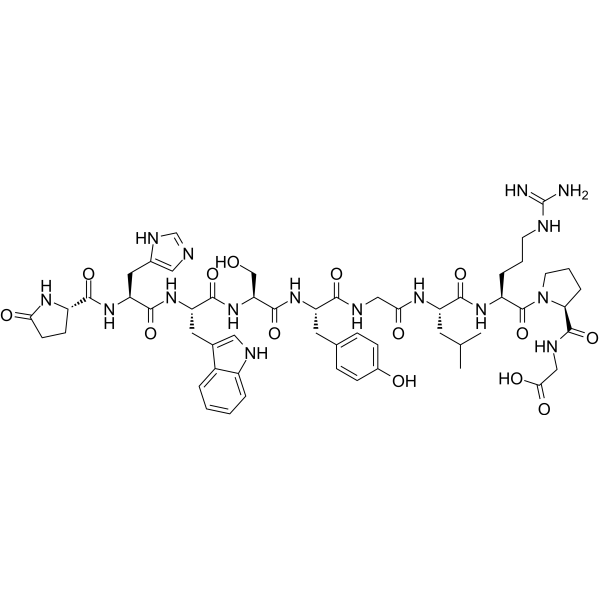
HY-P4675
LHRH free acidLHRHR Agonist


Actividad biológica
Descripciòn
IC50 & Target
IC50: 0.1 nM (human LHRH), 0.6 nM (monkey LHRH)[1]
Cellular Effect
|
Cell Line

|
Type | Value | Description | References |
|---|---|---|---|---|
| CHO | IC50 |
0.06 nM
Compound: 9k
|
Tested for inhibition of arachidonic acid(AA) release from CHO cells in Human
Tested for inhibition of arachidonic acid(AA) release from CHO cells in Human
|
[PMID: 12502365] |
| CHO | IC50 |
0.1 nM
Compound: 9k
|
Antagonist concentration required to inhibit specific binding of [125I]leuprorelin to human luteinizing releasing hormone receptor in cloned chinese hamster ovary (CHO) cells.
Antagonist concentration required to inhibit specific binding of [125I]leuprorelin to human luteinizing releasing hormone receptor in cloned chinese hamster ovary (CHO) cells.
|
[PMID: 12502365] |
| CHO | IC50 |
0.6 nM
Compound: 9k
|
Tested for antagonist concentration required to inhibit specific binding of [125I]leuprorelin to LHRH receptor in monkey (chinese hamster ovary (CHO) cells)
Tested for antagonist concentration required to inhibit specific binding of [125I]leuprorelin to LHRH receptor in monkey (chinese hamster ovary (CHO) cells)
|
[PMID: 12502365] |
| CHO | IC50 |
10 nM
Compound: 9k
|
Tested for inhibition of arachidonic acid(AA) release from CHO cells in Monkey
Tested for inhibition of arachidonic acid(AA) release from CHO cells in Monkey
|
[PMID: 12502365] |
| CHO | IC50 |
0.6 nM
Compound: 2, TAK-013
|
Binding affinity at cynomolgus monkey GnRH receptor expressed in CHO cells
Binding affinity at cynomolgus monkey GnRH receptor expressed in CHO cells
|
[PMID: 18419112] |
| CHO | IC50 |
10 nM
Compound: 2, TAK-013
|
Activity at cynomolgus monkey GnRH receptor expressed in CHO cells assessed as inhibition of arachidonic acid release
Activity at cynomolgus monkey GnRH receptor expressed in CHO cells assessed as inhibition of arachidonic acid release
|
[PMID: 18419112] |
| CHO | IC50 |
0.06 nM
Compound: 1
|
Antagonist activity at human GnRH receptor expressed in CHO cells assessed as inhibition of GnRH-induced arachidonic acid release using [5,6,8,9,11,12,14,15-3H]arachidonic acid preincubated for 15 mins measured after 45 mins by scintillation counting
Antagonist activity at human GnRH receptor expressed in CHO cells assessed as inhibition of GnRH-induced arachidonic acid release using [5,6,8,9,11,12,14,15-3H]arachidonic acid preincubated for 15 mins measured after 45 mins by scintillation counting
|
[PMID: 21657270] |
| CHO | IC50 |
0.1 nM
Compound: 1
|
Displacement of [125I]leuprorelin from recombinant human GnRH receptor expressed in CHO cells after 60 mins by X-ray counter
Displacement of [125I]leuprorelin from recombinant human GnRH receptor expressed in CHO cells after 60 mins by X-ray counter
|
[PMID: 21657270] |
| CHO | IC50 |
1.3 nM
Compound: 1
|
Displacement of [125I]leuprorelin from rat GnRH receptor expressed in CHO cells after 60 mins by X-ray counter in presence of 40% fetal bovine serum
Displacement of [125I]leuprorelin from rat GnRH receptor expressed in CHO cells after 60 mins by X-ray counter in presence of 40% fetal bovine serum
|
[PMID: 21657270] |
| CHO | IC50 |
1.6 nM
Compound: 1
|
Displacement of [125I]leuprorelin from monkey GnRH receptor expressed in CHO cells after 60 mins by X-ray counter in presence of 40% fetal bovine serum
Displacement of [125I]leuprorelin from monkey GnRH receptor expressed in CHO cells after 60 mins by X-ray counter in presence of 40% fetal bovine serum
|
[PMID: 21657270] |
| CHO | IC50 |
1.6 nM
Compound: 1
|
Displacement of [125I]leuprorelin from recombinant human GnRH receptor expressed in CHO cells after 60 mins by X-ray counter in presence of 40% fetal bovine serum
Displacement of [125I]leuprorelin from recombinant human GnRH receptor expressed in CHO cells after 60 mins by X-ray counter in presence of 40% fetal bovine serum
|
[PMID: 21657270] |
| CHO | IC50 |
13694 nM
Compound: 1
|
Antagonist activity at monkey GnRH receptor expressed in CHO cells assessed as inhibition of GnRH-induced arachidonic acid release using [5,6,8,9,11,12,14,15-3H]arachidonic acid preincubated for 15 mins measured after 45 mins by scintillation counting in
Antagonist activity at monkey GnRH receptor expressed in CHO cells assessed as inhibition of GnRH-induced arachidonic acid release using [5,6,8,9,11,12,14,15-3H]arachidonic acid preincubated for 15 mins measured after 45 mins by scintillation counting in
|
[PMID: 21657270] |
| COS-7 | IC50 |
0.5 nM
Compound: 4
|
Displacement of [His5, D-Tyr6]GnRH from GnRHR Y290L mutant expressed in COS7 cells
Displacement of [His5, D-Tyr6]GnRH from GnRHR Y290L mutant expressed in COS7 cells
|
[PMID: 17034124] |
| COS-7 | IC50 |
0.7 nM
Compound: 4
|
Displacement of [His5, D-Tyr6]GnRH from GnRHR N27A mutant expressed in COS7 cells
Displacement of [His5, D-Tyr6]GnRH from GnRHR N27A mutant expressed in COS7 cells
|
[PMID: 17034124] |
| COS-7 | IC50 |
0.8 nM
Compound: 4
|
Displacement of [125I]-His5, D-Tyr6]GnRH from GnRHR F272L mutant expressed in COS7 cells
Displacement of [125I]-His5, D-Tyr6]GnRH from GnRHR F272L mutant expressed in COS7 cells
|
[PMID: 17034124] |
| COS-7 | IC50 |
1.2 nM
Compound: 4
|
Displacement of [His5, D-Tyr6]GnRH from GnRHR Q208E mutant expressed in COS7 cells
Displacement of [His5, D-Tyr6]GnRH from GnRHR Q208E mutant expressed in COS7 cells
|
[PMID: 17034124] |
| COS-7 | IC50 |
1.9 nM
Compound: 4
|
Displacement of [His5, D-Tyr6]GnRH from GnRHR L300A mutant expressed in COS7 cells
Displacement of [His5, D-Tyr6]GnRH from GnRHR L300A mutant expressed in COS7 cells
|
[PMID: 17034124] |
| COS-7 | IC50 |
10 nM
Compound: 4
|
Displacement of [His5, D-Tyr6]GnRH from GnRHR F309Q mutant expressed in COS7 cells
Displacement of [His5, D-Tyr6]GnRH from GnRHR F309Q mutant expressed in COS7 cells
|
[PMID: 17034124] |
| COS-7 | IC50 |
100 nM
Compound: 4
|
Displacement of [His5, D-Tyr6]GnRH from GnRHR H306E mutant expressed in COS7 cells
Displacement of [His5, D-Tyr6]GnRH from GnRHR H306E mutant expressed in COS7 cells
|
[PMID: 17034124] |
| COS-7 | IC50 |
110 nM
Compound: 4
|
Displacement of [His5, D-Tyr6]GnRH from GnRHR M24I mutant expressed in COS7 cells
Displacement of [His5, D-Tyr6]GnRH from GnRHR M24I mutant expressed in COS7 cells
|
[PMID: 17034124] |
| COS-7 | IC50 |
12 nM
Compound: 4
|
Displacement of [His5, D-Tyr6]GnRH from GnRHR Y284L mutant expressed in COS7 cells
Displacement of [His5, D-Tyr6]GnRH from GnRHR Y284L mutant expressed in COS7 cells
|
[PMID: 17034124] |
| COS-7 | IC50 |
120 nM
Compound: 4
|
Displacement of [His5, D-Tyr6]GnRH from GnRHR D302N mutant expressed in COS7 cells
Displacement of [His5, D-Tyr6]GnRH from GnRHR D302N mutant expressed in COS7 cells
|
[PMID: 17034124] |
| COS-7 | IC50 |
190 nM
Compound: 4
|
Displacement of [His5, D-Tyr6]GnRH from GnRHR D302A mutant expressed in COS7 cells
Displacement of [His5, D-Tyr6]GnRH from GnRHR D302A mutant expressed in COS7 cells
|
[PMID: 17034124] |
| COS-7 | IC50 |
24 nM
Compound: 4
|
Displacement of [His5, D-Tyr6]GnRH from GnRHR F313L mutant expressed in COS7 cells
Displacement of [His5, D-Tyr6]GnRH from GnRHR F313L mutant expressed in COS7 cells
|
[PMID: 17034124] |
| COS-7 | IC50 |
24 nM
Compound: 4
|
Displacement of [His5, D-Tyr6]GnRH from GnRHR H306A mutant expressed in COS7 cells
Displacement of [His5, D-Tyr6]GnRH from GnRHR H306A mutant expressed in COS7 cells
|
[PMID: 17034124] |
| COS-7 | IC50 |
6 nM
Compound: 4
|
Displacement of [His5, D-Tyr6]GnRH from GnRHR F309L mutant expressed in COS-7 cells
Displacement of [His5, D-Tyr6]GnRH from GnRHR F309L mutant expressed in COS-7 cells
|
[PMID: 17034124] |
In Vitro
Sufugolix exhibits more than 3- and 2000-fold selectivity for the human receptor over the monkey and rat receptors, respectively. Sufugolix effectively antagonizes LHRH function on CHO cells expressing the human (IC50=0.1 nM) and monkey (IC50=0.6 nM) receptors. During the conformational analysis of sufugolix, using high-temperature molecular dynamics calculation, it is observed that the cis conformer of the methoxyurea is more populated than the trans conformer [1].
MedChemExpress (MCE) has not independently confirmed the accuracy of these methods. They are for reference only. Further protocols information, click here.
In Vivo
MedChemExpress (MCE) has not independently confirmed the accuracy of these methods. They are for reference only.


Chemical Information
-
No. CAS 308831-61-0
-
Appearance Solid
-
Peso molecular 667.72
-
Fòrmula C36H31F2N5O4S
-
Color Light yellow to yellow
-
SMILES
O=C(NOC)NC1=CC=C(C(S2)=C(CN(C)CC3=CC=CC=C3)C(C(N4C5=CC=CC=C5)=O)=C2N(CC6=C(F)C=CC=C6F)C4=O)C=C1
-
Synonyms
TAK-013
-
Envío
Room temperature in continental US; may vary elsewhere.
-
Almacenamiento
Powder -20°C 3 years 4°C 2 years * The compound is unstable in solutions, freshly prepared is recommended.


Solvente y solubilidad
In Vitro:
DMSO : 20 mg/mL (29.95 mM; ultrasonic and warming and heat to 60°C; Hygroscopic DMSO has a significant impact on the solubility of product, please use newly opened DMSO)
H2O : < 0.1 mg/mL (insoluble)
Please refer to the solubility information to select the appropriate solvent. The compound is unstable in solutions, freshly prepared is recommended.
Please refer to the solubility information to select the appropriate solvent. The compound is unstable in solutions, freshly prepared is recommended.
Concentration (start) × Volume (start) = Concentration (final) × Volume (final)

Protocolo
-
Cell Cytotoxicity Assay
Cytotoxicity assays are usually based on the assessment of cell membrane damage, which can also be indirectly detected by measuring cell viability. Detection methods include MTT assay, CKK-8 assay, LDH assay and ATP assay, etc.
-
Research Protocol for Endocrine Diseases
Endocrine diseases often arise from disrupted hormone production, hormone signaling, or target-tissue responsiveness; for diabetes-focused endocrine disease models, insulin signaling regulates glucose uptake, hepatic glucose output, lipid metabolism, and β-cell compensation. Type 2 diabetes develops through interacting defects in insulin resistance, β-cell dysfunction, adipose inflammation, hepatic glucose overproduction, altered incretin signaling, and ectopic lipid metabolism. A major unresolved question is whether endocrine dysfunction is driven primarily by target-tissue insulin resistance, intrinsic β-cell failure, immune/inflammatory stress, or combined multi-organ failure that differs by disease stage.


Pureza y Documentación
-
Ficha de datos (278 KB)
-
SDS (393 KB)
- English - EN (393 KB)
- Français - FR (393 KB)
- Deutsch - DE (393 KB)
- Norwegian - NO (393 KB)
- Español - ES (393 KB)
- Swedish - SV (393 KB)
- Italian - IT (393 KB)
- Korean - KR (393 KB)
- Portuguese - PT (393 KB)
-
Instrucciones de manejo (2659 KB)
Referencias
[1]. Sasaki S, et al. Discovery of a thieno[2,3-d]pyrimidine-2,4-dione bearing a p-methoxyureidophenyl moiety at the 6-position: a highly potent and orally bioavailable non-peptide antagonist for the human luteinizing hormone-releasing hormone receptor. J Med Chem. 2003 Jan 2;46(1):113-24. [Content Brief]


Complete Stock Solution Preparation Table
Please refer to the solubility information to select the appropriate solvent. The compound is unstable in solutions, freshly prepared is recommended.
| Optional Solvent | Concentration Solvent Mass | 1 mg | 5 mg | 10 mg | 25 mg |
|---|---|---|---|---|---|
| DMSO | 1 mM | 1.4976 mL | 7.4882 mL | 14.9763 mL | 37.4408 mL |
| 5 mM | 0.2995 mL | 1.4976 mL | 2.9953 mL | 7.4882 mL | |
| 10 mM | 0.1498 mL | 0.7488 mL | 1.4976 mL | 3.7441 mL | |
| 15 mM | 0.0998 mL | 0.4992 mL | 0.9984 mL | 2.4961 mL | |
| 20 mM | 0.0749 mL | 0.3744 mL | 0.7488 mL | 1.8720 mL | |
| 25 mM | 0.0599 mL | 0.2995 mL | 0.5991 mL | 1.4976 mL |


Sufugolix Related Classifications
HY-100209 Related Classifications
 Powered by Bioz