



Nacubactam
Based on 2 publication(s) in Google Scholar
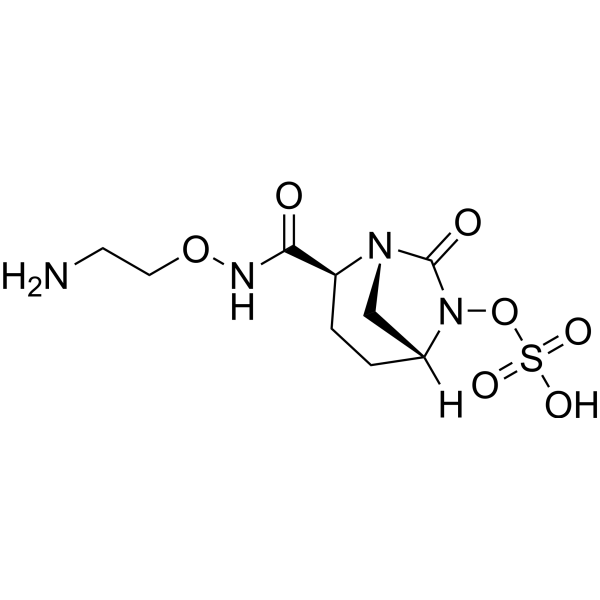
Nacubactam (OP0595 free acid) is a potent non-β-lactam-β-lactamase inhibitor with activity against class A and C β-lactamases. Nacubactam acts as a penicillin binding protein (PBP) 2-active antibacterial, and gives β-lactamase-independent potentiation of β-lactams targeting other PBPs. Nacubactam potentiates the antimicrobial activities of Piperacillin (HY-B1923), Cefepime (HY-B0692), and Meropenem (HY-13678) against CTX-M-15-positive Escherichia coli and KPC-positive Klebsiella pneumoniae.
For research use only. We do not sell to patients.
- Purity : 99.43%
- CAS No.: 1452458-86-4
- Formula: C9H16N4O7S
- Molecular Weight:324.31
-
Storage:
-20°C, protect from light, stored under nitrogen
* In solvent : -80°C, 6 months; -20°C, 1 month (protect from light, stored under nitrogen)

To place orders, for customer services and technical support, please contact: MedChemExpress USA
Tel: 609-228-6898 E-mail: [email protected] [email protected]


-
 Biological Activity
-
Chemical Information
-
Solvent & Solubility
- Protocols
- Purity & Documentation
- References
-
 Help & FAQs


-
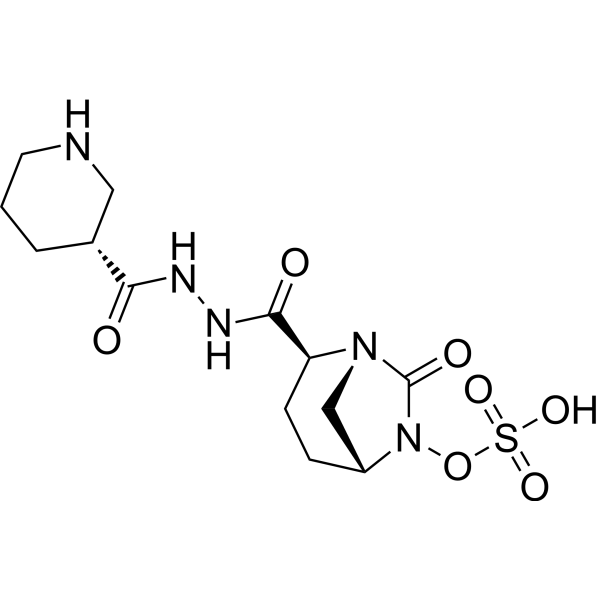
HY-120859
Zidebactamβ-lactamase/PBP2 Inhibitor -
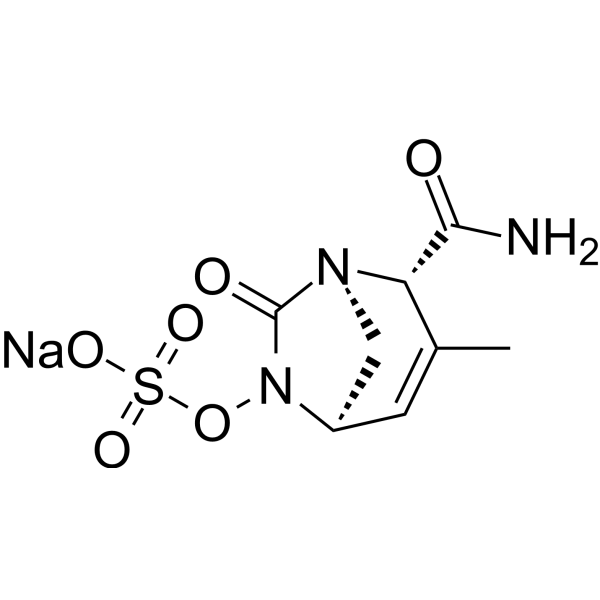
HY-117974
Durlobactam sodiumβ-lactamase Inhibitor -
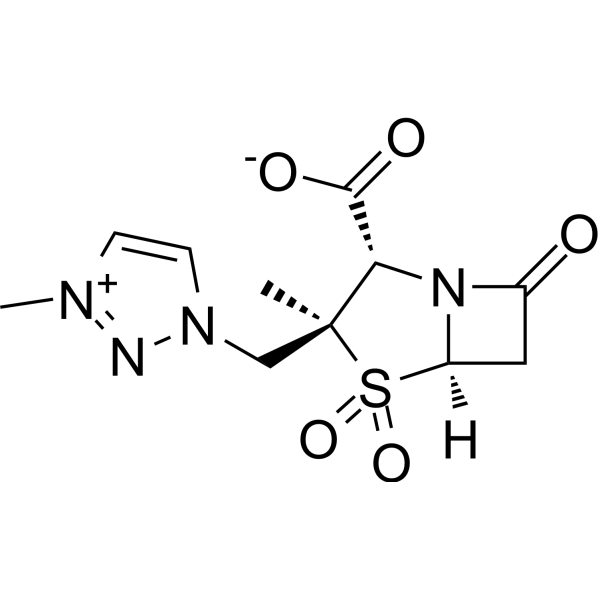
HY-103095
Enmetazobactamβ-lactamase Inhibitor -
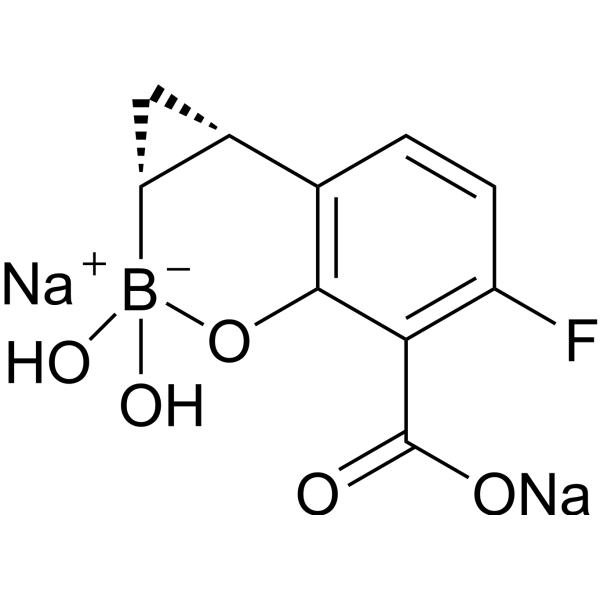
HY-136072
Xeruborbactam disodiumBeta-lactamase Inhibitor -
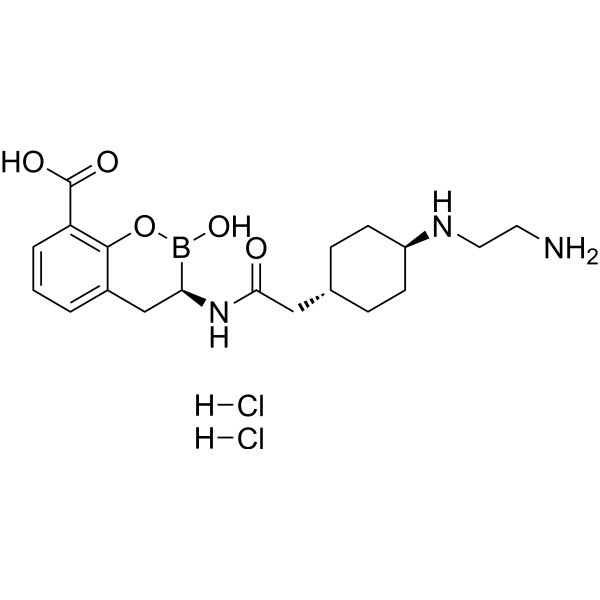
HY-109124A
Taniborbactam hydrochlorideβ-lactamase Inhibitor -
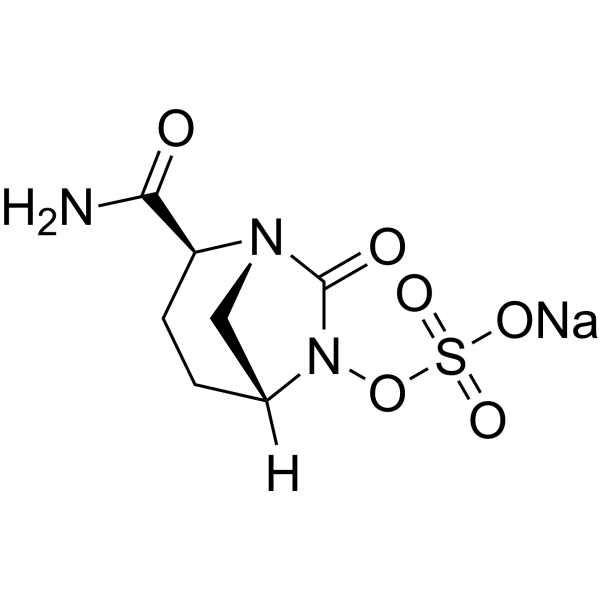
HY-14879A
Avibactam sodiumBeta-lactamase Inhibitor -
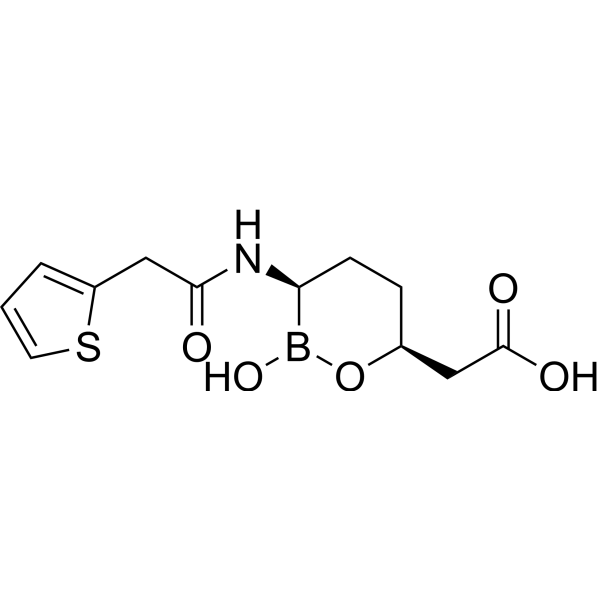
HY-19930
Vaborbactamβ-lactamase Inhibitor -
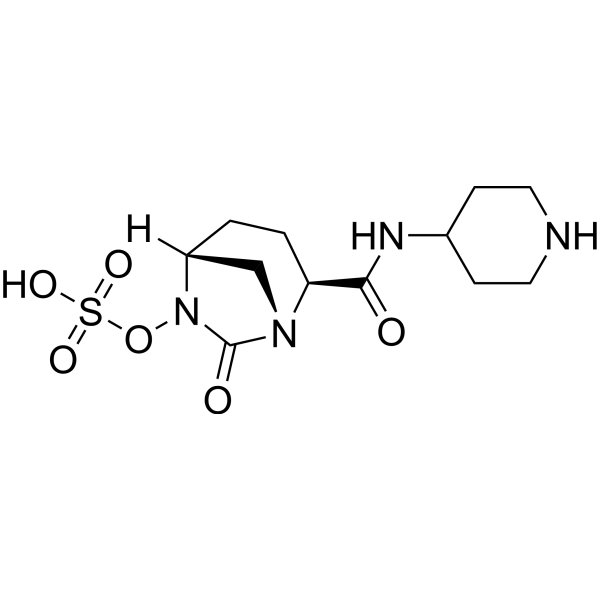
HY-16752
RelebactamBeta-lactamase Inhibitor -
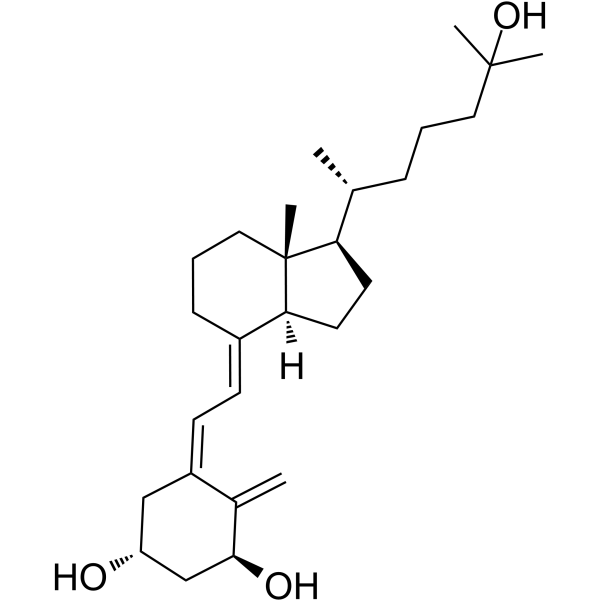
HY-10002
CalcitriolVDR Agonist -
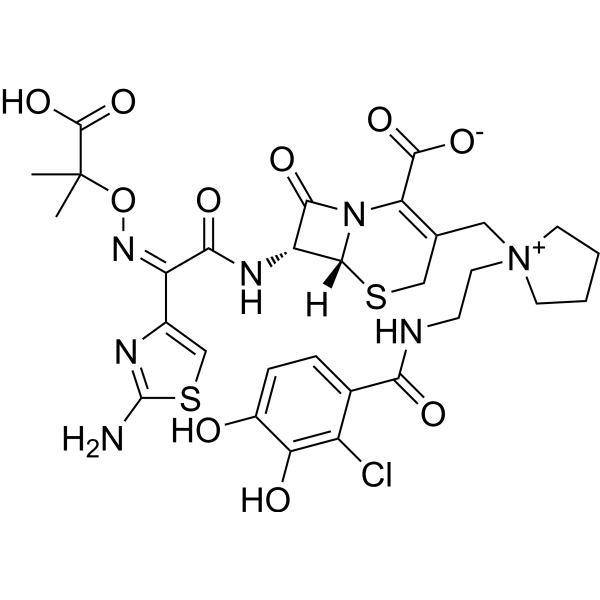
HY-17628
CefiderocolAntibiotic -
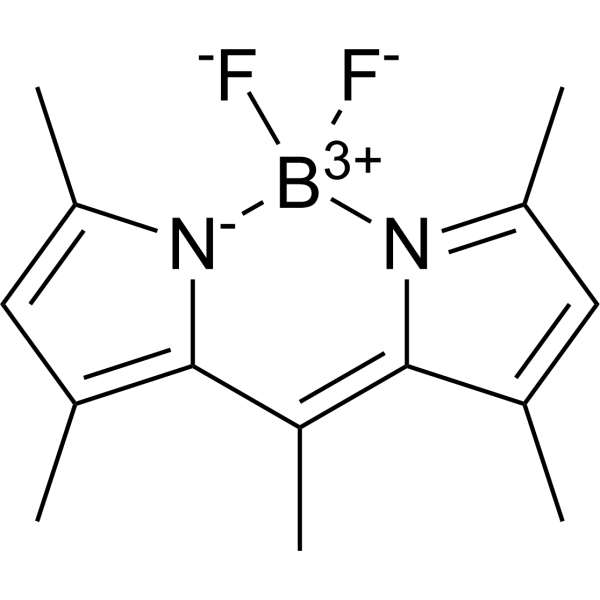
HY-W090090
BODIPY 493/503Neutral Lipid Dye -
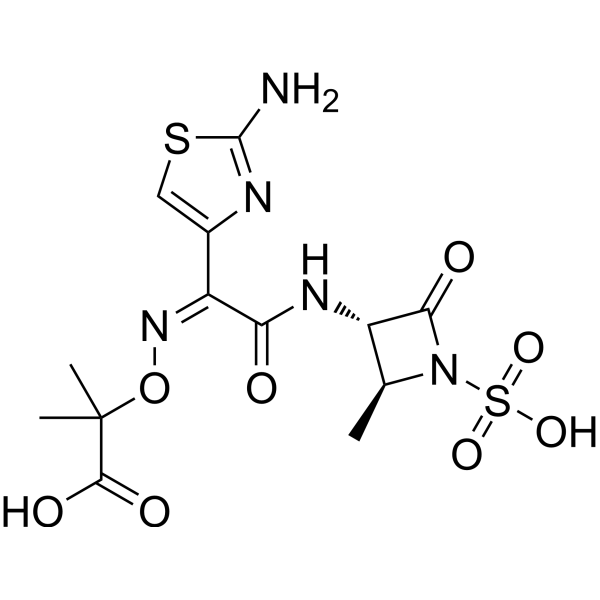
HY-B0129
AztreonamBacterial Inhibitor
Publications Citing Use of MedChemExpress (MCE) Nacubactam
MoreAll Beta-lactamase Isoforms
More

Biological Activity
Description
IC50 & Target
non-β-lactam-β-lactamase[1]
In Vitro
Nacubactam (4 μg/mL) can reduce the minimum inhibitory concentrations (MICs) of Piperacillin (HY-B1923), Cefepime (HY-B0692), and Meropenem (HY-13678) against CTX-M-15-positive Escherichia coli and KPC-positive Klebsiella pneumoniae, enhancing the antibacterial activity[1].
Nacubactam shows MICs ranging from 1 to >256 μg/mL against 11 Gram-negative isolates[2].
Nacubactam (8 μg/mL) can reduce the MIC50 of Meropenem by 8-fold, making all isolates susceptible or intermediately susceptible to Meropenem[4].
Nacubactam can inhibit Carbapenem-resistant Klebsiella pneumoniae producing KPC and restore the antibacterial activity of Meropenem[5].
MedChemExpress (MCE) has not independently confirmed the accuracy of these methods. They are for reference only. Further protocols information, click here.
In Vivo
Nacubactam (10-80 mg/kg; s.c.; administered every 8 h), when combined with Meropenem, shows the greatest in-vivo efficacy against 9 out of 10 Gram-negative isolates in a neutropenic murine complicated urinary tract infection model, reducing the bacterial load by 3 log from the 48-h control[2].
MedChemExpress (MCE) has not independently confirmed the accuracy of these methods. They are for reference only.
Clinical Trial
| NCT Number | Sponsor | Condition | Start Date |
Phase

|
|---|---|---|---|---|
| NCT01329991 | Plexxikon| | 2011-05 | PHASE1 |


Chemical Information
-
CAS No. 1452458-86-4
-
Appearance Solid
-
Molecular Weight 324.31
-
Formula C9H16N4O7S
-
Color White to light brown
-
SMILES
O=S(ON1[C@]2([H])CC[C@@H](C(NOCCN)=O)[N@@](C2)C1=O)(O)=O
-
Synonyms
OP0595 free acid
-
Shipping
Room temperature in continental US; may vary elsewhere.
-
Storage
-20°C, protect from light, stored under nitrogen
* In solvent : -80°C, 6 months; -20°C, 1 month (protect from light, stored under nitrogen)


Publications (2)
-
Journal Impact Factor
-
Most Recent
-
Antimicrob Agents Chemother
Relative inhibitory activities of newly developed diazabicyclooctanes, boronic acid derivatives, and penicillin-based sulfone β-lactamase inhibitors against broad-spectrum AmpC β-lactamases. [Abstract]2024 Nov 6;68(11):e0077524. PMID: 39365068 -


Solvent & Solubility
In Vitro:
DMSO : 100 mg/mL (308.35 mM; Need ultrasonic; Hygroscopic DMSO has a significant impact on the solubility of product, please use newly opened DMSO)
H2O : 50 mg/mL (154.17 mM; ultrasonic and warming and heat to 60°C)
Please refer to the solubility information to select the appropriate solvent. Once prepared, please aliquot and store the solution to prevent product inactivation from repeated freeze-thaw cycles.
Storage method and period of stock solution: -80°C, 6 months; -20°C, 1 month (protect from light, stored under nitrogen). When stored at -80°C, please use it within 6 months. When stored at -20°C, please use it within 1 month.
* Note: If you choose water as the stock solution, please dilute it to the working solution, then filter and sterilize it with a 0.22 μm filter before use.
Please refer to the solubility information to select the appropriate solvent. Once prepared, please aliquot and store the solution to prevent product inactivation from repeated freeze-thaw cycles.
Storage method and period of stock solution: -80°C, 6 months; -20°C, 1 month (protect from light, stored under nitrogen). When stored at -80°C, please use it within 6 months. When stored at -20°C, please use it within 1 month.
* Note: If you choose water as the stock solution, please dilute it to the working solution, then filter and sterilize it with a 0.22 μm filter before use.
Concentration (start) × Volume (start) = Concentration (final) × Volume (final)
In Vivo:
Select the appropriate dissolution method based on your experimental animal and administration route.
- For the following dissolution methods, please ensure to first prepare a clear stock solution using an In Vitro approach and then sequentially add co-solvents:
- To ensure reliable experimental results, the clarified stock solution can be appropriately stored based on storage conditions. As for the working solution for In Vivo experiments, it is recommended to prepare freshly and use it on the same day.
- The percentages shown for the solvents indicate their volumetric ratio in the final prepared solution. If precipitation or phase separation occurs during preparation, heat and/or sonication can be used to aid dissolution.
Add each solvent one by one: 10% DMSO 40% PEG300 5% Tween-80 45% Saline
Solubility: ≥ 2.08 mg/mL (6.41 mM); Clear solution
This protocol yields a clear solution of ≥ 2.08 mg/mL (saturation unknown).
Taking 1 mL working solution as an example, add 100 μL DMSO stock solution (20.8 mg/mL) to 400 μL PEG300, and mix evenly; then add 50 μL Tween-80 and mix evenly; then add 450 μL Saline to adjust the volume to 1 mL.
Preparation of Saline: Dissolve 0.9 g sodium chloride in ddH₂O and dilute to 100 mL to obtain a clear Saline solution.
Add each solvent one by one: 10% DMSO 90% (20% SBE-β-CD in Saline)
Solubility: ≥ 2.08 mg/mL (6.41 mM); Clear solution
This protocol yields a clear solution of ≥ 2.08 mg/mL (saturation unknown).
Taking 1 mL working solution as an example, add 100 μL DMSO stock solution (20.8 mg/mL) to 900 μL 20% SBE-β-CD in Saline, and mix evenly.
Preparation of 20% SBE-β-CD in Saline (4°C, storage for one week): 2 g SBE-β-CD powder is dissolved in 10 mL Saline, completely dissolve until clear.
For the following dissolution methods, please prepare the working solution directly:
It is recommended to prepare fresh solutions and use them promptly within a short period of time.
The percentages shown for the solvents indicate their volumetric ratio in the final prepared solution. If precipitation or phase separation occurs during preparation, heat and/or sonication can be used to aid dissolution.
Add each solvent one by one: PBS
Solubility: 100 mg/mL (308.35 mM); Clear solution; Need ultrasonic
In Vivo Dissolution Calculator
Please enter the basic information of animal experiments:
-
-
-
-
Recommended: Prepare an additional quantity of animals to account for potential losses during experiments.
Working solution concentration: 0.22 mg/mL
This product has good water solubility, please refer to the measured solubility data in water/PBS/Saline for details.

Protocols
-
Research Protocol for Infectious Diseases
Infectious-disease experiments test how pathogens interact with host barriers, innate immune receptors, inflammatory signaling, pathogen replication, and tissue injury; pattern-recognition receptors such as TLRs, RIG-I-like receptors, NOD-like receptors, and inflammasomes detect microbial molecules and activate NF-κB, interferon, and cytokine responses. The central hypothesis is that infection severity reflects the balance between pathogen burden and host response: protective inflammation restricts pathogen growth, whereas excessive or mislocalized inflammation contributes to tissue damage and disease phenotype. Unresolved questions include which host pathways are protective versus pathogenic, why some infection models fail to translate to human disease, and which combined readouts best predict clinically relevant infection outcomes.


Purity & Documentation
-
Data Sheet (276 KB)
-
SDS (393 KB)
- English - EN (393 KB)
- Français - FR (393 KB)
- Deutsch - DE (393 KB)
- Norwegian - NO (393 KB)
- Español - ES (393 KB)
- Swedish - SV (393 KB)
- Italian - IT (393 KB)
- Korean - KR (393 KB)
- Portuguese - PT (393 KB)
-
Handling Instructions (2659 KB)
References
[1]. Morinaka A, et al. In Vitro and In Vivo Activities of OP0595, a New Diazabicyclooctane, against CTX-M-15-Positive Escherichia coli and KPC-Positive Klebsiella pneumoniae. Antimicrob Agents Chemother. 2016 Apr 22;60(5):3001-6. [Content Brief]
[2]. Monogue ML, et al. In Vivo Efficacy of Meropenem with a Novel Non-β-Lactam-β-Lactamase Inhibitor, Nacubactam, against Gram-Negative Organisms Exhibiting Various Resistance Mechanisms in a Murine Complicated Urinary Tract Infection Model. Antimicrob Agents Chemother. 2018 Aug 27;62(9):e02596-17. [Content Brief]
[3]. Misawa K, et al. In vitro effects of diazabicyclooctane β-lactamase inhibitors relebactam and nacubactam against three subspecies of Mycobacterium abscessus complex. Int J Antimicrob Agents. 2022 Nov-Dec;60(5-6):106669. [Content Brief]
[4]. Kaushik A, et al. New β-Lactamase Inhibitors Nacubactam and Zidebactam Improve the In Vitro Activity of β-Lactam Antibiotics against Mycobacterium abscessus Complex Clinical Isolates. Antimicrob Agents Chemother. 2019 Aug 23;63(9):e00733-19. [Content Brief]
[5]. Barnes MD, et al. Nacubactam Enhances Meropenem Activity against Carbapenem-Resistant Klebsiella pneumoniae Producing KPC. Antimicrob Agents Chemother. 2019 Jul 25;63(8):e00432-19. [Content Brief]
[6]. Livermore DM, et al. Activity of OP0595/β-lactam combinations against Gram-negative bacteria with extended-spectrum, AmpC and carbapenem-hydrolysing β-lactamases. J Antimicrob Chemother. 2015 Nov;70(11):3032-41. [Content Brief]


Complete Stock Solution Preparation Table
Please refer to the solubility information to select the appropriate solvent. Once prepared, please aliquot and store the solution to prevent product inactivation from repeated freeze-thaw cycles.
Storage method and period of stock solution: -80°C, 6 months; -20°C, 1 month (protect from light, stored under nitrogen). When stored at -80°C, please use it within 6 months. When stored at -20°C, please use it within 1 month.
| Optional Solvent | Concentration Solvent Mass | 1 mg | 5 mg | 10 mg | 25 mg |
|---|---|---|---|---|---|
| H2O / DMSO | 1 mM | 3.0835 mL | 15.4173 mL | 30.8347 mL | 77.0867 mL |
| 5 mM | 0.6167 mL | 3.0835 mL | 6.1669 mL | 15.4173 mL | |
| 10 mM | 0.3083 mL | 1.5417 mL | 3.0835 mL | 7.7087 mL | |
| 15 mM | 0.2056 mL | 1.0278 mL | 2.0556 mL | 5.1391 mL | |
| 20 mM | 0.1542 mL | 0.7709 mL | 1.5417 mL | 3.8543 mL | |
| 25 mM | 0.1233 mL | 0.6167 mL | 1.2334 mL | 3.0835 mL | |
| 30 mM | 0.1028 mL | 0.5139 mL | 1.0278 mL | 2.5696 mL | |
| 40 mM | 0.0771 mL | 0.3854 mL | 0.7709 mL | 1.9272 mL | |
| 50 mM | 0.0617 mL | 0.3083 mL | 0.6167 mL | 1.5417 mL | |
| 60 mM | 0.0514 mL | 0.2570 mL | 0.5139 mL | 1.2848 mL | |
| 80 mM | 0.0385 mL | 0.1927 mL | 0.3854 mL | 0.9636 mL | |
| 100 mM | 0.0308 mL | 0.1542 mL | 0.3083 mL | 0.7709 mL |
* Note: If you choose water as the stock solution, please dilute it to the working solution, then filter and sterilize it with a 0.22 μm filter before use.


Nacubactam Related Classifications
HY-109008 Related Classifications
 Powered by Bioz