



Ibufenac

Based on 1 Customer Validation
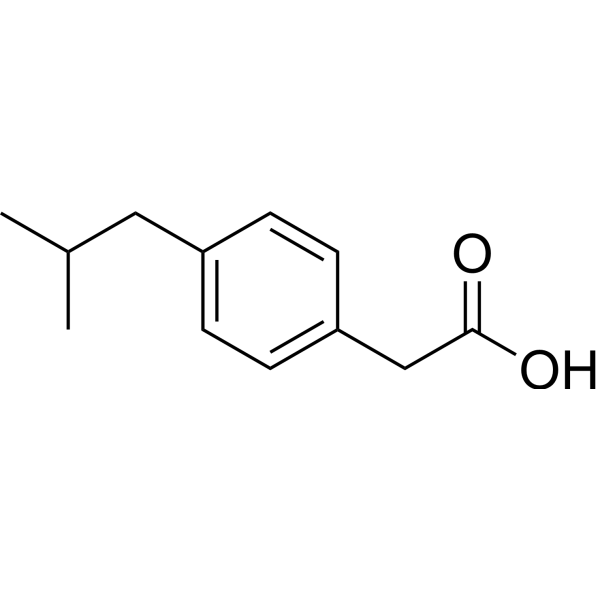
Ibufenac (Dytransin) is an orally active nonsteroidal anti-inflammatory agent. Ibufenac exerts anti-inflammatory, analgesic and antipyretic effects. Ibufenac is being studied for the treatment of rheumatic diseases such as rheumatoid arthritis.
연구목적의 판매만을 진행합니다. 환자를 대상으로 한 판매는 하지 않습니다.
- Purity : 98.19%
- CAS No.: 1553-60-2
- 화학식: C12H16O2
- 분자량:192.26
-
보관:
-20°C, sealed storage, away from moisture
* In solvent : -80°C, 6 months; -20°C, 1 month (sealed storage, away from moisture)

To place orders, for customer services and technical support, please contact: MedChemExpress USA
Tel: 609-228-6898 E-mail: [email protected] [email protected]


-
 Biological Activity
-
Chemical Information
-
용액&용해도
- Protocol
- 순도&문서
- References
-
 Help & FAQs


-
HY-78131
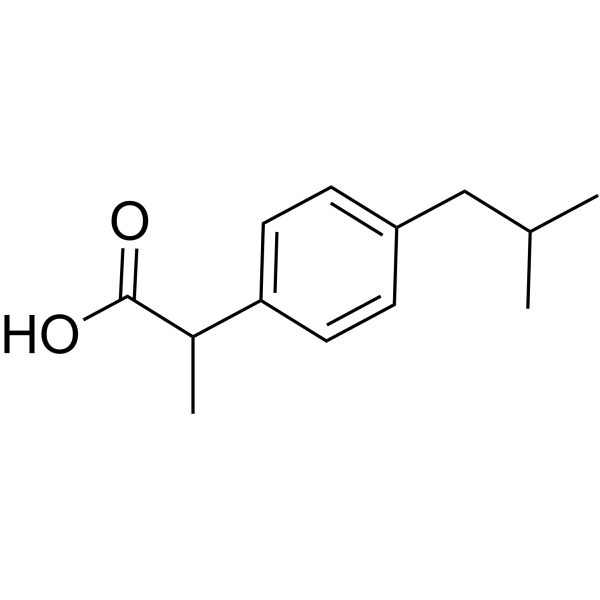
IbuprofenCOX-1 Inhibitor -
HY-16637
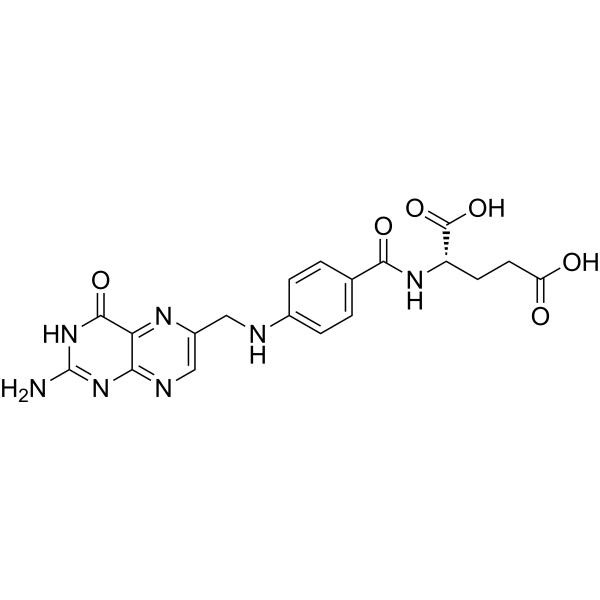
Folic acidB complex -
HY-B0135
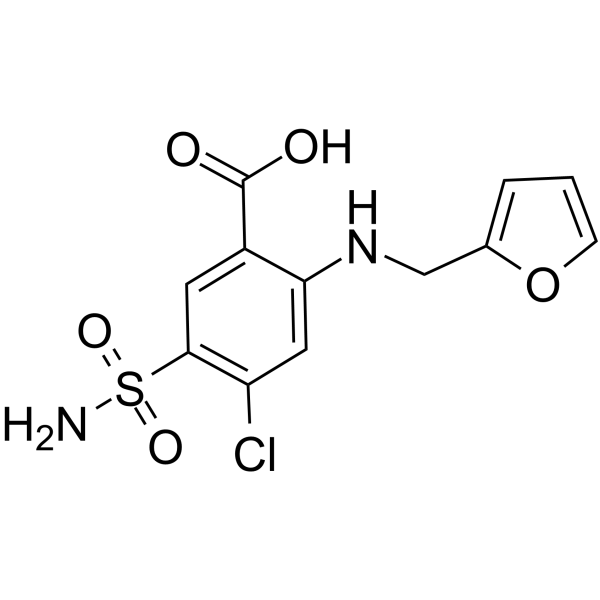
FurosemideGABAA Receptor Antagonist -
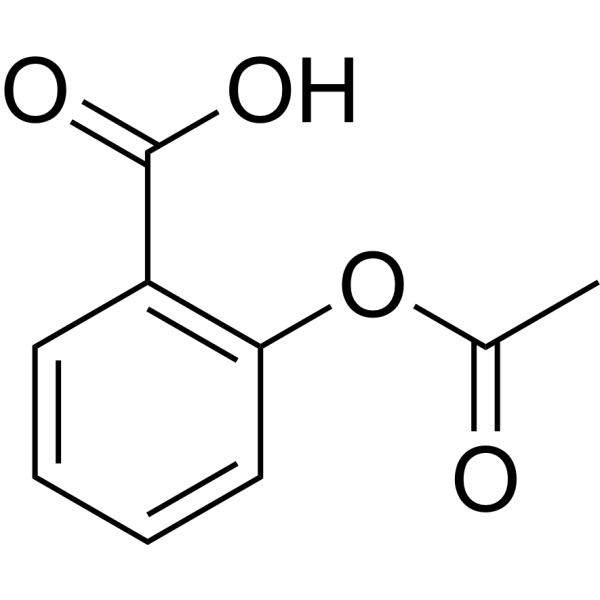
HY-14654
AspirinCOX Inhibitor -
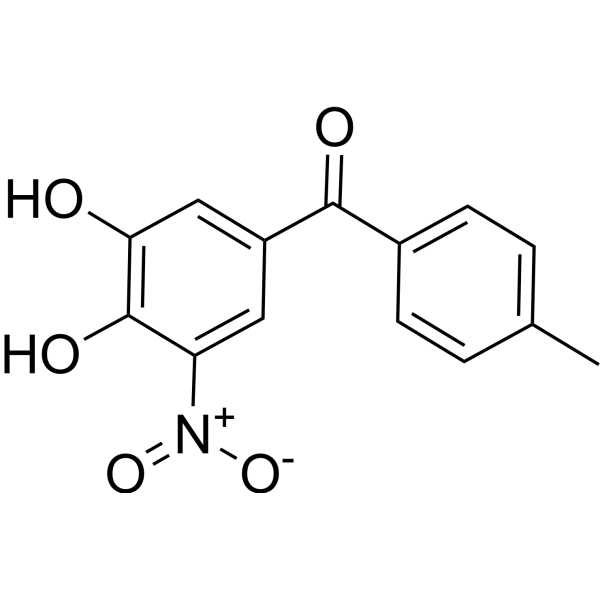
HY-17406
TolcaponeCOMT Inhibitor -
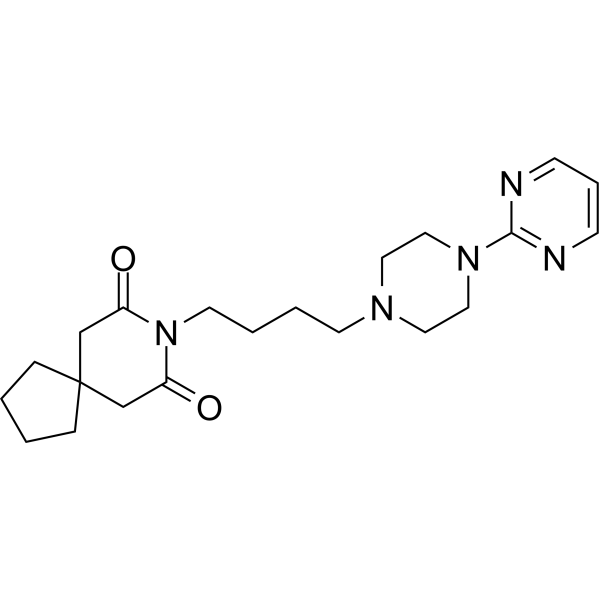
HY-B1115A
BuspironeAnxiolytic Agent -
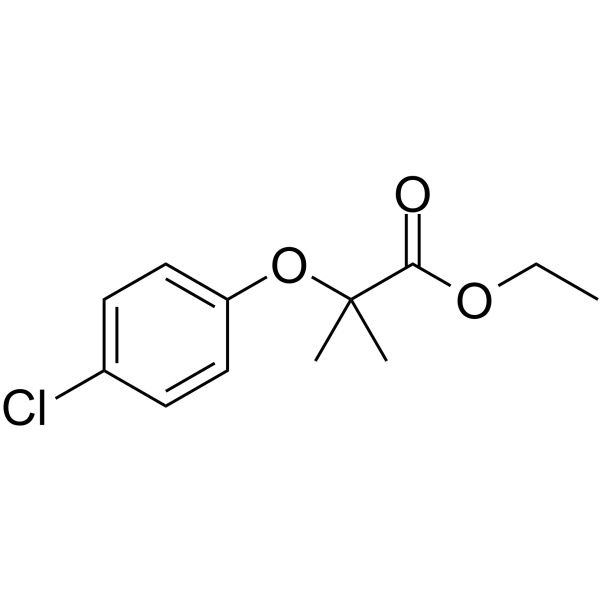
HY-B0287
ClofibratePPAR Agonist -
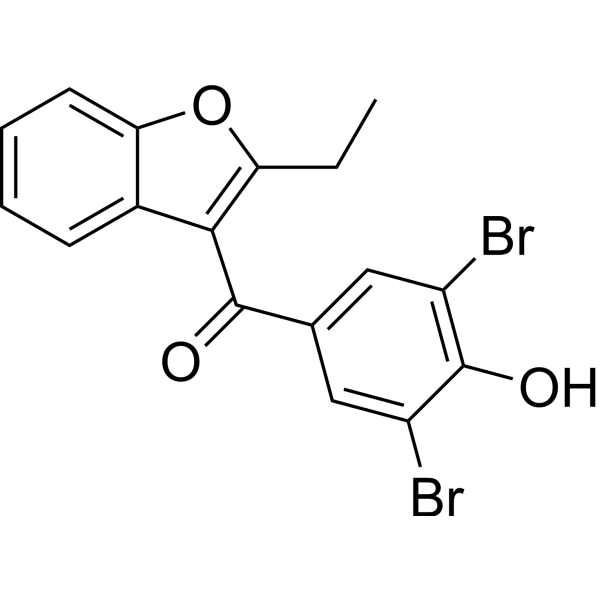
HY-B1135
BenzbromaroneApoptosis Inducer -
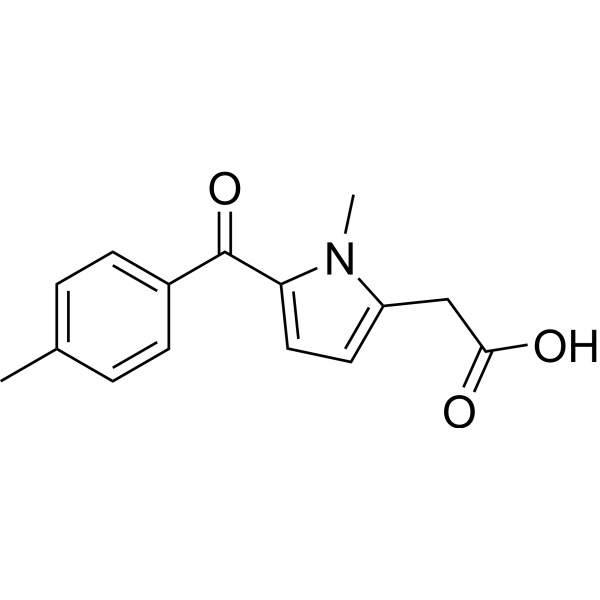
HY-B1799
TolmetinCOX Inhibitor -
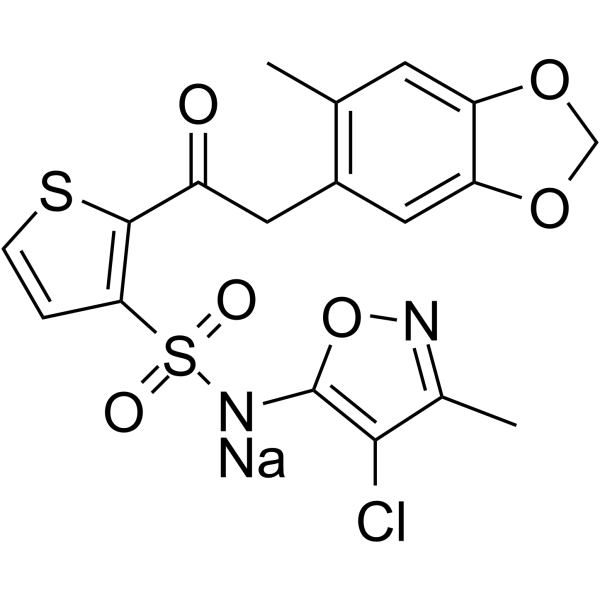
HY-11103
Sitaxsentan sodiumEndothelin A Receptor Antagonist -
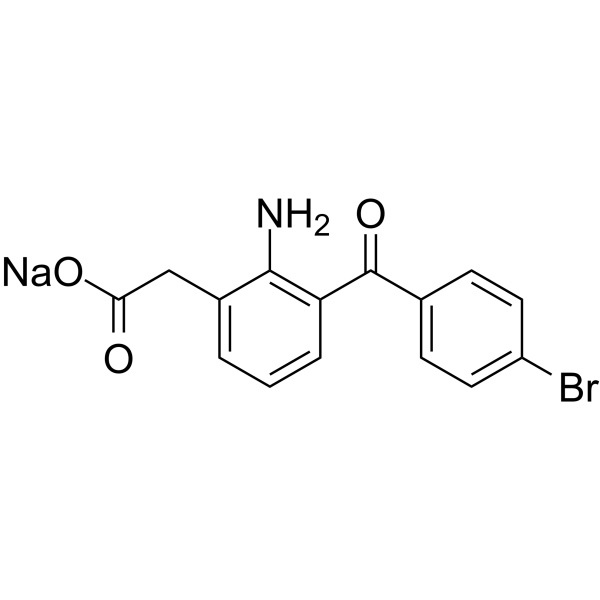
HY-B1888A
Bromfenac sodiumCOX Inhibitor


Biological Activity
제품 설명
In Vitro
Ibufenac (60-500 μg/mL; duration of the experiment) has a corneal permeability coefficient of about 22 μcm/s[1].
MedChemExpress (MCE) has not independently confirmed the accuracy of these methods. They are for reference only.
In Vivo
MedChemExpress (MCE) has not independently confirmed the accuracy of these methods. They are for reference only.
-
Animal Model:Male Wistar rats (about 150 g weight), female guinea - pigs (500 - 800 g weight), male mice (20 - 25 g weight) for various inflammation - related models such as adjuvant arthritis in rats, formation of granulation tissue in the rat[2]
-
Dosage:10, 20, 40, 80 mg/kg (adjuvant arthritis in rats); 80, 160, 320 mg/kg (formation of granulation tissue in the rat)
-
Administration:Oral administration (p.o.), twice a day (at 9:00 and 16:00 hr), and the cycle varied according to different experiments, for example, 7 days for the formation of granulation tissue experiment in the rat, 19 days for the adjuvant arthritis experiment in the rat after injection of adjuvant
-
Result:Was twice as active as aspirin but less effective than phenylbutazone in suppressing the development of adjuvant arthritis in the adjuvant arthritis experiment in rats.
Produced a significant reduction in granulation tissue compared with controls, but the effect was more modest compared to hydrocortisone sodium succinate in the formation of granulation tissue experiment in the rat (160 and 320 mg/kg).


Chemical Information
-
CAS No. 1553-60-2
-
Appearance Solid
-
분자량 192.26
-
화학식 C12H16O2
-
Color White to light yellow
-
SMILES
O=C(O)CC1=CC=C(CC(C)C)C=C1
-
Synonyms
Dytransin
-
선적
Room temperature in continental US; may vary elsewhere.
-
보관
-20°C, sealed storage, away from moisture
* In solvent : -80°C, 6 months; -20°C, 1 month (sealed storage, away from moisture)


용액&용해도
In Vitro:
DMSO : 100 mg/mL (520.13 mM; Need ultrasonic; Hygroscopic DMSO has a significant impact on the solubility of product, please use newly opened DMSO)
Please refer to the solubility information to select the appropriate solvent. Once prepared, please aliquot and store the solution to prevent product inactivation from repeated freeze-thaw cycles.
Storage method and period of stock solution: -80°C, 6 months; -20°C, 1 month (sealed storage, away from moisture). When stored at -80°C, please use it within 6 months. When stored at -20°C, please use it within 1 month.
Please refer to the solubility information to select the appropriate solvent. Once prepared, please aliquot and store the solution to prevent product inactivation from repeated freeze-thaw cycles.
Storage method and period of stock solution: -80°C, 6 months; -20°C, 1 month (sealed storage, away from moisture). When stored at -80°C, please use it within 6 months. When stored at -20°C, please use it within 1 month.
Concentration (start) × Volume (start) = Concentration (final) × Volume (final)


순도&문서
-
Data Sheet (270 KB)
-
SDS (393 KB)
- English - EN (393 KB)
- Français - FR (393 KB)
- Deutsch - DE (393 KB)
- Norwegian - NO (393 KB)
- Español - ES (393 KB)
- Swedish - SV (393 KB)
- Italian - IT (393 KB)
- Korean - KR (393 KB)
- Portuguese - PT (393 KB)
-
Handling Instructions (2659 KB)
References
[1]. Rao CS, et al. Biopharmaceutical evaluation of ibufenac, ibuprofen, and their hydroxyethoxy analogs in the rabbit eye. J Pharmacokinet Biopharm. 1992 Aug;20(4):357-88. [Content Brief]
[2]. Adams SS, et al. Some aspects of the pharmacology of ibufenac, a non-steroidal anti-inflammatory agent. J Pharm Pharmacol. 1968 Apr;20(4):305-12. [Content Brief]


Complete Stock Solution Preparation Table
Please refer to the solubility information to select the appropriate solvent. Once prepared, please aliquot and store the solution to prevent product inactivation from repeated freeze-thaw cycles.
Storage method and period of stock solution: -80°C, 6 months; -20°C, 1 month (sealed storage, away from moisture). When stored at -80°C, please use it within 6 months. When stored at -20°C, please use it within 1 month.
| Optional Solvent | Concentration Solvent Mass | 1 mg | 5 mg | 10 mg | 25 mg |
|---|---|---|---|---|---|
| DMSO | 1 mM | 5.2013 mL | 26.0065 mL | 52.0129 mL | 130.0323 mL |
| 5 mM | 1.0403 mL | 5.2013 mL | 10.4026 mL | 26.0065 mL | |
| 10 mM | 0.5201 mL | 2.6006 mL | 5.2013 mL | 13.0032 mL | |
| 15 mM | 0.3468 mL | 1.7338 mL | 3.4675 mL | 8.6688 mL | |
| 20 mM | 0.2601 mL | 1.3003 mL | 2.6006 mL | 6.5016 mL | |
| 25 mM | 0.2081 mL | 1.0403 mL | 2.0805 mL | 5.2013 mL | |
| 30 mM | 0.1734 mL | 0.8669 mL | 1.7338 mL | 4.3344 mL | |
| 40 mM | 0.1300 mL | 0.6502 mL | 1.3003 mL | 3.2508 mL | |
| 50 mM | 0.1040 mL | 0.5201 mL | 1.0403 mL | 2.6006 mL | |
| 60 mM | 0.0867 mL | 0.4334 mL | 0.8669 mL | 2.1672 mL | |
| 80 mM | 0.0650 mL | 0.3251 mL | 0.6502 mL | 1.6254 mL | |
| 100 mM | 0.0520 mL | 0.2601 mL | 0.5201 mL | 1.3003 mL |


Ibufenac Related Classifications
HY-W040672 Related Classifications
 Powered by Bioz