



TAT-CIRP
TAT-CIRP is a a small peptide, refers to Trans-trans-activating (Tat)-cold-inducible RNA binding protein. TAT-CIRP is an inhibitor of myeloid differentiation protein 2 (MD2). TAT-CIRP exhibits robust neuroprotection against ischemic and hemorrhagic stroke in mice.
연구목적의 판매만을 진행합니다. 환자를 대상으로 한 판매는 하지 않습니다.
- 화학식: C123H206N56O33
- 분자량:2997.31
-
보관:
Sealed storage, away from moisture and light, under nitrogen.
Powder -80°C, 2 years , -20°C, 1 year* In solvent : -80°C, 6 months; -20°C, 1 month (sealed storage, away from moisture and light, under nitrogen)

To place orders, for customer services and technical support, please contact: MedChemExpress USA
Tel: 609-228-6898 E-mail: [email protected] [email protected]


-
 Biological Activity
-
Chemical Information
- Protocol
- 순도&문서
- References
-
 Help & FAQs




Biological Activity
제품 설명
In Vitro
TAT-CIRP (5 μM) alleviates apoptosis and necroptosis induced by NMDA stimulation (50 μM; 1 h), through a TLR4-independent pathway, in neuronal cells[1].
MedChemExpress (MCE) has not independently confirmed the accuracy of these methods. They are for reference only. Further protocols information, click here.
In Vivo
TAT-CIRP (20 mg/kg; iv; single dose) can pass through the blood-brain barrier (BBB) in mice, with Cmax value of 4762.6 μg/L, and half-life about 90 min[1].
TAT-CIRP (20 mg/kg, 100 mg/kg; iv; once daily for 7 days) induces little toxicity in mice, with safety profile[1].
TAT-CIRP reduces cerebral ischemic injury in rhesus monkey[1].
MedChemExpress (MCE) has not independently confirmed the accuracy of these methods. They are for reference only.
-
Animal Model:Middle cerebral artery (MCA) occlusion (MCAO) model in mouse[1]
-
Dosage:5 mg/kg, 10 mg/kg, 20 mg/kg
-
Administration:IV; single dose or once daily for 7 days
-
Result:Resulted better neurological function at 28 days after brain hemorrhage than the mice that received saline.
Did not induce elevation of any liver transaminases or biomarkers of renal dysfunction.


Chemical Information
-
Appearance Solid
-
분자량 2997.31
-
화학식 C123H206N56O33
-
Color White to off-white
-
Sequence
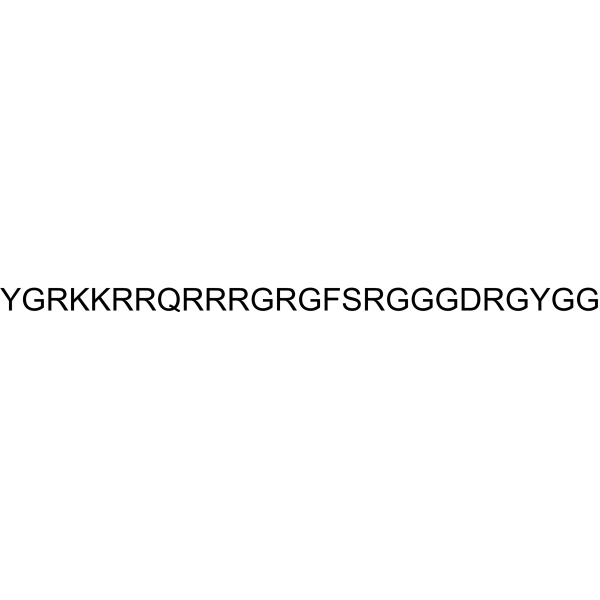
Tyr-Gly-Arg-Lys-Lys-Arg-Arg-Gln-Arg-Arg-Arg-Gly-Arg-Gly-Phe-Ser-Arg-Gly-Gly-Gly-Asp-Arg-Gly-Tyr-Gly-Gly
-
Sequence Shortening
YGRKKRRQRRRGRGFSRGGGDRGYGG
-
선적
Room temperature in continental US; may vary elsewhere.
-
보관
Sealed storage, away from moisture and light, under nitrogen
Powder -80°C 2 years -20°C 1 year * In solvent : -80°C, 6 months; -20°C, 1 month (sealed storage, away from moisture and light, under nitrogen)

Protocol
-
HL-60 granulocytic/neutrophil-like differentiation
HL-60 cells are a human promyelocytic leukemia cell model that can be induced toward granulocytic/neutrophil-like differentiation by DMSO, ATRA, or combined ATRA+DMSO treatment; differentiation is evaluated by morphology, reduced proliferation, CD11b gain, CD71 loss, phagocytosis, oxidative burst/NBT reduction, ROS formation, and, where relevant, NET-related assays. A literature-supported default protocol is 5 days of combined 1 µM ATRA plus 1% DMSO, because this condition produced neutrophil-like morphology, cell-cycle arrest, high CD11b positivity, low CD71 positivity, and increased phagocytic capacity compared with ATRA or DMSO alone in the cited study.


순도&문서
-
Data Sheet (262 KB)
-
SDS (252 KB)
- English - EN (252 KB)
- Français - FR (252 KB)
- Deutsch - DE (252 KB)
- Norwegian - NO (252 KB)
- Español - ES (252 KB)
- Swedish - SV (252 KB)
- Italian - IT (252 KB)
- Korean - KR (252 KB)
- Portuguese - PT (252 KB)
-
Handling Instructions (2659 KB)
References

Calculators
Concentration (start) × Volume (start) = Concentration (final) × Volume (final)


TAT-CIRP Related Classifications
HY-P5117 Related Classifications
 Powered by Bioz