



Beta-NGF Protein, Mouse (CHO)
Based on 2 publication(s) in Google Scholar
Nerve Growth Factor-β (Beta-NGF; NGF) is a neurotrophic factor that regulates neuronal survival and differentiation. NGF is also a seminal plasma protein involved in ovulation and luteinizing. NGF has potential functions in the female reproductive system to help overcome the current problem of early embryo loss. Beta-NGF Protein, Mouse (CHO) is produced by CHO cells (S122-G241), with tag free.
- Species: Mouse
- Source: CHO
-
Storage:Stored at -20°C for 2 years from date of receipt. After reconstitution, it is stable at 4°C for 1 week or -20°C for longer (with carrier protein). It is recommended to freeze aliquots at -20°C or -80°C for extended storage.

To place orders, for customer services and technical support, please contact: MedChemExpress USA
Tel: 609-228-6898 E-mail: [email protected] [email protected]


-
 Biological Activity
-
Technical Parameters
-
Product Properties
- Documentation
- References
- Help & FAQs


-

HY-P7359
GDNF Protein, Mouse (CHO) -
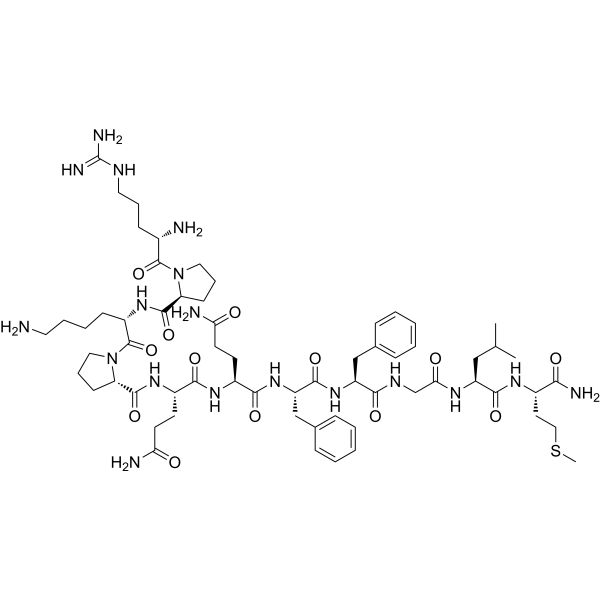
HY-P0201
Substance P -
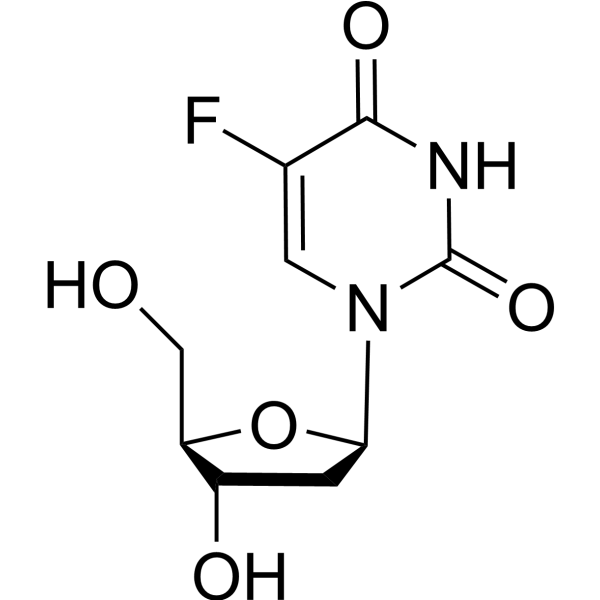
HY-B0097
Floxuridine -
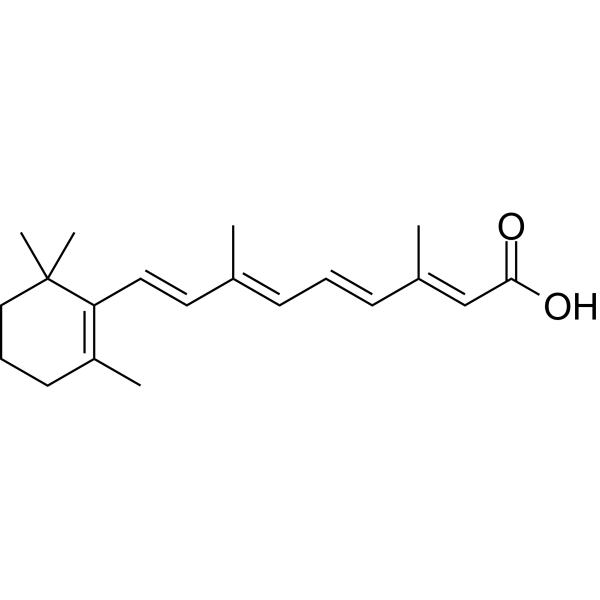
HY-14649
Retinoic acid -
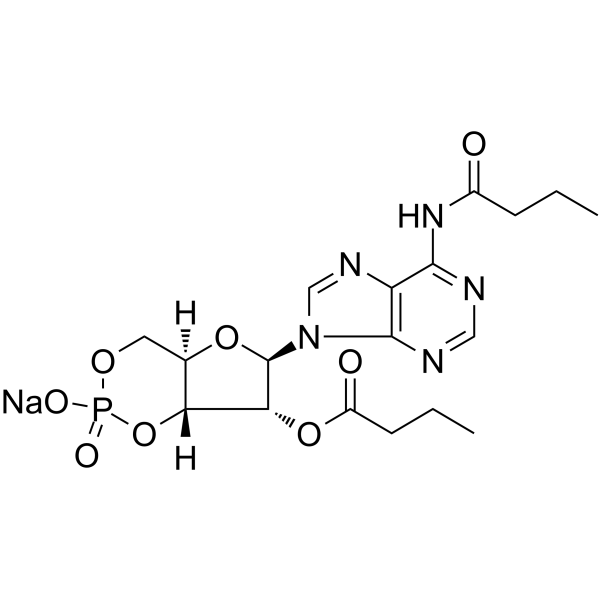
HY-B0764
Bucladesine sodium -
HY-13605
Cytarabine -
HY-13715A
Norepinephrine hydrochloride -
HY-B0593
Ceftazidime -
HY-B0282
Acetylcholine chloride -
HY-18314
GW 441756 -
HY-K1014
PolyFast Transfection Reagent -

HY-K3013
Bi-27 Supplement (50×), Sterile


Biological Activity
Description
Nerve Growth Factor-β (Beta-NGF; NGF) is a neurotrophic factor that regulates neuronal survival and differentiation. NGF is also a seminal plasma protein involved in ovulation and luteinizing. NGF has potential functions in the female reproductive system to help overcome the current problem of early embryo loss[1][2][3]. Beta-NGF Protein, Mouse (CHO) is produced by CHO cells (S122-G241), with tag free.
Background
Nerve Growth Factor-β (Beta-NGF; NGF) is a basic protein of 118 amino acids which acts are a trophic factor for sensory and sympathetic neurons of the peripheral nervous system, and on cholinergic neurons of the anterior basal cerebrum[1]. NGF involves in the regulation of neuronal survival and differentiation. Elevated levels of NGF are associated with the risk of post-traumatic stress disorder (PTSD). The trauma response leads to methylation of DNA nucleotides responsible for NGF expression. NGF levels have shown increased sympathetic fiber density proportional to NGF messenger RNA (mRNA) levels. NGF is also a seminal plasma protein commonly found in mammals. For example, NGF acts as an ovulation stimulating factor in camels and has been shown to have luteinizing effects in bulls. NGF has a potential function in the female reproductive system. For example, NGF plays an important role in ovulation induction, LH release, ovulation, luteal development, progesterone (P4) production, vascularization of luteal body, and gonadotropin response. Application of NGF to cattle enhances steroid production, luteal formation and function by increasing LH release, and leads to increased mRNA expression of markers of pregnancy and development downstream. In addition, the potential luteinizing effect of NGF could help overcome the current problem of early embryo loss[2][3]. The similarity between human and bovine NGF protein sequence was 90.87%. Meanwhile, the similarity rate of human NGF with rat and mouse was 85.89% and 85.06%, respectively.
In Vitro
NGF (mouse; 4 ng/mL; 24 h) IL-6 production is induced and ALP activity and collagen biosynthesis are enhanced without affecting cell proliferation in osteoblast MC3T3-E1[4].
Verified Bioactivity
Measured in a cell proliferation assay using TF-1 human erythroleukemic cells and the ED50 is 1-8 ng/mL.


Publications (2)
-
Journal Impact Factor
-
Most Recent
-
Mater Today Bio
Nerve growth factor-loaded biomimetic prussian blue nanocomplexes for reversing osteoporosis via promoting osteoblast precursor cell proliferation and differentiation. [Abstract]2025 May 22:32:101898. PMID: 40520557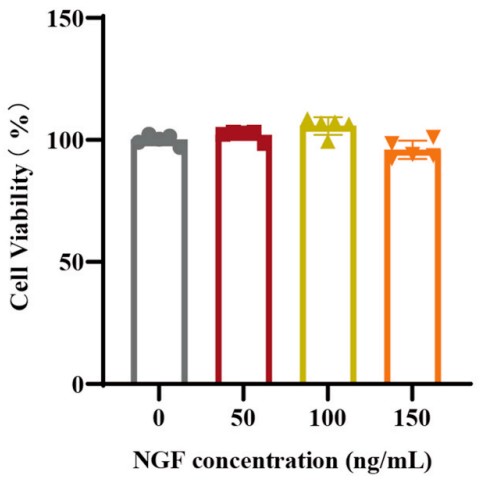
Beta-NGF Protein, Mouse (CHO) purchased from MedChemExpress. Usage Cited in: Mater Today Bio. 2025 May 22:32:101898. [Abstract]
Cell viability of the MC3T3-E1 cells incubated with NGF (Beta-NGF Protein; 50-150 ng/mL) for 24 h. The safe concentrations of NGF (0-150 ng/mL) within 24 h were determined by MTT assay.
Beta-NGF Protein, Mouse (CHO) purchased from MedChemExpress. Usage Cited in: Mater Today Bio. 2025 May 22:32:101898. [Abstract]
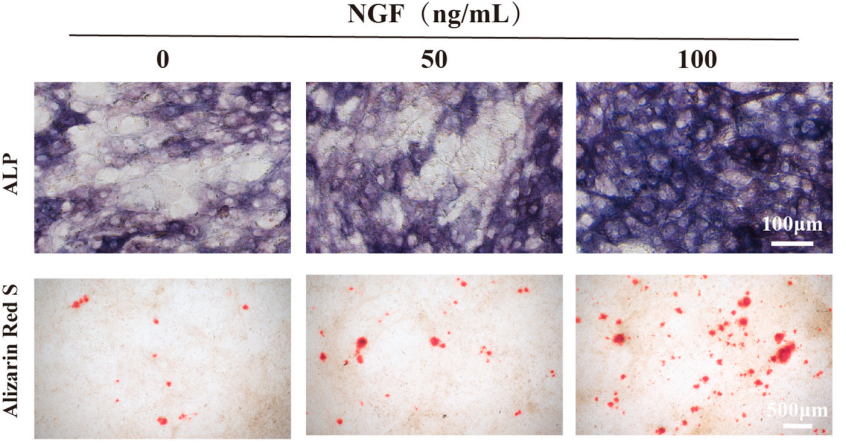
ALP and ARS staining of MC3T3-E1 cells treated with NGF (Beta-NGF Protein; 50-100 ng/mL; Every 2-3 days for 7-day ALP staining, 21 days for ARS staining). The results of ARS staining were consistent with those of ALP staining, showing that 100 ng/mL of NGF enhanced bone mineralization most effectively.
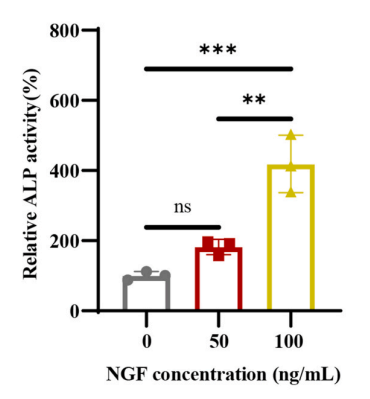
Beta-NGF Protein, Mouse (CHO) purchased from MedChemExpress. Usage Cited in: Mater Today Bio. 2025 May 22:32:101898. [Abstract]
ALP activity of MC3T3-E1 cells treated with NGF (Beta-NGF Protein; 50-100 ng/mL; Every 2-3 days for 7 days). ALP activity assay revealed that NGF promoted the secretion of ALP in MC3T3-E1 cells, with the most significant effect at the concentration of 100 ng/mL.
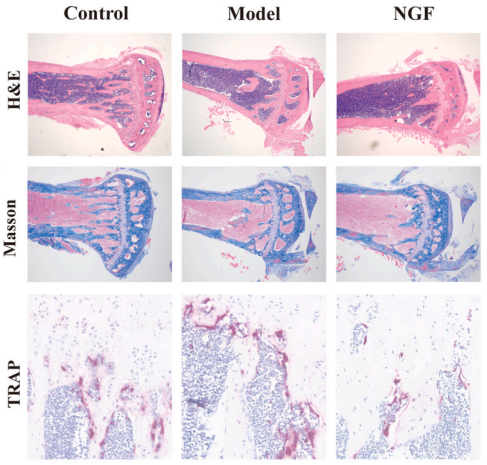
Beta-NGF Protein, Mouse (CHO) purchased from MedChemExpress. Usage Cited in: Mater Today Bio. 2025 May 22:32:101898. [Abstract]
NGF (Beta-NGF Protein; 10 μg/kg; i.v. (tail vein); every 2 days for 6 weeks). H&E, Masson and Trap staining of tibia tissue.
-
J Trace Elem Med Biol
Nerve growth factor acts as a modulator on the p38 MAPK pathway in copper-induced liver damage. [Abstract]2025 Aug:90:127694. PMID: 40664043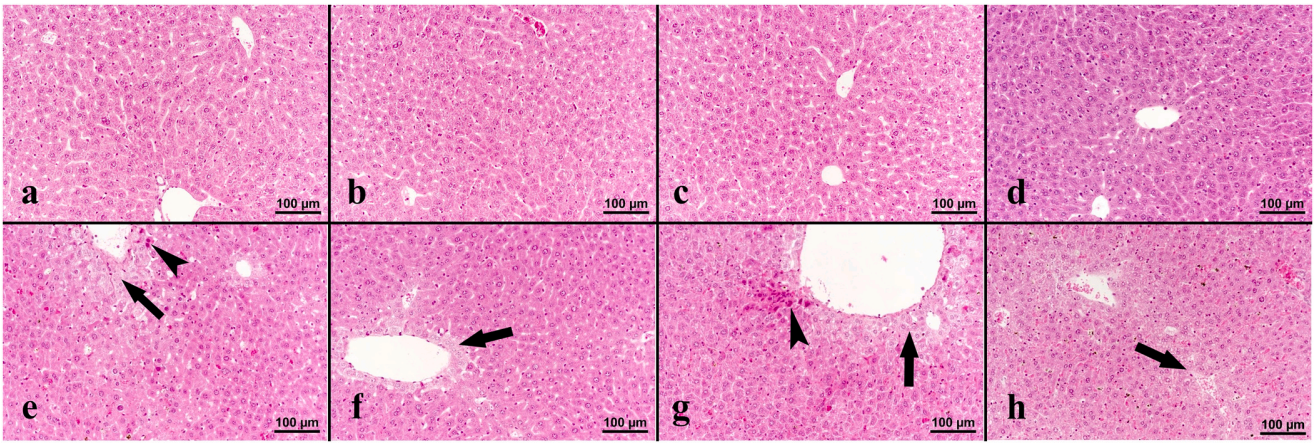
Beta-NGF Protein, Mouse (CHO) purchased from MedChemExpress. Usage Cited in: J Trace Elem Med Biol. 2025 Aug:90:127694. [Abstract]
Histopathological view of liver tissue: a. Control group, b. NGF (Beta-NGF Protein; 10 µg/kg; i.p.; once daily for 3 days) group, c. p38MAPKi group, d. NGF+p38MAPKi group, e. Cu group, f. Cu+NGF group, g. Cu+p38MAPKi group, h. Cu+NGF+p38MAPKi group. While the liver tissue of non-Cu-treated groups appears histomorphologically normal, hydropic degeneration (arrow) and hepatocellular necrosis (arrow head) are evident in Cu-treated groups. HE.


Technical Parameters
-
Species Mouse
-
Source CHO
-
Tag Tag Free
-
Accession
P01139 (S122-G241)
-
Molecular Construction
-
N-term
-
Beta-NGF (S122-G241)
Accession # P01139 -
C-term
-
-
Protein Length
Full Length of Mature Protein
-
Synonyms
NGF; Beta-NGF; Prev. NGFB; Pro-Nerve Growth Factor Long; Beta-Nerve Growth Factor; HSAN5; Nerve Growth Factor (Beta Polypeptide); Nerve Growth Factor; Nerve Growth Factor, Beta Subunit
-
AA Sequence
SSTHPVFHMGEFSVCDSVSVWVGDKTTATDIKGKEVTVLAEVNINNSVFRQYFFETKCRASNPVESGCRGIDSKHWNSYCTTTHTFVKALTTDEKQAAWRFIRIDTACVCVLSRKATRRG
-
Predicted Molecular Mass
13.5 kDa
-
Molecular Weight
Approximately 14 kDa, based on SDS-PAGE under reducing conditions.
-
Purity
≥ 95%, as determined by reducing SDS-PAGE.


Product Properties
Lyophilized powder
Lyophilized from a 0.22 μm filtered solution of 150 mM NaCl, 50 mM NaAc, pH 5.5, 5% trehalose, 5% mannitol and 0.01% Tween 80.
<1 EU/μg, determined by LAL method.
It is not recommended to reconstitute to a concentration less than 100 μg/mL in ddH2O.
Stored at -20°C for 2 years from date of receipt. After reconstitution, it is stable at 4°C for 1 week or -20°C for longer (with carrier protein). It is recommended to freeze aliquots at -20°C or -80°C for extended storage.
Room temperature in continental US; may vary elsewhere.


Documentation
-
Data Sheet (263 KB)
-
SDS (252 KB)
- English - EN (252 KB)
- Français - FR (252 KB)
- Deutsch - DE (252 KB)
- Norwegian - NO (252 KB)
- Español - ES (252 KB)
- Swedish - SV (252 KB)
- Italian - IT (252 KB)
- Korean - KR (252 KB)
- Portuguese - PT (252 KB)
-
Handling Instructions (2659 KB)


References
[1]. Castellanos MR, et al. Obtención y caracterización del beta-NGF murino. Aplicación en un modelo de envejecimiento cerebral [Obtention and characterization of murine beta-NGF. Application in a model of cerebral aging]. Rev Neurol. 1998;26(153):717-722. [Content Brief]
[2]. Lipov EG, et al. Possible Reversal of PTSD-Related DNA Methylation by Sympathetic Blockade. J Mol Neurosci. 2017 May;62(1):67-72. [Content Brief]
[3]. Lima FS, et al. Insights into nerve growth factor-β role in bovine reproduction - Review. Theriogenology. 2020 Jul 1;150:288-293. [Content Brief]
[4]. Yada M, et al. NGF stimulates differentiation of osteoblastic MC3T3-E1 cells. Biochem Biophys Res Commun. 1994 Dec 15;205(2):1187-93. [Content Brief]

Calculators
Concentration (start) × Volume (start) = Concentration (final) × Volume (final)


 Powered by Bioz

