



CNTF Protein, Mouse
Based on 1 publication(s) in Google Scholar
CNTF is a pluripotent neurotrophic factor, belonging to the IL-6 cytokine family. CNTF could protect retinal cone and rod photoreceptors. CNTF has neuroprotective effects on a variety of central and also peripheral nervous system neurons. CNTF Protein, Mouse is produced by E. coli (A2-M198) with tag free.
- Species: Mouse
- Source: E. coli
-
Storage:Stored at -20°C for 2 years from date of receipt. After reconstitution, it is stable at 4°C for 1 week or -20°C for longer (with carrier protein). It is recommended to freeze aliquots at -20°C or -80°C for extended storage.


To place orders, for customer services and technical support, please contact: MedChemExpress USA
Tel: 609-228-6898 E-mail: [email protected] [email protected]


-
 Biological Activity
-
Technical Parameters
-
Product Properties
- Documentation
- References
- Help & FAQs


-
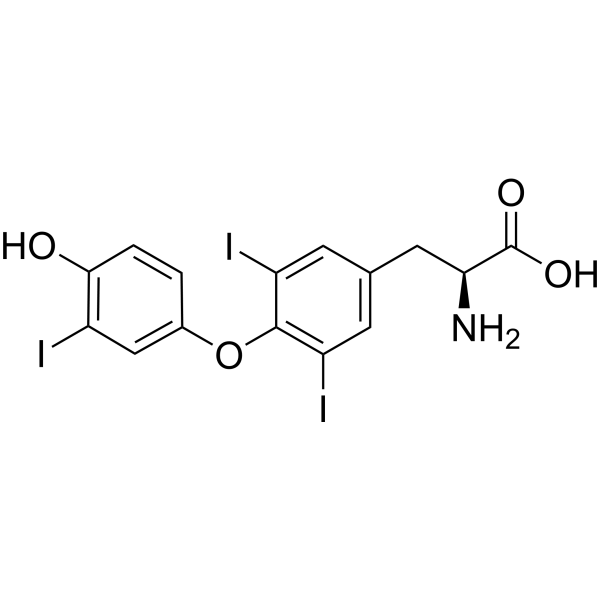
HY-A0070A
Liothyronine -

HY-P7066
FGF-2 Protein, Mouse (145a.a) -
HY-P7277
PDGF-AA Protein, Mouse -
HY-P7359
GDNF Protein, Mouse (CHO) -
HY-P74383A
BDNF Protein, Mouse (R129A, R130A, HEK293, C-His) -
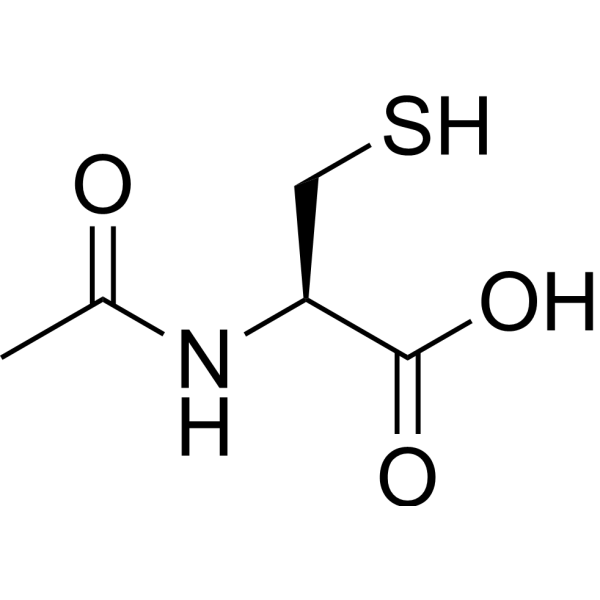
HY-B0215
Acetylcysteine -
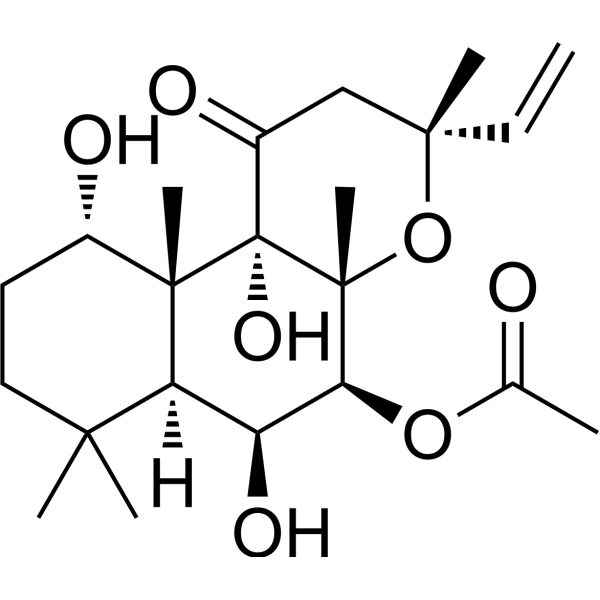
HY-15371
Forskolin -
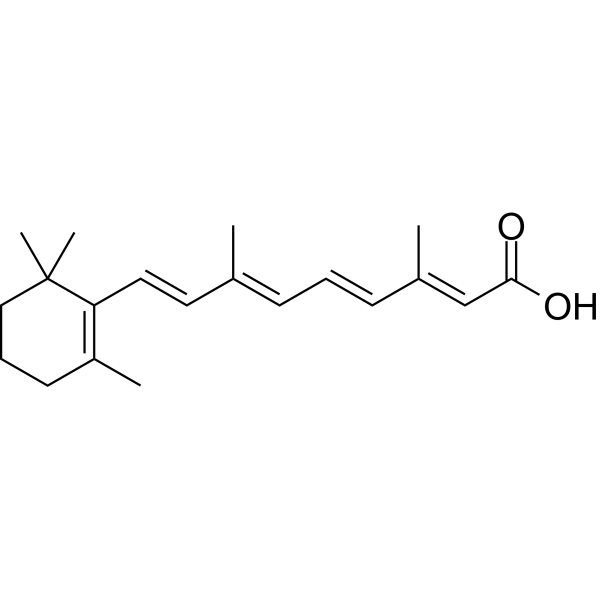
HY-14649
Retinoic acid -
HY-Y0320
Dimethyl sulfoxide, meets analytical specification of Ch.P. -
HY-P7087
PDGF-BB Protein, Mouse -
HY-P7004
FGF basic/bFGF Protein, Human (146a.a) -
HY-P7182
GDNF Protein, Human


Biological Activity
Description
CNTF is a pluripotent neurotrophic factor, belonging to the IL-6 cytokine family[1]. CNTF could protect retinal cone and rod photoreceptors[2]. CNTF has neuroprotective effects on a variety of central and also peripheral nervous system neurons[3]. CNTF Protein, Mouse is produced by E. coli (A2-M198) with tag free.
Background
Ciliary Neurotrophic Factor (CNTF) belongs to the IL-6 cytokine family. IL-6, IL-11 and CNTF are associated with cytokine trans signaling. CNTF shows a low affinity interaction with IL-6 receptor subunit alpha (IL-6Rα), leading to the formation and activation of the IL-6Rβ/gp130/LIFR signaling receptor complex[1]. CNTF is also an extracellular signaling protein in the neuroretinal and the interphotoreceptor matrix, which is associated with the membranes of the RPE, Muller and photoreceptor cells[2]. CNTF has neuroprotective effects on a variety of central and also peripheral nervous system neurons. Because it promotes differentiation and maturation of oligodendrocyte precursor cells to oligodendrocytes under in vitro conditions and thus improves remyelination. Importantly, it also increases the survival of mature oligodendrocytes[3]. The similarity of human CNTF protein sequences to mice and rats was 81.82% and 84.0%, respectively.
In Vitro
CNTF (mouse; 10 ng/mL; 1 h) inhibits high-threshold Ca channel currents in fetal mouse cortical neurones[4].
In Vivo
CNTF (mouse; 0.3 mg/kg; i.p.; single dose), injected into the intraperitoneal cavity of C57/Bl6 mice, activates AMPK and increases gene expression[5].
Verified Bioactivity
The ED50 is <30 ng/mL as measured by its ability to induce alkaline phosphatase production by TF-1 cells.
MCE Validation Data
-
Purity - SDS-PAGE
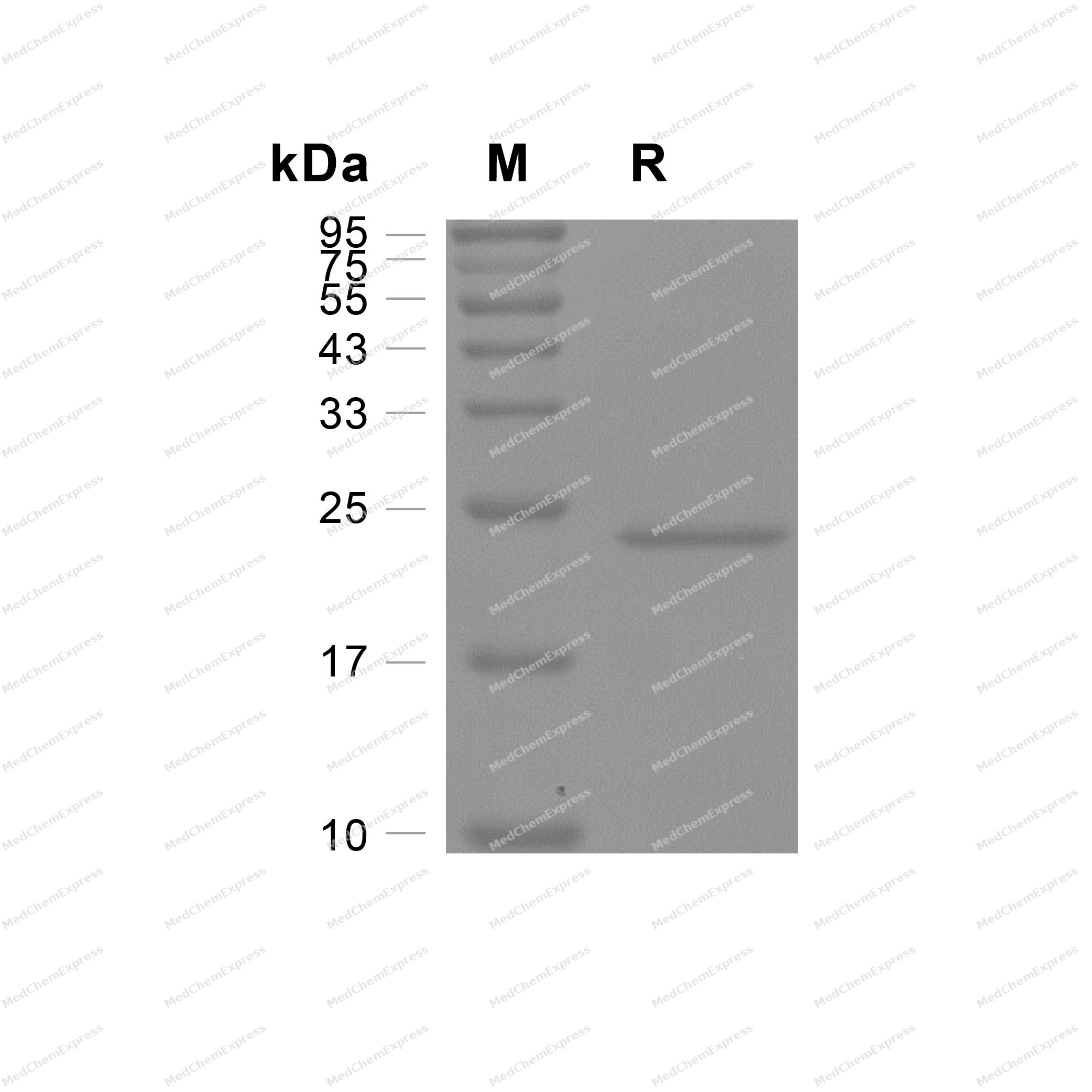
Purity - SDS-PAGE
-
Bioactivity - Cell-Based Assay
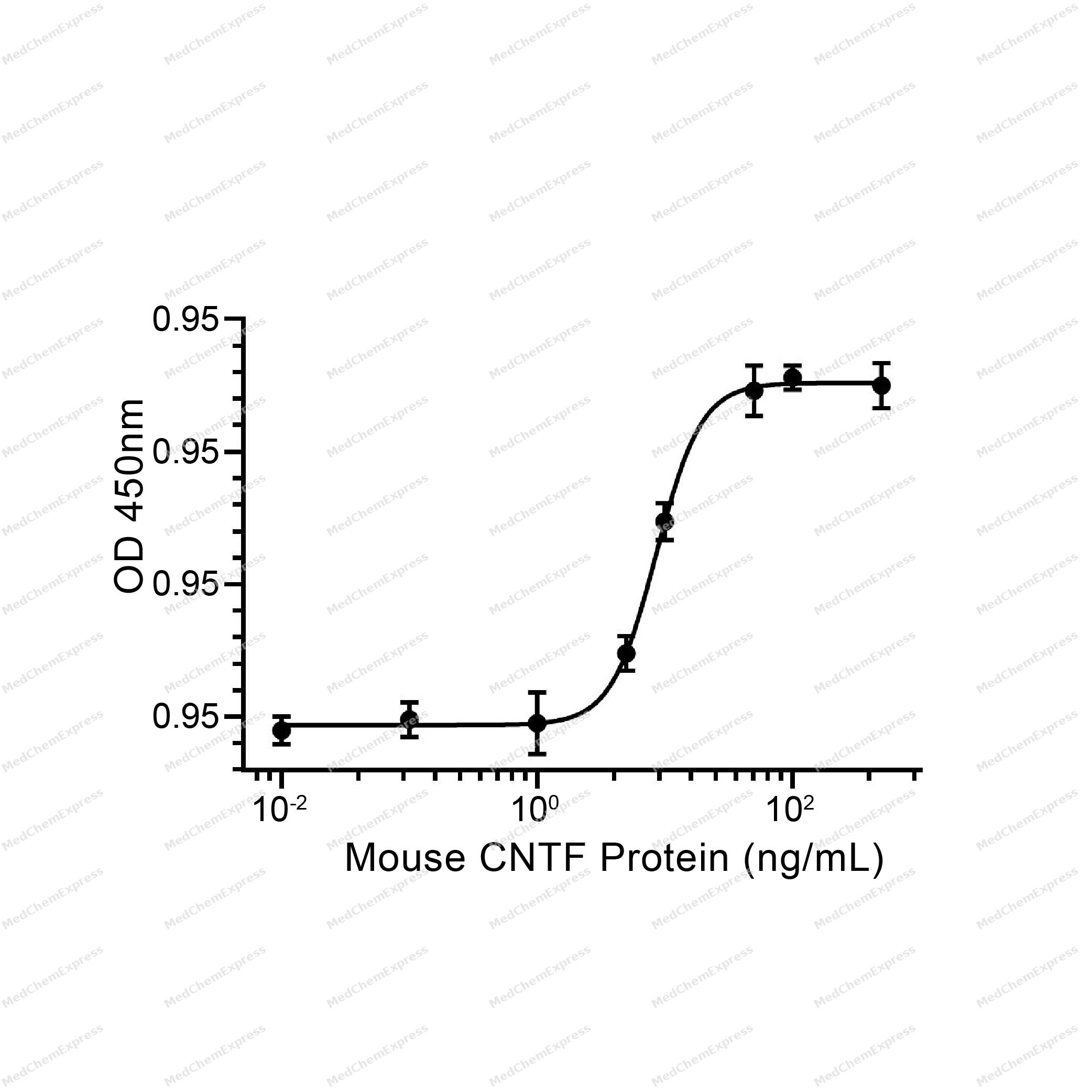
Bioactivity - Cell-Based Assay


Publications (1)
-
Journal Impact Factor
-
Most Recent
-
Exp Neurol
Inhibition of histamine receptor 3 alleviates sevoflurane-induced hypomyelination and neurobehavioral deficits. [Abstract]2025 Mar:385:115086. PMID: 39637962


Technical Parameters
-
Species Mouse
-
Source E. coli
-
Tag Tag Free
-
Accession
P51642 (A2-M198)
-
Molecular Construction
-
N-term
-
CNTF (A2-M198)
Accession # P51642 -
C-term
-
-
Protein Length
Full Length
-
Synonyms
CNTF; HCNTF; Ciliary Neurotrophic Factor; Ciliary Neuronotrophic Factor
-
AA Sequence
AFAEQSPLTLHRRDLCSRSIWLARKIRSDLTALMESYVKHQGLNKNISLDSVDGVPVASTDRWSEMTEAERLQENLQAYRTFQGMLTKLLEDQRVHFTPTEGDFHQAIHTLTLQVSAFAYQLEELMALLEQKVPEKEADGMPVTIGDGGLFEKKLWGLKVLQELSQWTVRSIHDLRVISSHHMGISAHESHYGAKQM
-
Predicted Molecular Mass
22.5 kDa
-
Molecular Weight
Approximately 23 kDa, based on SDS-PAGE under reducing conditions.
-
Purity
≥ 95%, as determined by reducing SDS-PAGE.


Product Properties
Lyophilized powder
1.Lyophilized from a 0.22 μm filtered solution of PBS.
2.Lyophilized from a 0.22 μm filtered solution of 50 mM Tris-HCl, 300 mM NaCl, pH 7.4.
Please refer to the lot-specific COA for specific buffer information.
Note: For SPR assay, please replace the buffer. Primary amine components (e.g., Tris, imidazole) can affect protein-coupled chips.
<0.2 EU/μg, determined by LAL method.
It is not recommended to reconstitute to a concentration less than 100 μg/mL in ddH2O. For long term storage it is recommended to add a carrier protein (0.1% BSA, 5% HSA, 10% FBS or 5% Trehalose).
Stored at -20°C for 2 years from date of receipt. After reconstitution, it is stable at 4°C for 1 week or -20°C for longer (with carrier protein). It is recommended to freeze aliquots at -20°C or -80°C for extended storage.
Room temperature in continental US; may vary elsewhere.


Documentation
-
Data Sheet (264 KB)
-
SDS (251 KB)
- English - EN (251 KB)
- Français - FR (251 KB)
- Deutsch - DE (251 KB)
- Norwegian - NO (251 KB)
- Español - ES (251 KB)
- Swedish - SV (251 KB)
- Italian - IT (251 KB)
- Korean - KR (251 KB)
- Portuguese - PT (251 KB)
-
Handling Instructions (2659 KB)


References
[1]. Jones SA, et al. Recent insights into targeting the IL-6 cytokine family in inflammatory diseases and cancer. Nat Rev Immunol. 2018 Dec;18(12):773-789. [Content Brief]
[2]. Li S, et al. Ciliary neurotrophic factor (CNTF) protects retinal cone and rod photoreceptors by suppressing excessive formation of the visual pigments. J Biol Chem. 2018 Sep 28;293(39):15256-15268. [Content Brief]
[3]. Abbaszadeh HA, et al. Human ciliary neurotrophic factor-overexpressing stable bone marrow stromal cells in the treatment of a rat model of traumatic spinal cord injury. Cytotherapy. 2015 Jul;17(7):912-21. [Content Brief]
[4]. Holm NR, et al. CNTF inhibits high voltage activated Ca2+ currents in fetal mouse cortical neurones. J Neurochem. 2002 Aug;82(3):495-503. [Content Brief]
[5]. Watt MJ, et al. CNTF reverses obesity-induced insulin resistance by activating skeletal muscle AMPK. Nat Med. 2006 May;12(5):541-8. [Content Brief]

Calculators
Concentration (start) × Volume (start) = Concentration (final) × Volume (final)


 Powered by Bioz

