



RET-IN-4
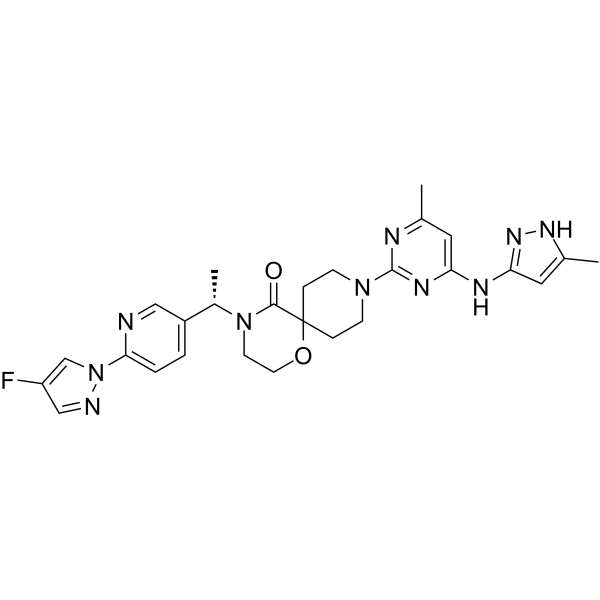
RET-IN-4 is a potent, selective and orally active RET inhibitor with IC50s of 1.29 nM, 1.97 nM, and 0.99 nM for RET (WT), RET (V804M), and RET (M918T), respectively. RET-IN-4 exhibits better kinases selectivity against JAK2 (IC50 of 4.4 nM) and FLT3 (IC50 of 30.8 nM). RET-IN-4 has anticancer effects.
Nos produits utilisent uniquement pour la recherche. Nous ne vendons pas aux patients.
- CAS No.: 2436473-55-9
- Formule: C27H31FN10O2
- Masse moléculaire:546.60
-
Stockage:
Please store the product under the recommended conditions in the Certificate of Analysis.

To place orders, for customer services and technical support, please contact: MedChemExpress USA
Tel: 609-228-6898 E-mail: [email protected] [email protected]


-
 Activité biologique
-
Chemical Information
- Pureté et documentation
- Références
-
 Help & FAQs


-
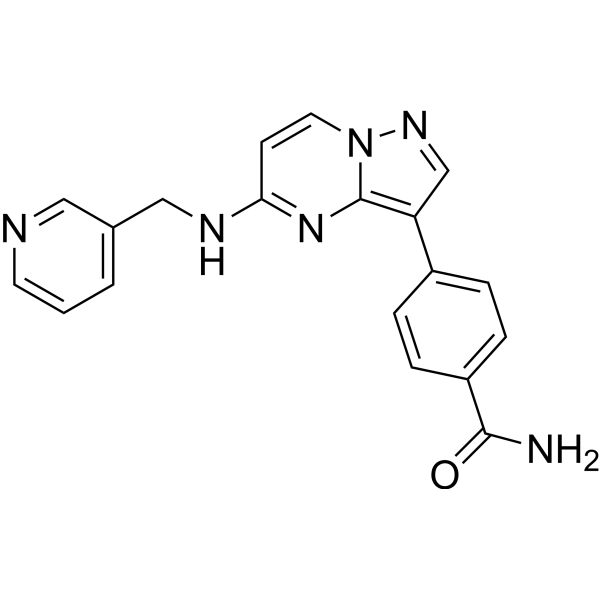
HY-136534
RET V804M-IN-1RET Inhibitor -
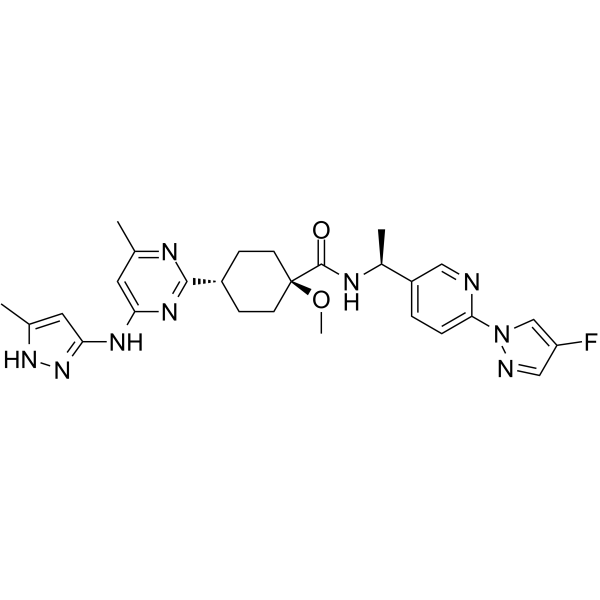
HY-112301A
trans-PralsetinibRET Inhibitor -
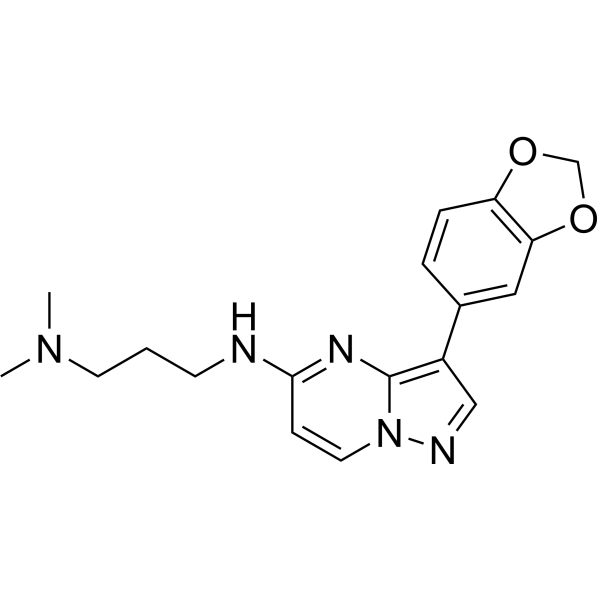
HY-133553
RET-IN-3RET Inhibitor -
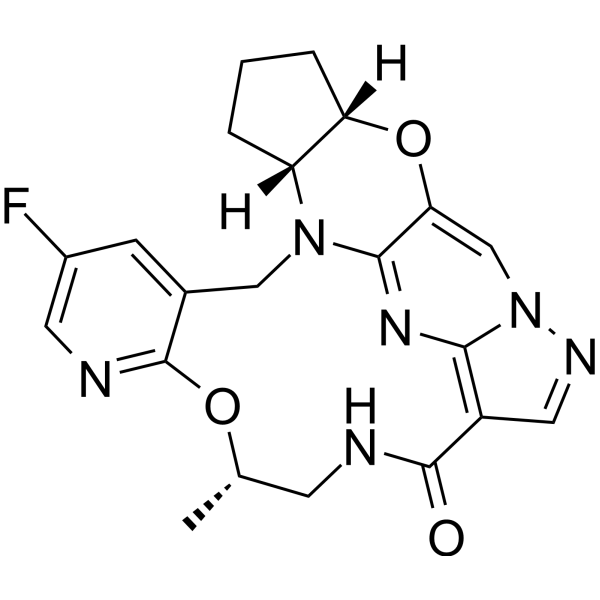
HY-145565
EnbezotinibRET Inhibitor -
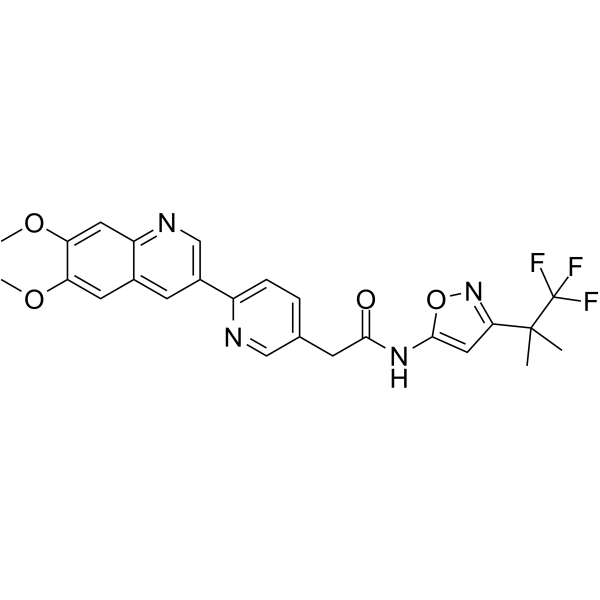
HY-139590
ZeteletinibRET Kinase Inhibitor -

HY-112301AR
trans-Pralsetinib (Standard)RET Inhibitor -
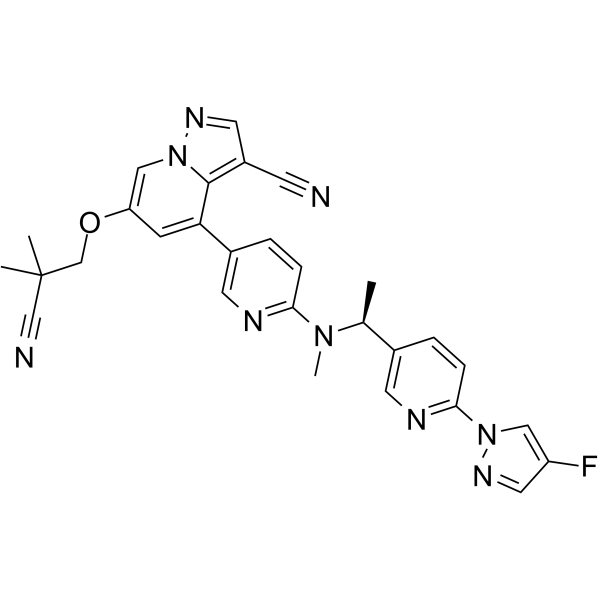
HY-145023
RET-IN-5RET Inhibitor -
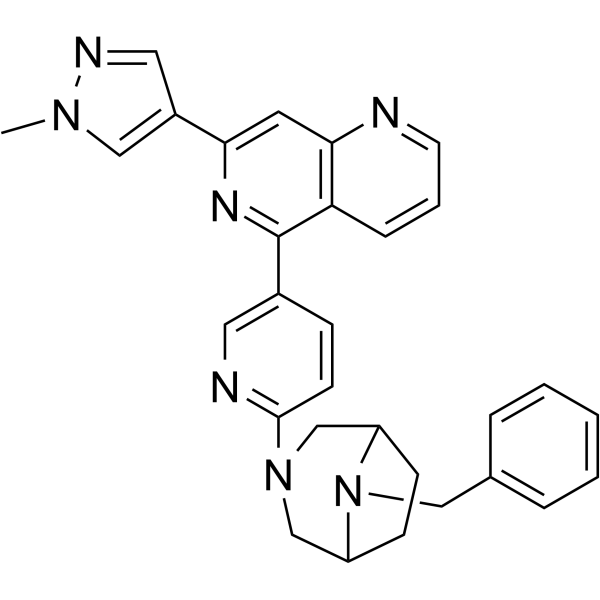
HY-145024
RET-IN-6RET Inhibitor -
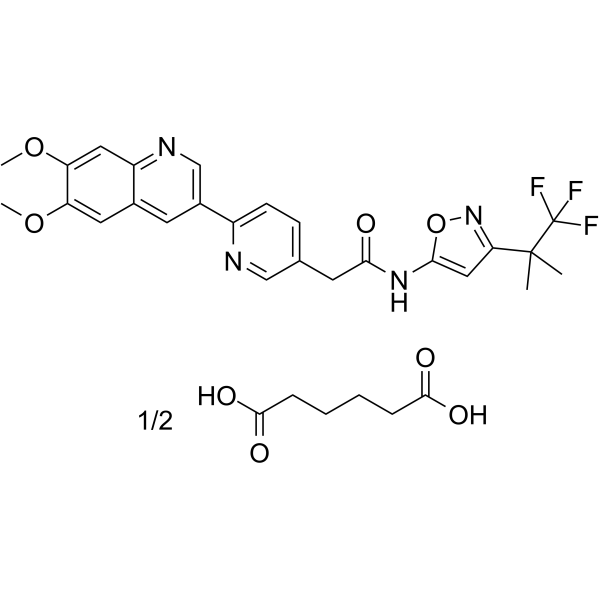
HY-139590A
Zeteletinib hemiadipateRET Kinase Inhibitor


Activité biologique
Description
IC50 & Target
IC50: 1.29 nM (RET (WT)), 1.97 nM (RET (V804M)), and 0.99 nM (RET (M918T))[1]
Cellular Effect
|
Cell Line

|
Type | Value | Description | References |
|---|---|---|---|---|
| BaF3 | IC50 |
19 nM
Compound: 9
|
Antiproliferative activity against mouse KIF5B-RET BaF3 cells by cell based assay
Antiproliferative activity against mouse KIF5B-RET BaF3 cells by cell based assay
|
[PMID: 34058344] |
In Vitro
The proliferation of Ba/F3 cells transformed with NSCLC related KIF5B-RET fusion is effectively suppressed by RET-IN-4 (compound 9) (IC50 of 19 nM). RET-IN-4 displays less ‘off-target’ effects than BLU-667[1].
MedChemExpress (MCE) has not independently confirmed the accuracy of these methods. They are for reference only.
In Vivo
MedChemExpress (MCE) has not independently confirmed the accuracy of these methods. They are for reference only.
-
Animal Model:Immunodeficient nude/nude mice bearing KIF5B-RET Ba/F3 cells[1]
-
Dosage:10 mg/kg, 20 mg/kg
-
Administration:p.o.; daily; for 10 days
-
Result:The tumor growth was remarkably suppressed.


Chemical Information
-
CAS No. 2436473-55-9
-
Masse moléculaire 546.60
-
Formule C27H31FN10O2
-
SMILES
O=C1N([C@H](C2=CC=C(N3N=CC(F)=C3)N=C2)C)CCOC14CCN(C5=NC(NC6=NNC(C)=C6)=CC(C)=N5)CC4
-
Livraison
Room temperature in continental US; may vary elsewhere.
-
Stockage
Please store the product under the recommended conditions in the Certificate of Analysis.


Pureté et documentation
Références

Calculators
Concentration (start) × Volume (start) = Concentration (final) × Volume (final)


RET-IN-4 Related Classifications
HY-132193 Related Classifications
 Powered by Bioz