



Reducing Sugars

- Formula: C6H11FO5
- Molecular Weight: 182.15
3-Deoxy-3-fluoro-D-mannose is a class of biochemical reagents used in glycobiology research. Glycobiology studies the structure, synthesis, biology, and evolution of sugars. It involves carbohydrate chemistry, enzymology of glycan formation and degradation, protein-glycan recognition, and the role of glycans in biological systems. This field is closely related to basic research, biomedicine, and biotechnology.

- Formula: C14H19FO9
- Molecular Weight: 350.29
Acetofluoro-α-D-mannose is a class of biochemical reagents used in glycobiology research. Glycobiology studies the structure, synthesis, biology, and evolution of sugars. It involves carbohydrate chemistry, enzymology of glycan formation and degradation, protein-glycan recognition, and the role of glycans in biological systems. This field is closely related to basic research, biomedicine, and biotechnology.


- Formula: C20H22N4O5
- Molecular Weight: 398.41
3-Deoxy-D-erythro-hexos-2-ulose bis(2-benzoylhydrazone) is a class of biochemical reagents used in glycobiology research. Glycobiology studies the structure, synthesis, biology, and evolution of sugars. It involves carbohydrate chemistry, enzymology of glycan formation and degradation, protein-glycan recognition, and the role of glycans in biological systems. This field is closely related to basic research, biomedicine, and biotechnology.

- Formula: C6H11FO5
- Molecular Weight: 182.15
4-Deoxy-4-fluoro-D-mannose is a class of biochemical reagents used in glycobiology research. Glycobiology studies the structure, synthesis, biology, and evolution of sugars. It involves carbohydrate chemistry, enzymology of glycan formation and degradation, protein-glycan recognition, and the role of glycans in biological systems. This field is closely related to basic research, biomedicine, and biotechnology.

- Formula: C6H10O7.1/2Ca
- Molecular Weight: 214.18
2-Keto-d-gluconic acid (hemicalcium monohydrate) is a biochemical assay reagent.

- Formula: C9H14O7
- Molecular Weight: 234.20
D-Glucuronic acid,2-propen-1-yl ester is a biochemical assay reagent.

- Formula: C7H12O7
- Molecular Weight: 208.17
Methyl D-galacturonate is a class of biochemical reagent used in glycobiology research. Glycobiology investigates the structure, synthesis, biology and evolution of sugars. It covers carbohydrate chemistry, enzymology of glycan formation and degradation, protein-glycan recognition, as well as the roles of glycans in biological systems. This field is closely related to basic research, biomedicine and biotechnology.

- Formula: C6H11K2O9P
- Molecular Weight: 336.32
D-Glucose 6-phosphate dipotassium is a key central node metabolite in glucose metabolism. It serves as the initiating metabolite for glycolysis and the pentose phosphate pathway, as well as a substrate for glycogen synthesis. D-Glucose 6-phosphate dipotassium acts as a metabolic stress signal, which activates the mTOR pathway to promote protein synthesis, especially when phosphoglucose isomerase (PGI) is inhibited, thereby participating in cardiac remodeling processes. D-Glucose 6-phosphate dipotassium can be used in research related to non-insulin-dependent diabetes mellitus and heart failure.
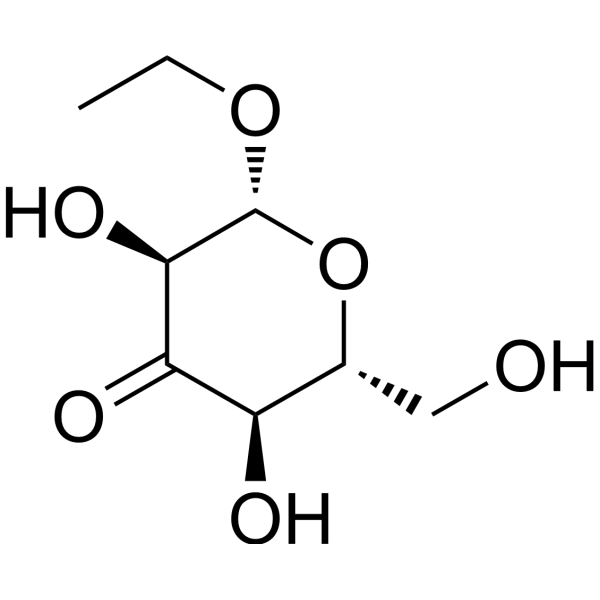
- Formula: C8H14O6
- Molecular Weight: 206.19
Ethyl β-D-ribo-hexopyranosid-3-ulose (Compound 2) is a natural product that can be isolated from Coleus forskohlii.
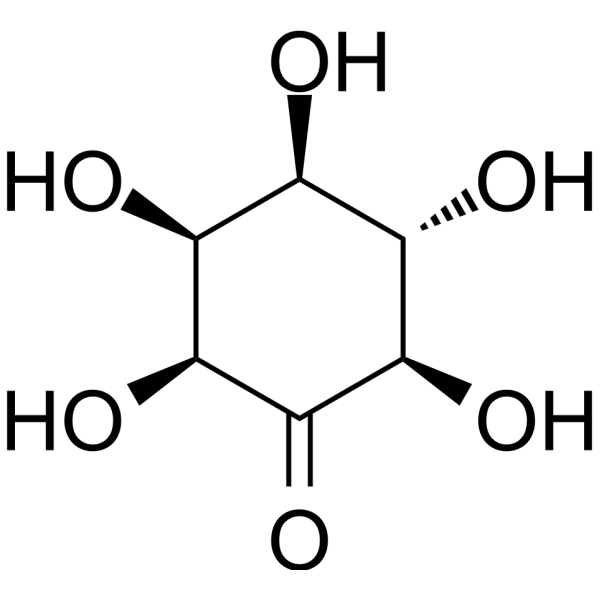
- Formula: C6H10O6
- Molecular Weight: 178.14
1L-epi-2-Inosose is a biochemical reagent that can be used as a biological material or organic compound for life science related research.
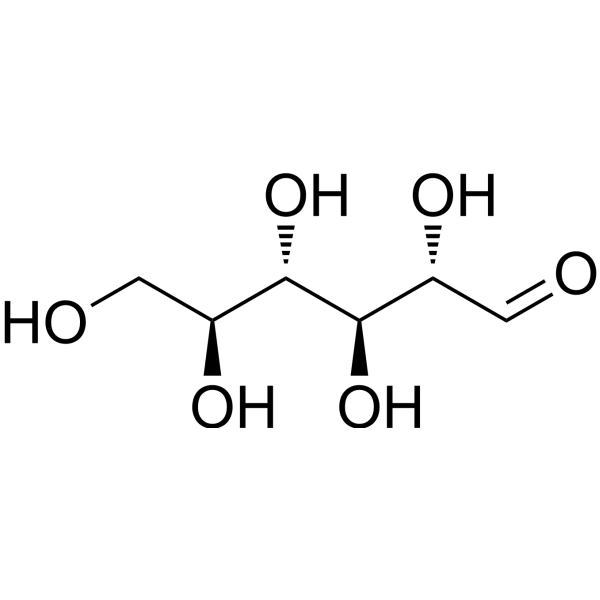
- Formula: C6H12O6
- Molecular Weight: 180.16
L-Allose is a biochemical reagent that can be used as a biological material or organic compound for life science related research.
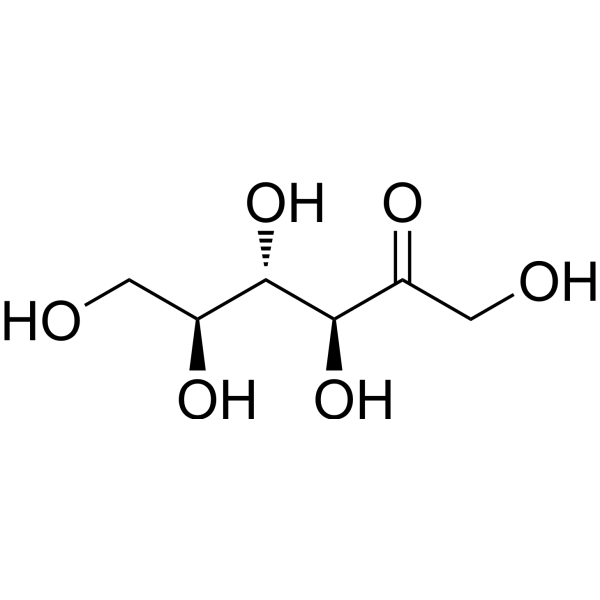
- Formula: C6H12O6
- Molecular Weight: 180.16
L-Psicose is a biochemical reagent that can be used as a biological material or organic compound for life science related research.
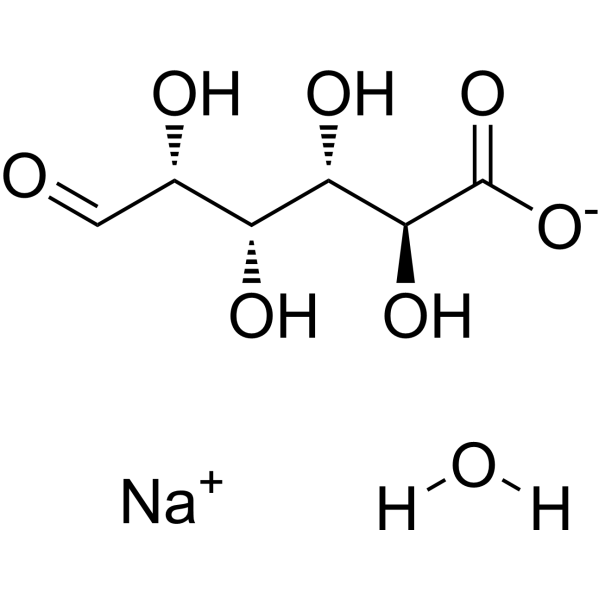
- Formula: C6H11NaO8
- Molecular Weight: 234.14
D-Glucuronic acid sodium salt monohydrate is a major component of many anti-inflammatory proteoglycans, which can promote embryonic development and inhibit cell aggregation. After being metabolized into ethyl glucuronide (HY-113093), D-Glucuronic acid sodium salt monohydrate activates Toll-like receptor 4 (TLR4), causing pain. D-Glucuronic acid sodium salt monohydrate and its derivative glucurono-lactone can serve as liver detoxifiers, and its derivatives also possess anti-tumor activity.

- Formula: C6H10O6
- Molecular Weight: 178.14
D-gluco-Hexodialdose,a glucose, is a chiral intermediate with multiple industrial applications. D-gluco-Hexodialdose is a building block for the synthesis of Organoboron monosaccharides.
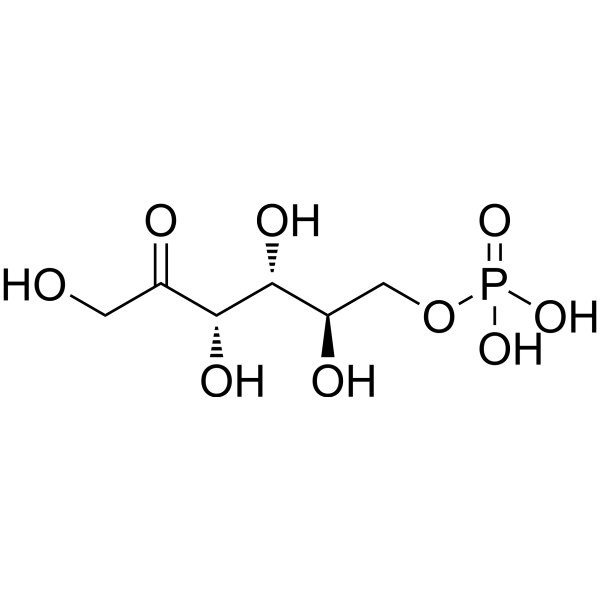
- Formula: C6H13O9P
- Molecular Weight: 260.14
D-Fructose 6-phosphate is an endogenous metabolite. D-Fructose 6-phosphate can be obtained by hydrolysis of Fructose-1,6-bisphosphatase (FBPase). D-Fructose-6-phosphate is a sugar intermediate in the glycolysis pathway and the pentose phosphate pathway. D-Fructose-6-phosphate can be used to detect glucosamine-6-phosphate synthase and TAL activities. D-Fructose 6-phosphate can be used to study Lewy body dementia.



