



Reducing Sugars
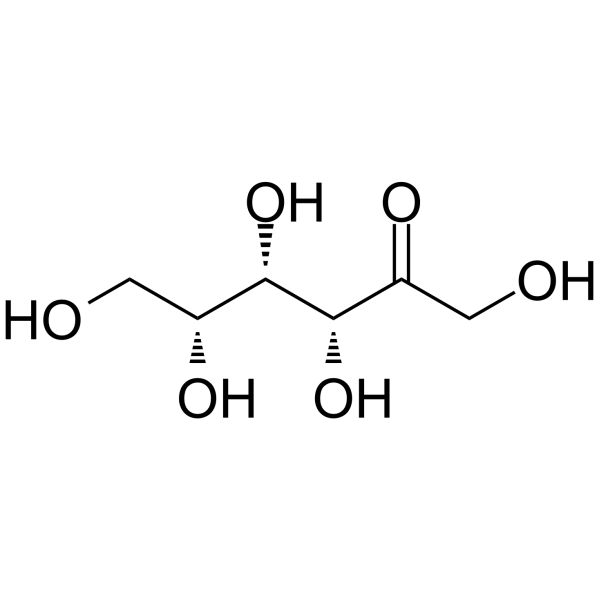
- Formula: C6H12O6
- Molecular Weight: 180.16
D-(+)-Sorbose, an active enantiomer of D-Sorbose, which inhibits disaccharidase activity and demonstrates suppressive action on postprandial blood levels of glucose and insulin in the rat. D-sorbose acts as a sweetener may contribute to the prevention of lifestyle-related diseases, such as type 2 diabetes mellitus.
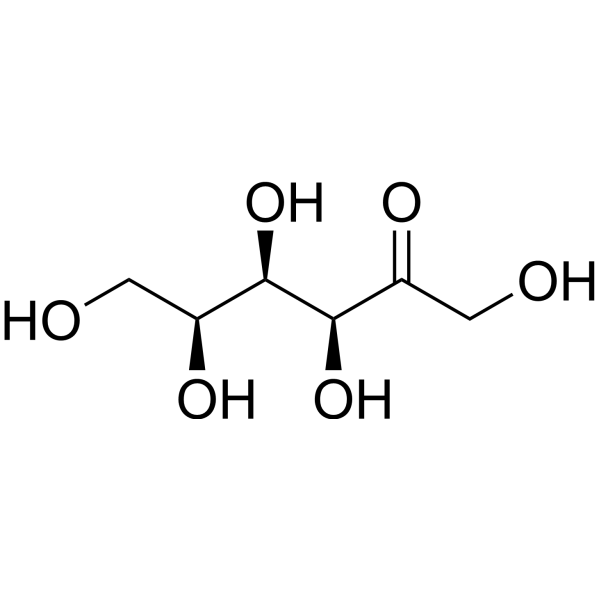
- Formula: C6H12O6
- Molecular Weight: 180.16
L-(-)-Sorbose (L-Sorbose) is a monosaccharide that induces the production of cellulase. L-(-)-Sorbose regulates the coordinated transcription of 6 cellulase genes (including egl3) in Trichoderma reesei strains. L-(-)-Sorbose is currently the only monosaccharide reported to exhibit cellulase-inducing activity.

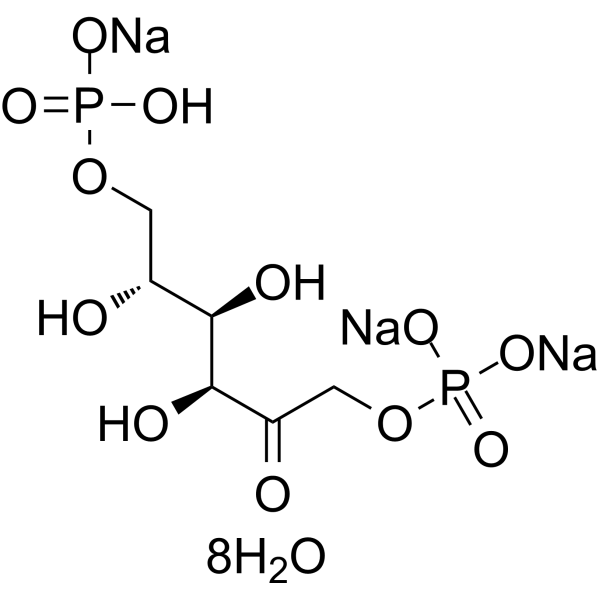
- Formula: C6H27Na3O20P2
- Molecular Weight: 550.18
Fosfructose trisodium octahydrate is a phosphorylated sugar derivative used in biochemical research and is also an intermediate in carbohydrate metabolism.
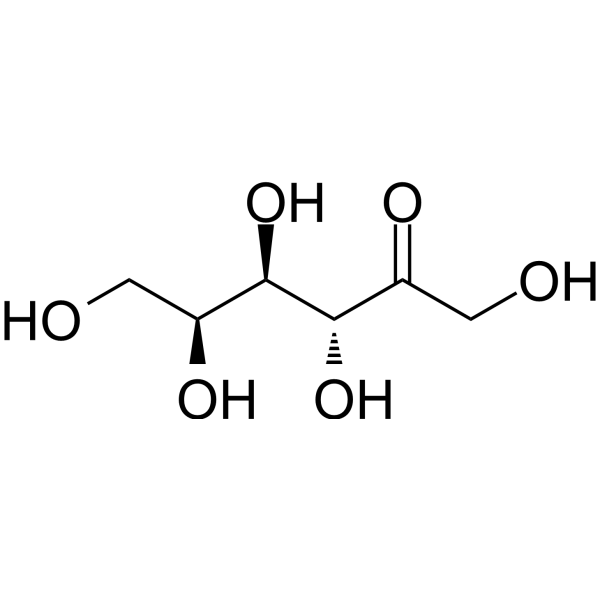
- Formula: C6H12O6
- Molecular Weight: 180.16
L-Tagatose is a biochemical reagent that can be used as a biological material or organic compound for life science related research.
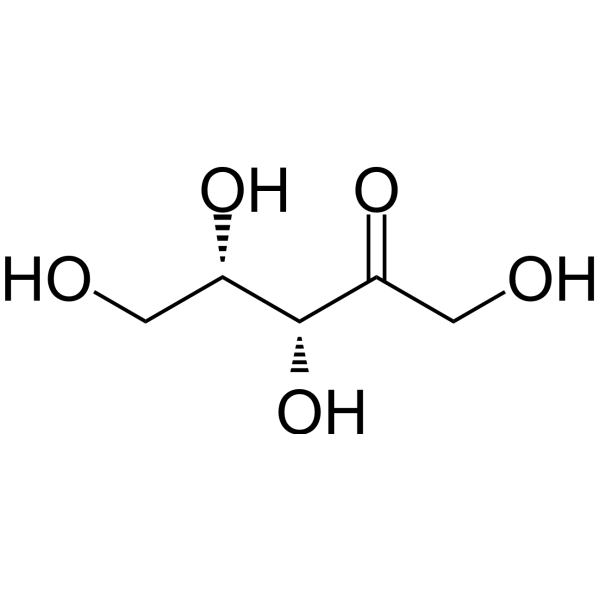
- Formula: C5H10O5
- Molecular Weight: 150.13
L-Xylulose is an endogenous metabolite present in Blood, Cerebrospinal_Fluid and Urine that can be used for the research of Ribose 5 Phosphate Isomerase Deficiency.

- Formula: C5H10O5
- Molecular Weight: 150.13
D-Ribulose (1 M in water) is a pentose sugar, a key intermediate in the Calvin cycle, and a substrate for pentose isomerase and ribulokinase. D-Ribulose (1 M in water) can be enzymatically converted to D-arabinose by pentose isomerase; it undergoes a two-step oxidation by cells of Acetobacter suboxydans. D-Ribulose (1 M in water) can be used in metabolism-related research.
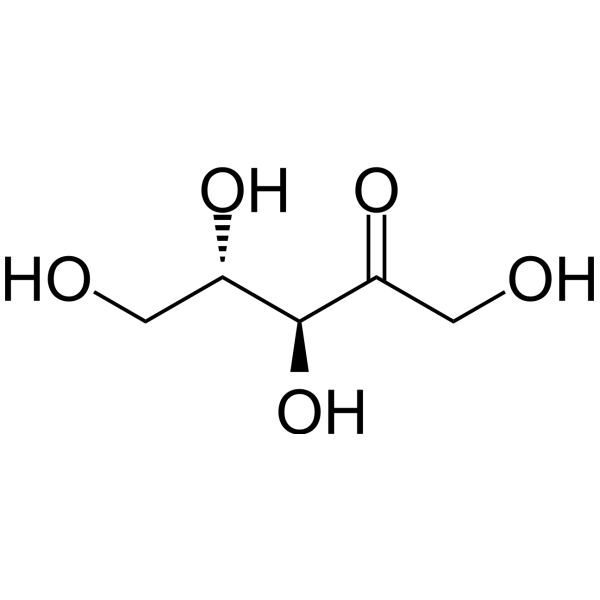
- Formula: C5H10O5
- Molecular Weight: 150.13
L-Ribulose is an L-form pentulose. L-Ribulose serves as a key precursor for the synthesis of L-ribose and L-nucleoside analogs.
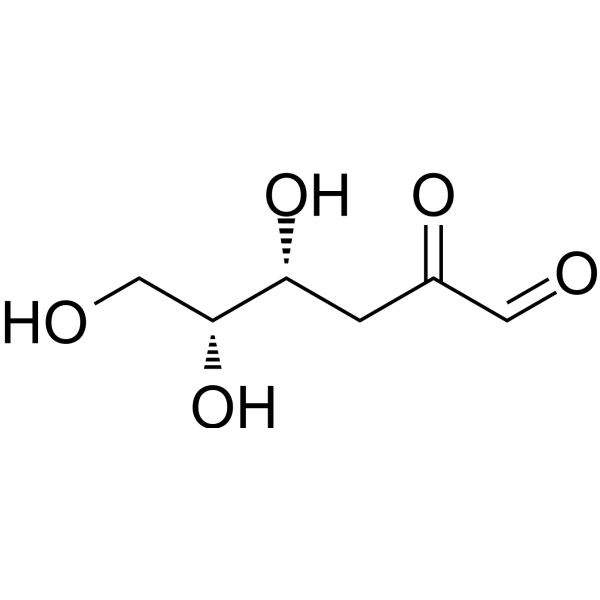

- Formula: C6H10O7
- Molecular Weight: 194.14
2-keto-D-Gluconic acid is a key precursor for synthesising vitamin C (HY-B0166) and isovitamin C.
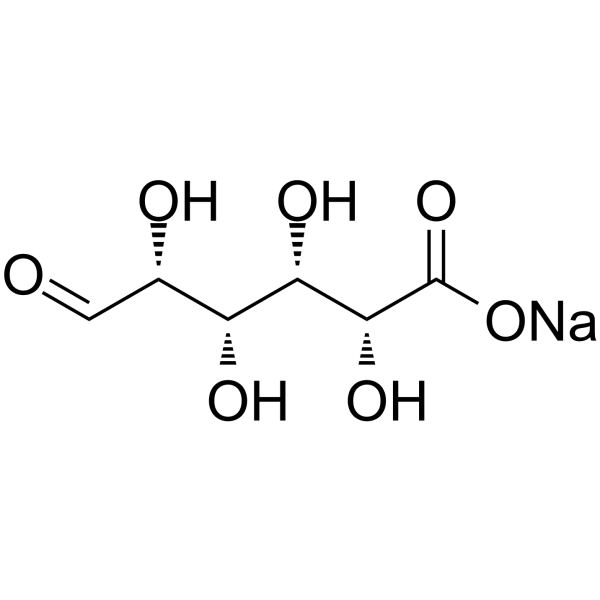
- Formula: C6H9NaO7
- Molecular Weight: 216.12
L-Iduronic acid sodium salt is an important monosaccharide component of glycosaminoglycans (GAGs) such as Heparin, Heparan sulfate and Dermatan sulfate.

- Formula: C7H14O7
- Molecular Weight: 210.18
Sedoheptulose is a heptulose. Sedoheptulose, in the form of phosphate esters, functions as a metabolic intermediate in the pentose phosphate pathway. Sedoheptulose serves as a starting material for the chemical synthesis of pseudoaminosugars and chiral substituted furans.
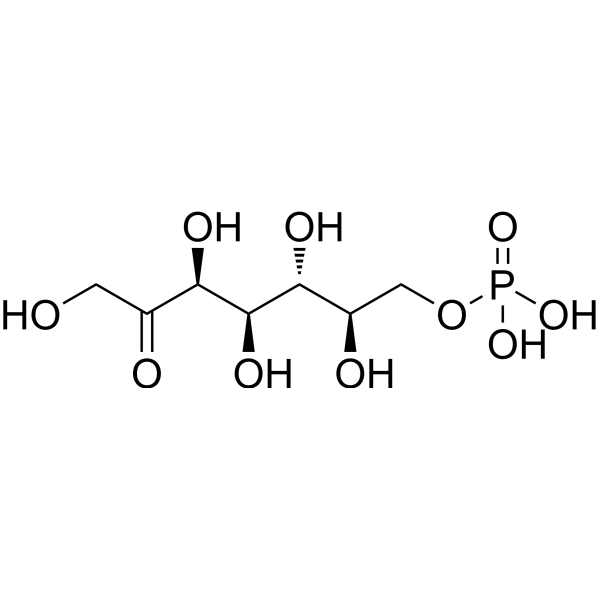
- Formula: C7H15O10P
- Molecular Weight: 290.16
D-Sedoheptulose 7-phosphate is a common precursor for the heptoses of septacidin (group III) and hygromycin B (group IV). D-Sedoheptulose 7-phosphate can be converted to NDP-heptoses through similar biosynthetic pathways in those compounds .

- Formula: C6H12O6
- Molecular Weight: 180.16
L-(+)-Fructose, 95% (L-arabino-2-Hexulose, 95%) is the L-isomer of D-Fructose (HY-N7092). L-(+)-Fructose, 95% participates in glycolysis and gluconeogenesis, and can be used to study photosynthesis and carbohydrate storage in plant biology. L-(+)-Fructose, 95% is applicable for investigating the activity of fructokinase and other fructose-metabolizing enzymes.

- Formula: C6H13O9P
- Molecular Weight: 260.14
D-Fructose 1-phosphate is a key intermediate metabolite in the fructose metabolic pathway. As a key signaling molecule linking fructose metabolism and glucose metabolic regulation, D-Fructose 1-phosphate acts as an allosteric modulator to counteract the inhibitory effect of the glucokinase-regulatory protein complex, thereby finely regulating the direction of hepatic glucose metabolism at the substrate level.

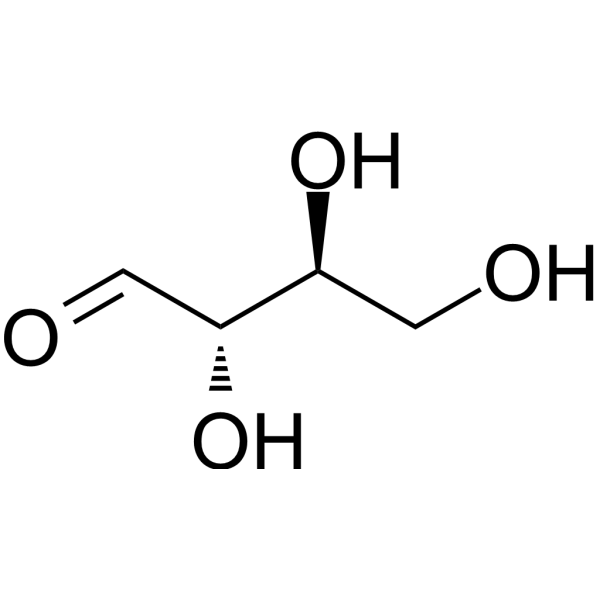
- Formula: C4H8O4
- Molecular Weight: 120.10
L-Erythrose (solution) (70% in water) is an aldose carbohydrate that has been used in glycation studies and to characterize erythrose reductase activity.

- Formula: C7H13O10P
- Molecular Weight: 288.15
3-Deoxy-D-arabino-heptulosonate 7-phosphate is a key intermediate in the biosynthetic pathway of aromatic amino acids. 3-Deoxy-D-arabino-heptulosonate 7-phosphate is formed by the condensation of D-erythrose-4-phosphate and phosphoenolpyruvate (PEP) catalyzed by DAHP synthase. 3-Deoxy-D-arabino-heptulosonate 7-phosphate can be used in studies related to cellular metabolism.

- Formula: C6H10Ca2O12P2
- Molecular Weight: 416.24
Calcium fructose diphosphate (Dicalcium 1,6-di-O-phosphonato-L-tagatose) is a crucial intermediate in the glycolysis process and is closely related to ATP synthesis. Calcium fructose diphosphate can be used to regulate calcium and phosphorus balance, protect myocardial tissue from ischemia/reperfusion injury, counteract the effects of alcohol, and serve as a safer source of phosphate in parenteral nutrition.

- Formula: C35H34O6
- Molecular Weight: 550.64
Benzyl 2,3-O-Isopropylidene-6-O-trityl-5-keto-α-D-mannofuranose is a class of biochemical reagents used in glycobiology research. Glycobiology studies the structure, synthesis, biology, and evolution of sugars. It involves carbohydrate chemistry, enzymology of glycan formation and degradation, protein-glycan recognition, and the role of glycans in biological systems. This field is closely related to basic research, biomedicine, and biotechnology.



