

232 Results for "

Volatile

" in MedChemExpress (MCE) Product Catalog:
Products (232)

232 Results for "Volatile" in MCE Product Catalog:

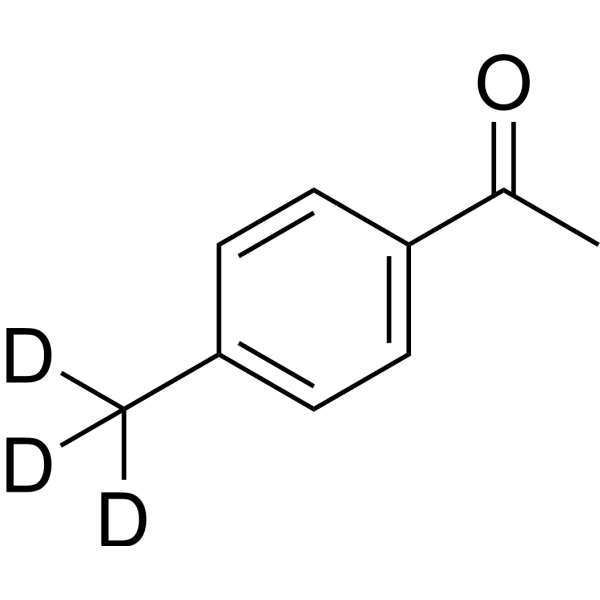
Cat. No.: HY-W012653S1
CAS No.: 114379-92-9
4'-Methylacetophenone-d3 is the deuterium labeled 4'-Methylacetophenone (HY-W012653) . 4′-Methylacetophenone is a phenolic compound that can be used as a fragrance material. 4′-Methylacetophenone is wildly occurs in volatile compounds in food and in some natural complex substances (NCS). 4′-Methylacetophenone can be used to study the Bayer-Villiger reaction and to synthesize functionalized terpolymers .
loading...
    loading...
Cat. No.: HY-W012836R
CAS No.: 123-07-9
4-Ethylphenol (Standard) is the analytical standard of 4-Ethylphenol (HY-W012836). This product is intended for research and analytical applications. 4-Ethylphenol is a volatile phenolic compound associated with off-odour in wine. 4-Ethylphenol is a phenolic compound that can be synthesized by intestinal flora. 4-Ethylphenol will be converted to 4-ethylphenyl sulfate (HY-W674241) by Lactobacillus plantarum .
loading...
    loading...
Cat. No.: HY-W612164
CAS No.: 19089-47-5
2-Methyl-3-phenylpropanal is a volatile aromatic compound found in the flowers of legume host plants such as cowpeas and lentils. 2-Methyl-3-phenylpropanal can specifically bind to the odor-binding protein MvitOBP3 of the bean pod moth and exert potential oviposition attraction activity. 2-Methyl-3-phenylpropanal can be used for pest control .
loading...
    loading...
Cat. No.: HY-129300
CAS No.: 52888-80-9
Target:  

Endogenous Metabolite

Research Areas:  

Others

Prosulfocarb is a herbicide with a rapidly growing use trend. Prosulfocarb is used in winter cereals to help address the problem of increasing biotic resistance of weeds to certain pesticides. Environmental and food effects of prosulfocarb have been observed, and its transfer pattern from target crops to non-target areas has been studied. The volatility effect of prosulfocarb is an important factor explaining the inefficiency of isolated area contamination and marginal protection against residue spread .
loading...
    loading...
Cat. No.: HY-N16557
CAS No.: 77398-92-6
(Rac)-8-Gingerol is a non-volatile component. (Rac)-8-Gingerol can be extracted from ginger. (Rac)-8-Gingerol enhances Apoptosis. (Rac)-8-Gingerol decreases the level of phosphorylated EGFR and, accordingly, the phosphorylation levels of its downstream effectors, STAT3 and ERK. (Rac)-8-Gingerol exhibits anticancer activity against colorectal cancer .
loading...
    loading...
Cat. No.: HY-W004154R
CAS No.: 88-09-5
2-Ethylbutyric acid (Standard) is an analytical standard of 2-Ethylbutyric acid (HY-W004154). This product is intended for research and analytical applications. 2-Ethylbutyric acid is a volatile fatty acid. 2-Ethylbutyric acid exhibits phytotoxicity. 2-Ethylbutyric acid is used as an internal standard in milk and dairy products and as an internal standard (IS) in the calibration of fecal VFA standards. 2-Ethylbutyric acid can be used in the research of embryonic development .
loading...
    loading...
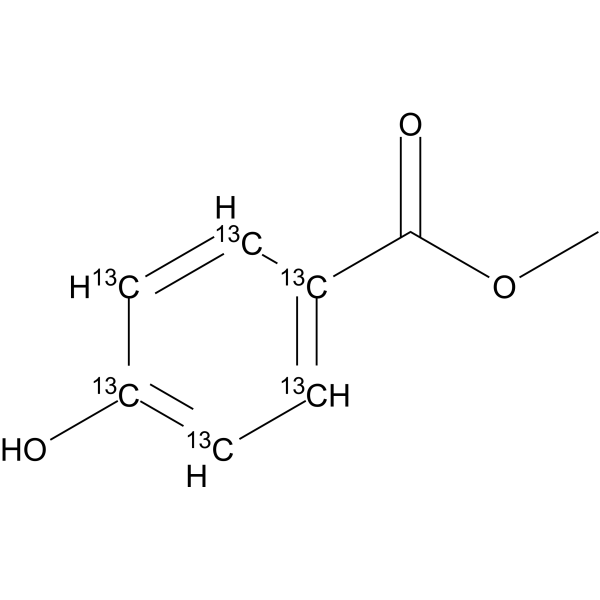
Cat. No.: HY-N0349S1
CAS No.: 1581694-95-2
Synonyms: Methyl 4-hydroxybenzoate-13C6
Methyl Paraben- 13C6 (Methyl 4-hydroxybenzoate- 13C6) is a 13C labeled Methyl Paraben (HY-N0349) . Methyl Paraben, isolated from the barks of Tsuga dumosa the methyl ester of p-hydroxybenzoic acid, is a standardized chemical allergen. Methyl Paraben is a stable, non-volatile compound used as an antimicrobial preservative in foods, agents and cosmetics. The physiologic effect of Methyl Paraben is by means of increased histamine release, and cell-mediated immunity .
loading...
    loading...
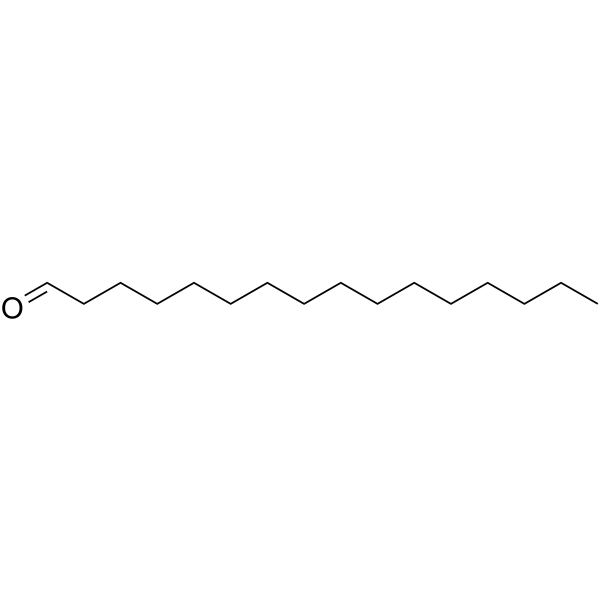
Cat. No.: HY-W004305
CAS No.: 629-80-1
Synonyms: Palmitaldehyde
Hexadecanal (Palmitaldehyde) , a volatile long-chain aliphatic aldehyde, is emitted from human feces, skin, and breath. The receptor for hexadecanal(OR37B) is highly conserved across mammals. Hexadecanal may exert its effects by modulating functional connectivity between the brain substrates of social appraisal and the brain substrates of aggressive execution. Also, Hexadecanal is confirmed to be highly deterrent to the ant Lasius niger. Hexadecanal is promising for the research of startle responses and aggression
loading...
    loading...
Cat. No.: HY-W585888
CAS No.: 87304-79-8
Research Areas:  

Others

Fructose-isoleucine is a non-volatile Amadori compound and Maillard reaction intermediate. Fructose-isoleucine is associated with roasted flavor and roasted odor in chicken soup samples as well as chicken soup supplemented with yeast-derived flavor products. Fructose-isoleucine is formed via the amino-carbonyl reaction and induces oxidative browning in miso, white wine and Saké. In malt, Fructose-isoleucine acts as a precursor via Strecker degradation to generate flavor compounds with roasted and sweet aromas .
loading...
    loading...
Cat. No.: HY-W701252
CAS No.: 1216543-26-8
Synonyms: Methyl 4-hydroxybenzoate-d3
Methyl paraben-d3 (Methyl 4-hydroxybenzoate-d3) is the deuterium labeled Methyl paraben (HY-N0349). Methyl Paraben is a standardized methyl paraben allergen isolated from Yunnan hemlock (Tsuga dumosa). Methyl Paraben is commonly used as a stable, non-volatile preservative. Methyl Paraben increases histamine release and cellular regulation of immunity, blocks sodium channels, and prevents ischemia-reperfusion injury .
loading...
    loading...
Cat. No.: HY-N17530
CAS No.: 14202-25-6
Methyl (9E,12E,15E)-octatrienoate is an aliphatic ester that exists in the leaves of Taxus wallichiana var. mairei .
loading...
    loading...
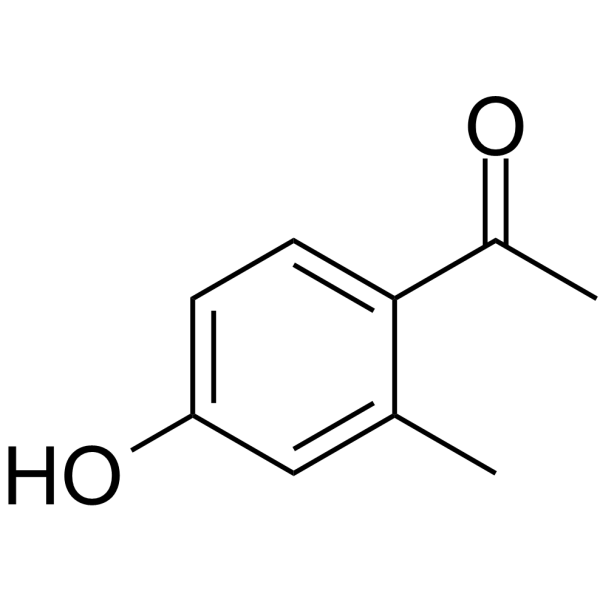
Cat. No.: HY-W010254
CAS No.: 875-59-2
4′-Hydroxy-2′-methylacetophenone is an aroma compound in red wine, which can be isolated from the cv. Bobal grape variety. 4′-Hydroxy-2′-methylacetophenone accumulates in adipose tissues and exerts non-specific membrane effects on Tetrahymena pyriformis. 4′-Hydroxy-2′-methylacetophenone inhibits the growth of Tetrahymena pyriformis .
loading...
    loading...
Cat. No.: HY-128429
CAS No.: 6728-26-3
Purity:  99.20%
Synonyms: (E)-2-Hexenal
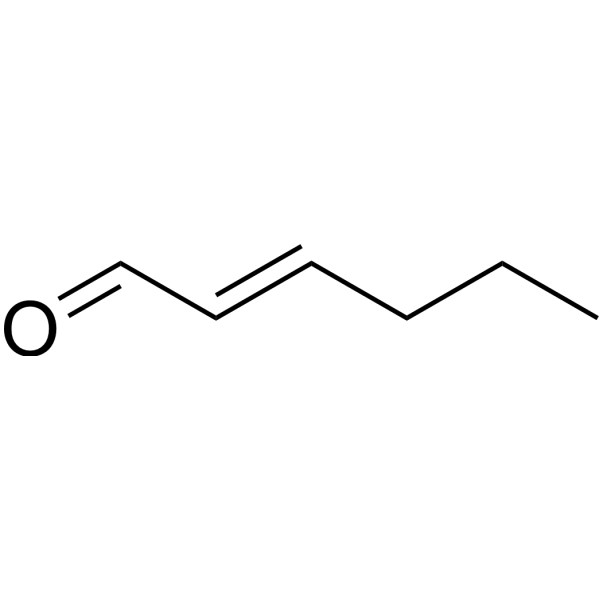
trans-2-Hexenal ((E)-2-Hexenal) is a volatile compound widely present in fresh plants, vegetables, and fruits, with a unique leafy aroma. trans-2-Hexenal has antifungal activity and can also inhibit the germination of soybean seeds and the growth of seedlings. In addition, trans-2-Hexenal can be used to determine low-molecular-weight carbonyl compounds that are reactive with biological nucleophiles in biological samples .
loading...
    loading...
Cat. No.: HY-W041080R
CAS No.: 1138-52-9
3,5-Di-tert-butylphenol (Standard) is the analytical standard of 3,5-Di-tert-butylphenol (HY-W041080). This product is intended for research and analytical applications. 3,5-Di-tert-butylphenol is an volatile organic compound with anti-biofilm and antifungal activities. 3,5-Di-tert-butylphenol induces accumulation of reactive oxygen species (ROS) in C. albicans cells. 3,5-Di-tert-butylphenol also has antibacterial activities.
loading...
    loading...
Cat. No.: HY-W099538
CAS No.: 123-28-4
Synonyms: Dilauryl 3,3'-Thiodipropionate
Dilauryl thiodipropionate (DLTDP), which is a sulfur-containing antioxidant commonly used to stabilize polymers and plastics against degradation caused by heat, oxygen, and UV light, acts to scavenge free radicals and others that may cause polymer chain scission and cross-linked active substances, in addition, DLTDP has been used as an additive to lubricants, oils and other industrial fluids to improve their oxidation stability, the long hydrocarbon chain in DLTDP makes it low volatility and compatible with many materials and Good compatibility with substrates.
loading...
    loading...
Cat. No.: HY-125678S
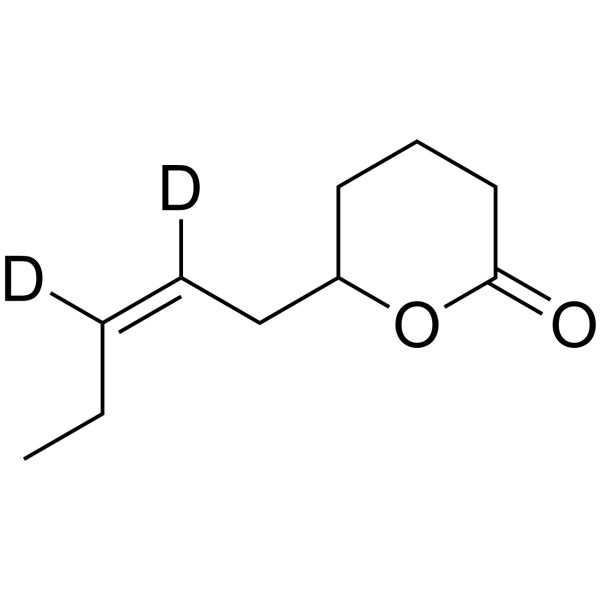
Jasmine lactone-d2 is deuterated labeled Jasmine lactone (HY-125678). Jasmine lactone, a volatile substance produced by plants under stress, has a strong odor and is known for its unique jasmine-like floral and fruity scent which is very popular in tea, especially in oolong and black tea. The biosynthesis mechanism of Jasmine lactone in tea is regulated by various stresses, including mechanical damage and low temperature stress. Continuous mechanical damage and low temperature and mechanical damage can enhance the accumulation of Jasmine lactone in tea .
loading...
    loading...
Cat. No.: HY-129300R
CAS No.: 52888-80-9
Research Areas:  

Others

Prosulfocarb (Standard) is the analytical standard of Prosulfocarb. This product is intended for research and analytical applications. Prosulfocarb is a herbicide with a rapidly growing use trend. Prosulfocarb is used in winter cereals to help address the problem of increasing biotic resistance of weeds to certain pesticides. Environmental and food effects of prosulfocarb have been observed, and its transfer pattern from target crops to non-target areas has been studied. The volatility effect of prosulfocarb is an important factor explaining the inefficiency of isolated area contamination and marginal protection against residue spread .
loading...
    loading...
Cat. No.: HY-N7176R
CAS No.: 22688-78-4
Synonyms: Kaempferol-3-glucuronide (Standard); Kaempferol-3-O-glucuronide (Standard)
Prosulfocarb (Standard) is the analytical standard of Prosulfocarb. This product is intended for research and analytical applications. Prosulfocarb is a herbicide with a rapidly growing use trend. Prosulfocarb is used in winter cereals to help address the problem of increasing biotic resistance of weeds to certain pesticides. Environmental and food effects of prosulfocarb have been observed, and its transfer pattern from target crops to non-target areas has been studied. The volatility effect of prosulfocarb is an important factor explaining the inefficiency of isolated area contamination and marginal protection against residue spread .
loading...
    loading...
Cat. No.: HY-N7926
CAS No.: 629-62-9
Pentadecane is an orally active natural plant volatile alkane with anti-inflammatory, analgesic, antipyretic and anti-leishmanial activities. Pentadecane presents IC50 values of 65.3 μM, 60.5 μM and 194.8 μM against Leishmania infantum promastigotes, amastigotes and intracellular amastigotes, respectively. Pentadecane downregulates the mRNA expression of TNF-α and IL-12 and inhibits the release of inflammatory mediators. Pentadecane arrests the cell cycle of Leishmania infantum and induces apoptosis. Pentadecane can be applied to the research of inflammation and leishmaniasis .
loading...
    loading...
Cat. No.: HY-W004305R
CAS No.: 629-80-1
Synonyms: Palmitaldehyde (Standard)
Hexadecanal (Standard) is an analytical standard for Hexadecanal. This product is intended for research and analytical applications. Hexadecanal (Palmitaldehyde), a volatile, long-chain fatty aldehyde, is released from human feces, skin, and breath. The hexadecanal receptor (OR37B) is highly conserved in mammals. Hexadecanal may exert its effects by modulating functional connectivity between social evaluation brain substrates and aggression execution brain substrates. Hexadecanal has also been shown to have a strong deterrent effect on black ants. Hexadecanal has potential for use in startle response and aggression behavior
loading...
    loading...

