259 Results for "

Stat3 pathway

" in MedChemExpress (MCE) Product Catalog:
Products (259)

259 Results for "Stat3 pathway" in MCE Product Catalog:

Cat. No.: HY-159570
CAS No.: 2710221-08-0
XD2-149 is a ZFP91 PROTAC degrader with DC50 values of 0.08 μM and 0.06 μM, respectively. ZFP91 is a bifunctional nuclear protein with both transcription factor and E3 ubiquitin ligase activities, and is classified as an oncogenic non-canonical NF-κB pathway regulator in tumor and immune regulation. XD2-149 induces proteasome-dependent degradation of the E3 ubiquitin-protein ligase ZFP91. XD2-149 inhibits the STAT3 signaling pathway in pancreatic cancer cells and induces NQO1-dependent cell death independent of ZFP91 degradation. XD2-149 can be used for the research of pancreatic cancer .
loading...
    loading...
Cat. No.: HY-119009
CAS No.: 1103745-28-3
Target:  

JAK STAT NF-κB Bcl-2 Family

Research Areas:  

Cancer

TM-233 is an inhibitor of the JAK/STAT and NF-κB signaling pathways, exhibiting significant antitumor activity. TM-233 reduces the expression of the anti-apoptotic protein Mcl-1 by inhibiting the phosphorylation of JAK2 and STAT3, and regulates its transcription by directly binding to the Mcl-1 gene promoter. Additionally, TM-233 prevents the translocation of NF-κB from the cytoplasm to the nucleus by inhibiting its DNA-binding activity, thereby reducing nuclear NF-κB expression. TM-233 shows potential in overcoming Bortezomib (HY-10227) resistance and can be applied in research related to multiple myeloma .
loading...
    loading...
Cat. No.: HY-13404CR
CAS No.: 1865733-40-9
Synonyms: INC280 dihydrochloride hydrate (Standard); INCB-28060 dihydrochloride hydrate (Standard)
Research Areas:  

Cancer

Capmatinib (dihydrochloride hydrate) (Standard) is the analytical standard of Capmatinib (dihydrochloride hydrate). This product is intended for research and analytical applications. Capmatinib (INC280; INCB28060) dihydrochloride hydrate is a potent, orally active, selective, and ATP competitive c-Met kinase inhibitor (IC50=0.13 nM). Capmatinib dihydrochloride hydrate can inhibit phosphorylation of c-MET as well as c-MET pathway downstream effectors such as ERK1/2, AKT, FAK, GAB1, and STAT3/5. Capmatinib dihydrochloride hydrate potently inhibits c-MET-dependent tumor cell proliferation and migration and effectively induces apoptosis. Antitumor activity. Capmatinib dihydrochloride hydrate is largely metabolized by CYP3A4 and aldehyde oxidase .
loading...
    loading...
Cat. No.: HY-13404R
CAS No.: 1029712-80-8
Synonyms: INC280 (Standard); INCB28060 (Standard)
Research Areas:  

Cancer

Capmatinib (Standard) is the analytical standard of Capmatinib. This product is intended for research and analytical applications. Capmatinib (INC280; INCB28060) is a potent, orally active, selective, and ATP competitive c-Met kinase inhibitor (IC50=0.13 nM). Capmatinib can inhibit phosphorylation of c-MET as well as c-MET pathway downstream effectors such as ERK1/2, AKT, FAK, GAB1, and STAT3/5. Capmatinib potently inhibits c-MET-dependent tumor cell proliferation and migration and effectively induces apoptosis. Antitumor activity. Capmatinib is largely metabolized by CYP3A4 and aldehyde oxidase .
loading...
    loading...
Cat. No.: HY-178500A
Research Areas:  

Cancer

WCY-8-67 TFA is an orally active and selective USP5 inhibitor, with an IC50 value of 1.33 μM. WCY-8-67 TFA induces apoptosis and suppresses JAK/STAT3 and PI3K/AKT signaling pathways. WCY-8-67 TFA inhibits proliferation of AE-positive AML cells, induces G1 phase arrest and differentiation of AML cells. WCY-8-67 TFA demonstrates potent anti-leukemic efficacy in mice. WCY-8-67 TFA can be used for the study of acute myeloid leukemia .
loading...
    loading...
Cat. No.: HY-W717425
CAS No.: 1421677-31-7
SC-60 is a derivative of Sorafenib (HY-10201). SC-60 exerts its anti-tumor effect by activating the phosphatase activity of SHP-1, thereby inhibiting the STAT3 signaling pathway. SC-60 exhibits strong proliferation inhibitory activity in various hepatocellular carcinoma (HCC) cell lines. SC-60 downregulates the expression of downstream anti-apoptotic proteins (such as Bcl-2, Cyclin D1, Survivin), ultimately inducing caspase-dependent apoptosis. SC-60 significantly inhibits tumor growth in xenograft tumor models. SC-60 can be used for the study of HCC .
loading...
    loading...
Cat. No.: HY-184119
CAS No.: 3061276-55-6
Synonyms: IM502
Pabgraminone C (IM502) is a Fungal metabolite and PI3Kγ inhibitor with an IC50 of 61.7 nM against PI3Kγ. Pabgraminone C shifts the STAT signaling pathway in cells from an immunosuppressive STAT3/STAT6-dominant profile to an immunostimulatory STAT1/STAT2-dominant profile, driving cells toward a pro-inflammatory phenotype. Pabgraminone C reprograms cells from an immunosuppressive state to an immunostimulatory state, reversing their suppressive effect on anti-tumor immunity. Pabgraminone C inhibits established tumor growth and metastasis across multiple cancer types. Pabgraminone C overcomes resistance to PD-1 checkpoint blockade strategies. Pabgraminone C can be used in research related to liver cancer, melanoma, and colorectal cancer .
loading...
    loading...
Cat. No.: HY-N3201
CAS No.: 630057-39-5
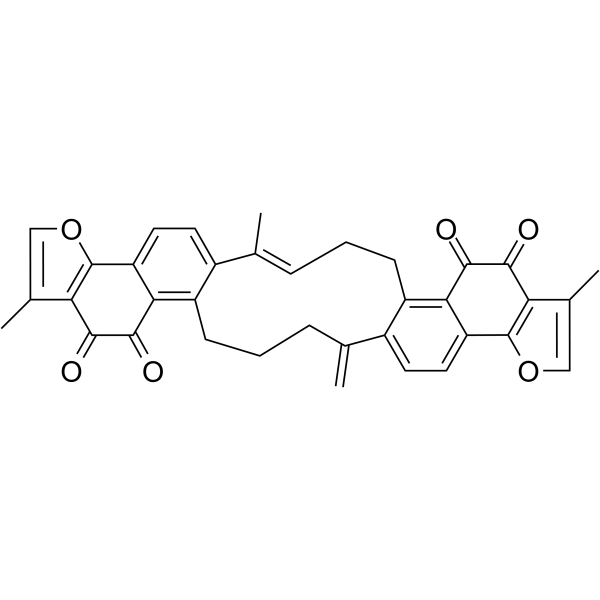
Neoprzewaquinone (NEO) is an orally active phenanthraquinone derivative isolated from Salvia miltiorrhiza Bunge. Neoprzewaquinone A inhibits IL-15Rα, blocks the ROCK2/STAT3 pathway to impair the migration and invasion abilities of triple-negative breast cancer cells; induces apoptosis of hepatocellular carcinoma cells by inhibiting the PI3K-AKT pathway; suppresses LPS-induced inflammation via binding to TLR4/MD2, and inhibits IL-15-induced proliferation, migration and phagocytosis of microglial cells; protects osteoblasts from mitochondrial dysfunction and apoptosis in diabetic osteoporosis by activating PRKD2 and the ELF5/PRKD2/PI3K/AKT/mTOR axis. Neoprzewaquinone A can be used in the research of diseases including rheumatoid arthritis, hepatocellular carcinoma, diabetic osteoporosis and triple-negative breast cancer .
loading...
    loading...
Cat. No.: HY-105064DR
CAS No.: 863406-85-3
Synonyms: CP-597396 hydrochloride hydrate (Standard)
Zoniporide hydrochloride hydrate (Standard) (CP-597396 hydrochloride hydrate (Standard)) is the analytical standard of Zoniporide hydrochloride hydrate (HY-105064D). This product is intended for research and analytical applications. Zoniporide hydrochloride hydrate (CP-597396 hydrochloride hydrate) is a selective Na +/H + exchanger subtype 1 (NHE1) inhibitor with cardioprotective activity, with IC50 values of 67 nM and 73 nM against rat NHE1. Zoniporide hydrochloride hydrate reduces intracellular Na + and Ca 2+ overload, preserves mitochondrial integrity, activates pro-survival ERK1/2 and STAT3 signaling pathways, reduces necrosis and apoptosis, and decreases neutrophil aggregation. Zoniporide hydrochloride hydrate is applicable to research related to myocardial ischemia-reperfusion injury and heart graft ischemia-reperfusion injury .
loading...
    loading...
Cat. No.: HY-105064R
CAS No.: 241800-98-6
Synonyms: CP-597396 (Standard)
Zoniporide (Standard) (CP-597396 (Standard)) is the analytical standard of Zoniporide (HY-105064). This product is intended for research and analytical applications. Zoniporide (CP-597396) is a selective Na +/H + exchanger subtype 1 (NHE1) inhibitor with cardioprotective activity, with IC50 values of 67 nM and 73 nM against rat NHE1. Zoniporide reduces intracellular Na + and Ca 2+ overload, preserves mitochondrial integrity, activates pro-survival ERK1/2 and STAT3 signaling pathways, reduces necrosis and apoptosis, and decreases neutrophil aggregation. Zoniporide is applicable to research related to myocardial ischemia-reperfusion injury and heart graft ischemia-reperfusion injury .
loading...
    loading...
Cat. No.: HY-13752
CAS No.: 1118915-78-8
Research Areas:  

Cancer

STA-1474 is an orally active and highly selective HSP90 inhibitor, as well as a phosphate prodrug of the HSP90 inhibitor STA-9090 (HY-15205). STA-1474 disrupts the chaperone function of HSP90 and promotes the degradation of client proteins. STA-1474 inhibits the phosphorylation of Met, Akt and STAT3, thereby blocking related signaling pathways. STA-1474 induces apoptosis and inhibits proliferation of osteosarcoma cells, and triggers the up-regulation of HSP70 and HSP90. STA-1474 induces tumor regression and caspase-3 activation in mouse osteosarcoma xenograft models. STA-1474 can be used in the research of osteosarcoma .
loading...
    loading...
Cat. No.: HY-13752B
CAS No.: 1402907-09-8
Research Areas:  

Cancer

STA-1474 sodium is an orally active and highly selective HSP90 inhibitor, as well as a phosphate prodrug of the HSP90 inhibitor STA-9090 (HY-15205). STA-1474 sodium disrupts the chaperone function of HSP90 and promotes the degradation of client proteins. STA-1474 sodium inhibits the phosphorylation of Met, Akt and STAT3, thereby blocking related signaling pathways. STA-1474 sodium induces apoptosis and inhibits proliferation of osteosarcoma cells, and triggers the up-regulation of HSP70 and HSP90. STA-1474 sodium induces tumor regression and caspase-3 activation in mouse osteosarcoma xenograft models. STA-1474 sodium can be used in the research of osteosarcoma .
loading...
    loading...
Cat. No.: HY-155949
CAS No.: 931305-29-2
Research Areas:  

Neurological Disease Cancer

Bt354 is an orally active STAT3 inhibitor with IC50 values of 4.6 μM (DU145), 6.5 μM (MDA-MB-435) and 7.2 μM (MDA-MB-231), respectively. Bt354 induces cell cycle arrest and apoptosis, and downregulates epithelial-mesenchymal transition-related genes. Bt354 exhibits anti-angiogenic and anti-inflammatory activities, attenuates the polarization of M1 microglia and A1 astrocytes, suppresses inflammasome-related signaling pathways, and alleviates mechanical hyperalgesia and thermal hyperalgesia. Bt354 can be used in research related to glioblastoma multiforme, triple-negative breast cancer, prostate cancer and neuropathic pain .
loading...
    loading...
Cat. No.: HY-N21550
CAS No.: 1292294-32-6
Synonyms: Tricin 4'-O-(threo-β-guaiacylglyceryl)ether
(-)-Salcolin B (Tricin 4'-O-(threo-β-guaiacylglyceryl) ether) is an isomer of Salcolin B (HY-N16766) and anti-inflammatory agent. (-)-Salcolin B is isolable from Njavara. (-)-Salcolin B downregulates the activities of NF-κB and STAT3, reduces the expressions of iNOS and COX-2, activates the ERK signaling pathway, and inhibits LPS-induced NO and ROS production. (-)-Salcolin B induces Apoptosis. (-)-Salcolin B inhibits TPA (HY-18739)-induced ear edema. (-)-Salcolin B possesses antioxidant activity. (-)-Salcolin B can be used in research related to inflammatory diseases, colon adenocarcinoma, ovarian cancer and breast cancer .
loading...
    loading...
Cat. No.: HY-153858
CAS No.: 2470433-36-2
PHI-501 is a dual inhibitor targeting RAF/DDR. PHI-501 exhibits significant anti-proliferative effects in melanoma cell lines and significantly inhibits the colony formation of drug-resistant cells. PHI-501 strongly inhibits ERK and AKT phosphorylation. PHI-501 downregulates the gene sets in drug-resistant cells of TNFA-NFKB, IL6-JAK-STAT3, and KRAS signaling pathways as well as the epithelial-mesenchymal transition (EMT) signaling pathways. PHI-501 demonstrates significant anti-tumor effects in the SK-MEL3DR xenograft model. PHI-501 can be used for research on the problem of drug resistance in melanoma .
loading...
    loading...
Cat. No.: HY-180117
Target:  

MMP STAT Apoptosis

Research Areas:  

Cancer

MMP-2/9-IN-2 (Compound 6k) is a MMP-2 and MMP-9 inhibitor, with IC50 values of 29.27 and 24.87 μM respectively. MMP-2/9-IN-2 exhibits good selective toxicity against multiple human hepatoma cell lines. MMP-2/9-IN-2 induces cell cycle arrest and apoptosis, significantly inhibits cell migration and invasion. MMP-2/9-IN-2 inhibits the phosphorylation of the STAT3 signaling pathway. MMP-2/9-IN-2 shows strong anti-tumor activity in a nude mouse xenograft model of HepG2 liver cancer cells .
loading...
    loading...
Cat. No.: HY-182722
CAS No.: 2388536-21-6
Target:  

Androgen Receptor JAK STAT

Research Areas:  

Cancer

UT-105 is an orally active, selective androgen receptor (AR) degrader. UT-105 binds to the N-terminal domain of AR, inhibits the transactivation of AR, blocks the recruitment of AR to androgen response elements, and induces AR degradation. UT-105 inhibits the JAK-STAT signaling pathway, including reducing the expression of interferon-stimulated genes, inhibiting the phosphorylation of STAT1 and STAT3, and blocking the recruitment of STAT1 to response elements. UT-105 exhibits anticancer activity against AR-positive triple-negative breast cancer (TNBC). UT-105 can be used in the research of selective androgen receptor modulator-resistant ER-positive breast cancer and triple-negative breast cancer .
loading...
    loading...
Cat. No.: HY-179715
PROTAC JAK1/2 degrader-1 is an orally active JAK1/JAK2 PROTAC degrader, with DC50 values of 1.4 μM and 0.92 μM against JAK1 and JAK2, respectively. PROTAC JAK1/2 degrader-1 triggers degradation via a CRBN- and proteasome-dependent pathway. PROTAC JAK1/2 degrader-1 inhibits the secretion of tumor necrosis factor-α (TNF-α) and interleukin-6 (IL-6). PROTAC JAK1/2 degrader-1 alleviates inflammatory responses and colon injury by inhibiting the JAK/STAT3 signaling pathway. PROTAC JAK1/2 degrader-1 can be used for the research of inflammatory bowel disease .
loading...
    loading...
Cat. No.: HY-189068
CAS No.: 1240895-94-6
Research Areas:  

Cancer

GL-4512 is an orally active LILRB4/ILT3 inhibitor with an IC50 of 37 nM against human targets, and human Kd values of 18.1 nM and 39.2 nM, respectively. GL-4512 directly binds to the extracellular pockets of LILRB4/ILT3 that accommodate their ligands, blocks the LILRB4-SCG2 signaling pathway, and inhibits the downstream SHP1/SHP2 and STAT3 signaling pathways. GL-4512 restores anti-tumor immune activity, promotes the production of IFN-γ and IL-2, enhances the activation of cytotoxic T cells, reduces tumor cell viability, inhibits tumor growth, and strengthens intratumoral immune activation. GL-4512 can be used in research related to colorectal cancer and acute myeloid leukemia .
loading...
    loading...
Cat. No.: HY-L008
738 compounds

The Janus kinase (JAK)/signal transducer and activator of transcription (STAT) pathway is central to signaling by cytokine receptors, a superfamily of more than 30 transmembrane proteins that recognize specific cytokines, and is critical in blood formation and immune response. Canonical JAK/STAT signaling begins with the association of cytokines and their corresponding transmembrane receptors. Activated JAKs then phosphorylate latent STAT monomers, leading to dimerization, nuclear translocation, and DNA binding. In mammals, there are four JAKs (JAK1, JAK2, JAK3, TYK2) and seven STATs (STAT1, STAT2, STAT3, STAT4, STAT5a, STAT5b, STAT6). Since the JAK/STAT pathway plays a major role in many fundamental processes, such as apoptosis and inflammation, dysfunctional proteins in the pathway may lead to a number of diseases. For example, alterations in JAK/STAT signalling can result in cancer and diseases affecting the immune system, such as severe combined immunodeficiency disorder (SCID).

MCE provides 738 compounds that can be used in the study of the JAK/STAT signaling pathway and related diseases.

