
287 Results for "

hematologic

" in MedChemExpress (MCE) Product Catalog:
Products (287)

287 Results for "hematologic" in MCE Product Catalog:

Cat. No.: HY-147864
CAS No.: 2145102-33-4
Target:  

c-Fms c-Kit Apoptosis

Research Areas:  

Cancer

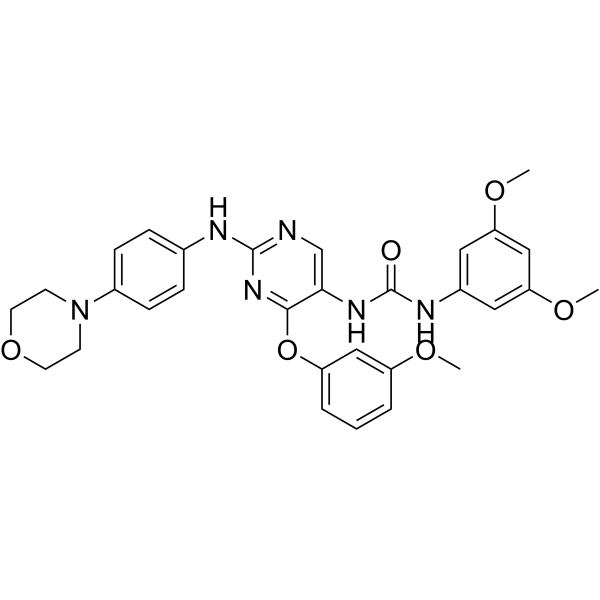
c-Fms-IN-12 (Compound 4g) is an FMS kinase inhibitor. c-Fms-IN-12 can also inhibits c-KIT. c-Fms-IN-12 is a potential broad-spectrum anticancer agent against multiple cancer types. c-Fms-IN-12 induces A549 cell apoptosis .
loading...
    loading...
Cat. No.: HY-183476
CAS No.: 36508-71-1
Synonyms: Rubidazon hydrochloride; Rubidazone hydrochloride
Target:  

Antibiotic

Research Areas:  

Infection Cancer

Zorubicin hydrochloride (Rubidazon hydrochloride) is an anthracycline Antibiotic. Zorubicin hydrochloride exhibits activity against breast cancer, leukemia, and undifferentiated nasopharyngeal carcinoma. Zorubicin hydrochloride shows activity against undifferentiated nasopharyngeal carcinoma either as a monotherapy or in combination with Cisplatin (HY-17394). Zorubicin hydrochloride can be used in research related to breast cancer, leukemia, and undifferentiated nasopharyngeal carcinoma .
loading...
    loading...
Cat. No.: HY-183354
Research Areas:  

Cancer

HLC40 is a MLL1 histone methyltransferase inhibitor with an IC50 of 0.82 μM by binding to WDR5. HLC40 inhibits proliferation of cancer cells, induces apoptosis and upregulates cleaved caspase-3 levels. HLC40 exhibits antitumor efficacy in a murine AML xenograft model .
loading...
    loading...
Cat. No.: HY-W116336D
CAS No.: 1314-13-2
Zinc oxide, <100 nm particle size is a nitrate reductase modulator and growth promoter with plant stress resistance activity and oral toxicity. Zinc oxide, <100 nm particle size acts as a nutrient source for maize plants. By enhancing nitrate reductase activity and reducing free proline levels, it significantly improves plant height, root length and dry matter weight of maize, and its growth-promoting effect is comparable to that of traditional zinc sulfate fertilizer. Zinc oxide, <100 nm particle size induces anemia-related and persistent tissue inflammatory damage, leading to obvious histopathological adverse reactions in the stomach, pancreas, eyes and prostate of rats. Zinc oxide, <100 nm particle size acts as a non-toxic antibacterial agent and selective cytotoxin against multiple bacteria, fungi and spores .
loading...
    loading...
Cat. No.: HY-148837
CAS No.: 2883535-99-5
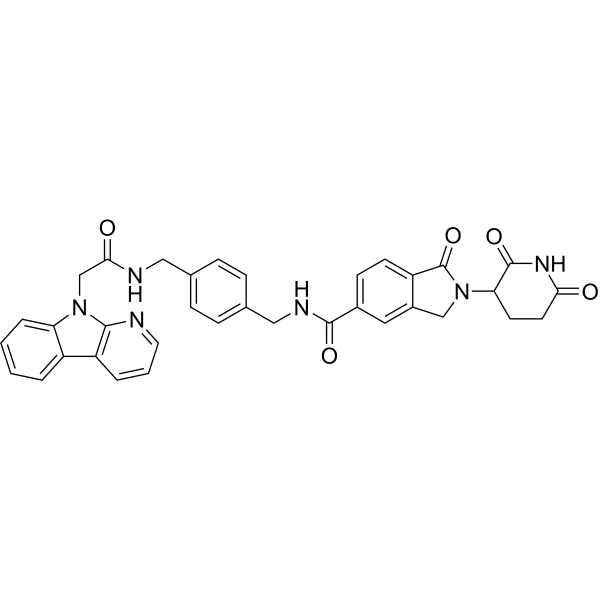
GT19630 is an orally active c-Myc PROTAC targeted degrader based on the cereblon E3 ubiquitin ligase, with an IC50 of 1.5 nM against human c-Myc. GT19630 mediates the degradation of MYC, GSPT1, GSPT2, CK1 alpha, N-Myc, B7-H3 and XIAP, and disrupts the MYC-GSPT1 synergistic regulatory feedback loop. GT19630 inhibits cell proliferation, blocks S-phase progression of the cell cycle, promotes cell apoptosis, reduces cell migration capacity, induces integrated stress response, and blocks oxidative phosphorylation by inhibiting the TCA cycle. GT19630 can be used in the research of Myc-driven hematological cancers, small cell lung cancer, breast cancer, TP53-mutant cancers, and venetoclax-resistant cancers .
loading...
    loading...
Cat. No.: HY-A0003S
CAS No.: 1227162-34-6
Synonyms: CC-5013-d5
Lenalidomide-d5 (CC-5013-d5) is the d5-labeled Lenalidomide (HY-A0003). Lenalidomide (CC-5013) is an orally active immunomodulatory agent that binds CRBN as a molecular glue to alter substrate specificity, inducing ubiquitination and proteasome-dependent degradation of IKZF1, IKZF3 and CK1α. Lenalidomide induces apoptosis by degrading IKZF1/3, and activates p53 by degrading CK1α. Lenalidomide promotes IL-2 release and effector functions of CD8 + T/NK cells, while inhibiting TNF-α secretion and M1-type pyroptosis. Lenalidomide can be used in research related to hematological malignancies, acute liver failure and acute kidney injury .
loading...
    loading...
Cat. No.: HY-A0003S2
Synonyms: CC-5013-13C5,15N
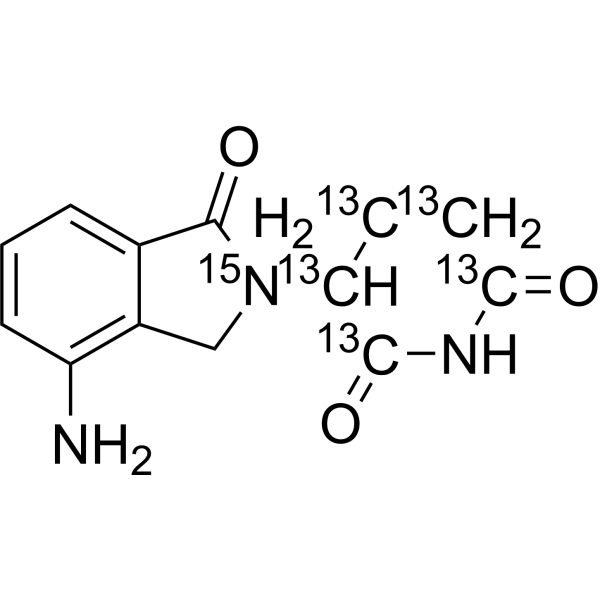
Lenalidomide- 13C5, 15N (CC-5013- 13C5, 15N) is the 13C, 15N-labeled Lenalidomide (HY-A0003). Lenalidomide (CC-5013) is an orally active immunomodulatory agent that binds CRBN as a molecular glue to alter substrate specificity, inducing ubiquitination and proteasome-dependent degradation of IKZF1, IKZF3 and CK1α. Lenalidomide induces apoptosis by degrading IKZF1/3, and activates p53 by degrading CK1α. Lenalidomide promotes IL-2 release and effector functions of CD8 + T/NK cells, while inhibiting TNF-α secretion and M1-type pyroptosis. Lenalidomide can be used in research related to hematological malignancies, acute liver failure and acute kidney injury .
loading...
    loading...
Cat. No.: HY-A0003S3
CAS No.: 1130061-52-7
Synonyms: CC-5013-d4
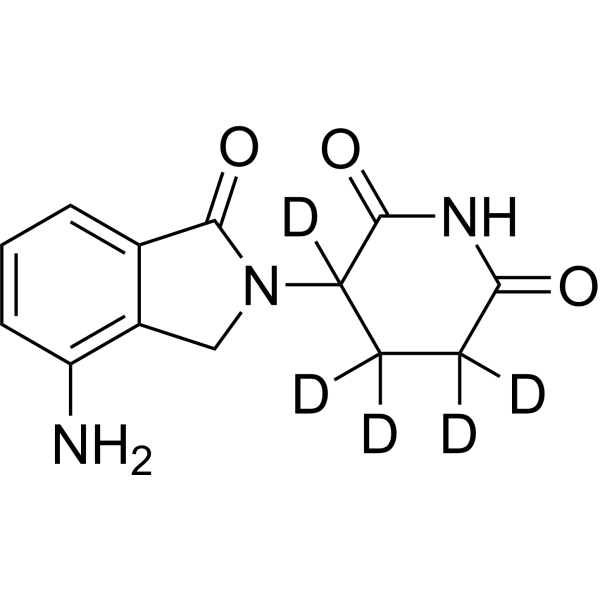
Lenalidomide-d4 (CC-5013-d4) is the d4-labeled Lenalidomide (HY-A0003). Lenalidomide (CC-5013) is an orally active immunomodulatory agent that binds CRBN as a molecular glue to alter substrate specificity, inducing ubiquitination and proteasome-dependent degradation of IKZF1, IKZF3 and CK1α. Lenalidomide induces apoptosis by degrading IKZF1/3, and activates p53 by degrading CK1α. Lenalidomide promotes IL-2 release and effector functions of CD8 + T/NK cells, while inhibiting TNF-α secretion and M1-type pyroptosis. Lenalidomide can be used in research related to hematological malignancies, acute liver failure and acute kidney injury .
loading...
    loading...
Cat. No.: HY-P99125
Anti-Mouse CD16/CD32 Antibody (2.4G2) is an anti-mouse CD16/CD32 IgG2b monoclonal antibody. Anti-Mouse CD16/CD32 Antibody (2.4G2) can block Fcγ receptor-mediated immune responses. Anti-Mouse CD16/CD32 Antibody (2.4G2) can block the combination of CD16 and FcγRs to reduce the production of foam cells. Anti-Mouse CD16/CD32 Antibody (2.4G2) can be used for researches on atherosclerosis and autoimmune hematological disorders .
loading...
    loading...
Cat. No.: HY-W777286
CAS No.: 1219332-91-8
Synonyms: CC-5013-13C5
rac-Lenalidomide- 13C5 (CC-5013- 13C5) is the 13C5-labeled Lenalidomide (HY-A0003). Lenalidomide (CC-5013) is an orally active immunomodulatory agent that binds CRBN as a molecular glue to alter substrate specificity, inducing ubiquitination and proteasome-dependent degradation of IKZF1, IKZF3 and CK1α. Lenalidomide induces apoptosis by degrading IKZF1/3, and activates p53 by degrading CK1α. Lenalidomide promotes IL-2 release and effector functions of CD8 + T/NK cells, while inhibiting TNF-α secretion and M1-type pyroptosis. Lenalidomide can be used in research related to hematological malignancies, acute liver failure and acute kidney injury .
loading...
    loading...
Cat. No.: HY-13650R
CAS No.: 165668-41-7
Synonyms: E 7070 (Standard)
Indisulam (Standard) (E 7070 (Standard)) is the analytical standard of Indisulam (HY-13650). This product is intended for research and analytical applications. Indisulam (E 7070) is a carbonic anhydrase inhibitor and RBM39 molecular glue degrader, with Ki values of 31, 15, and 24 nM against human carbonic anhydrase I, II, and IX, respectively, and a Ki value of 65 nM against bovine carbonic anhydrase IV. Indisulam promotes the recruitment of RBM39 to the CUL4-DCAF15 E3 ubiquitin ligase complex, triggering polyubiquitination and proteasomal degradation of RBM39. Indisulam induces aberrant pre-mRNA splicing, G1 cell cycle arrest, and cell death in cancer cells. As an anticancer agent, Indisulam drives tumor regression and growth inhibition in xenograft models. Indisulam can be used in research related to solid tumors, hematologic and lymphoid malignancies, colorectal cancer, and non-small cell lung cancer .
loading...
    loading...
Cat. No.: HY-155232
CAS No.: 2766437-35-6
Purity:  99.02%
Target:  

PI3K Apoptosis

Research Areas:  

Cancer

PI3Kδ-IN-16 is a potent and selective PI3Kδ inhibitor with an IC50 value of 0.9 nM. PI3Kδ-IN-16 has a strong anti-proliferative effect on SU-DHL-6 cells, causing cell cycle arrest and inducing apoptosis. PI3Kδ-IN-16 tightly bins to PI3Kδ protein with a planar-shaped conformation. The kinase activity of PI3Kδ-IN-16 which is ~378-fold over PI3Kα, 412-fold over PI3Kβ, and 10-fold over PI3Kγ. PI3Kδ-IN-16 can be used for the study of hematologic malignancies .
loading...
    loading...
Cat. No.: HY-P990954
CAS No.: 2850355-94-9
Synonyms: IMM-0306
Target:  

CD47 CD20

Research Areas:  

Cancer

Amulirafusp alfa (IMM-0306) is a fusion protein of CD20 monoclonal antibody (mAb) with the CD47 binding domain of SIRPα, with human CD20 Kd 2.45 nM and human CD47 Kd 4.91 nM. Amulirafusp alfa binds to CD20 and CD47 on B cells, engages FcɣR, blocks CD47-SIRPα interaction, activates macrophages, NK cells, and complement cascade, mediates phagocytosis and cytotoxicity, inhibits apoptosis of Jurkat-CSR cells, reverses IL-16 tumor-promoting effects, and binds human/cynomolgus CD47 but not mouse/rat CD47. Amulirafusp alfa can be used for the research of hematological malignancies, relapsed or refractory CD20-positive B-cell non-Hodgkin’s lymphoma, relapsed or refractory B-cell non-Hodgkin lymphoma, and activated B-cell-like diffuse large B-cell lymphoma .
loading...
    loading...
Cat. No.: HY-W018324S
Synonyms: 5hmC-13C,d2
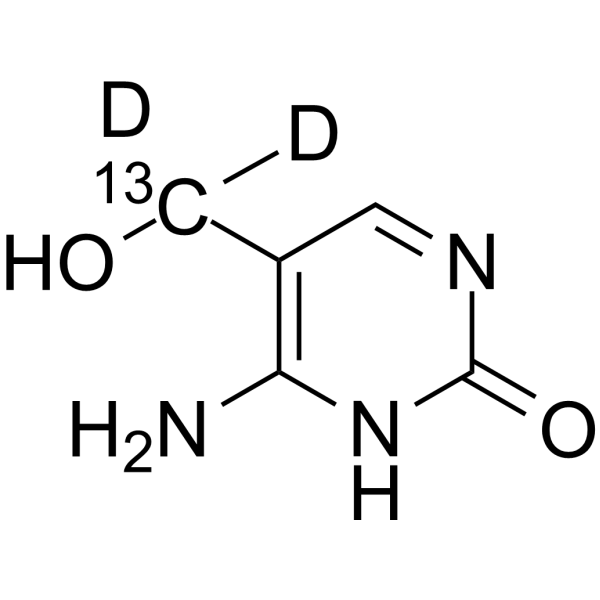
5-Hydroxymethylcytosine- 13C,d2 is the 13C and deuterium labeled 5-Hydroxymethylcytosine (HY-W018324). 5-Hydroxymethylcytosine (5hmC) is an oxidized forms of 5-methylcytosine (5mC) in mammalian DNA. 5-Hydroxymethylcytosine is produced from 5mC in an enzymatic pathway involving three 5mC oxidases, Ten-eleven translocation (TET)1, TET2, and TET3. The conversion of 5mC into 5hmC can be the first step in a pathway leading towards DNA demethylation. 5-Hydroxymethylcytosine is associated with gene transcription and frequently used as a mark to investigate dynamic DNA methylation conversion during mammalian development. 5-Hydroxymethylcytosine can be used for the study of non-small cell lung cancer (NSCLC), neurodegenerative diseases (Alzheimer’s, Parkinson’s) and hematological malignancies (acute myeloid leukemia, myelodysplastic syndromes) .
loading...
    loading...
Cat. No.: HY-162651
CAS No.: 3081180-48-2
Research Areas:  

Cancer

PROTAC BRD9 Degrader-8 is a selective, orally active BRD9 PROTAC degrader with a DC50 of 16 pM.\nPROTAC BRD9 Degrader-8 induces cell cycle arrest at the G1 phase and promotes apoptosis. PROTAC BRD9 Degrader-8 can be used for research on acute myeloid leukemia and diffuse large B-cell lymphoma .
loading...
    loading...
Cat. No.: HY-10446A
CAS No.: 1320211-69-5
(S)-Pralatrexate is an orally active anticancer compound. (S)-Pralatrexate exhibits cytotoxic activity against cancer cells and possesses anti-inflammatory activity. (S)-Pralatrexate can be used in research related to prostate cancer, breast cancer, rheumatoid arthritis, etc.
loading...
    loading...
Cat. No.: HY-132989
CAS No.: 1638156-31-6
Purity:  ≥95.0%
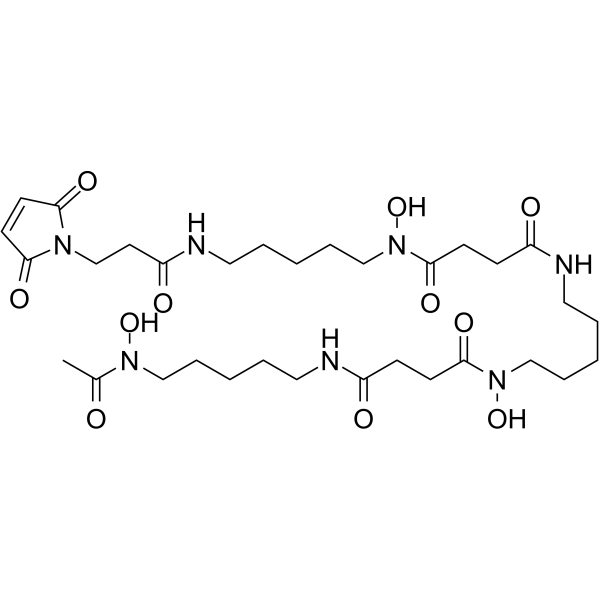
Mal-Deferoxamine is a maleimide-functionalized trihydroxamate siderophore derivative that can be isolated from Streptomyces pilosus. Mal-Deferoxamine possesses highly specific Fe (III) chelating ability, and the stability of complexes formed between it and non-Fe (III) metal ions is significantly lower. Mal-Deferoxamine exhibits growth inhibitory effects against Gram-positive bacteria, but shows no obvious inhibitory activity against Gram-negative bacteria (MIC>50 μM). Mal-Deferoxamine is mainly suitable for scientific research in hematology and related fields .
loading...
    loading...
Cat. No.: HY-184823
CAS No.: 1417634-25-3
Target:  

Casein Kinase

Research Areas:  

Cancer

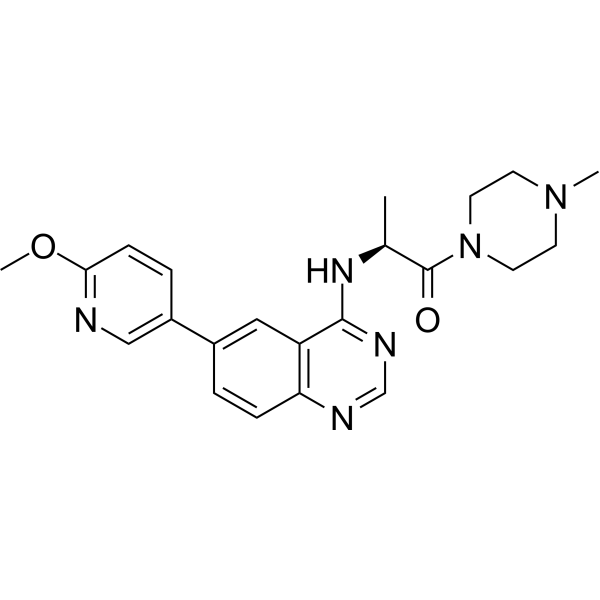
CK2-IN-17 is a protein kinase CK2 inhibitor with an IC50 of 9.5 μM against human targets. CK2-IN-17 regulates the activity of protein kinase CK2 by interacting with its ATP-binding site. CK2-IN-17 can be used in studies related to protein kinase CK2-mediated pathways, such as tumors .
loading...
    loading...
Cat. No.: HY-185561
Synonyms: RC88
Target:  

Mesothelin

Research Areas:  

Cancer

Misitatug blivedotin (RC88) is an antibody-drug conjugate (ADC) targeting mesothelin (MSLN). Misitatug blivedotin binds to mesothelin and exhibits dose‐dependent antitumor activity. Misitatug blivedotin can be used for the research of ovarian cancer, non-squamous non-small-cell lung carcinoma, cervical cancer .
loading...
    loading...

