3193 Results for "

Formation

" in MedChemExpress (MCE) Product Catalog:
Products (3193)

3193 Results for "Formation" in MCE Product Catalog:

Cat. No.: HY-L136
1,525 compounds

Coagulation, also known as clotting, is the process in which blood changes from a liquid to a solid gel to form a blood clot. Thrombin, which is accurately and evenly generated in the injured part of blood vessels, is a key effector enzyme of the blood coagulation system and participates in many important biological processes, such as platelet activation, fibrinogen conversion to fibrin network, coagulation feedback amplification, etc. At the same time, to avoid the accidental formation of thrombus in the body, there is also an anticoagulant mechanism that inhibits blood coagulation.

Normal coagulation mechanism represents a balance between the pro-coagulant pathway in the injured site and anti-coagulant pathway beyond it. The blood coagulation system may be out of balance during the perioperative period or critical illness, which may lead to thrombosis or excessive bleeding. Therefore, the physiological study of coagulation balance is an important basis for clinical diagnosis and treatment of the abnormal coagulation process.

MCE supplies a unique collection of 1,525 compounds targeting key proteins in coagulation and anti-coagulation system. MCE Coagulation and Anti-coagulation Compound Library is a useful tool for study the mechanism of coagulation and anticoagulation.

Cat. No.: HY-12017C
CAS No.: 1159490-83-1
PF-04217903 phosphate is an orally active, highly selective ATP-competitive c-Met kinase inhibitor with a Ki value of 4.8 nM and a Kd value of 4.5 nM. PF-04217903 phosphate blocks c-Met and HGF signaling pathways, inhibits MET phosphorylation, and blocks downstream MAPK, PI3K/AKT and PLCγ1 pathways. PF-04217903 phosphate suppresses tumor proliferation, survival, migration, invasion, angiogenesis and metastasis, induces apoptosis, and enhances efferocytosis, Annexin A1 expression and resolution of inflammation. PF-04217903 phosphate retains activity against several c-Met mutants (M1131T, V1220I, H1094R). PF-04217903 phosphate increases the incidence of subarachnoid hemorrhage and reduces survival rate without altering aneurysm formation, and also prevents lymph node metastasis induced by VEGF inhibition. PF-04217903 phosphate is applicable to research related to tumors (pancreas, stomach, lung, brain, colon, breast, kidney, melanoma, etc.), intracranial aneurysms and inflammatory diseases (gouty arthritis, neutrophilic pleuritis) .
loading...
    loading...
Cat. No.: HY-128633
CAS No.: 2269470-35-9
Target:  

PI3K Akt Apoptosis

Research Areas:  

Cancer

PI3K-IN-4 is a potent Pan-PI3K inhibitor. PI3K-IN-4 has high activity for three PI3K isoforms with the IC50 values of picomole. PI3K-IN-4 shows superior inhibitory activity against PI3Kα (IC50 = 0.20 nM), PI3Kβ (IC50 = 2.99 nM), PI3Kδ (IC50 = 0.48 nM) and PI3Kγ (IC50 = 0.58 nM) and has no significant activity against EGFR. PI3K-IN-4 inhibits cancer cell growth though PI3K/Akt signaling pathway, leading to the inhibition of colony formation and the induction of apoptosis. PI3K-IN-4 can be used for lung, colon and breast cancer research .
loading...
    loading...
Cat. No.: HY-135319
CAS No.: 517-46-4
Purity:  97.15%
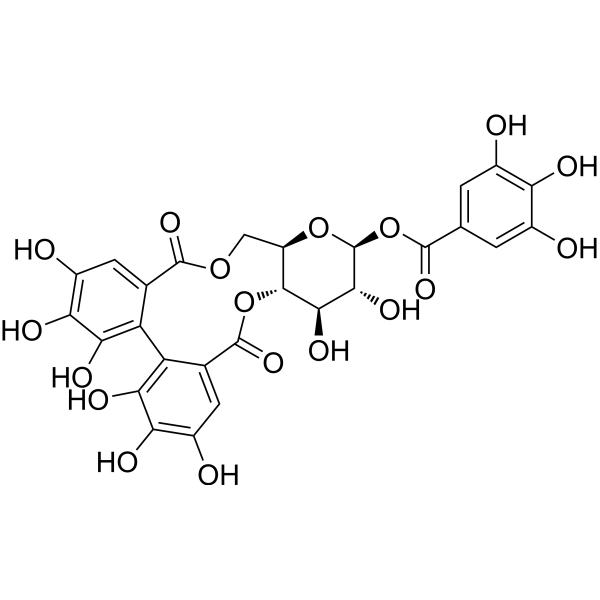
Strictinin is an orally active phenolic compound. Strictinin reduces xanthine oxidase activity, uric acid production, and the activation of ERK1/2, JNK, NF-κB, and NLRP3 inflammasome components in hepatocytes treated with Xanthine (HY-W017389). Strictinin decreases elevated serum uric acid levels and enhanced xanthine oxidase activity in mice treated with potassium oxonate. Strictinin acts as a ROR1 inhibitor and exhibits anticancer activity against highly aggressive non-androgen-dependent prostate cancer. Strictinin induces cancer cell apoptosis (apoptosis), arrests cell cycle, and inhibits cancer cell migration, invasion, and epithelial-mesenchymal transition. Strictinin modulates gut microbiota, inhibits bacterial growth and biofilm formation, accelerates small intestinal transit, and blocks viral entry and replication. Strictinin can be used in research related to hyperuricemia, androgen receptor-negative non-androgen-dependent prostate cancer, triple-negative breast cancer, bacterial infections, constipation, coronavirus infections, dental caries, and infections caused by influenza A, influenza B, and human parainfluenza virus type 1 .
loading...
    loading...
Cat. No.: HY-141439
CAS No.: 936475-62-6
TBE 31 is an orally active Keap1/Nrf2 pathway activator and NQO1 inducer with a Dm value of 1.1 nM for NQO1. TBE 31 binds to cysteine residues of Keap1, inhibits ubiquitination and degradation of Nrf2, thereby activating the expression of ARE-dependent genes. TBE 31 induces cytoprotective enzymes including NQO1 and GST isoforms, promotes Nrf2 accumulation, and upregulates Nrf2-regulated genes related to antioxidation and lipid metabolism. TBE 31 inhibits pro-inflammatory responses, formation of AFB1-DNA adducts, endoplasmic reticulum stress, cell apoptosis (apoptosis), hepatic fibrosis, oxidative stress, and the expression of ChREBP. TBE 31 reduces the number of tumors in a mouse model of ultraviolet-induced skin carcinogenesis. TBE 31 enhances nerve growth factor-induced neurite outgrowth. TBE 31 attenuates LPS-induced serum TNF-α levels and immobility time in mice. TBE 31 can be used in research related to liver cancer, skin cancer, inflammation-related depression, and non-alcoholic steatohepatitis .
loading...
    loading...
Cat. No.: HY-162775
CAS No.: 50566-97-7
Target:  

Bacterial Antibiotic

Research Areas:  

Infection

TST1N-224 is a potent response regulator VraRC inhibitor. TST1N-224 can disrupt VraRC-DNA complex formation (IC50=60.2 μM). TST1N-224 exhibits interference with VraRC binding to its cognate DNA through a fast-on-fast-off binding mechanism (KD=23.4 μM). TST1N-224 predominantly interacts with the α9- and α10-helixes of the DNA-binding domain of VraR. TST1N-224 inhibits the growths of S. aureus (SA; MIC>126 μM), Methicillin-resistant S. aureus (MRSA; MIC>126 μM), and Vancomycin-intermediate S. aureus (VISA; MIC=63 μM). TST1N-224, an antimicrobial agent, evidently enhances the susceptibility of VISA to both Vancomycin (HY-B0671) and Methicillin (HY-B0974) .
loading...
    loading...
Cat. No.: HY-179528
CAS No.: 2595179-74-9
DIM-3,5-Cl2 is an inverse NR4A1/NR4A2 agonist with KD values of 7.7 μM and 12.0 μM for NR4A1 and NR4A2, respectively. DIM-3,5-Cl2 acts as an inverse agonist to downregulate pro-oncogenic and proendometriotic gene products, and as an agonist to enhance NR4A1/2/Sp1/Sp4-mediated CD71 transactivation. DIM-3,5-Cl2 induces ferroptosis via ROS formation, lipoperoxidation, MDA production, and reduced GPX4, SLC7A11 expression. DIM-3,5-Cl2 induces apoptosis via PARP and caspase-3 cleavage, reduced BCL-2 expression, and inhibits cancer cell viability. DIM-3,5-Cl2 can be used for the research of triple negative breast cancer, endometriosis, and colorectal cancer .
loading...
    loading...
Cat. No.: HY-179560
Research Areas:  

Cancer

PMV6-PEG4-BI2536 is an RIPTAC-like bifunctional molecule that promotes the formation of the p53 Y220C-PLK1 ternary complex (EC50 = 1.4 μM). PMV6-PEG4-BI2536 causes PLK1 mislocalization and inhibits PLK1 activity, inducing G2/M phase arrest and apoptosis in p53 Y220C-mutant cells, while sparing cells with wild-type TP53. PMV6-PEG4-BI2536 can be used in research on uterine, gastric, pancreatic, prostate, and breast cancers harboring the p53 Y220C mutation. PMV6-PEG4-BI2536 is composed of PMV6 (a p53 Y220C mutant-binding ligand), PEG4 (a linker), and BI2536 (HY-159493) (a PLK inhibitor) .
loading...
    loading...
Cat. No.: HY-N0819R
CAS No.: 89412-79-3
Raddeanin A (Standard) is the analytical standard of Raddeanin A (HY-N0819). This product is intended for research and analytical applications. Raddeanin A is an oleanane-type triterpenoid saponin with oral activity. Raddeanin A inhibits SRC, mTOR, JNK, VEGFR2, NLRP3 inflammasome, Wnt/β-catenin, Wee1, PI3K/AKT signaling pathway, MAPK/ERK signaling pathway, AR-FL, AR-Vs, and downregulates the expression of p-PI3K and p-AKT. Raddeanin A inhibits osteoclast formation, bone resorption, osteolysis, cancer cell invasion, migration, proliferation, angiogenesis and epithelial-mesenchymal transition, while induces apoptosis, cell cycle arrest, ROS production, immunogenic cell death and dendritic cell maturation. Raddeanin A improves blood-retinal barrier function, alleviates inflammation, regulates the tumor microenvironment, and enhances the activity of anti-PD-1 antibody. Raddeanin A is applicable to the research of breast cancer-associated osteolysis, human osteosarcoma, colorectal cancer, glioblastoma, Alzheimer's disease, cholangiocarcinoma, melanoma, non-small cell lung cancer, castration-resistant prostate cancer and multiple myeloma.
loading...
    loading...
Cat. No.: HY-N1510
CAS No.: 22149-35-5
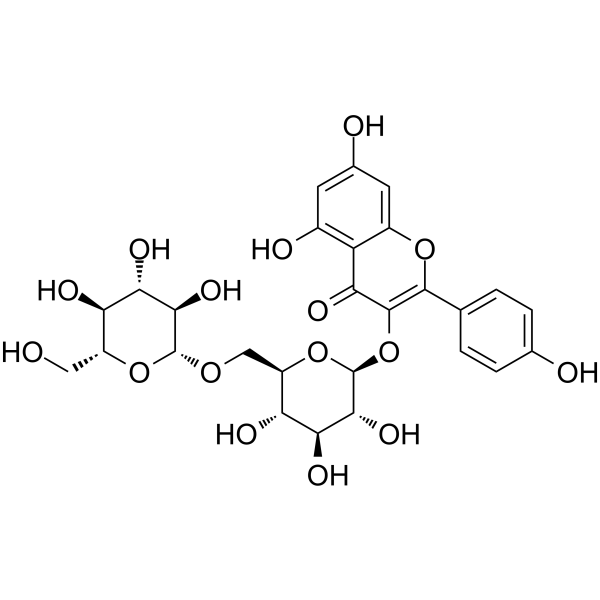
Kaempferol 3-O-gentiobioside is an orally active flavonoid, with a Ka value of 57 µM against human NOTCH1 and an IC50 value of 50 μM against α-glucosidase. Kaempferol 3-O-gentiobioside inhibits the NOTCH signaling pathway. It downregulates the expression of TLR4 and NLRP3, and suppresses the activation and nuclear translocation of NF-κB. Kaempferol 3-O-gentiobioside inhibits the expression of MUC5AC, reduces nitrite and ROS levels, and attenuates excessive mucus secretion. It exhibits antibacterial activity, reducing the formation and growth of MRSA biofilms. Kaempferol 3-O-gentiobioside blocks the TGF-β/ALK5/Smad signaling pathway and inhibits epithelial-mesenchymal transition. It suppresses the proliferation, migration, invasion and metastatic growth of tumor cells. Kaempferol 3-O-gentiobioside alleviates airway inflammation and mucus hypersecretion in mice with allergic asthma . It reduces the volume of ovarian cancer xenografts in mice. Kaempferol 3-O-gentiobioside can be used in research related to allergic asthma, diabetes, MRSA infection, breast cancer, gastric cancer and ovarian cancer .
loading...
    loading...
Cat. No.: HY-P11242
Cm-CATH2 is an antimicrobial peptide discovered from Chelonia mydas. Cm-CATH2 has a potent, broad-spectrum and rapid bactericidal ability by rapidly destroying the integrity of bacterial cell membranes. It shows strong activity against Gram-positive bacteria (such as VREF, Staphylococcus aureus), Gram-negative bacteria (such as Escherichia coli, Klebsiella pneumoniae), and fungi (such as Candida albicans) with MICs ranges from 1.17 to 18.75 μg/mL. Cm-CATH2 is also effective against various aquatic pathogenic bacteria. Cm-CATH2 not only inhibits biofilm formation but can also remove the formed biofilms. Cm-CATH2 has immunomodulatory functions and chemotactic effects on immune cells, and can inhibit the production of pro-inflammatory cytokines by macrophages stimulated by LPS (HY-D1056). Cm-CATH2 prevents the activation of NF-κB by inhibiting the degradation of IκBα, and also inhibits the phosphorylation of MAPK signaling pathways (p38, JNK, ERK). Cm-CATH2 demonstrates strong anti-infective ability in mouse peritonitis models and pneumonia models .
loading...
    loading...
Cat. No.: HY-P990801
Anti-Mouse CD11a/LFA-1α Antibody (M17/4) is an anti-mouse CD11a/LFA-1α IgG2a monoclonal antibody. Anti-Mouse CD11a/LFA-1α Antibody (M17/4) can reduce the recruitment of effector memory CD8 T cells. Anti-Mouse CD11a/LFA-1α Antibody (M17/4) promotes the formation of xenograft tumors by reducing immune rejection reactions. Anti-Mouse CD11a/LFA-1α Antibody (M17/4) can be used for researches on cancer, infection conditions and immunology such as glioblastoma, parasitic and bacterial infections. The recommend isotype control of Anti-Mouse CD11a/LFA-1α Antibody (M17/4): Rat IgG2a kappa, Isotype Control (HY-P990679) .
loading...
    loading...
Cat. No.: HY-W015551R
CAS No.: 3913-81-3
Synonyms: (E)-Dec-2-enal (Standard)
trans-2-Decenal ((E)-Dec-2-enal)) Standard is the analytical standard of trans-2-Decenal (HY-W015551). This product is intended for research and analytical applications. trans-2-Decenal ((E)-Dec-2-enal) acts as a urease inhibitor and antibacterial agent against Helicobacter pylori, with an IC50 of 9.484 μg/mL against Helicobacter pylori urease. trans-2-Decenal reduces the urease activity of Helicobacter pylori, and possesses antibacterial, bactericidal, anti-biofilm and anti-migratory activities. It alters the morphology of Helicobacter pylori, induces bacterial rupture, inhibits biofilm formation, reduces the number of mature biofilms and impairs the migratory capacity of Helicobacter pylori. trans-2-Decenal disrupts the cell wall integrity of Phytophthora capsici, damages membrane integrity and permeability, triggers intracellular reactive oxygen species (ROS) accumulation, decreases glutathione levels and disrupts the mitochondrial membrane potential of Phytophthora capsici. trans-2-Decenal is applicable to studies related to Helicobacter pylori and plant diseases induced by and Phytophthora capsici.
loading...
    loading...
Cat. No.: HY-W015551S
CAS No.: 1335436-39-9
Synonyms: (E)-Dec-2-enal-d2
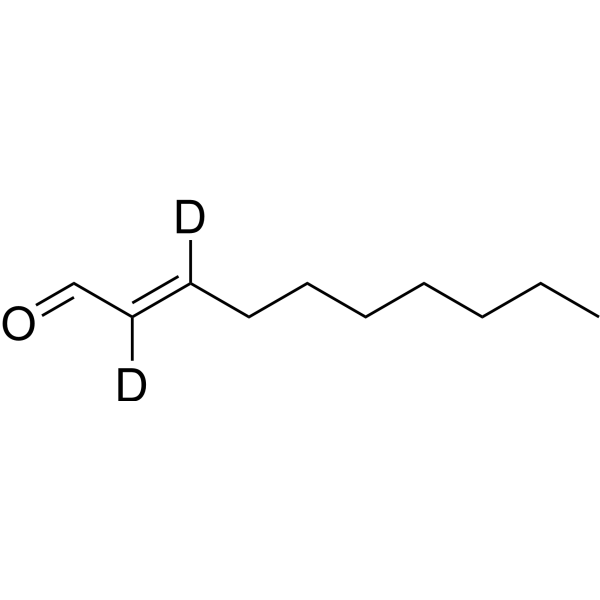
trans-2-Decenal-d2 ((E)-Dec-2-enal-d2) is deuterated labeled trans-2-Decenal (HY-W015551). trans-2-Decenal ((E)-Dec-2-enal) acts as a urease inhibitor and antibacterial agent against Helicobacter pylori, with an IC50 of 9.484 μg/mL against Helicobacter pylori urease. trans-2-Decenal reduces the urease activity of Helicobacter pylori, and possesses antibacterial, bactericidal, anti-biofilm and anti-migratory activities. It alters the morphology of Helicobacter pylori, induces bacterial rupture, inhibits biofilm formation, reduces the number of mature biofilms and impairs the migratory capacity of Helicobacter pylori. trans-2-Decenal disrupts the cell wall integrity of Phytophthora capsici, damages membrane integrity and permeability, triggers intracellular reactive oxygen species (ROS) accumulation, decreases glutathione levels and disrupts the mitochondrial membrane potential of Phytophthora capsici. trans-2-Decenal is applicable to studies related to Helicobacter pylori and plant diseases induced by and Phytophthora capsici .
loading...
    loading...
Cat. No.: HY-W1143867
CAS No.: 2226-71-3
4’-Phosphopantetheine is an orally active coenzyme A (CoA) precursor. 4’-Phosphopantetheine is membrane-permeable and acts as a CoA precursor, a prosthetic group, and a reactive oxygen species (ROS) inhibitor. 4’-Phosphopantetheine binds covalently to rat liver fatty acid synthase, modifies the conserved serine residue in the PKS/NRPS carrier protein domain, and serves as a substrate for CoA synthase and PPAT. 4’-Phosphopantetheine undergoes non-catalytic exchange on rat liver fatty acid synthase, with a faster turnover rate than that of the enzyme complex, and restores intracellular CoA levels in cells with impaired de novo biosynthesis. 4’-Phosphopantetheine rescues phenotypes induced by CoA deficiency, normalizes PKAN-related biomarkers, restores mitochondrial enzyme activity, and alleviates vascular endothelial damage. 4’-Phosphopantetheine shows biological stability in serum, acts as a prosthetic group and degradation product of ACP, and inhibits the formation of atherosclerotic plaques. 4’-Phosphopantetheine can be used in the research of brain iron accumulation neurodegenerative diseases, pantothenate kinase-associated neurodegeneration, CoASY protein-associated neurodegenerative diseases, coronary heart disease, and atherosclerosis .
loading...
    loading...
Cat. No.: HY-W127393
CAS No.: 177158-21-3
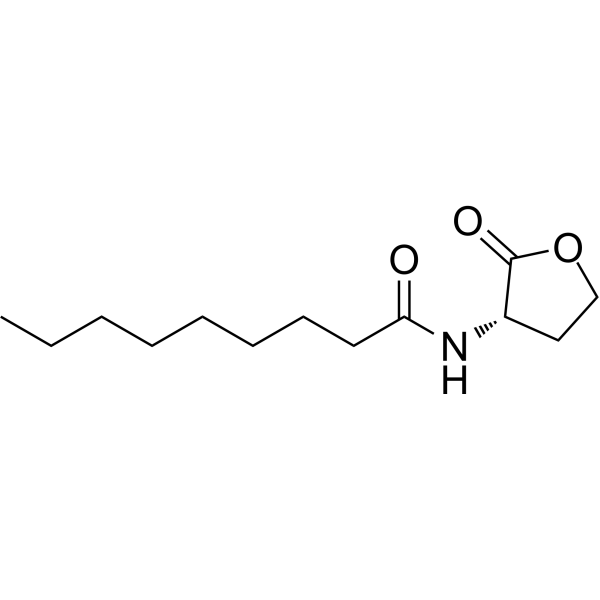
Quorum sensing is a regulatory system used by bacteria to control gene expression in response to increased cell density. This regulatory process manifests itself in a variety of phenotypes, including biofilm formation and virulence factor production. Coordinated gene expression is achieved through the production, release and detection of small diffusible signaling molecules called autoinducers. N-acylated homoserine lactones (AHLs) comprise a class of such autoinducers, each of which generally consists of a fatty acid coupled to a homoserine lactone (HSL). Modulation of bacterial quorum-sensing signaling systems to suppress pathogenesis represents a new approach to antimicrobial research for infectious diseases. AHLs differ in acyl length (C4-C18), C3 substitution (hydrogen, hydroxyl, or oxo group), and the presence or absence of one or more carbon-carbon double bonds in the fatty acid chain. These differences confer signaling specificity through the affinity of the LuxR family of transcriptional regulators. C9-HSL is a rare odd-numbered acyl carbon chain produced by wild-type Erwinia carotovora strain SCC 3193 grown in nutrient-rich Luria-Bertani broth (LB) medium.
loading...
    loading...
Cat. No.: HY-12017B
CAS No.: 1159490-85-3
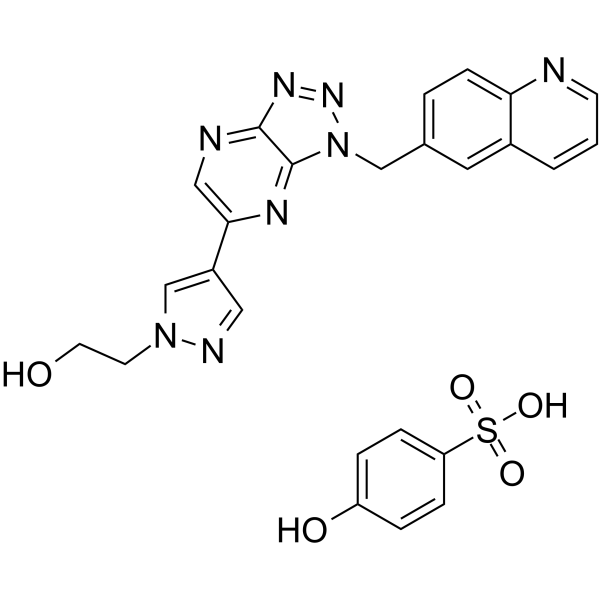
PF-04217903 phenolsulfonate is an orally active, highly selective ATP-competitive c-Met kinase inhibitor with a Ki value of 4.8 nM and a Kd value of 4.5 nM. PF-04217903 phenolsulfonate blocks c-Met and HGF signaling pathways, inhibits MET phosphorylation, and blocks downstream MAPK, PI3K/AKT and PLCγ1 pathways. PF-04217903 phenolsulfonate suppresses tumor proliferation, survival, migration, invasion, angiogenesis and metastasis, induces apoptosis, and enhances efferocytosis, Annexin A1 expression and resolution of inflammation. PF-04217903 phenolsulfonate retains activity against several c-Met mutants (M1131T, V1220I, H1094R). PF-04217903 phenolsulfonate increases the incidence of subarachnoid hemorrhage and reduces survival rate without altering aneurysm formation, and also prevents lymph node metastasis induced by VEGF inhibition. PF-04217903 phenolsulfonate is applicable to research related to tumors (pancreas, stomach, lung, brain, colon, breast, kidney, melanoma, etc.), intracranial aneurysms and inflammatory diseases (gouty arthritis, neutrophilic pleuritis) .
loading...
    loading...
Cat. No.: HY-169385
CAS No.: 2925060-81-5
Research Areas:  

Cancer

ATC-324 is an bivalent AR (Androgen Receptor) degrader based on the protein degradation technology platform AUTOphagy-TArgeting Chimera (AUTOTAC). ATC-324 induces the formation of AR/p62 complex, leading to autophagy-lysosomal degradation of AR. ATC-324 can reduce nuclear AR levels and downregulate target gene expression of AR and AR-v7, and also has a degradation effect on common AR mutants in PCa . ATC-324 is composed of target-binding ligand (TBL) Enzalutamide (HY-70002) and p62/SQSTM1 autophagy-targeting ligand (ATL) YT 6-2 analog-1 (HY-169386), connected by Boc-NH-PEG4-CH2CH2NH2 (HY-W008352). Among them, the active control of the target protein ligand is Enzalutamide carboxylic acid (HY-70002B), and the conjugate composed of the autophagy-targeting ligand and the linker is YT 6-2-PEG3-C2-NH2 (HY-169387).
loading...
    loading...
Cat. No.: HY-P11935
CAS No.: 2410535-57-6
RR-171 is an amino acid polypeptide and an inhibitor of the Wnt signaling pathway. RR-171 reduces the expression levels of Wnt-1, GSK3β and β-catenin. RR-171 induces apoptosis (Apoptosis) in pancreatic cancer cells, which is characterized by an increased Bax/Bcl-2 ratio, activation of Caspase-3/7/9, and increased Cleaved-PARP; this pro-apoptotic effect can be partially reversed by Z-VAD-FMK (HY-16658B). RR-171 also induces pyroptosis (Pyroptosis) in pancreatic cancer cells, which is manifested by activation of the NLRP-3 inflammasome, activation of Caspase-1, cleavage of GSDMD, upregulation of IL-1β and IL-18, and increased LDH release; this pro-pyroptotic effect can be partially reversed by VX-765 (HY-13205). RR-171 inhibits the viability, proliferation and colony formation of pancreatic cancer cells, with low cytotoxicity against normal cells. RR-171 downregulates the expression of Ki-67 and PCNA in tumor tissues in vivo, with favorable biosafety. RR-171 can be used in studies related to pancreatic cancer .
loading...
    loading...
Cat. No.: HY-124529
CAS No.: 37116-80-6
Lunularin is an inhibitor of 11β-hydroxysteroid dehydrogenase 1, with an IC50 of 45.44 μM and a Ki of 35.8 μM against human 11β-HSD1, and an IC50 of 17.39 μM and a Ki of 10.31 μM against rat 11β-HSD1. Lunularin upregulates the transcription levels of Sirt1 and Hmox1 genes in the liver. Lunularin reduces food intake and body weight gain, and decreases blood glucose levels in mice fed a high-fat diet. Lunularin inhibits LPS-induced TLR4-mediated NF-κB pathway activation and nitric oxide production. Lunularin inhibits the proliferation and colony formation of renal cancer and colon cancer cells, and exhibits cancer cell-specific cytotoxicity. Lunularin binds to the steroid-binding site of human 11β-HSD1 and the steroid/NADPH-binding region of rat 11β-HSD1, but does not inhibit 11β-HSD2 or mouse 11β-HSD1. Lunularin can be used in research related to diet-induced obesity, renal cancer, colorectal cancer, inflammatory diseases and metabolic syndrome .
loading...
    loading...

